


About us


-
See what students, mentors, alumni and recruiters say about Masters' Union University. Shared highlights and moments that reflect our culture, learning and community. Explore their voices.
OVERVIEW


-
See how Masters’ Union University is represented across leading news and media platforms. Explore articles, features, and press coverage that reflect our journey, initiatives, and growing impact in education, innovation, and industry engagement.
OVERVIEW
-
Explore the awards, rankings and accreditations that recognise the quality, impact and industry relevance of Masters' Union University programmes.
OVERVIEW

-
Explore the reports, brochures, policies, and publications that document Masters' Union University's outcomes, standards, and institutional commitments.
OVERVIEW


PROGRAMMEs
- Highlights
- Curriculum
- Admissions & Fees
- Immersions
- Entrepreneurship
- Careers
- Class Profile
PROGRAMME oVERVIEW
- Highlights
- Curriculum
- Admissions & Fees
- Immersions
- Entrepreneurship
- Career Prospects
- Class Profile
PROGRAMME oVERVIEW
- Highlights
- Curriculum & Faculty
- Immersions
- Admissions & Fees
- Career Prospects
- Class Profile
PROGRAMME oVERVIEW
- Highlights
- Curriculum
PROGRAMME oVERVIEW
- Home
PROGRAMME oVERVIEW
- Highlights
- Curriculum & Faculty
- Admissions & Fees
- Career Prospects
- Class Profile
PROGRAMME oVERVIEW
- Highlights
- Curriculum & Faculty
- Admissions & Fees
- Career Prospects
- Class Profile
PROGRAMME oVERVIEW
- Highlights
- Curriculum
- Admissions & Fees
- Career Prospects
- Class Profile
PROGRAMME oVERVIEW
PROGRAMMEs
- Highlights
- Curriculum & Faculty
- Admissions & Fees
- Career Prospects
- Class Profile
PROGRAMME oVERVIEW
- Highlights
- Curriculum & Faculty
- Admissions & Fees
- Career Prospects
- Class Profile
PROGRAMME oVERVIEW
- Highlights
- Curriculum
- Admissions & Fees
- Career Prospects
- Class Profile
PROGRAMME oVERVIEW
- Highlights
- Curriculum & Faculty
- Admissions & Fees
- Career Prospects
- Class Profile
PROGRAMME oVERVIEW
- Highlights
- Curriculum & Faculty
- Admissions & Fees
- Career Prospects
- Class Profile
PROGRAMME oVERVIEW
- Highlights
- Curriculum
- Admissions & Fees
- Career Prospects
- Class Profile
PROGRAMME oVERVIEW
- Highlights
- Curriculum
- Admissions & Fees
- Career Prospects
- Class Profile
PROGRAMME oVERVIEW
PROGRAMMES
-
PGP in
Technology & Business Management

-
PGP in
Technology & Business Management
(Young Leaders Cohort)
-
Post Graduate Diploma (Human Resources and Organisation Strategy)
-
Post Graduate Diploma (Sports Management and Gaming)
-
PGP in
Applied AI & Agentic Systems
-
PGP in Sustainability &
Business Management
-
Four Nations Global
Business Programme
- Highlights
- Curriculum
- Immersions
- Admissions & Fees
- Career Prospects
- Cohort Profile
PROGRAMME oVERVIEW
- Highlights
- Curriculum
- Immersions
- Admissions & Fees
- Career Prospects
- Faculty & Student Stories
PROGRAMME oVERVIEW
- Highlights
- Curriculum
- Immersions
- Admissions & Fees
- Career Prospects
PROGRAMME oVERVIEW
- Highlights
- Curriculum & Faculty
- Admissions & Fees
- Career Prospects
PROGRAMME oVERVIEW
- Highlights
- Curriculum & Faculty
- Admissions & Fees
- Career Prospects
PROGRAMME OVERVIEW
- Highlights
- Curriculum & Faculty
- Admissions & Fees
PROGRAMME OVERVIEW
- Highlights
PROGRAMME OVERVIEW
- Highlights
- Curriculum
- Immersions
- Admissions & Fees
- Career Prospects
- Cohort Profile
PROGRAMME oVERVIEW
PROGRAMMES
-
Post Graduate Diploma (Rise General Management)
-
Post Graduate Diploma (Capital Markets & Trading)
-
PGP in US Capital Markets &
Trading
-
PGP
in Entrepreneurship & Business Acceleration
-
Post Graduate Diploma (Rise General Management Global)
-
AI First Operator Programme
-
Bloomberg Equity Research Programme
- Highlights
- Curriculum
- Faculty
- Admissions & Fees
- Career Prospects
- Cohort Profile
PROGRAMME oVERVIEW
- Home
PROGRAMME oVERVIEW
- Highlights
- Curriculum
- Admissions & Fees
PROGRAMME oVERVIEW
- Highlights
- Curriculum
- Admissions & Fees
PROGRAMME oVERVIEW
- Highlights
- Curriculum
- Immersions
- Faculty & Coaches
- Admissions & Fees
- Career Prospects
PROGRAMME oVERVIEW
- Highlights
- Curriculum
PROGRAMME oVERVIEW
- Home
PROGRAMME oVERVIEW
- Highlights
- Global Immersions
- Curriculum
- Faculty & Coaches
- Leadership Learning
- Admissions & Fees
PROGRAMME oVERVIEW
- Highlights
- Curriculum
- Admissions & Fees
PROGRAMME oVERVIEW
PROGRAMMES
- Highlights
- Curriculum
- Beyond Classroom
- Admissions & Fees
PROGRAMME oVERVIEW
- Highlights
- Curriculum
- Beyond Classroom
- Admissions & Fees
PROGRAMME oVERVIEW
- Home
PROGRAMME oVERVIEW
- Home
PROGRAMME oVERVIEW
PROGRAMMES
- Home
PROGRAMME oVERVIEW
- Highlights
- Curriculum
- Beyond Classroom
- Admissions & Fees
PROGRAMME oVERVIEW
- Home
PROGRAMME oVERVIEW
- Home
PROGRAMME oVERVIEW
STUDENT LIFE
- Student Premises
- Amenities
- Hostel Council
oVERVIEW


- Case Union
- UnMute
- Clubs & Committees
oVERVIEW

oVERVIEW

- Healthcare
- BFSI
- Technology
- Manufacturing
- Retail
Industry
- Governments
- Universities
- Startups
- SMEs
- Large Enterprises
Industry
oVERVIEW
PROGRAMMEs
- Highlights
- Curriculum & Faculty
- Admissions & Fees
- Career Prospects
- Class Profile
PROGRAMME oVERVIEW
- Highlights
- Curriculum & Faculty
- Admissions & Fees
- Career Prospects
- Class Profile
PROGRAMME oVERVIEW
- Highlights
- Curriculum
- Admissions & Fees
- Career Prospects
- Class Profile
PROGRAMME oVERVIEW
- Highlights
- Curriculum & Faculty
- Admissions & Fees
- Career Prospects
- Class Profile
PROGRAMME oVERVIEW
- Highlights
- Curriculum & Faculty
- Admissions & Fees
- Career Prospects
- Class Profile
PROGRAMME oVERVIEW
- Highlights
- Curriculum
- Admissions & Fees
- Career Prospects
- Class Profile
PROGRAMME oVERVIEW
- Highlights
- Curriculum
- Admissions & Fees
- Career Prospects
- Class Profile
PROGRAMME oVERVIEW
PROGRAMMES
- Highlights
- Curriculum
- Immersions
- Admissions & Fees
- Career Prospects
- Cohort Profile
PROGRAMME oVERVIEW
- Highlights
- Curriculum
- Immersions
- Admissions & Fees
- Career Prospects
- Faculty & Student Stories
PROGRAMME oVERVIEW
- Highlights
- Curriculum
- Immersions
- Admissions & Fees
- Career Prospects
PROGRAMME oVERVIEW
- Highlights
- Curriculum & Faculty
- Admissions & Fees
- Career Prospects
PROGRAMME oVERVIEW
- Highlights
- Curriculum
- Immersions
- Admissions & Fees
- Career Prospects
- Cohort Profile
PROGRAMME oVERVIEW
PROGRAMMES
- Highlights
- Curriculum
- Faculty
- Admissions & Fees
- Career Prospects
- Cohort Profile
PROGRAMME oVERVIEW
- Highlights
- Curriculum
- Admissions & Fees
PROGRAMME oVERVIEW
- Highlights
- Curriculum
- Admissions & Fees
PROGRAMME oVERVIEW
- Highlights
- Curriculum
- Immersions
- Faculty & Coaches
- Admissions & Fees
- Career Prospects
PROGRAMME oVERVIEW
- Highlights
- Global Immersions
- Curriculum
- Faculty & Coaches
- Leadership Learning
- Admissions & Fees
PROGRAMME oVERVIEW
- Highlights
- Curriculum
- Admissions & Fees
PROGRAMME oVERVIEW


About Us

Undergraduate
Postgraduate
PGP in Technology & Business Management
PGP in Technology & Business Management
(Young Leaders Cohort)
Post Graduate Diploma (Human Resources and Organisation Strategy)
Post Graduate Diploma (Sports Management and Gaming)
PGP in Applied AI & Agentic Systems
PGP in Sustainability & Business Management
Four Nations Global Business Programme
Executive
Post Graduate Diploma (Rise General Management)
Post Graduate Diploma (Capital Markets & Trading)
PGP in US Capital Markets & Trading
PGP in Entrepreneurship & Business Acceleration
Post Graduate Diploma (Rise General Management Global)
AI First Operator Programme
Bloomberg Equity Research Programme
Family Business
Immersions
1:1 Executive Coaching
Careers
Innovations
Faculty
MU Ventures
Enterprise L&D
Student Life
Jobs
Become a Master
Merch Store
events
For Companies
Blog
Coach LMS
Human Resource Careers
Accelerate your Career from HR Operations to HR Strategy & People Analytics
May 26, 2026
What does career growth in HR actually look like today?
A few years ago, most HR teams were evaluated on efficiency. Hiring timelines. Payroll accuracy. Policy compliance. Smooth onboarding. Important work, but largely operational. Now, companies expect HR teams to influence business decisions as well.
A recent report found that 82% of HR professionals already use AI in their daily work, while organisations are investing heavily in workforce planning, people analytics, and skills-based hiring systems. HR is becoming closely tied to productivity, retention, growth, and organisational planning.
For professionals working in HR operations careers, this raises a bigger career question. How do you move from execution-focused work into HR strategy roles and people analytics careers? The answer usually begins with learning how businesses think.
Why More HR Professionals Are Moving Towards Strategic Roles?
Most HR professionals begin with operational responsibilities. Coordinating interviews. Managing onboarding. Handling employee records. Supporting payroll processes. Resolving day-to-day employee concerns.
These experiences build strong organisational understanding. They teach how teams function under pressure and how people respond to leadership, structure, and culture. But as companies scale, leadership teams need more from HR.
They want professionals who can identify attrition risks before resignation spikes begin. They want workforce planning aligned with business growth. They want HR teams that understand productivity, capability gaps, and long-term hiring strategy.This is where HR strategy careers begin to look very different from traditional HR operations work.
What Changes for HR Professionals:
-
HR operations experience builds strong organisational understanding
-
Strategic HR focuses on long-term workforce and business impact
-
Companies increasingly expect HR teams to contribute to growth decisions
The Real Difference Between HR Operations and HR Strategy
The transition sounds abstract until you see how the work changes.An operations-focused HR professional may manage hiring logistics. A strategic HR professional analyses why attrition is rising in a particular business unit and redesigns retention frameworks.
An operations team may coordinate training sessions. A people analytics team studies performance patterns and capability gaps to decide which skills the company will need two years from now. An HR administrator maintains systems. An HR business partner influences leadership decisions.
This is why workforce analytics careers and HR transformation roles are growing rapidly. Businesses need HR professionals who understand both people and performance.
How HR Operations Differs from HR Strategy in Practice:
-
Strategic HR focuses on long-term workforce impact
-
People analytics connects employee data to business outcomes
-
Modern HR careers increasingly combine technology, psychology, and strategy
Do People Analytics Careers Require More Than HR Knowledge?
Many professionals assume people analytics is mostly about dashboards and reporting, it is not. The real value lies in interpretation. A retention number alone means very little. The important part is understanding why employees are leaving, which teams are affected, what leadership behaviours contribute to attrition, and how those patterns affect business performance.
That requires a broader skill set. Professionals moving into HR leadership careers India are increasingly expected to understand business models, organisational psychology, communication, workforce planning, and technology systems alongside HR fundamentals.
This is also why AI is becoming part of modern HR conversations. Not because HR is becoming less human, but because decision-making now depends on better information.
Why People Analytics Requires More Than HR Skills:
-
People analytics careers require business and analytical thinking
-
HR leaders increasingly work with data, AI tools, and workforce insights
-
Communication alone is no longer enough for senior HR growth
Why Companies Look for Business Understanding in HR Strategy Careers?
One of the biggest gaps between operational HR and strategic HR is commercial understanding. When leadership teams discuss expansion, profitability, restructuring, or productivity, strategic HR professionals are expected to contribute meaningfully. That requires fluency in finance, operations, market behaviour, and organisational strategy.
This is why newer HR programmes are moving beyond traditional HR theory. For example, the PGP HR&OS programme at Masters' Union begins with business foundations before moving into advanced HR strategy and analytics. Students learn economics, finance, communication, AI applications, organisational behaviour, and workforce systems alongside practical HR concepts.
The idea is simple. HR professionals influence better decisions when they understand how organisations operate commercially.
Why HR Strategy Careers Depend on Business Thinking:
-
Strategic HR requires commercial and financial understanding
-
HR professionals increasingly work alongside business leaders
-
Modern HR education is becoming interdisciplinary and technology-led
Why Hands-On Strategic HR Careers Are More in Demand?
One common frustration among HR professionals is the gap between theory and actual workplace decision-making. Reading about talent strategy is very different from building one under pressure. That is why live projects and industry exposure matter so much in strategic HR learning.
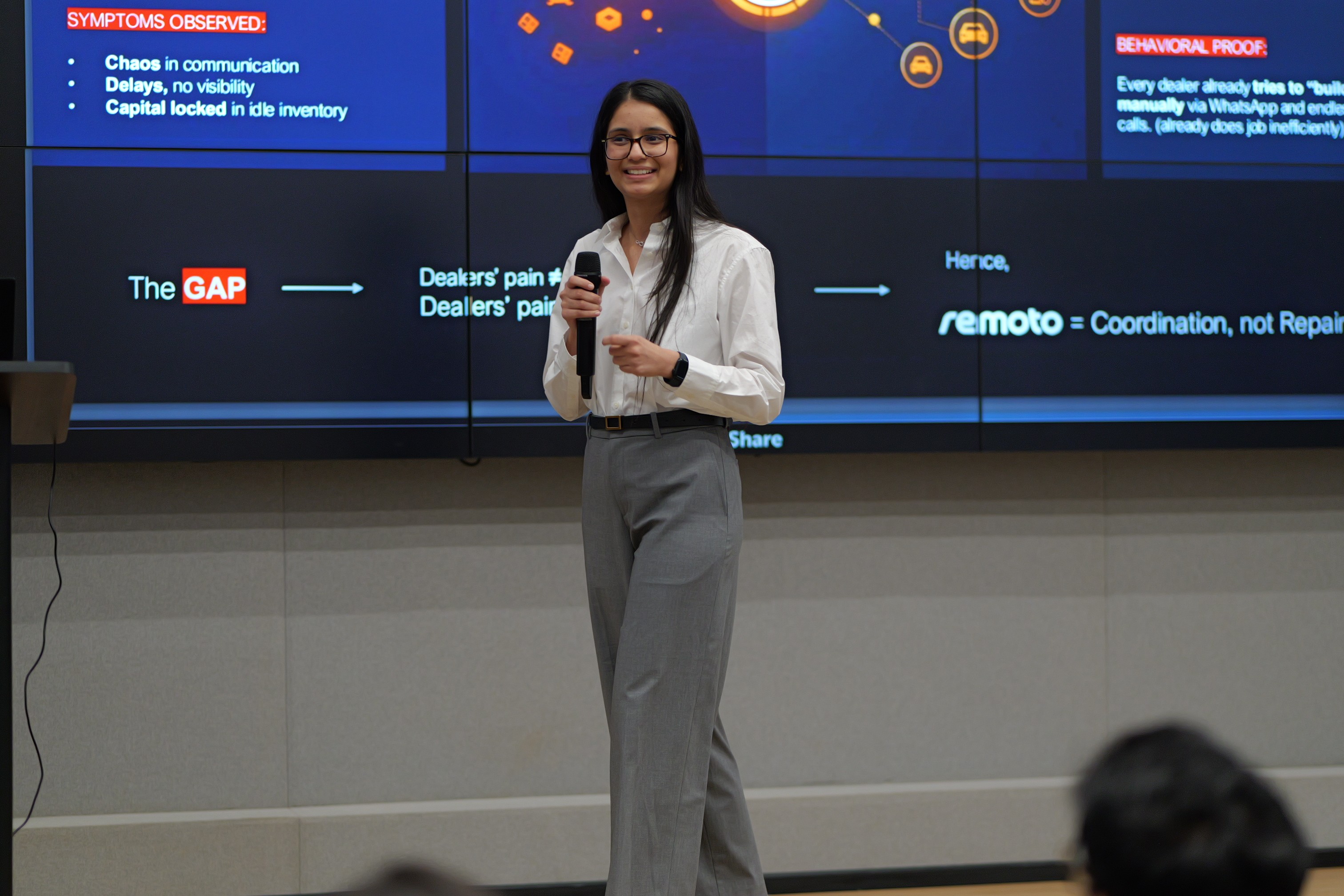
Inside the PGP HR&OS programme at Masters' Union, students work on talent acquisition sprints, culture audits, HR consulting projects, employer branding strategy exercises, and workforce analytics challenges. One term is taught in partnership with leaders from Aon, giving students exposure to real organisational problems and decision-making frameworks.
The learning environment mirrors how modern HR teams actually work today.
Why Strategic HR Careers Demand Real-World Experience:
-
Strategic HR learning benefits from live business exposure
-
HR consulting and analytics projects improve practical understanding
-
Real organisational scenarios build stronger decision-making skills
How is the Future of Work Looking in HR Leadership Roles?
India’s workforce landscape is changing rapidly. Startups are scaling faster. Global capability centres are expanding. AI adoption is changing team structures. Organisations are redesigning how they hire, retain, and develop talent.
As this happens, HR leadership careers will increasingly reward professionals who can combine behavioural understanding with business intelligence. The future CHRO may look very different from the traditional HR manager.
They may be equally comfortable discussing workforce analytics, organisational psychology, AI systems, leadership behaviour, compensation strategy, and culture transformation in the same meeting. That transition has already started.
How HR Leadership Careers Are Evolving:
-
Strategic HR careers combine business, analytics, and people understanding
-
HR leadership roles are evolving rapidly across industries in India
-
The future of HR belongs to professionals who can influence organisational decisions
HR careers are expanding beyond operations into analytics, strategy, and business leadership. Professionals who combine people understanding with data, technology, and commercial thinking will shape the future of work.
 QUERIES
Frequently Asked Questions
What is HR strategy?

HR strategy focuses on aligning people decisions with business goals such as hiring, retention, workforce planning, and organisational growth.
How can I move from HR operations to HR strategy?
Build business understanding, analytical skills, and exposure to workforce planning, people analytics, and strategic HR projects.
What skills are required for people analytics careers?
Data interpretation, communication, workforce planning, HR technology, and business understanding are key skills for people analytics roles.
What does the PGP HR&OS programme at Masters' Union cover?
The programme combines business foundations, HR strategy, people analytics, organisational psychology, HR technology, AI applications, and live industry projects.
How does the partnership with Aon benefit students in the PGP HR&OS programme?
Students learn directly from Aon leaders through specialised courses, live projects, internships, HR consulting exposure, and industry immersion opportunities.