

About us


-
See what students, mentors, alumni and recruiters say about Masters' Union University. Shared highlights and moments that reflect our culture, learning and community. Explore their voices.
OVERVIEW


-
See how Masters’ Union University is represented across leading news and media platforms. Explore articles, features, and press coverage that reflect our journey, initiatives, and growing impact in education, innovation, and industry engagement.
OVERVIEW

-
Explore the awards, rankings and accreditations that recognise the quality, impact and industry relevance of Masters' Union University programmes.
OVERVIEW

-
Explore the reports, brochures, policies, and publications that document Masters' Union University's outcomes, standards, and institutional commitments.
OVERVIEW


PROGRAMMEs
- Highlights
- Curriculum
- Admissions & Fees
- Immersions
- Entrepreneurship
- Careers
- Class Profile
PROGRAMME oVERVIEW
- Highlights
- Curriculum
- Admissions & Fees
- Immersions
- Entrepreneurship
- Career Prospects
- Class Profile
PROGRAMME oVERVIEW
- Highlights
- Curriculum & Faculty
- Immersions
- Admissions & Fees
- Career Prospects
- Class Profile
PROGRAMME oVERVIEW
- Highlights
- Curriculum
PROGRAMME oVERVIEW
- Home
PROGRAMME oVERVIEW
- Highlights
- Curriculum & Faculty
- Admissions & Fees
- Career Prospects
- Class Profile
PROGRAMME oVERVIEW
- Highlights
- Curriculum & Faculty
- Admissions & Fees
- Career Prospects
- Class Profile
PROGRAMME oVERVIEW
- Highlights
- Curriculum
- Admissions & Fees
- Career Prospects
- Class Profile
PROGRAMME oVERVIEW
PROGRAMMEs
- Highlights
- Curriculum & Faculty
- Admissions & Fees
- Career Prospects
- Class Profile
PROGRAMME oVERVIEW
- Highlights
- Curriculum & Faculty
- Admissions & Fees
- Career Prospects
- Class Profile
PROGRAMME oVERVIEW
- Highlights
- Curriculum
- Admissions & Fees
- Career Prospects
- Class Profile
PROGRAMME oVERVIEW
- Highlights
- Curriculum & Faculty
- Admissions & Fees
- Career Prospects
- Class Profile
PROGRAMME oVERVIEW
- Highlights
- Curriculum & Faculty
- Admissions & Fees
- Career Prospects
- Class Profile
PROGRAMME oVERVIEW
- Highlights
- Curriculum
- Admissions & Fees
- Career Prospects
- Class Profile
PROGRAMME oVERVIEW
- Highlights
- Curriculum
- Admissions & Fees
- Career Prospects
- Class Profile
PROGRAMME oVERVIEW
PROGRAMMES
-
PGP in
Technology & Business Management

-
PGP in
Technology & Business Management
(Young Leaders Cohort)
-
Post Graduate Diploma (Human Resources and Organisation Strategy)
-
Post Graduate Diploma (Sports Management and Gaming)
-
PGP in
Applied AI & Agentic Systems
-
PGP in Sustainability &
Business Management
-
Four Nations Global
Business Programme
- Highlights
- Curriculum
- Immersions
- Admissions & Fees
- Career Prospects
- Cohort Profile
PROGRAMME oVERVIEW
- Highlights
- Curriculum
- Immersions
- Admissions & Fees
- Career Prospects
- Faculty & Student Stories
PROGRAMME oVERVIEW
- Highlights
- Curriculum
- Immersions
- Admissions & Fees
- Career Prospects
PROGRAMME oVERVIEW
- Highlights
- Curriculum & Faculty
- Admissions & Fees
- Career Prospects
PROGRAMME oVERVIEW
- Highlights
- Curriculum & Faculty
- Admissions & Fees
- Career Prospects
PROGRAMME OVERVIEW
- Highlights
- Curriculum & Faculty
- Admissions & Fees
PROGRAMME OVERVIEW
- Highlights
PROGRAMME OVERVIEW
- Highlights
- Curriculum
- Immersions
- Admissions & Fees
- Career Prospects
- Cohort Profile
PROGRAMME oVERVIEW
PROGRAMMES
-
Post Graduate Diploma (Rise General Management)
-
Post Graduate Diploma (Capital Markets & Trading)
-
PGP in US Capital Markets &
Trading
-
PGP
in Entrepreneurship & Business Acceleration
-
Post Graduate Diploma (Rise General Management Global)
-
AI First Operator Programme
-
Bloomberg Equity Research Programme
- Highlights
- Curriculum
- Faculty
- Admissions & Fees
- Career Prospects
- Cohort Profile
PROGRAMME oVERVIEW
- Home
PROGRAMME oVERVIEW
- Highlights
- Curriculum
- Admissions & Fees
PROGRAMME oVERVIEW
- Highlights
- Curriculum
- Admissions & Fees
PROGRAMME oVERVIEW
- Highlights
- Curriculum
- Immersions
- Faculty & Coaches
- Admissions & Fees
- Career Prospects
PROGRAMME oVERVIEW
- Highlights
- Curriculum
PROGRAMME oVERVIEW
- Home
PROGRAMME oVERVIEW
- Highlights
- Global Immersions
- Curriculum
- Faculty & Coaches
- Leadership Learning
- Admissions & Fees
PROGRAMME oVERVIEW
- Highlights
- Curriculum
- Admissions & Fees
PROGRAMME oVERVIEW
PROGRAMMES
- Highlights
- Curriculum
- Beyond Classroom
- Admissions & Fees
PROGRAMME oVERVIEW
- Highlights
- Curriculum
- Beyond Classroom
- Admissions & Fees
PROGRAMME oVERVIEW
- Home
PROGRAMME oVERVIEW
- Home
PROGRAMME oVERVIEW
PROGRAMMES
- Home
PROGRAMME oVERVIEW
- Highlights
- Curriculum
- Beyond Classroom
- Admissions & Fees
PROGRAMME oVERVIEW
- Home
PROGRAMME oVERVIEW
- Home
PROGRAMME oVERVIEW
STUDENT LIFE
- Student Premises
- Amenities
- Hostel Council
oVERVIEW


- Case Union
- UnMute
- Clubs & Committees
oVERVIEW


oVERVIEW

- Healthcare
- BFSI
- Technology
- Manufacturing
- Retail
Industry
- Governments
- Universities
- Startups
- SMEs
- Large Enterprises
Industry
oVERVIEW
PROGRAMMEs
- Highlights
- Curriculum & Faculty
- Admissions & Fees
- Career Prospects
- Class Profile
PROGRAMME oVERVIEW
- Highlights
- Curriculum & Faculty
- Admissions & Fees
- Career Prospects
- Class Profile
PROGRAMME oVERVIEW
- Highlights
- Curriculum
- Admissions & Fees
- Career Prospects
- Class Profile
PROGRAMME oVERVIEW
- Highlights
- Curriculum & Faculty
- Admissions & Fees
- Career Prospects
- Class Profile
PROGRAMME oVERVIEW
- Highlights
- Curriculum & Faculty
- Admissions & Fees
- Career Prospects
- Class Profile
PROGRAMME oVERVIEW
- Highlights
- Curriculum
- Admissions & Fees
- Career Prospects
- Class Profile
PROGRAMME oVERVIEW
- Highlights
- Curriculum
- Admissions & Fees
- Career Prospects
- Class Profile
PROGRAMME oVERVIEW
PROGRAMMES
- Highlights
- Curriculum
- Immersions
- Admissions & Fees
- Career Prospects
- Cohort Profile
PROGRAMME oVERVIEW
- Highlights
- Curriculum
- Immersions
- Admissions & Fees
- Career Prospects
- Faculty & Student Stories
PROGRAMME oVERVIEW
- Highlights
- Curriculum
- Immersions
- Admissions & Fees
- Career Prospects
PROGRAMME oVERVIEW
- Highlights
- Curriculum & Faculty
- Admissions & Fees
- Career Prospects
PROGRAMME oVERVIEW
- Highlights
- Curriculum
- Immersions
- Admissions & Fees
- Career Prospects
- Cohort Profile
PROGRAMME oVERVIEW
PROGRAMMES
- Highlights
- Curriculum
- Faculty
- Admissions & Fees
- Career Prospects
- Cohort Profile
PROGRAMME oVERVIEW
- Highlights
- Curriculum
- Admissions & Fees
PROGRAMME oVERVIEW
- Highlights
- Curriculum
- Admissions & Fees
PROGRAMME oVERVIEW
- Highlights
- Curriculum
- Immersions
- Faculty & Coaches
- Admissions & Fees
- Career Prospects
PROGRAMME oVERVIEW
- Highlights
- Global Immersions
- Curriculum
- Faculty & Coaches
- Leadership Learning
- Admissions & Fees
PROGRAMME oVERVIEW
- Highlights
- Curriculum
- Admissions & Fees
PROGRAMME oVERVIEW


About Us

Undergraduate
Postgraduate
PGP in Technology & Business Management
PGP in Technology & Business Management
(Young Leaders Cohort)
Post Graduate Diploma (Human Resources and Organisation Strategy)
Post Graduate Diploma (Sports Management and Gaming)
PGP in Applied AI & Agentic Systems
PGP in Sustainability & Business Management
Four Nations Global Business Programme
Executive
Post Graduate Diploma (Rise General Management)
Post Graduate Diploma (Capital Markets & Trading)
PGP in US Capital Markets & Trading
PGP in Entrepreneurship & Business Acceleration
Post Graduate Diploma (Rise General Management Global)
AI First Operator Programme
Bloomberg Equity Research Programme
Family Business
Immersions
1:1 Executive Coaching
Careers
Innovations
Faculty
MU Ventures
Enterprise L&D
Student Life
Jobs
Become a Master
Merch Store
events
For Companies
Blog
Coach LMS

Connect with Counsellor


Download Brochure
Executive Leadership Programme in
AI & GCC Transformation
An industry-led 6 months Applied AI programme for GCC transformation & leadership.


Executive Leadership Programme in AI & GCC Transformation
Format
Offline/Online
Sat-Sun classes
Commencement Date
Aug '26
Application starting soon
Eligibility
Min. 15 years of GCC experience
Duration
6 Months
Inclusive of industry-led live projects
 Highlights
 Admissions
& Fees
Admissions
& Fees
Master Essential AI Tools for GCC Leadership




















How This Programme Elevates Your GCC Transformation
Learn from industry leaders to lead next-gen global
capability centers by
tackling real GCC use
cases with AI integration.
The GCC Executive Club


Visit GCCs like Costco, Microsoft, to name a few, and connect with leaders.
Get personalised mentorship by GCC leaders who are running the business.
Access curated C-suite GCC opportunities you won't find on job boards.
Build hands-on AI fluency with enterprise platforms, guided by practitioners.

Dr. Dinesh Kumar Murugesan
Programme Chairperson

Dr. Dinesh Kumar Murugesan is the CEO of EzyAct Consulting
, a global GCC enabler operating across India, the US, Europe,
the Middle East, Asia, and Australia.
With nearly three decades of experience, he has led enterprise transformation across organizations such as TCS, Deloitte, Bank of America, and dsm-firmenich. A recognized expert in building and scaling Global Capability Centers, he has driven innovation, talent strategy, and business impact at scale.



Get Real Insights from
GCC Immersions
Gain exclusive insights from the global exposure of AI ecosystem to elevate and transform GCCs

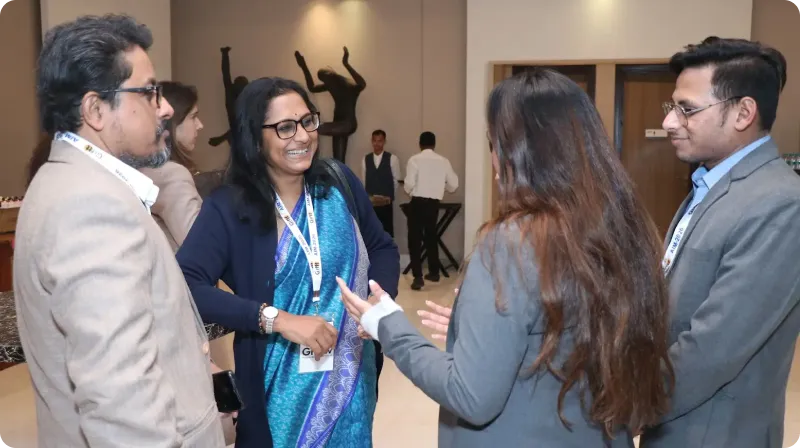
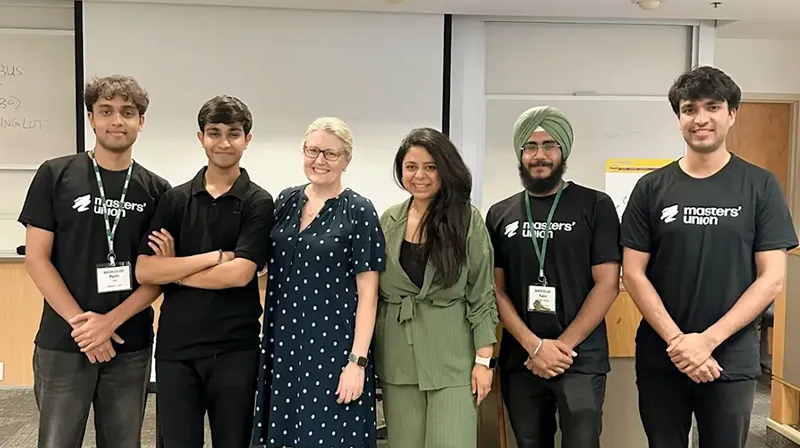
Infosys: Enterprise AI, GCC Operating Models
Engage with senior delivery and transformation leaders to understand how AI is embedded into operating models, talent structures, and large-scale enterprise workflows.

Microsoft: Cloud & Tech with Responsible AI
Interact with AI architects and enterprise leaders to understand how GCCs build, govern, and scale AI solutions using Microsoft’s ecosystem.
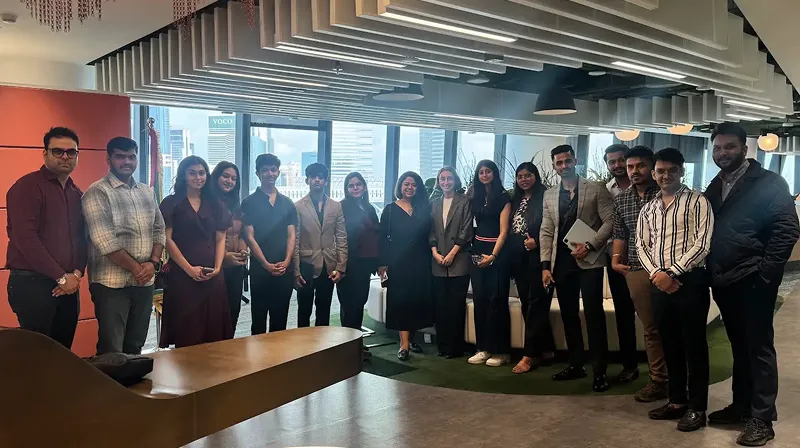
Amazon (AWS): AI Infrastructure & Use Cases
Network with AWS’s cloud and AI specialists to learn how GCCs launch, optimise, and manage AI systems at scale with speed and resilience.
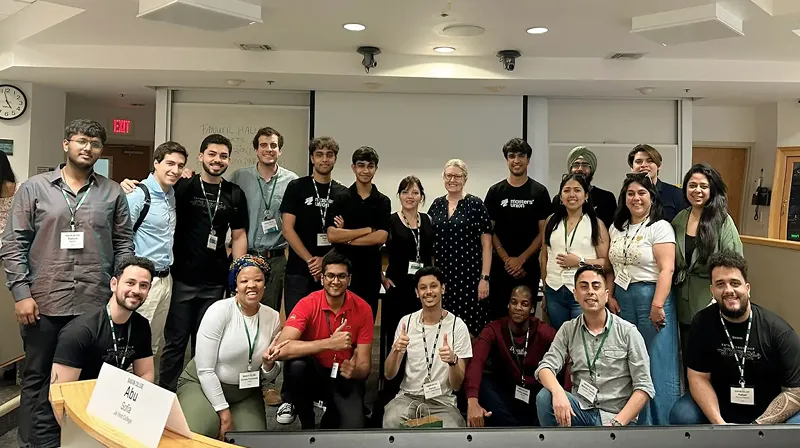
Deloitte: AI Strategy & Decision-Making
Gain insights on Deloitte’s approach to AI strategy, risk management, and transformation advisory and align AI initiatives with GCC business outcomes.
Career-Defining
Outcomes to Expect
Gain practical skills and hands-on experience to lead GCC
transformation
and AI-driven initiatives.

Elevate your portfolio with real AI initiatives that earn board-level recognition
Develop CXO-level fluency in ROI, scalability and transformation metrics
Turn your GCC experience into a globally recognised mandate for bigger opportunities
Network with high-caliber GCC leadership for collaboration & future perks
Redefine real GCC challenges with AI solutions with a board-ready capstone


Reach out to the Support Team

Email ID

Mobile no.

Innovative Curriculum for
Future GCC Leaders
Programme Flow
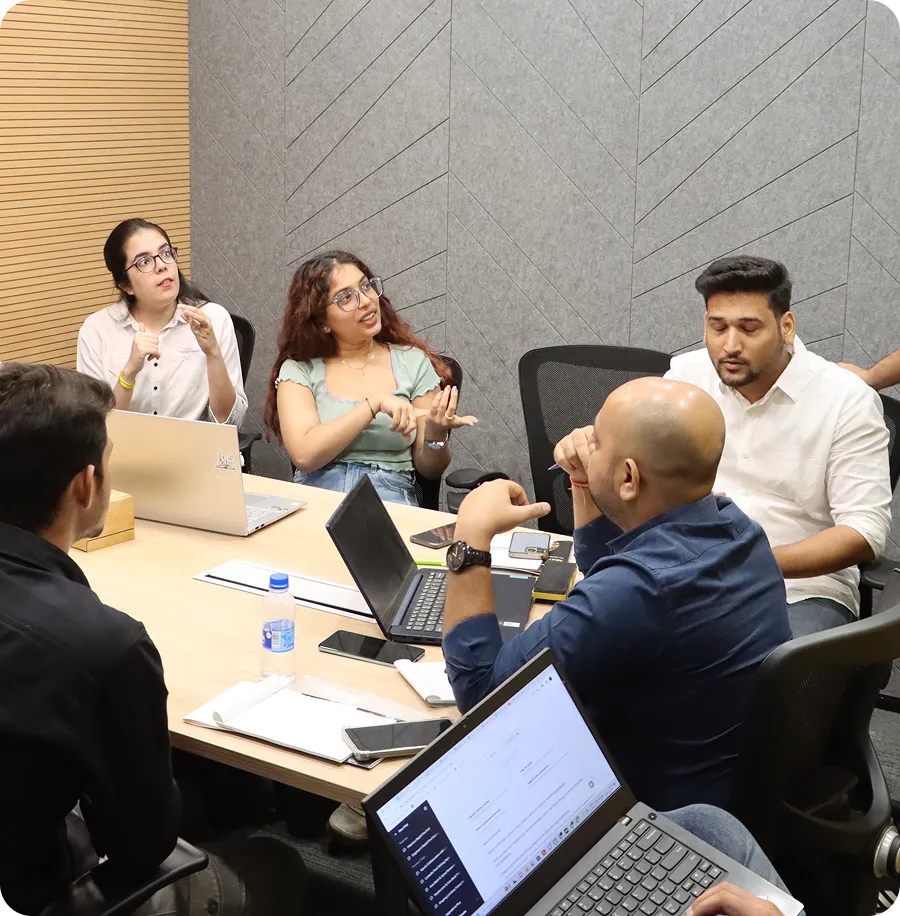
How to Build Executive Leadership Excellence?

- Core Learning
- Tools and Frameworks
- Skills Acquired
How to build executive presence in C-suite conversations?
- Drive board decisions using value-focused narratives
- Position GCC strategy as enterprise growth lever
- Influence senior stakeholders with financial clarity
- Command credibility in high-stakes discussions
How to navigate crises with data-driven confidence?
- Make high-impact decisions under uncertainty
- Minimize risk through predictive insights
- Stabilize teams during volatility
- Convert ambiguity into strategic advantage
How to build leadership succession frameworks?
- Ensure leadership continuity during scale and transition
- Reduce dependency on critical individuals
- Build future-ready leadership pipelines
- Strengthen long-term organizational resilience
How to influence across geographies without authority?
- Align global stakeholders without formal power
- Accelerate decisions across matrixed structures
- Build cross-border leadership influence
- Drive collaboration across diverse functions
How to lead distributed teams with strategic alignment?
- Align global teams to enterprise priorities
- Improve execution across locations
- Increase accountability in hybrid structures
- Deliver consistent performance at scale
Frameworks & Methods
- 5P Executive Leadership Model
- Human + AI Leadership Model
- ADKAR Model
- S Curve Model
- Resilience Model
AI Tools for Transformation



- Drive strategic leadership in complex, high-growth environments
- Build organisational change readiness in dynamic markets
- Deliver narratives focused on ROI and business impact
- Design crisis management frameworks using predictive analytics
- Transition from functional expert to P&L business leader
How to a Set Up GCC?
- Core Learning
- Tools and Frameworks
- Skills Acquired
How to build financial models proving value beyond arbitrage?
- Quantify enterprise value beyond labor savings
- Translate capability maturity into financial impact
- Model innovation ROI and speed-to-market gains
- Secure executive investment through data-backed projections
How to structure tax-optimised legal entities globally?
- Optimize global tax efficiency within compliant structures
- Reduce cross-border financial exposure
- Strengthen transfer pricing defensibility
- Improve post-tax profitability
How to define an effective location strategy?
- Maximize talent-to-cost advantage
- De-risk operations through geographic diversification
- Strengthen access to innovation ecosystems
- Enable long-term scalability
How to design governance ensuring sponsorship and autonomy?
- Accelerate decision-making velocity
- Strengthen executive oversight without micromanagement
- Align KPIs with enterprise priorities
- Safeguard operational autonomy
How to position GCC as a capability hub, not cost centre?
- Elevate GCC contribution to enterprise growth
- Increase ownership of high-value work
- Drive measurable innovation outcomes
- Strengthen strategic relevance
How to align GCC with enterprise digital & business strategy?
- Integrate GCC into transformation roadmaps
- Strengthen digital capability depth
- Improve cross-border execution alignment
- Accelerate enterprise modernization
Frameworks & Methods
- The 7-Stage GCC Lifecycle Model
- GCC Value Pyramid
- 5-Factor Location Scorecard
AI Tools for Transformation




- Quantify innovation velocity and capability differentiation
- Navigate transfer pricing and tax treaty optimization
- Balance global control with local agility
- Build executive sponsorship through strategic storytelling
- Master multi-year ROI projections and cost structures
How to Lead GCC Transformation Through Process Redesign & AI‑Enabled Thinking?
- Core Learning
- Tools and Frameworks
- Skills Acquired
How to align transformation with long-term strategic goals?
- Connect transformation investments to enterprise value drivers
- Prioritize initiatives that accelerate strategic outcomes
- Eliminate effort that doesn’t support business direction
- Strengthen GCC relevance in enterprise transformation
How to identify processes for redesign and readiness?
- Surface high-friction, low-value process bottlenecks
- Target processes with highest automation and redesign potential
- Reduce change risk through readiness assessment
- Align transformation scope with stakeholder capacity
How to build business cases with measurable impact?
- Quantify impact beyond efficiency gains
- Link process improvements to revenue, speed, and risk reduction
- Secure funding through outcome-driven narratives
- Track value realization with measurable KPIs
How to map stakeholders and drive structured buy-in?
- Increase adoption through early stakeholder alignment
- Reduce transformation resistance proactively
- Strengthen cross-functional ownership of change
- Improve implementation success rates
How to prioritise using impact–effort for max value?
- Focus resources on highest-value opportunities
- Avoid low-impact transformation distractions
- Accelerate quick wins while enabling long-term gains
- Optimize portfolio-level transformation ROI
How to sustain change with metrics, adoption, and discipline?
- Prevent value leakage post-implementation
- Institutionalize new ways of working
- Reinforce behavior change with performance metrics
- Build a culture of continuous improvement
Frameworks & Methods
- Control-Impact Matrix
- 7 Ingredients of Culture Change
- Solution-Effect Diagram
- ADKAR (Prosci)
- Templates for stakeholder mapping, communication planning, and process assessment
AI Tools for Transformation





- Design structured transformation roadmaps aligned with business priorities
- Identify high-impact opportunities for process improvement and automation
- Build practical MVPs with clear success metrics and adoption plans
- Drive change management, influence key stakeholders and manage resistance
- Apply proven frameworks and tools to deliver sustainable transformation outcomes in GCC environments
How to Create the Right Talent Strategy in GCC?
- Core Learning
- Tools and Frameworks
- Skills Acquired
How to shift from cost hiring to capability-led talent?
- Prioritize skills that drive strategic differentiation
- Increase impact-per-hire, not just headcount efficiency
- Align talent supply with long-term capability goals
- Strengthen innovation capacity through targeted hiring
How to map future skills and talent roadmaps
- Anticipate emerging capability gaps early
- Align hiring plans with enterprise transformation priorities
- Reduce future skill shortages
- Strengthen workforce readiness for new tech adoption
How to design retention for modern workforce needs?
- Reduce regrettable attrition
- Improve engagement and productivity outcomes
- Strengthen employer value proposition
- Increase long-term workforce stability
How to build career paths for mobility and growth?
- Increase internal mobility across functions and geographies
- Build leadership pipelines from within
- Strengthen succession readiness
- Improve employee growth visibility
How to compete for top AI/ML talent globally?
- Attract scarce digital and AI capabilities
- Differentiate employer brand in competitive markets
- Improve offer acceptance rates
- Reduce time-to-hire for critical roles
Frameworks & Methods
- 3B Talent Sourcing Model
- The 7C Model for GCC Talent Excellence
- GCC Talent Maturity Model
AI Tools for Transformation







- Design enterprise workforce strategies that build differentiated, future-ready capabilities
- Implement AI-powered skills forecasting to drive strategic workforce planning
- Build data-driven attraction and compensation strategies to compete in global talent markets
- Create transparent career progression frameworks that enable leadership pipelines and mobility
- Master turnover prediction and skills gap analysis for proactive talent risk management
How to Drive Business Innovation in GCCs?
- Core Learning
- Tools and Frameworks
- Skills Acquired
How to drive innovation for long-term GCC advantage?
- Link innovation efforts to business outcomes and strategic mandates
- Position GCCs as value creation hubs, not just cost centres
- Align innovation goals with global enterprise transformation agendas
- Strengthen long-term differentiation through capability-led innovation
How to overcome cultural and structural barriers?
- Break siloed decision-making and encourage cross-functional collaboration
- Shift leadership mindset from risk-avoidance to experimentation
- Embed innovation KPIs into leadership and team performance metrics
- Create psychological safety to challenge legacy processes
How to build a customer-first, curiosity mindset?
- Anchor innovation around real customer pain points and journeys
- Encourage problem discovery before solution building
- Promote data-driven curiosity and insight-led decision making
- Strengthen user-centric thinking across product, ops, and strategy teams
How to enable low-risk pilots and rapid learning?
- Run controlled pilots to validate ideas before full-scale deployment
- Reduce innovation risk through iterative testing and feedback loops
- Accelerate learning through rapid prototyping and agile sprints
- Institutionalize a test–learn–scale culture
How to create pods and forums to test ideas?
- Set up cross-functional innovation pods for focused problem-solving
- Launch internal idea forums to crowdsource high-impact solutions
- Build incubator-style environments to test scalable concepts
- Enable faster decision-making through decentralized innovation governance
How to link innovation to revenue and efficiency?
- Measure innovation through productivity and cost-efficiency gains
- Link pilots to operational effectiveness and process optimization
- Demonstrate revenue impact through new products and AI-led capabilities
- Strengthen executive buy-in through quantified business value outcomes
Frameworks & Methods
- ADKAR (Prosci)
- Impact–Effort Matrix
- Brainwriting (6‑3‑5 Method)
- Affinity Mapping
- Innovation Funnel
- Interrelationship Diagram
AI Tools for Transformation


- Design simple, effective innovation operating models tailored to GCC environments
- Build balanced innovation portfolios spanning efficiency, customer-centric improvements, and new concepts
- Create experimentation cultures with fast learning cycles and clear decision checkpoints
- Measure innovation impact through customer value, efficiency gains, and new opportunities
- Secure leadership sponsorship and cross-team support and cross-team support while overcoming biases that block innovation
How to Influence Global Headquarters?
- Core Learning
- Tools and Frameworks
- Skills Acquired
How to secure board-level visibility for key initiatives?
- Elevate GCC priorities to board agendas
- Influence enterprise investment decisions
- Increase visibility of transformation outcomes
- Strengthen strategic credibility with CXOs
How to reposition GCC as a strategic business partner?
- Shift perception from execution arm to value creator
- Increase ownership of enterprise-critical initiatives
- Strengthen cross-functional collaboration with HQ
- Embed GCC in growth and innovation agendas
How to navigate HQ–GCC dynamics and budget politics?
- Strengthen budget negotiation leverage
- Reduce decision friction across geographies
- Align competing priorities across stakeholders
- Protect strategic initiatives during cost pressures
How to communicate impact in revenue and market terms?
- Quantify GCC impact in revenue and margin terms
- Translate operational metrics into growth indicators
- Strengthen CFO-level reporting credibility
- Improve funding approval rates
How to embed GCC into enterprise ESG strategy?
- Integrate ESG metrics into GCC performance dashboards
- Strengthen ethical AI and governance positioning
- Increase enterprise sustainability contributions
- Enhance global brand reputation through responsible operations
Frameworks & Methods
- The 7I Model for Driving HQ Influence
- HQ Stakeholder Influence Map
- GCC-HQ Influence Maturity Model
AI Tools for Transformation










- Master executive storytelling and data-driven communication for business impact
- Build stakeholder influence maps across HQ functions to drive alignment
- Design transformation communication and resistance management strategies
- Quantify business impact in CFO language for strategic decision-making
- Position GCC as an ESG and ethical AI leader in the enterprise ecosystem
Meet Our Masters
Learn from those who’ve cracked the code of transforming a GCC with intelligent systems.


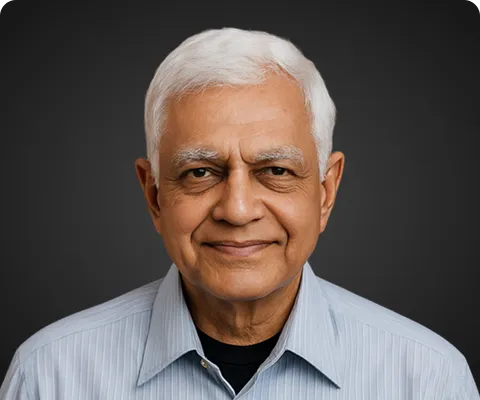
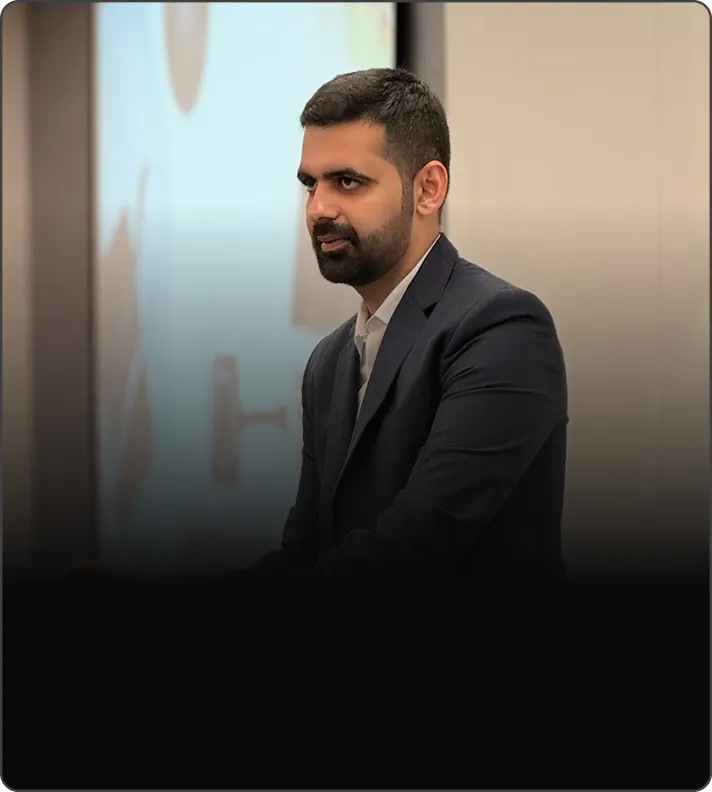
Dinesh Kumar Murugesan
Programme Chairperson


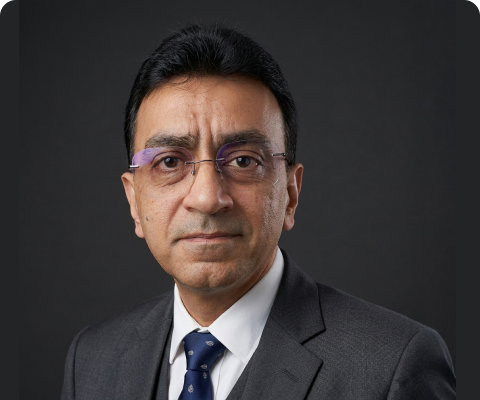
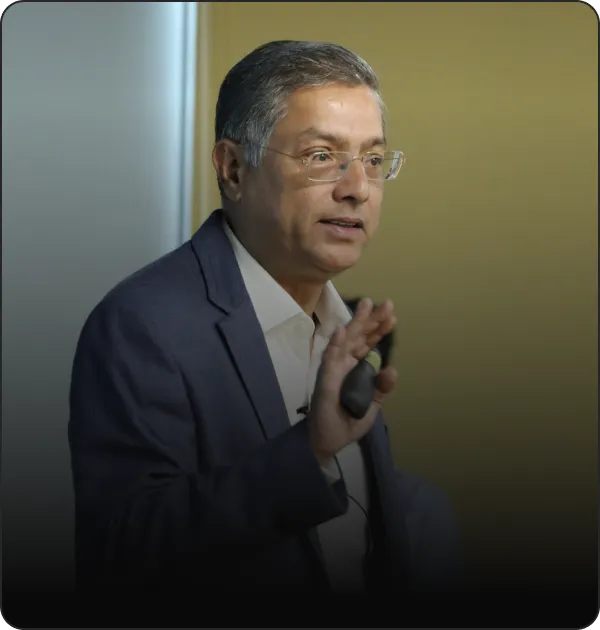
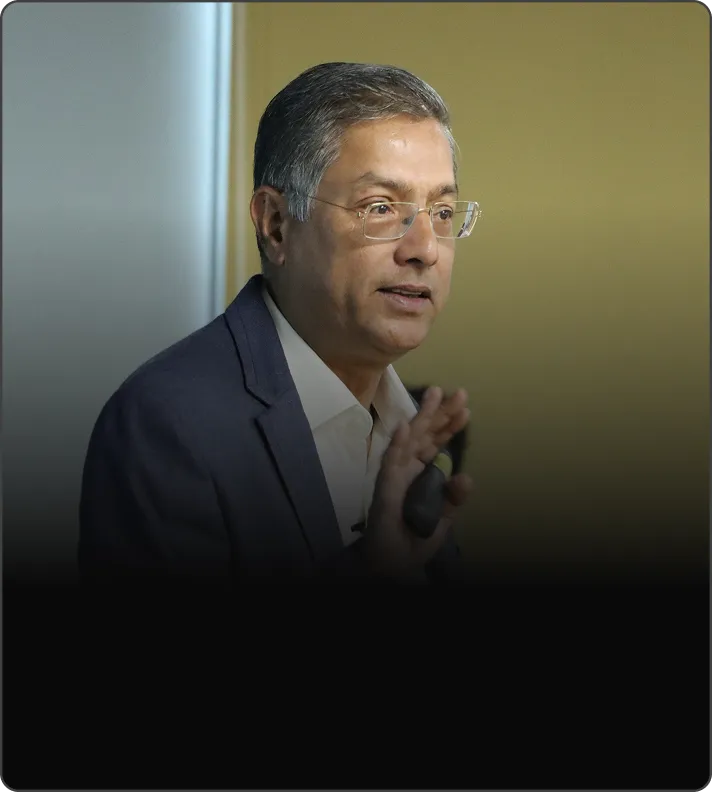
Rajeev Mall
CEO

Sumit Bhatia
Senior People Partner




Vineet Dwivedi
Sr. Vice President


Bhawani Prasad Chavali
CEO; Ex-L&D Director


Dr. Murali Padmanabhan
Board Advisor










Dinesh Kumar Murugesan
Programme Chairperson
Rajeev Mall
CEO
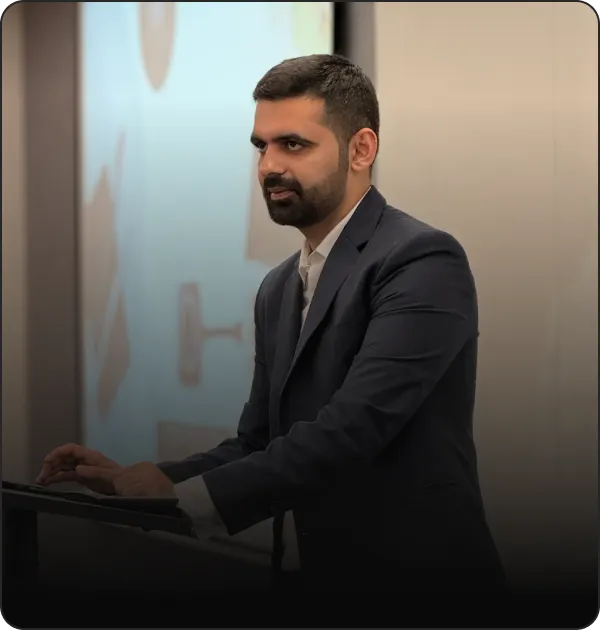
Sumit Bhatia
Senior People Partner
Vineet Dwivedi
Sr. Vice President
Bhawani Prasad Chavali
CEO; Ex-L&D Director
Dr. Murali Padmanabhan
Board Advisor







Enrollment Checklist
Admissions Criteria



Application & Fee
| Rounds | Application Deadline | Personal Interview *(Dates may vary) |
Application Fees | Status | Action |
|---|---|---|---|---|---|
| Round 1 | 15th June '26 | Coming Soon | INR 1,500/- | Application open | Apply Now |
01.
Online
Application
Form


01.
Online Application Form
Candidates must complete and submit the online application form to be considered for the Executive Leadership Programme in AI & GCC Transformation
Requirements:
-
Personal Details
-
Professional Details
-
Updated Resume
Note: As part of the application, you will also receive a prompt for an essay. You may choose to submit a video essay (duration: 2 minutes) or a text-based essay (up to 200 words)
02.
1:1
Interview


02.
1:1 Interview
1:1 Interview
Shortlisted candidates will be invited to attend an online interaction. This conversation allows us to understand the applicant better and gives candidates clarity on various aspects of the Executive Leadership Programme in AI & GCC Transformation. Our faculty comes from academia and industry, along with representatives from the core team.
03.
Admission
Decision


03.
Admission Decision
Admission Decision
After the evaluation, the Admissions Office will review the application again before presenting it to the Admissions Committee for the final decision. Candidates will be notified of the outcome of their application via email.
Fee Structure
| Fee Timelines |
Amount |
Due Date |
|---|---|---|
| Admission Offer Acceptance | INR 80,000/- | Within 30 days of offer |
| Programme Commencement | INR 4,50,000 | Before start of classes |
| Mid Programme | INR 4,50,000 | After 2 months |
| Total Fee | INR 9,80,000/- |

Reach out to the Support Team
Email ID
Mobile no.
2-Days On-campus
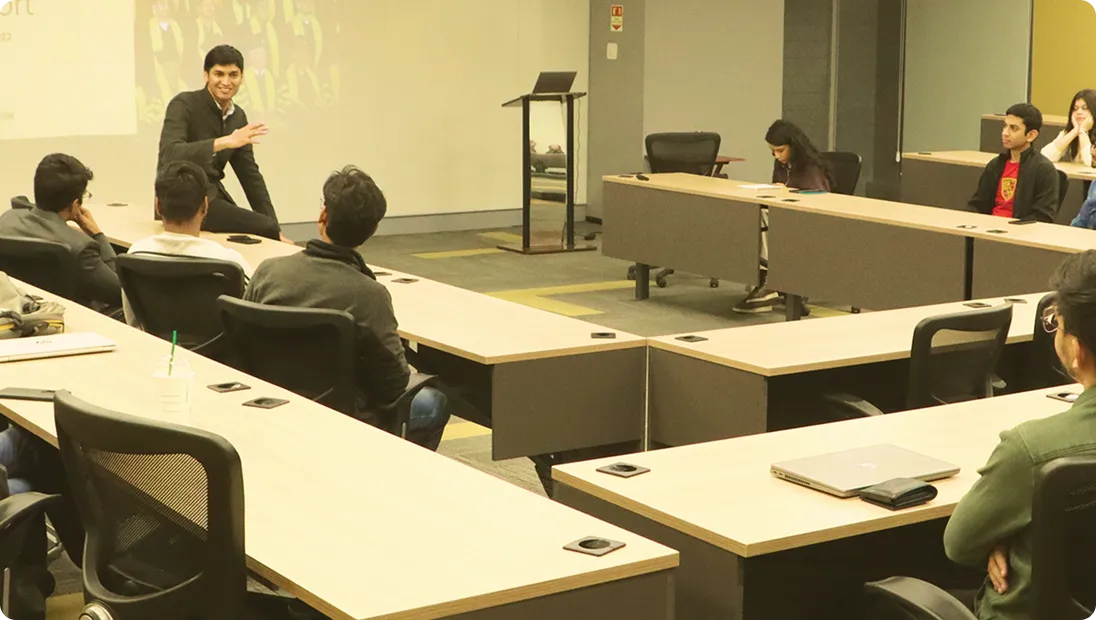
Quarterly Executive Residencies
Every quarter, step away from delivery and into closed-door, high-signal leadership immersions:
- CXO Closed-Room Sessions: Off-the-record conversations with product and AI leaders from Zomato, Swiggy, Flipkart; focused on AI unit economics, scale decisions, and 2026 product bets
- Peer Network Building: Build lasting relationships with senior PMs, founders, and AI leaders operating at enterprise scale

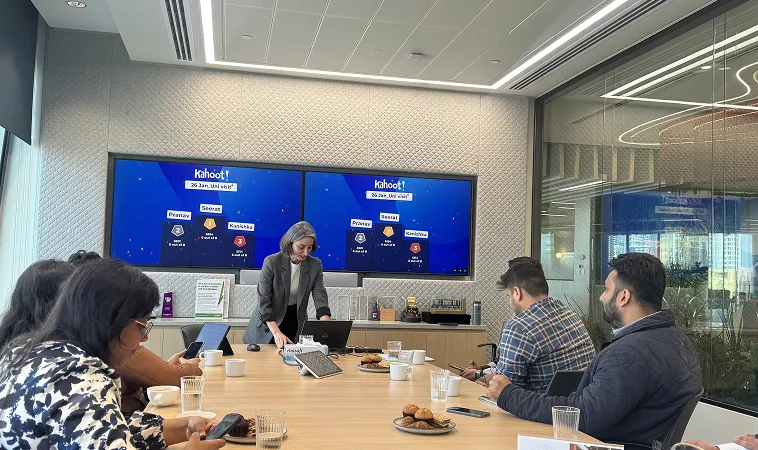
Industry Immersion
Gain insights from Industry Leaders on how technology is shaping the future.


ChapterApps
Explore the role of AI in learning and the future of work

CARPL.ai
Learn how AI is transforming healthcare and radiology

Rabbit AI
Unlock secrets to a career in AI and data science
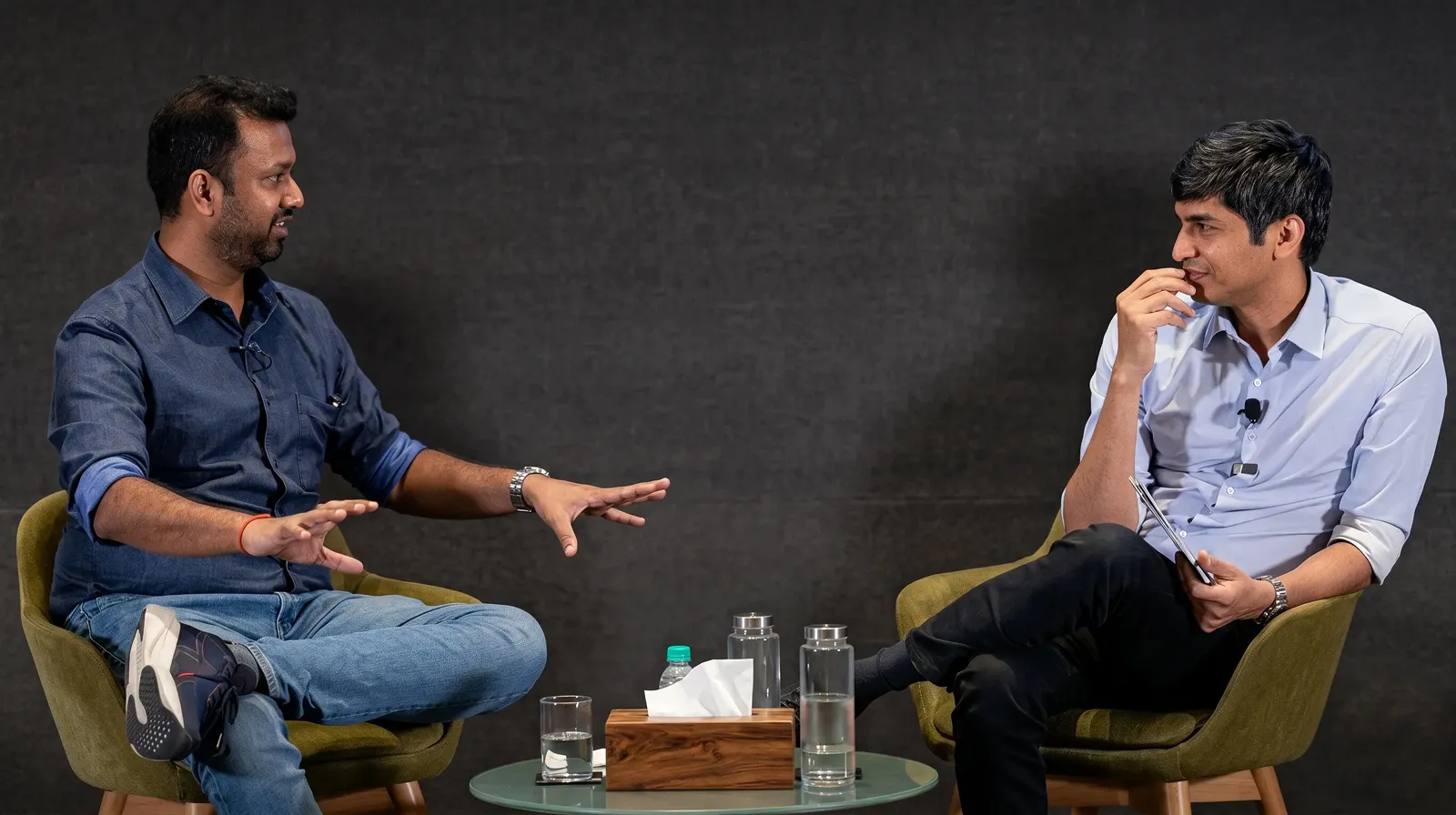
CoinSwitch
Learn how to build your own cryptocurrency

PwC
Discover AI trends and their economic disruptions
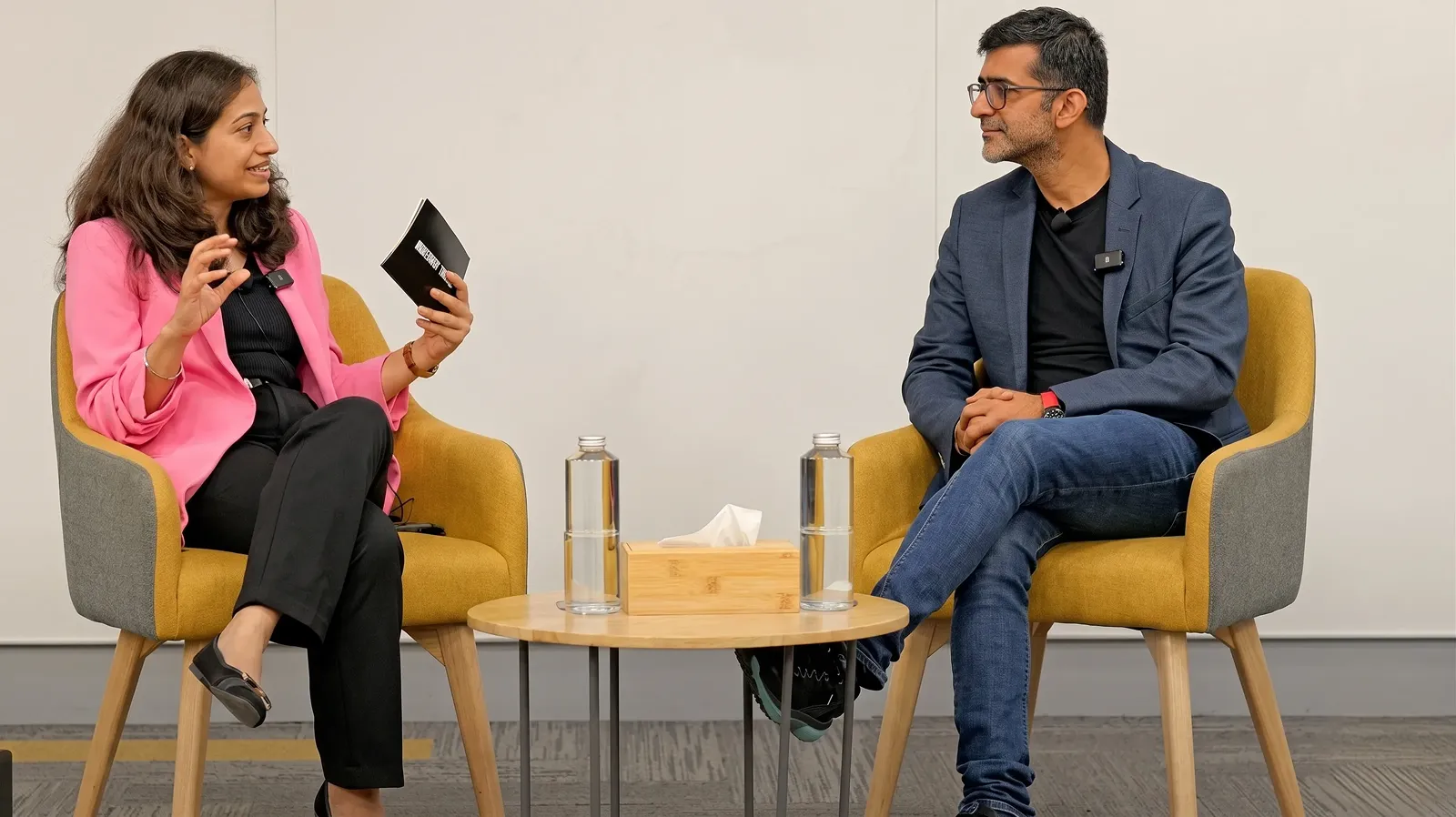
IQOO
Discover how AI is transforming the smartphone industry
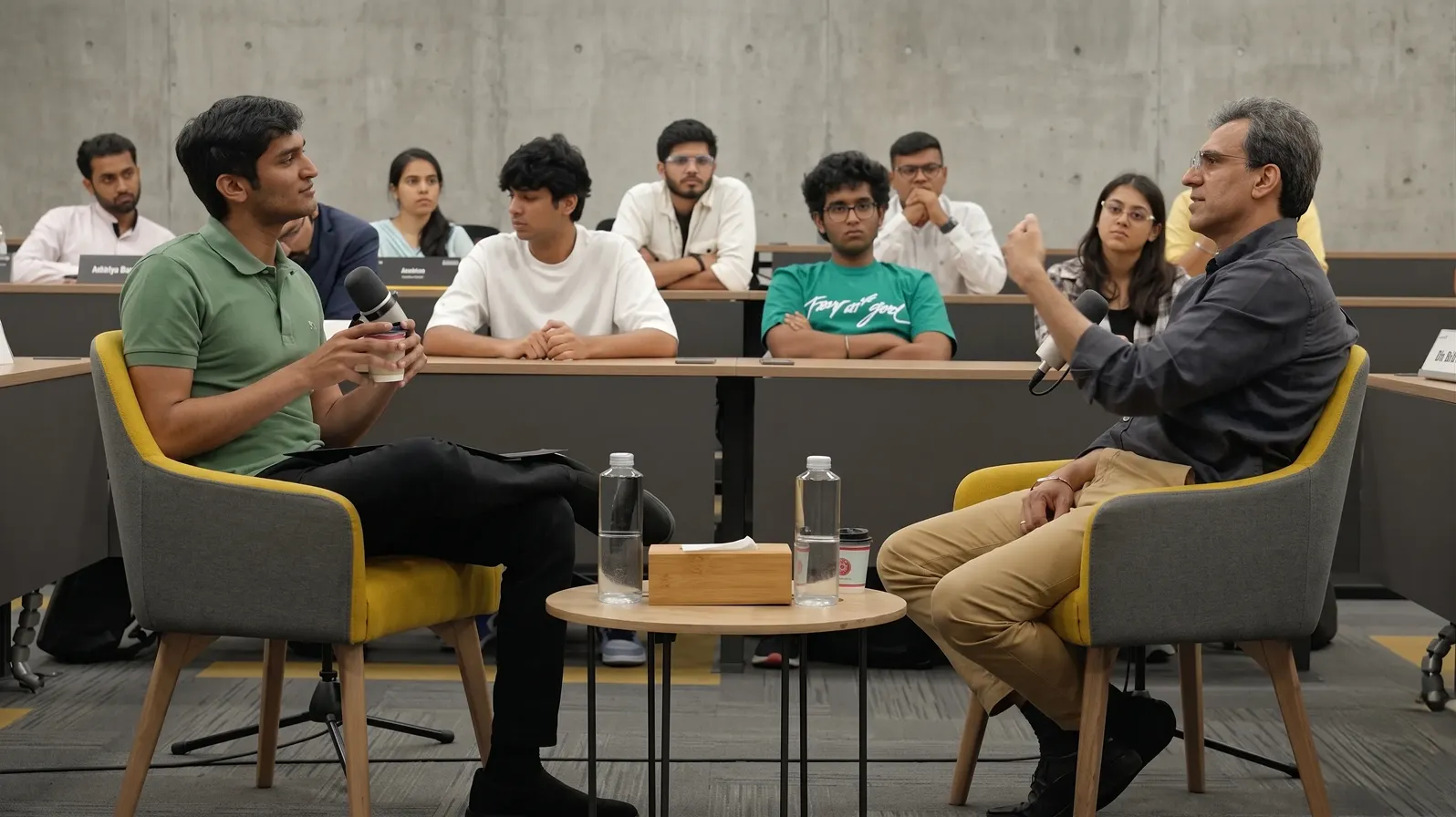
Naukri.com
Learn how technology has revolutionised hiring

Hike
Explore the future of the gaming industry in India
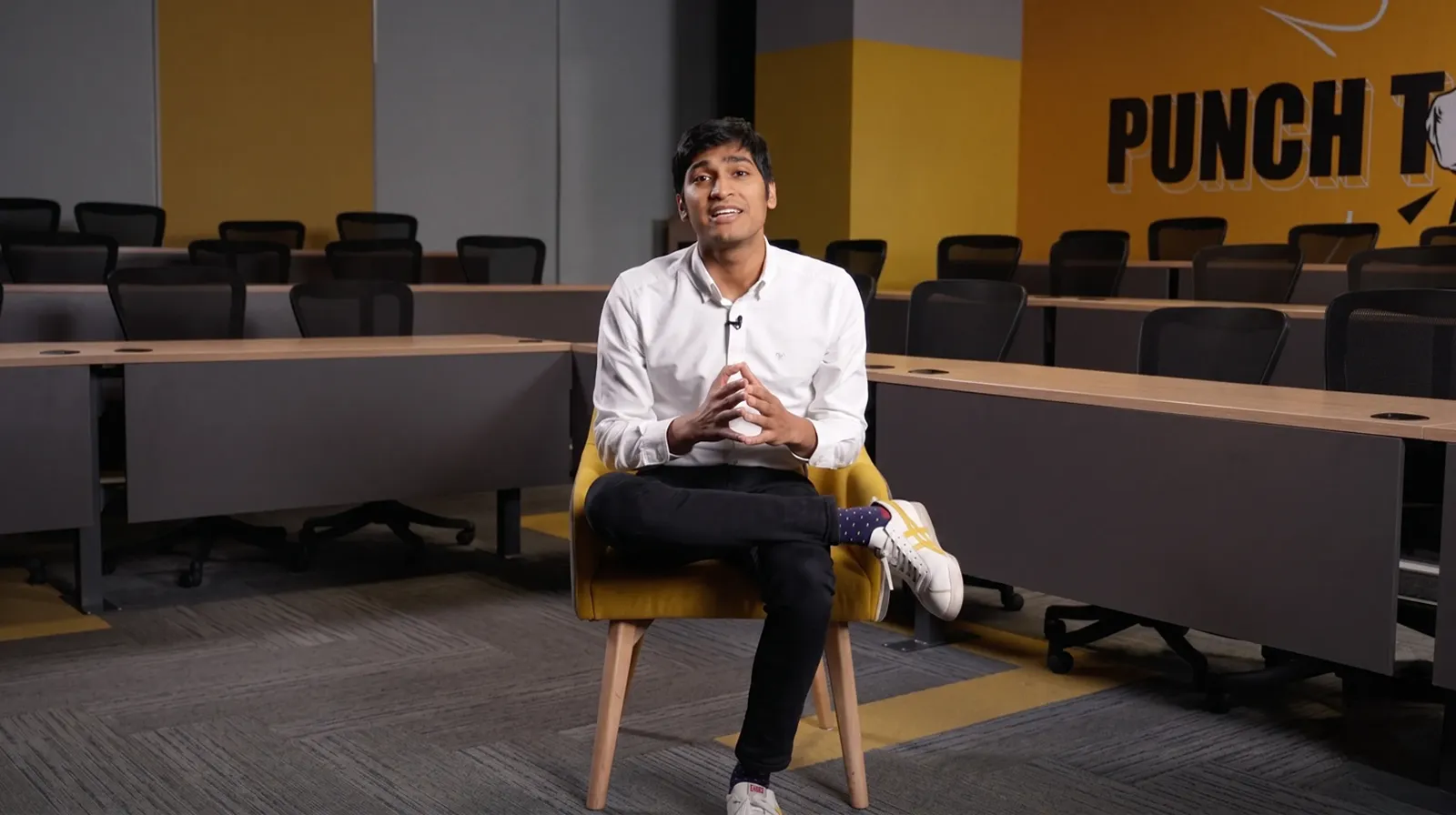
Masters' Union University
Explore AI in personalised education
Solve Your Chosen
Organisation’s AI Challenge as Capstones
Pick an organisation of your choice to audit AI readiness, design production-ready systems, and deliver a board approved roadmap with measurable ROI.
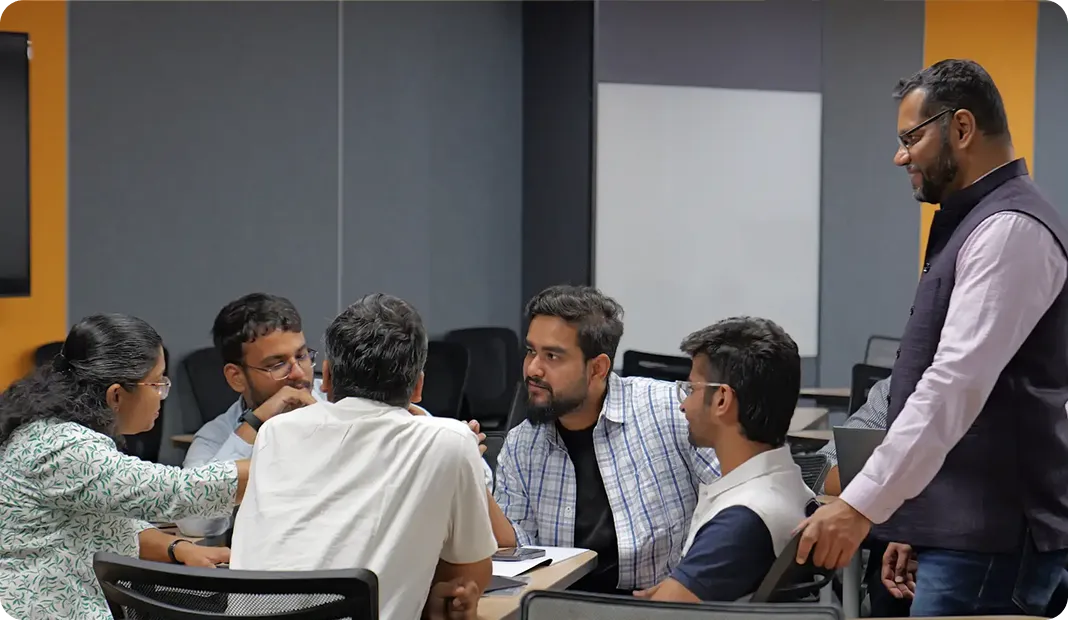
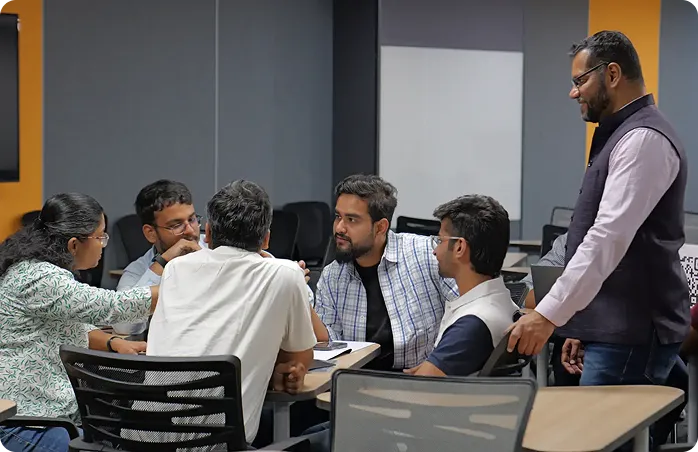
Global Immersions on AI Ecosystem
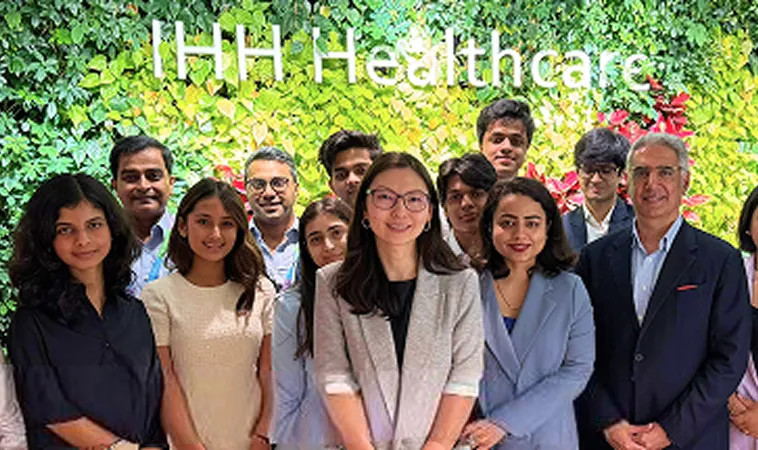
Singapore: Finance, Sustainability & Global Markets
Explore Singapore’s leadership in fintech, sustainable finance and digital health. Visit leading organizations such as Singtel, Agoda, and IHH Healthcare & network with global executives and AI-first startup founders
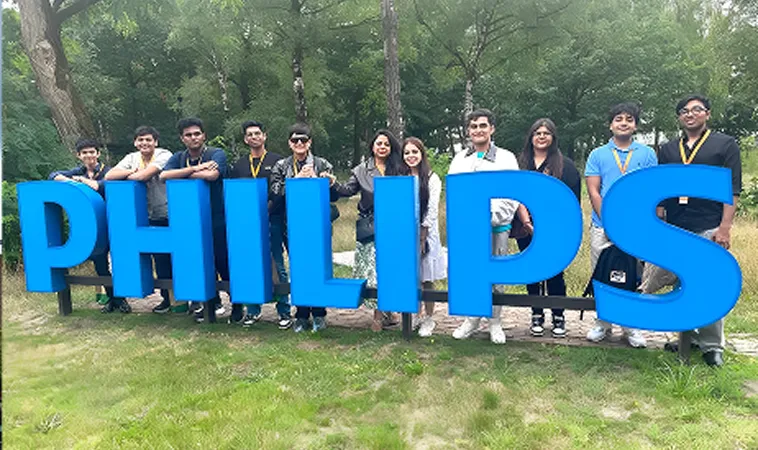
Europe: International Governance, Renewable Energy & Auto-Engineering
Explore Europe’s AI applications in industrial automation, energy optimization, healthtech R&D & intelligent financial systems. Visiting institutes like Philips R&D HQ, IÉSEG Campus and more. Connect with leaders at United Nations HQ & more
UAE: AI-Driven Smart Infrastructure & Digital Economy
Witness UAE’s achievements in smart infrastructure, aviation, smart-city operations, & digital governance. Visit organizations such as Emirates Group, & Smart Dubai initiatives. Meet AI policymakers & startup founders to explore AI-driven nation-building

Japan: Research & Development at Scale
Unravel Japan’s strategies in advanced manufacturing, robotics, precision engineering, and industrial R&D. Visit Nissan Tochigi Plant, Kyoto Research Park, Daikin R&D Centre, Rakuten. Meet industry leaders and R&D scientists through networking forums
Reach out to the Support Team
Email ID
Mobile no.




Frequently Asked
Questions
Loading FAQs...
