


About us


-
See what students, mentors, alumni and recruiters say about Masters' Union University. Shared highlights and moments that reflect our culture, learning and community. Explore their voices.
OVERVIEW


-
See how Masters’ Union University is represented across leading news and media platforms. Explore articles, features, and press coverage that reflect our journey, initiatives, and growing impact in education, innovation, and industry engagement.
OVERVIEW
-
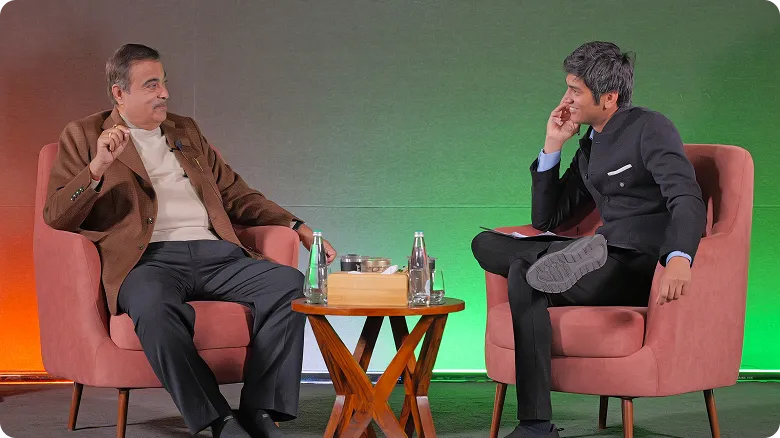
Explore the awards, rankings and accreditations that recognise the quality, impact and industry relevance of Masters' Union University programmes.
OVERVIEW

-
Explore the reports, brochures, policies, and publications that document Masters' Union University's outcomes, standards, and institutional commitments.
OVERVIEW


PROGRAMMEs
- Highlights
- Curriculum
- Admissions & Fees
- Immersions
- Entrepreneurship
- Careers
- Class Profile
PROGRAMME oVERVIEW
- Highlights
- Curriculum
- Admissions & Fees
- Immersions
- Entrepreneurship
- Career Prospects
- Class Profile
PROGRAMME oVERVIEW
- Highlights
- Curriculum & Faculty
- Immersions
- Admissions & Fees
- Career Prospects
- Class Profile
PROGRAMME oVERVIEW
- Highlights
- Curriculum
PROGRAMME oVERVIEW
- Home
PROGRAMME oVERVIEW
- Highlights
- Curriculum & Faculty
- Admissions & Fees
- Career Prospects
- Class Profile
PROGRAMME oVERVIEW
- Highlights
- Curriculum & Faculty
- Admissions & Fees
- Career Prospects
- Class Profile
PROGRAMME oVERVIEW
- Highlights
- Curriculum
- Admissions & Fees
- Career Prospects
- Class Profile
PROGRAMME oVERVIEW
PROGRAMMEs
- Highlights
- Curriculum & Faculty
- Admissions & Fees
- Career Prospects
- Class Profile
PROGRAMME oVERVIEW
- Highlights
- Curriculum & Faculty
- Admissions & Fees
- Career Prospects
- Class Profile
PROGRAMME oVERVIEW
- Highlights
- Curriculum
- Admissions & Fees
- Career Prospects
- Class Profile
PROGRAMME oVERVIEW
- Highlights
- Curriculum & Faculty
- Admissions & Fees
- Career Prospects
- Class Profile
PROGRAMME oVERVIEW
- Highlights
- Curriculum & Faculty
- Admissions & Fees
- Career Prospects
- Class Profile
PROGRAMME oVERVIEW
- Highlights
- Curriculum
- Admissions & Fees
- Career Prospects
- Class Profile
PROGRAMME oVERVIEW
- Highlights
- Curriculum
- Admissions & Fees
- Career Prospects
- Class Profile
PROGRAMME oVERVIEW
PROGRAMMES
-
PGP in
Technology & Business Management

-
PGP in
Technology & Business Management
(Young Leaders Cohort)
-
Post Graduate Diploma (Human Resources and Organisation Strategy)
-
Post Graduate Diploma (Sports Management and Gaming)
-
PGP in
Applied AI & Agentic Systems
-
PGP in Sustainability &
Business Management
-
Four Nations Global
Business Programme
- Highlights
- Curriculum
- Immersions
- Admissions & Fees
- Career Prospects
- Cohort Profile
PROGRAMME oVERVIEW
- Highlights
- Curriculum
- Immersions
- Admissions & Fees
- Career Prospects
- Faculty & Student Stories
PROGRAMME oVERVIEW
- Highlights
- Curriculum
- Immersions
- Admissions & Fees
- Career Prospects
PROGRAMME oVERVIEW
- Highlights
- Curriculum & Faculty
- Admissions & Fees
- Career Prospects
PROGRAMME oVERVIEW
- Highlights
- Curriculum & Faculty
- Admissions & Fees
- Career Prospects
PROGRAMME OVERVIEW
- Highlights
- Curriculum & Faculty
- Admissions & Fees
PROGRAMME OVERVIEW
- Highlights
PROGRAMME OVERVIEW
- Highlights
- Curriculum
- Immersions
- Admissions & Fees
- Career Prospects
- Cohort Profile
PROGRAMME oVERVIEW
PROGRAMMES
-
Post Graduate Diploma (Rise General Management)
-
Post Graduate Diploma (Capital Markets & Trading)
-
PGP in US Capital Markets &
Trading
-
PGP
in Entrepreneurship & Business Acceleration
-
Post Graduate Diploma (Rise General Management Global)
-
AI First Operator Programme
-
Bloomberg Equity Research Programme
- Highlights
- Curriculum
- Faculty
- Admissions & Fees
- Career Prospects
- Cohort Profile
PROGRAMME oVERVIEW
- Home
PROGRAMME oVERVIEW
- Highlights
- Curriculum
- Admissions & Fees
PROGRAMME oVERVIEW
- Highlights
- Curriculum
- Admissions & Fees
PROGRAMME oVERVIEW
- Highlights
- Curriculum
- Immersions
- Faculty & Coaches
- Admissions & Fees
- Career Prospects
PROGRAMME oVERVIEW
- Highlights
- Curriculum
PROGRAMME oVERVIEW
- Home
PROGRAMME oVERVIEW
- Highlights
- Global Immersions
- Curriculum
- Faculty & Coaches
- Leadership Learning
- Admissions & Fees
PROGRAMME oVERVIEW
- Highlights
- Curriculum
- Admissions & Fees
PROGRAMME oVERVIEW
PROGRAMMES
- Highlights
- Curriculum
- Beyond Classroom
- Admissions & Fees
PROGRAMME oVERVIEW
- Highlights
- Curriculum
- Beyond Classroom
- Admissions & Fees
PROGRAMME oVERVIEW
- Home
PROGRAMME oVERVIEW
- Home
PROGRAMME oVERVIEW
PROGRAMMES
- Home
PROGRAMME oVERVIEW
- Highlights
- Curriculum
- Beyond Classroom
- Admissions & Fees
PROGRAMME oVERVIEW
- Home
PROGRAMME oVERVIEW
- Home
PROGRAMME oVERVIEW
STUDENT LIFE
- Student Premises
- Amenities
- Hostel Council
oVERVIEW


- Case Union
- UnMute
- Clubs & Committees
oVERVIEW


oVERVIEW

- Healthcare
- BFSI
- Technology
- Manufacturing
- Retail
Industry
- Governments
- Universities
- Startups
- SMEs
- Large Enterprises
Industry
oVERVIEW
PROGRAMMEs
- Highlights
- Curriculum & Faculty
- Admissions & Fees
- Career Prospects
- Class Profile
PROGRAMME oVERVIEW
- Highlights
- Curriculum & Faculty
- Admissions & Fees
- Career Prospects
- Class Profile
PROGRAMME oVERVIEW
- Highlights
- Curriculum
- Admissions & Fees
- Career Prospects
- Class Profile
PROGRAMME oVERVIEW
- Highlights
- Curriculum & Faculty
- Admissions & Fees
- Career Prospects
- Class Profile
PROGRAMME oVERVIEW
- Highlights
- Curriculum & Faculty
- Admissions & Fees
- Career Prospects
- Class Profile
PROGRAMME oVERVIEW
- Highlights
- Curriculum
- Admissions & Fees
- Career Prospects
- Class Profile
PROGRAMME oVERVIEW
- Highlights
- Curriculum
- Admissions & Fees
- Career Prospects
- Class Profile
PROGRAMME oVERVIEW
PROGRAMMES
- Highlights
- Curriculum
- Immersions
- Admissions & Fees
- Career Prospects
- Cohort Profile
PROGRAMME oVERVIEW
- Highlights
- Curriculum
- Immersions
- Admissions & Fees
- Career Prospects
- Faculty & Student Stories
PROGRAMME oVERVIEW
- Highlights
- Curriculum
- Immersions
- Admissions & Fees
- Career Prospects
PROGRAMME oVERVIEW
- Highlights
- Curriculum & Faculty
- Admissions & Fees
- Career Prospects
PROGRAMME oVERVIEW
- Highlights
- Curriculum
- Immersions
- Admissions & Fees
- Career Prospects
- Cohort Profile
PROGRAMME oVERVIEW
PROGRAMMES
- Highlights
- Curriculum
- Faculty
- Admissions & Fees
- Career Prospects
- Cohort Profile
PROGRAMME oVERVIEW
- Highlights
- Curriculum
- Admissions & Fees
PROGRAMME oVERVIEW
- Highlights
- Curriculum
- Admissions & Fees
PROGRAMME oVERVIEW
- Highlights
- Curriculum
- Immersions
- Faculty & Coaches
- Admissions & Fees
- Career Prospects
PROGRAMME oVERVIEW
- Highlights
- Global Immersions
- Curriculum
- Faculty & Coaches
- Leadership Learning
- Admissions & Fees
PROGRAMME oVERVIEW
- Highlights
- Curriculum
- Admissions & Fees
PROGRAMME oVERVIEW


About Us

Undergraduate
Postgraduate
PGP in Technology & Business Management
PGP in Technology & Business Management
(Young Leaders Cohort)
Post Graduate Diploma (Human Resources and Organisation Strategy)
Post Graduate Diploma (Sports Management and Gaming)
PGP in Applied AI & Agentic Systems
PGP in Sustainability & Business Management
Four Nations Global Business Programme
Executive
Post Graduate Diploma (Rise General Management)
Post Graduate Diploma (Capital Markets & Trading)
PGP in US Capital Markets & Trading
PGP in Entrepreneurship & Business Acceleration
Post Graduate Diploma (Rise General Management Global)
AI First Operator Programme
Bloomberg Equity Research Programme
Family Business
Immersions
1:1 Executive Coaching
Careers
Innovations
Faculty
MU Ventures
Enterprise L&D
Student Life
Jobs
Become a Master
Merch Store
events
For Companies
Blog
Coach LMS
PGP in Applied AI & Agentic System
Do You Really Need a Masters in AI to Break Into AI Roles in 2026?
April 24, 2026
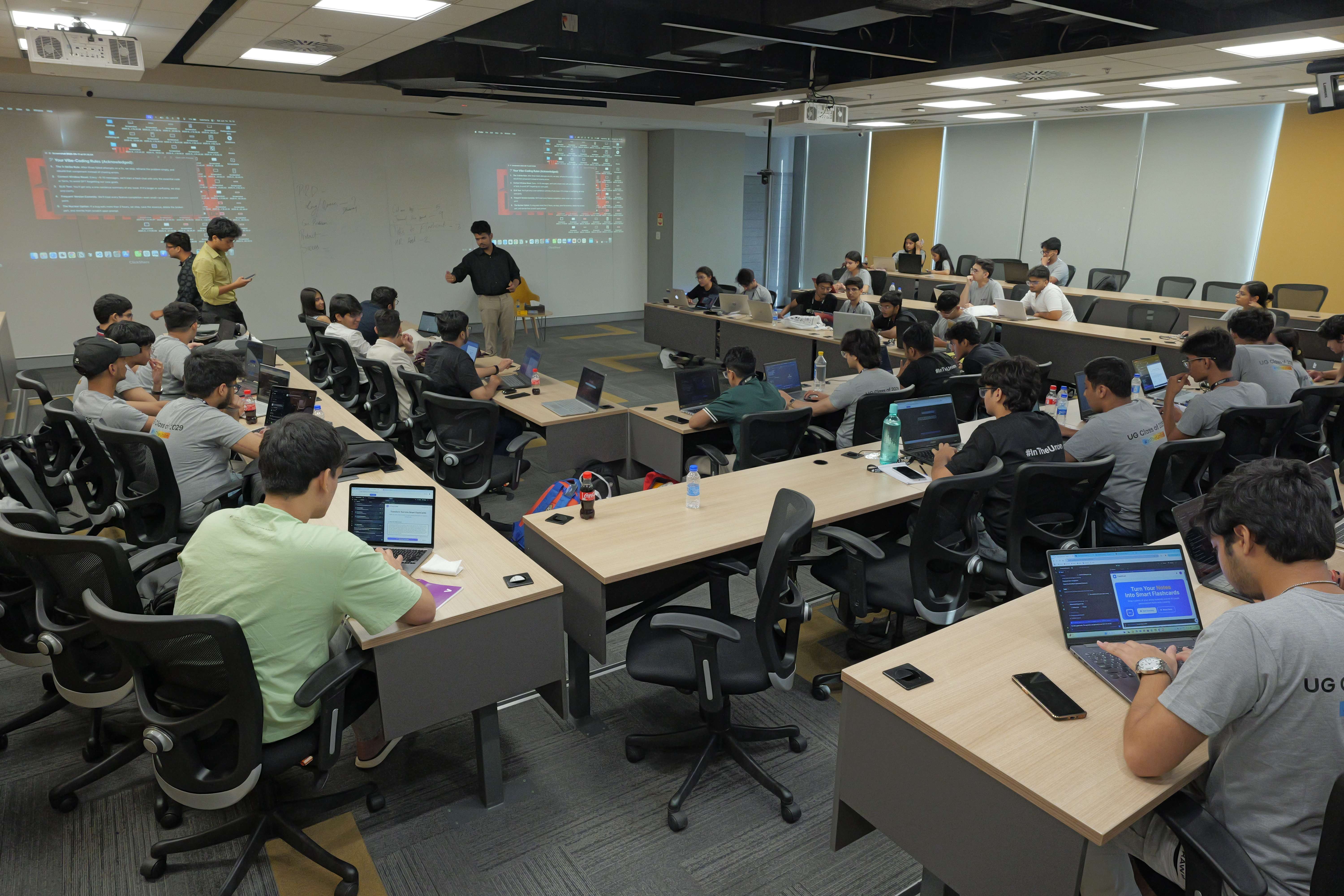
Most people trying to move into AI are not struggling with what to learn. That part is already clear. The confusion starts when they try to answer a more important question:
“What actually gets me into an AI role?”
Over the past few years, learning AI has fragmented into multiple pathways.
-
Free and open-source learning
-
Short-term structured courses
-
Full-fledged postgraduate programmes
What’s missing is clarity on which path actually works for you – and more importantly, why.
Because the difference between learning AI and getting hired into AI roles is not theoretical. It comes down to how structured your path needs to be, given where you are starting from.
The Reality: Not Everyone Needs a Full AI Programme
Over the last few years, interest in AI careers has accelerated sharply, both in India and globally. Engineers, analysts, consultants, and even non-tech professionals are actively trying to move into AI roles, driven by the visible demand across tech and product companies, startups, and GCCs (Global Capability Centres).
What’s less clear is how to make that transition.
The effort required to break into AI roles is not uniform – it depends on how far you are from your desired role.
For a software engineer, whose role is already being reshaped by AI, the gap is often about building deeper technical capability. This includes understanding and fine-tuning language models (LLMs, SLMs), applying machine learning principles, building RAG pipelines or knowledge graphs, and designing end-to-end production-grade systems.
For someone in a business or non-technical role, the focus is different. It is often about leveraging AI for productivity and workflows. This could involve building automations using tools like n8n or Replit, and using tools like Claude Code or OpenAI Codex to create lightweight agents that improve efficiency.
Most people underestimate this gap.
They assume the same approach will work regardless of where they are starting from. That’s where decisions begin to break down.
Free AI Courses: High Access, Limited Outcomes
The availability of high-quality AI learning resources has improved significantly over the last few years.
Courses from platforms like OpenAI Academy, Anthropic Academy, and Google, combined with open-source ecosystems such as Hugging Face, have made it possible to access cutting-edge tools without formal enrolment. Structured learning programmes from platforms like DeepLearning.AI, along with technical breakdowns across credible YouTube channels, have further lowered the barrier to access good-quality learning content.
For individuals with a strong foundation in programming, particularly those already working in full-stack software development or adjacent technical roles, this ecosystem can be sufficient to get started. It allows them to experiment with models, build small systems, and incrementally layer AI capabilities onto their existing skillset.
However, access alone does not translate into outcomes.
What remains missing in most self-driven pathways is structure and practical exposure of building real-world AI products or applications. There is no defined progression from fundamentals to deployment, no external validation of capability, and limited feedback on whether what is being built aligns with industry expectations.
More importantly, understanding tools and models is only one part of the equation. The ability to demonstrate applied capability through your portfolio, and to position that work effectively in a hiring context, is what determines outcomes.
Short-Term AI Courses: Structured Exposure, but Limited Career Impact
Short-term AI courses have grown rapidly in response to the surge in interest around AI careers. These typically range from a few weeks to a few months and are offered across platforms such as Coursera, edX, Udacity, and a growing number of bootcamps.
They introduce structure into the learning process. Concepts are sequenced, assignments are defined, and in some cases, learners are guided through basic projects. For individuals at an early stage, especially those exploring AI without a strong technical background, this format provides a clearer starting point than self-directed learning.
However, the limitation lies in what these programmes are designed to do.
Most short-term courses are built for exposure, not transformation. They are effective at helping learners understand terminology, familiarise themselves with tools, and gain a broad overview of how AI systems work. But they rarely go deep enough to build the level of applied capability required for role transitions.
Comprehensive AI Programmes: When Structure & Exposure Become Necessary
For a certain segment of learners, incremental approaches stop working. This is typically the point where individuals have already explored AI through self-learning or short-term courses, but are unable to translate that exposure into meaningful roles. The gap is no longer about access or awareness. It is about capacity building.
Full-fledged programmes such as Post Graduation Programmes (PGP), M.Tech, MS, or M.Sc degrees are designed to address this gap. Unlike shorter formats, they are built around progression. Concepts are not introduced in isolation, but connected across systems, workflows, and real-world applications. Across the spectrum of master’s programmes, from MS/MSc to M.Tech to industry-focused PG programmes, the emphasis shifts from theory and research to applied, real-world use cases.
In PG programmes, learners are expected to work on end-to-end systems, move from using models to system design, and engage with problems that resemble actual industry scenarios. This creates a different level of readiness, one that is aligned with how AI roles are defined in practice.
These programmes are not necessary for everyone.
But they become relevant when the goal is not just to learn AI, but to reposition into roles that require demonstrable, applied capability. This is often the case for professionals who have reached a plateau in their current roles, or for those attempting a more substantial career shift into AI.
What Actually Changes: From Models to Systems
One of the biggest shifts in structured programmes is moving beyond theory and isolated application to building real-world, production-grade AI applications, products, and systems. The transition is from working with individual models to building complete systems around them.
In isolation, learning how to call an API or fine-tune a model is relatively straightforward. The complexity emerges when these models need to be integrated into workflows that involve data pipelines, multiple services, and real-world constraints such as latency, cost, and reliability.
This includes working with components like:
-
Autonomous, agentic systems for complex workflow orchestration
-
Frameworks for managing multi-step tasks and reasoning
-
Retrieval systems that connect models to external data
-
Evaluation pipelines to measure performance and failure cases
This is the layer where most real-world AI work happens, and it is rarely covered in fragmented or short-term learning formats.
From Projects to Production
Another key difference is the shift from building isolated projects to thinking in terms of production systems. In most entry-level learning environments, projects are designed to demonstrate understanding. They are often self-contained, with clean datasets and predefined outcomes.
In practice, AI systems operate under very different conditions. Data is messy, requirements change, and systems need to perform consistently over time. This introduces challenges around versioning, monitoring, iteration, and failure handling.
Structured programmes that focus on applied learning expose learners to these constraints early. The emphasis is not just on building something that works once, but on designing systems that can be adapted, maintained, and scaled.
This is also what ultimately drives outcomes. To position effectively for AI roles, learners need a portfolio of real-world AI products, applications, or systems that demonstrate applied capability.
As a result, when evaluating programmes, the focus should be on:
-
How build-intensive the programme is
-
Whether the curriculum is aligned with current industry practices
-
Whether it is taught by practitioners who are actively building in AI
Because in practice, hiring decisions are not based on what you have learned, but on what you have built.
FAQs
Do I need a Masters degree to get into AI roles?
Not necessarily. If you already have a strong foundation in programming and systems, you can transition into AI through self-learning and project work. However, for most people, especially those without a technical background or those attempting a structured career shift, a comprehensive programme helps bridge the gap between learning and employability.
Can I switch to AI using free courses alone?
Yes, but with limitations. Free resources are often sufficient to get started, particularly for developers who are comfortable building independently. The real challenge is not access to content, but translating that learning into demonstrable, job-ready capability. Most learners struggle with this transition without structure, feedback, and real-world exposure.
Are short-term AI courses enough to get a job?
In most cases, no. Short-term courses are useful for building foundational understanding and exploring the field, but they are rarely sufficient for role transitions. Most AI jobs require applied experience in building and deploying systems, not just familiarity with concepts.
What kind of roles can I realistically target after learning AI?
Common entry points include roles such as AI Engineer, Applied AI Engineer, and Machine Learning Engineer, along with emerging roles focused on building agentic systems. The exact role you can target depends on your prior experience and the depth of your applied work.
Are AI jobs actually higher paying in India?
Yes. AI roles, particularly in engineering and product environments, typically offer higher compensation than non-AI roles at similar experience levels. This is driven by strong demand and a relatively limited supply of professionals with applied, system-building capability.
What skills are most important for getting hired into AI roles?
Beyond understanding models, employers look for the ability to build and deploy systems. This includes working with APIs, handling data pipelines, designing workflows, and showcasing projects that reflect real-world use cases.
Is AI a better career choice than data science?
It depends on your career goals. Data science continues to focus on analytics and decision-making, while AI is increasingly centred around building systems and automation. If you are more inclined toward engineering and product building, AI may be a better fit.
How do I decide which learning path is right for me?
Start with your current skill level and career goal. If you already have strong technical fundamentals, self-learning may be sufficient. If you are early in your journey or attempting a career transition, a more structured and applied pathway is usually more effective.
Is a Masters in AI worth it in India?
It depends on your starting point and career goals. For individuals who already have strong technical foundations, it is possible to transition into AI roles through self-learning and project work. However, for most learners, especially those attempting a career shift or lacking structured exposure, a Masters or comprehensive AI programme can significantly improve outcomes.
The key value lies not in the degree itself, but in the ability to build real-world, production-grade systems and develop a strong portfolio that demonstrates applied capability. Programmes that are build-intensive, aligned with industry practices, and led by experienced practitioners tend to deliver better career outcomes.