


About us


-
See what students, mentors, alumni and recruiters say about Masters' Union University. Shared highlights and moments that reflect our culture, learning and community. Explore their voices.
OVERVIEW


-
See how Masters’ Union University is represented across leading news and media platforms. Explore articles, features, and press coverage that reflect our journey, initiatives, and growing impact in education, innovation, and industry engagement.
OVERVIEW

-
Explore the awards, rankings and accreditations that recognise the quality, impact and industry relevance of Masters' Union University programmes.
OVERVIEW

-
Explore the reports, brochures, policies, and publications that document Masters' Union University's outcomes, standards, and institutional commitments.
OVERVIEW


PROGRAMMEs
- Highlights
- Curriculum
- Admissions & Fees
- Immersions
- Entrepreneurship
- Careers
- Class Profile
PROGRAMME oVERVIEW
- Highlights
- Curriculum
- Admissions & Fees
- Immersions
- Entrepreneurship
- Career Prospects
- Class Profile
PROGRAMME oVERVIEW
- Highlights
- Curriculum & Faculty
- Immersions
- Admissions & Fees
- Career Prospects
- Class Profile
PROGRAMME oVERVIEW
- Highlights
- Curriculum
PROGRAMME oVERVIEW
- Home
PROGRAMME oVERVIEW
- Highlights
- Curriculum & Faculty
- Admissions & Fees
- Career Prospects
- Class Profile
PROGRAMME oVERVIEW
- Highlights
- Curriculum & Faculty
- Admissions & Fees
- Career Prospects
- Class Profile
PROGRAMME oVERVIEW
- Highlights
- Curriculum
- Admissions & Fees
- Career Prospects
- Class Profile
PROGRAMME oVERVIEW
PROGRAMMEs
- Highlights
- Curriculum & Faculty
- Admissions & Fees
- Career Prospects
- Class Profile
PROGRAMME oVERVIEW
- Highlights
- Curriculum & Faculty
- Admissions & Fees
- Career Prospects
- Class Profile
PROGRAMME oVERVIEW
- Highlights
- Curriculum
- Admissions & Fees
- Career Prospects
- Class Profile
PROGRAMME oVERVIEW
- Highlights
- Curriculum & Faculty
- Admissions & Fees
- Career Prospects
- Class Profile
PROGRAMME oVERVIEW
- Highlights
- Curriculum & Faculty
- Admissions & Fees
- Career Prospects
- Class Profile
PROGRAMME oVERVIEW
- Highlights
- Curriculum
- Admissions & Fees
- Career Prospects
- Class Profile
PROGRAMME oVERVIEW
- Highlights
- Curriculum
- Admissions & Fees
- Career Prospects
- Class Profile
PROGRAMME oVERVIEW
PROGRAMMES
-
PGP in
Technology & Business Management

-
PGP in
Technology & Business Management
(Young Leaders Cohort)
-
PGP in
Human Resources & Organisation Strategy
-
PGP in Sports
Management & Gaming
-
PGP in
Applied AI & Agentic Systems
-
PGP in Sustainability &
Business Management
-
Four Nations Global
Business Programme
- Highlights
- Curriculum
- Immersions
- Admissions & Fees
- Career Prospects
- Cohort Profile
PROGRAMME oVERVIEW
- Highlights
- Curriculum
- Immersions
- Admissions & Fees
- Career Prospects
- Faculty & Student Stories
PROGRAMME oVERVIEW
- Highlights
- Curriculum
- Immersions
- Admissions & Fees
- Career Prospects
PROGRAMME oVERVIEW
- Highlights
- Curriculum & Faculty
- Admissions & Fees
- Career Prospects
PROGRAMME oVERVIEW
- Highlights
- Curriculum & Faculty
- Admissions & Fees
- Career Prospects
PROGRAMME OVERVIEW
- Highlights
- Curriculum & Faculty
- Admissions & Fees
PROGRAMME OVERVIEW
- Highlights
PROGRAMME OVERVIEW
- Highlights
- Curriculum
- Immersions
- Admissions & Fees
- Career Prospects
- Cohort Profile
PROGRAMME oVERVIEW
PROGRAMMES
- Highlights
- Curriculum
- Faculty
- Admissions & Fees
- Career Prospects
- Cohort Profile
PROGRAMME oVERVIEW
- Home
PROGRAMME oVERVIEW
- Highlights
- Curriculum
- Admissions & Fees
PROGRAMME oVERVIEW
- Highlights
- Curriculum
- Admissions & Fees
PROGRAMME oVERVIEW
- Highlights
- Curriculum
- Immersions
- Faculty & Coaches
- Admissions & Fees
- Career Prospects
PROGRAMME oVERVIEW
- Highlights
- Curriculum
PROGRAMME oVERVIEW
- Home
PROGRAMME oVERVIEW
- Highlights
- Global Immersions
- Curriculum
- Faculty & Coaches
- Leadership Learning
- Admissions & Fees
PROGRAMME oVERVIEW
- Highlights
- Curriculum
- Admissions & Fees
PROGRAMME oVERVIEW
PROGRAMMES
- Highlights
- Curriculum
- Beyond Classroom
- Admissions & Fees
PROGRAMME oVERVIEW
- Highlights
- Curriculum
- Beyond Classroom
- Admissions & Fees
PROGRAMME oVERVIEW
- Home
PROGRAMME oVERVIEW
- Home
PROGRAMME oVERVIEW
PROGRAMMES
- Home
PROGRAMME oVERVIEW
- Highlights
- Curriculum
- Beyond Classroom
- Admissions & Fees
PROGRAMME oVERVIEW
- Home
PROGRAMME oVERVIEW
- Home
PROGRAMME oVERVIEW
STUDENT LIFE
- Student Premises
- Amenities
- Hostel Council
oVERVIEW


- Case Union
- UnMute
- Clubs & Committees
oVERVIEW



oVERVIEW

- Healthcare
- BFSI
- Technology
- Manufacturing
- Retail
Industry
- Governments
- Universities
- Startups
- SMEs
- Large Enterprises
Industry
oVERVIEW
PROGRAMMEs
- Highlights
- Curriculum & Faculty
- Admissions & Fees
- Career Prospects
- Class Profile
PROGRAMME oVERVIEW
- Highlights
- Curriculum & Faculty
- Admissions & Fees
- Career Prospects
- Class Profile
PROGRAMME oVERVIEW
- Highlights
- Curriculum
- Admissions & Fees
- Career Prospects
- Class Profile
PROGRAMME oVERVIEW
- Highlights
- Curriculum & Faculty
- Admissions & Fees
- Career Prospects
- Class Profile
PROGRAMME oVERVIEW
- Highlights
- Curriculum & Faculty
- Admissions & Fees
- Career Prospects
- Class Profile
PROGRAMME oVERVIEW
- Highlights
- Curriculum
- Admissions & Fees
- Career Prospects
- Class Profile
PROGRAMME oVERVIEW
- Highlights
- Curriculum
- Admissions & Fees
- Career Prospects
- Class Profile
PROGRAMME oVERVIEW
PROGRAMMES
- Highlights
- Curriculum
- Immersions
- Admissions & Fees
- Career Prospects
- Cohort Profile
PROGRAMME oVERVIEW
- Highlights
- Curriculum
- Immersions
- Admissions & Fees
- Career Prospects
- Faculty & Student Stories
PROGRAMME oVERVIEW
- Highlights
- Curriculum
- Immersions
- Admissions & Fees
- Career Prospects
PROGRAMME oVERVIEW
- Highlights
- Curriculum & Faculty
- Admissions & Fees
- Career Prospects
PROGRAMME oVERVIEW
- Highlights
- Curriculum
- Immersions
- Admissions & Fees
- Career Prospects
- Cohort Profile
PROGRAMME oVERVIEW
PROGRAMMES
- Highlights
- Curriculum
- Faculty
- Admissions & Fees
- Career Prospects
- Cohort Profile
PROGRAMME oVERVIEW
- Highlights
- Curriculum
- Admissions & Fees
PROGRAMME oVERVIEW
- Highlights
- Curriculum
- Admissions & Fees
PROGRAMME oVERVIEW
- Highlights
- Curriculum
- Immersions
- Faculty & Coaches
- Admissions & Fees
- Career Prospects
PROGRAMME oVERVIEW
- Highlights
- Global Immersions
- Curriculum
- Faculty & Coaches
- Leadership Learning
- Admissions & Fees
PROGRAMME oVERVIEW
- Highlights
- Curriculum
- Admissions & Fees
PROGRAMME oVERVIEW


About Us

Undergraduate
Postgraduate
PGP in Technology & Business Management
PGP in Technology & Business Management
(Young Leaders Cohort)
PGP in Human Resources & Organisation Strategy
PGP in Sports Management & Gaming
PGP in Applied AI & Agentic Systems
PGP in Sustainability & Business Management
Four Nations Global Business Programme
Executive
Family Business
Immersions
1:1 Executive Coaching
Careers
Innovations
Faculty
MU Ventures
Enterprise L&D
Student Life
Jobs
Become a Master
Merch Store
events
For Companies
Blog
Coach LMS
Artificial Intelligence
The Highest-Paying AI Jobs in 2026 with Critically Small Talent Pool
April 10, 2026
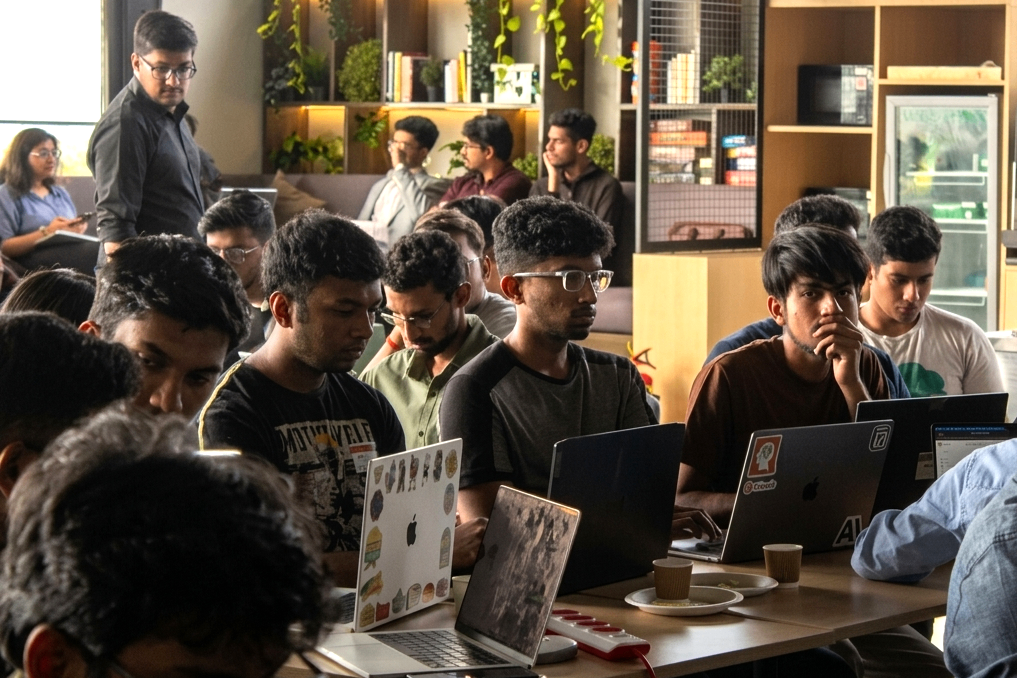
Most engineers know AI is where the money is. What most don't know is which roles, what they pay, and more importantly, what separates the people getting hired from the ones still waiting.
This is that breakdown.
The Split Happening Inside Tech Right Now
Two years ago, AI skills were a differentiator. Today it's becoming the baseline expectation for a growing set of roles.
The career ladder in tech is splitting. On one side traditional engineering roles – backend, QA, automation – where growth is slower and parts of the workflow are getting automated. On the other AI-native roles, where demand is outrunning supply and companies are paying a clear premium to fill the gap.
This isn't about replacing software engineers. It's about what the same job title now requires. A backend engineer who can build AI-powered systems isn't just a better backend engineer. They're a different hire, and they're compensated differently.
The professionals moving into that second lane right now are doing it early enough to matter.
The Roles Worth Targeting And What They Actually Involve
1. AI Engineer
Builds AI-powered applications – products, internal tools, customer-facing systems – using models, APIs, and data pipelines. The natural next step for software engineers who want to stay technical but move into higher-leverage work.
2. Applied AI Engineer
Takes existing AI models and puts them to work on real business problems – automating repetitive workflows, building recommendation systems, creating tools that make non-technical teams faster. This role is less about research and more about deployment, which is where most of the actual hiring is.
3. Agentic AI Developer
This is the fastest-emerging category in the space right now. Agentic systems don't just respond to inputs, they plan, execute, use tools, and complete multi-step tasks with minimal human intervention. Building these systems is genuinely new work, and the people who understand it are rare. Demand is ahead of supply by a wide margin.
4. AI Product Manager
Translates AI capabilities into business outcomes. Works with engineering to identify where AI creates real value – not where it's interesting, but where it moves a metric. As companies move from AI experiments to AI products, this role is becoming one of the highest-leverage positions in any tech org.
What the Compensation Actually Looks Like
The premium on AI roles is real and growing. India's AI job market has grown over 40% year-on-year, with average salary growth projected at 15-20% annually through 2026. (Source: Testleaf, NASSCOM data, 2026)
|
Role |
Entry Level (0-2 yrs) |
Mid-Level (3-5 yrs) |
|---|---|---|
|
Software Engineer (non-AI) |
5-8 LPA |
12-20 LPA |
|
AI / Applied AI Engineer |
8-12 LPA |
18-35 LPA |
|
GenAI / LLM Engineer |
10-15 LPA |
25-45 LPA |
|
Agentic AI Developer |
12-20 LPA |
25-40 LPA |
|
AI Product Manager |
15-25 LPA |
30-60 LPA |
Sources: Glassdoor India, NASSCOM, Scaler - data from Jan-Mar 2026
A few things worth noting about these ranges:
Company type moves the needle more than experience level alone. An entry-level AI engineer at a large IT services firm earns 6-8 LPA. The same profile at a product startup or GCC can start at 14-18 LPA. The ranges above reflect the broader market – where you apply matters as much as what you know. (Source: Glassdoor + NASSCOM + Scaler, Mar 2026)
Agentic AI is the outlier in this table. Junior roles are already coming in at 12-20 LPA because the supply of trained talent is genuinely thin. LinkedIn India data shows job postings requiring LangChain, CrewAI, or AI agent skills grew over 300% between January 2025 and March 2026. NASSCOM projects India will need 50,000+ specialised agentic AI professionals by 2027. The category is less than two years old – which is exactly why the premium exists right now. (Source: cambridgeinfotech.io, citing LinkedIn India and NASSCOM, 2026)
The supply of trained talent today is a fraction of that number. That gap is where the salary premium comes from.
Why Agentic AI Upskilling Matters
Most AI upskilling content is still talking about models. The industry has moved past that.
The real frontier is agentic systems – AI that doesn't wait to be prompted. It takes a task, breaks it into steps, uses tools like APIs and databases, executes, and course-corrects based on feedback. These systems are already being deployed inside enterprises for everything from customer support to code review to procurement workflows.
The people building them – AI Workflow Designers, Autonomous Systems Engineers, Agent Developers – are operating in a space where the job description is still being written. That's uncomfortable for some. For others, that's exactly where you want to be.
Where You Fit Based on Where You Are Now
Fresh graduate or final-year student
- Entry points: AI Analyst, Junior AI Engineer, AI Operations. The work is hands-on. Deployment, data handling, testing AI systems in real environments. The learning curve is steep, but the foundation you build here compounds fast.
2-5 years of experience in IT or software
- This is the highest-leverage window. You have enough technical context to move quickly, and you're not yet locked into a senior role that makes a pivot harder. AI Engineer and Applied AI Engineer roles are directly accessible. This is the transition point – and the one most companies are actively hiring for.
5+ years, senior technical or product role
-
AI becomes a strategic layer here. Systems architecture, AI product leadership, or building and scaling AI-first teams. The work shifts from execution to judgment – knowing where to apply AI and how to scale it matters more than the tools themselves.
Why the Timing of This Decision Matters
The gap between AI role demand and available talent is real, but it won't stay this wide forever. What sets someone apart today will be baseline in 3 years.
That's not a reason to panic. It's a reason to be honest about what learning AI actually means. Watching courses and collecting certificates isn't the same as building systems, deploying models, and solving real problems.
The professionals who are breaking into these roles aren't the ones who know the most theory. They're the ones who've built things.
Making the Transition Structured
This is exactly the gap that applied programmes are being built to address. The PG Programme in Applied AI & Agentic Systems at Masters' Union is structured around one question: can a working professional or fresh graduate go from knowing about AI to actually building with it, in under a year? The curriculum runs on live projects, not lectures – because that's what the roles above are hiring for.
Explore the PGP in Applied AI & Agentic Systems →
FAQs
1. What AI jobs can I get after a PGP in Applied AI?
Roles like AI Engineer, Applied AI Engineer, Agentic AI Developer, and AI Product Manager – depending on your background and where you want to position yourself.
2. Do AI roles actually pay more in India?
Yes - and the gap is significant, particularly at mid-level. AI Engineers with 3-5 years of experience are seeing packages that outpace comparable non-AI roles by 40-80%.
3. Can someone with a non-AI background transition into these roles?
Yes, but the transition needs to be structured. Ad hoc online learning rarely translates into job-ready skills. The people making successful switches have done project-based work and can demonstrate what they've built.
4. What makes agentic AI different from regular AI work?
Agentic AI involves building systems that act autonomously – not just responding to inputs but planning, executing tasks, and adapting. It's newer, harder to hire for, and compensating at a higher level as a result.
5. Is a postgraduate programme worth it for an AI career switch?
For most working professionals, yes - if the programme is applied and not classroom-heavy. A programme that has you building real systems is worth more than one that teaches you the theory behind them.