


About us


-
See what students, mentors, alumni and recruiters say about Masters' Union University. Shared highlights and moments that reflect our culture, learning and community. Explore their voices.
OVERVIEW


-
See how Masters’ Union University is represented across leading news and media platforms. Explore articles, features, and press coverage that reflect our journey, initiatives, and growing impact in education, innovation, and industry engagement.
OVERVIEW
-
Explore the awards, rankings and accreditations that recognise the quality, impact and industry relevance of Masters' Union University programmes.
OVERVIEW
-
Explore the reports, brochures, policies, and publications that document Masters' Union University's outcomes, standards, and institutional commitments.
OVERVIEW


PROGRAMMEs
- Highlights
- Curriculum
- Admissions & Fees
- Immersions
- Entrepreneurship
- Careers
- Class Profile
PROGRAMME oVERVIEW
- Highlights
- Curriculum
- Admissions & Fees
- Immersions
- Entrepreneurship
- Career Prospects
- Class Profile
PROGRAMME oVERVIEW
- Highlights
- Curriculum & Faculty
- Immersions
- Admissions & Fees
- Career Prospects
- Class Profile
PROGRAMME oVERVIEW
- Highlights
- Curriculum
PROGRAMME oVERVIEW
- Home
PROGRAMME oVERVIEW
- Highlights
- Curriculum & Faculty
- Admissions & Fees
- Career Prospects
- Class Profile
PROGRAMME oVERVIEW
- Highlights
- Curriculum & Faculty
- Admissions & Fees
- Career Prospects
- Class Profile
PROGRAMME oVERVIEW
- Highlights
- Curriculum
- Admissions & Fees
- Career Prospects
- Class Profile
PROGRAMME oVERVIEW
PROGRAMMEs
- Highlights
- Curriculum & Faculty
- Admissions & Fees
- Career Prospects
- Class Profile
PROGRAMME oVERVIEW
- Highlights
- Curriculum & Faculty
- Admissions & Fees
- Career Prospects
- Class Profile
PROGRAMME oVERVIEW
- Highlights
- Curriculum
- Admissions & Fees
- Career Prospects
- Class Profile
PROGRAMME oVERVIEW
- Highlights
- Curriculum & Faculty
- Admissions & Fees
- Career Prospects
- Class Profile
PROGRAMME oVERVIEW
- Highlights
- Curriculum & Faculty
- Admissions & Fees
- Career Prospects
- Class Profile
PROGRAMME oVERVIEW
- Highlights
- Curriculum
- Admissions & Fees
- Career Prospects
- Class Profile
PROGRAMME oVERVIEW
- Highlights
- Curriculum
- Admissions & Fees
- Career Prospects
- Class Profile
PROGRAMME oVERVIEW
PROGRAMMES
-
PGP in
Technology & Business Management

-
PGP in
Technology & Business Management
(Young Leaders Cohort)
-
Post Graduate Diploma (Human Resources and Organisation Strategy)
-
Post Graduate Diploma (Sports Management and Gaming)
-
PGP in
Applied AI & Agentic Systems
-
PGP in Sustainability &
Business Management
-
Four Nations Global
Business Programme
- Highlights
- Curriculum
- Immersions
- Admissions & Fees
- Career Prospects
- Cohort Profile
PROGRAMME oVERVIEW
- Highlights
- Curriculum
- Immersions
- Admissions & Fees
- Career Prospects
- Faculty & Student Stories
PROGRAMME oVERVIEW
- Highlights
- Curriculum
- Immersions
- Admissions & Fees
- Career Prospects
PROGRAMME oVERVIEW
- Highlights
- Curriculum & Faculty
- Admissions & Fees
- Career Prospects
PROGRAMME oVERVIEW
- Highlights
- Curriculum & Faculty
- Admissions & Fees
- Career Prospects
PROGRAMME OVERVIEW
- Highlights
- Curriculum & Faculty
- Admissions & Fees
PROGRAMME OVERVIEW
- Highlights
PROGRAMME OVERVIEW
- Highlights
- Curriculum
- Immersions
- Admissions & Fees
- Career Prospects
- Cohort Profile
PROGRAMME oVERVIEW
PROGRAMMES
-
Post Graduate Diploma (Rise General Management)
-
Post Graduate Diploma (Capital Markets & Trading)
-
PGP in US Capital Markets &
Trading
-
PGP
in Entrepreneurship & Business Acceleration
-
Post Graduate Diploma (Rise General Management Global)
-
AI First Operator Programme
-
Bloomberg Equity Research Programme
- Highlights
- Curriculum
- Faculty
- Admissions & Fees
- Career Prospects
- Cohort Profile
PROGRAMME oVERVIEW
- Home
PROGRAMME oVERVIEW
- Highlights
- Curriculum
- Admissions & Fees
PROGRAMME oVERVIEW
- Highlights
- Curriculum
- Admissions & Fees
PROGRAMME oVERVIEW
- Highlights
- Curriculum
- Immersions
- Faculty & Coaches
- Admissions & Fees
- Career Prospects
PROGRAMME oVERVIEW
- Highlights
- Curriculum
PROGRAMME oVERVIEW
- Home
PROGRAMME oVERVIEW
- Highlights
- Global Immersions
- Curriculum
- Faculty & Coaches
- Leadership Learning
- Admissions & Fees
PROGRAMME oVERVIEW
- Highlights
- Curriculum
- Admissions & Fees
PROGRAMME oVERVIEW
PROGRAMMES
- Highlights
- Curriculum
- Beyond Classroom
- Admissions & Fees
PROGRAMME oVERVIEW
- Highlights
- Curriculum
- Beyond Classroom
- Admissions & Fees
PROGRAMME oVERVIEW
- Home
PROGRAMME oVERVIEW
- Home
PROGRAMME oVERVIEW
PROGRAMMES
- Home
PROGRAMME oVERVIEW
- Highlights
- Curriculum
- Beyond Classroom
- Admissions & Fees
PROGRAMME oVERVIEW
- Home
PROGRAMME oVERVIEW
- Home
PROGRAMME oVERVIEW
STUDENT LIFE
- Student Premises
- Amenities
- Hostel Council
oVERVIEW


- Case Union
- UnMute
- Clubs & Committees
oVERVIEW
oVERVIEW

- Healthcare
- BFSI
- Technology
- Manufacturing
- Retail
Industry
- Governments
- Universities
- Startups
- SMEs
- Large Enterprises
Industry
oVERVIEW
PROGRAMMEs
- Highlights
- Curriculum & Faculty
- Admissions & Fees
- Career Prospects
- Class Profile
PROGRAMME oVERVIEW
- Highlights
- Curriculum & Faculty
- Admissions & Fees
- Career Prospects
- Class Profile
PROGRAMME oVERVIEW
- Highlights
- Curriculum
- Admissions & Fees
- Career Prospects
- Class Profile
PROGRAMME oVERVIEW
- Highlights
- Curriculum & Faculty
- Admissions & Fees
- Career Prospects
- Class Profile
PROGRAMME oVERVIEW
- Highlights
- Curriculum & Faculty
- Admissions & Fees
- Career Prospects
- Class Profile
PROGRAMME oVERVIEW
- Highlights
- Curriculum
- Admissions & Fees
- Career Prospects
- Class Profile
PROGRAMME oVERVIEW
- Highlights
- Curriculum
- Admissions & Fees
- Career Prospects
- Class Profile
PROGRAMME oVERVIEW
PROGRAMMES
- Highlights
- Curriculum
- Immersions
- Admissions & Fees
- Career Prospects
- Cohort Profile
PROGRAMME oVERVIEW
- Highlights
- Curriculum
- Immersions
- Admissions & Fees
- Career Prospects
- Faculty & Student Stories
PROGRAMME oVERVIEW
- Highlights
- Curriculum
- Immersions
- Admissions & Fees
- Career Prospects
PROGRAMME oVERVIEW
- Highlights
- Curriculum & Faculty
- Admissions & Fees
- Career Prospects
PROGRAMME oVERVIEW
- Highlights
- Curriculum
- Immersions
- Admissions & Fees
- Career Prospects
- Cohort Profile
PROGRAMME oVERVIEW
PROGRAMMES
- Highlights
- Curriculum
- Faculty
- Admissions & Fees
- Career Prospects
- Cohort Profile
PROGRAMME oVERVIEW
- Highlights
- Curriculum
- Admissions & Fees
PROGRAMME oVERVIEW
- Highlights
- Curriculum
- Admissions & Fees
PROGRAMME oVERVIEW
- Highlights
- Curriculum
- Immersions
- Faculty & Coaches
- Admissions & Fees
- Career Prospects
PROGRAMME oVERVIEW
- Highlights
- Global Immersions
- Curriculum
- Faculty & Coaches
- Leadership Learning
- Admissions & Fees
PROGRAMME oVERVIEW
- Highlights
- Curriculum
- Admissions & Fees
PROGRAMME oVERVIEW


About Us

Undergraduate
Postgraduate
PGP in Technology & Business Management
PGP in Technology & Business Management
(Young Leaders Cohort)
Post Graduate Diploma (Human Resources and Organisation Strategy)
Post Graduate Diploma (Sports Management and Gaming)
PGP in Applied AI & Agentic Systems
PGP in Sustainability & Business Management
Four Nations Global Business Programme
Executive
Post Graduate Diploma (Rise General Management)
Post Graduate Diploma (Capital Markets & Trading)
PGP in US Capital Markets & Trading
PGP in Entrepreneurship & Business Acceleration
Post Graduate Diploma (Rise General Management Global)
AI First Operator Programme
Bloomberg Equity Research Programme
Family Business
Immersions
1:1 Executive Coaching
Careers
Innovations
Faculty
MU Ventures
Enterprise L&D
Student Life
Jobs
Become a Master
Merch Store
events
For Companies
Blog
Coach LMS
BMW Insights
BMW Strategy, Luxury Consumer Behaviour, EV Adoption: Ft. Vikram Pawah
April 17, 2026

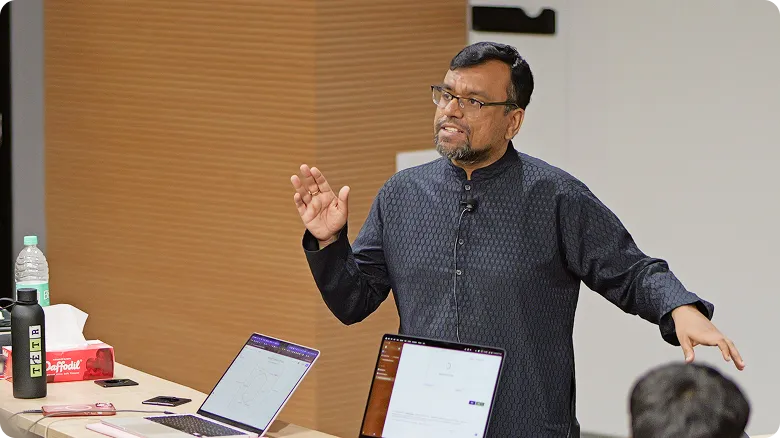
At a Masters’ Union session led by Swati Ganeti, Managing Director, Masters’ Union, Vikram Pawah, CEO of BMW Group Australia and former CEO of BMW India, unpacked what it truly takes to win in India’s evolving luxury car market.
The conversation moved beyond brand narratives. It focused on behaviour, adaptation, and the uncomfortable realities of building a premium brand in a market that is still learning how to consume luxury.
India, he explained, is not just another growth market. It is a market that reshapes global strategies.
Rebuild Your Strategy for a Market That Doesn’t Start With Brand Loyalty
The Indian luxury buyer is fundamentally different from their global counterpart. In mature markets, customers often enter with strong brand preferences. In India, especially among first-time buyers, that loyalty does not yet exist.
Consumers typically shortlist three to four brands. The decision is less about allegiance and more about discovery. They are learning what luxury means, what differentiates brands, and what justifies the price.
Post-COVID, this behaviour has sharpened. The earlier “you only live once” mindset has matured into a more nuanced desire for experiences. Buyers are no longer chasing labels. They are seeking meaning.
What This Means for Luxury Strategy in India:
-
Indian luxury buyers are in a discovery phase
-
Brand loyalty is weak at the entry level
-
Experience has replaced impulse-driven spending
Design Dual-Audience Value Architecture
BMW’s global identity is clear. It stands for performance, precision, and what it calls “sheer driving pleasure.”
However, India complicates this positioning. Here, cars are rarely personal indulgences. They are family assets. Even when purchased for oneself, they must justify their value to the household.
This creates a tension. How do you sell a driver’s car in a market where many owners are chauffeur-driven?
Pawah’s answer is layered. You do not abandon the core. You evolve its expression. BMW continues to sell the thrill of driving, but complements it with comfort, space, and usability for the family.
How Dual-Audience Demand Reshapes Product Strategy:
-
Core brand DNA remains unchanged
-
Positioning adapts to cultural realities
-
Luxury must serve both driver and family
Eliminate “Base Model Economics” to Match Indian Luxury Expectations
One of the most revealing insights from Pawah’s conversation was how Indian consumers perceive value in luxury.
Globally, luxury cars are often customised. Buyers start with a base model and add features as needed. In India, this approach fails. A base model is not seen as premium. It feels incomplete.
Indian buyers expect a luxury car to come fully loaded. Features are not optional add-ons. They are proof of status. Even rarely used elements like sunroofs or cruise control cannot be excluded without impacting perception.
BMW responded by fundamentally changing its product strategy. Cars are now offered with nearly all features as standard, ensuring that nothing feels missing.
How Feature Strategy Shapes Luxury Perception in India:
-
Indian buyers equate luxury with completeness
-
Optional features are perceived as compromises
-
Fully loaded offerings drive purchase confidence
Solve Structural Buying Barriers With Market-Specific Product Design
A defining example of localisation is the BMW X1 Long Wheelbase, a model specifically developed for India.
The insight was simple but powerful. The biggest barrier for first-time luxury buyers was not price. It was space. Families feared that luxury cars would compromise comfort, especially in the rear seat.
By extending the wheelbase, BMW addressed both functional and emotional concerns. The car offered better legroom, improved comfort, and a stronger road presence. It felt appropriate for family use without diluting its premium appeal.
Why Space Becomes a Strategic Variable in Luxury Positioning:
-
Space is a key barrier to luxury adoption
-
Rear-seat comfort influences purchase decisions
-
Localised products unlock new customer segments
Turn Crisis Recovery Into a Competitive Advantage
Pawah’s return to India during COVID marked a critical phase for the company. The challenge was not just operational. It was emotional and organisational.
The immediate focus was stability. Ensuring employee safety, maintaining operational readiness, and preparing for recovery. But the real differentiator came post-lockdown.
BMW moved faster than its competitors. It aligned teams around clear internal narratives, what Pawah described as “war cries,” and executed with urgency. The result was a strong rebound, driven not by new ideas alone but by disciplined execution.
How Execution Speed Becomes the Real Post-Crisis Differentiator:
-
Crisis management begins with stability
-
Recovery depends on speed and readiness
-
Internal alignment drives external performance
EV Adoption India: Skipping Curves, Not Following Them
One of the most compelling parts of the discussion centred on electric vehicles.
Globally, there is scepticism about India’s readiness for EV adoption. Concerns around infrastructure, power supply, and affordability dominate the narrative.
Pawah challenged this view. India, he argued, does not evolve gradually. It leapfrogs. Just as it moved rapidly to CNG or skipped stages in consumer technology, it is now accelerating towards EV adoption.
BMW anticipated this shift early. Instead of testing the market cautiously, it launched multiple EV models within a short span, signalling commitment rather than experimentation.
How India Forces a Rethink of Global EV Rollout Strategy:
-
India adopts technology through leapfrogging
-
EV growth is faster than global expectations
-
Commitment outperforms cautious entry
EV Consumer Behaviour India: Economics, Identity, and Intent
The decision to buy an electric vehicle in India is not driven by a single factor. It is a layered choice.
At the base level is intent. Consumers want to align with sustainability. Above that sits economics. EVs are significantly cheaper to run, making them financially attractive.
Government incentives further bridge the gap, allowing EVs to be priced competitively with traditional vehicles. Practical considerations, such as short daily commutes and home charging, reinforce the decision.
Finally, there is identity. EVs signal progressiveness. They communicate awareness and status in a way that traditional cars increasingly do not.
Why Identity and Status Now Influence Mobility Choices:
-
EV adoption is driven by multiple stacked factors
-
Cost savings accelerate decision-making
-
EVs act as status and identity symbols
Treat Local Manufacturing as a Trust-Building Strategy, Not Just Cost Efficiency
BMW’s long-term success in India is rooted in its commitment to localisation.
From the outset, the company invested in manufacturing within the country. Today, the majority of its vehicles sold in India are locally produced.
This approach is not just about cost efficiency. It signals intent. It shows that the brand is invested in the market, not merely exporting to it. In a country like India, that distinction matters.
Why Manufacturing Presence Shapes Brand Credibility:
-
Local manufacturing builds credibility
-
Long-term commitment strengthens brand trust
-
“Build in India” is both strategic and symbolic
Build Innovation Systems That Reinforce Core Identity, Not Replace It
BMW’s ability to remain relevant after more than a century lies in its approach to innovation.
The company does not chase trends for the sake of it. Instead, it continuously reimagines its core. Whether it is redesigning the driving interface or rethinking interior layouts, the focus remains on enhancing the driving experience.
Pawah described an internal culture of self-competition. The benchmark is not the market. It is the brand’s own previous best.
How Self-Competition Becomes a System for Continuous Innovation:
-
Innovation is anchored in core identity
-
Self-competition drives continuous improvement
-
Legacy brands must evolve without dilution
Careers in Auto Industry India: Reality Beyond Glamour
For students aspiring to enter the automotive sector, Pawah offered a grounded perspective.
The industry is often perceived as glamorous, driven by high-profile launches and premium branding. The reality is far more demanding.
Selling a car requires engaging with a large number of potential customers. Retaining them requires years of consistent interaction. The role blends sales, hospitality, problem-solving, and stakeholder management.
It is a complex ecosystem, not a single-function career path.
How the Industry Rewards Persistence Over Perception:
-
Auto industry demands persistence and resilience
-
Customer relationships are long-term commitments
-
Success requires multi-functional capability
The Future of Luxury Automotive India: Experience Over Ownership
The Indian luxury market is at an inflection point.
As consumers evolve, their expectations are becoming sharper. They are no longer satisfied with ownership alone. They want experiences, relevance, and alignment with their lifestyles.
BMW’s journey in India reflects this shift. It is not about selling cars. It is about understanding a market that is still defining what luxury means to it.
The brands that succeed will be those that listen closely, adapt intelligently, and execute consistently.
Implications for Building Relevance Beyond Ownership:
-
Luxury is shifting from ownership to experience
-
Consumer expectations are evolving rapidly
-
Success depends on deep market understanding
In India, luxury is not inherited. It is constructed, decision by decision, feature by feature, experience by experience. The brands that recognise this will not just participate in the market. They will shape it.