


About us


-
See what students, mentors, alumni and recruiters say about Masters' Union University. Shared highlights and moments that reflect our culture, learning and community. Explore their voices.
OVERVIEW


-
See how Masters’ Union University is represented across leading news and media platforms. Explore articles, features, and press coverage that reflect our journey, initiatives, and growing impact in education, innovation, and industry engagement.
OVERVIEW
-
Explore the awards, rankings and accreditations that recognise the quality, impact and industry relevance of Masters' Union University programmes.
OVERVIEW

-
Explore the reports, brochures, policies, and publications that document Masters' Union University's outcomes, standards, and institutional commitments.
OVERVIEW


PROGRAMMEs
- Highlights
- Curriculum
- Admissions & Fees
- Immersions
- Entrepreneurship
- Careers
- Class Profile
PROGRAMME oVERVIEW
- Highlights
- Curriculum
- Admissions & Fees
- Immersions
- Entrepreneurship
- Career Prospects
- Class Profile
PROGRAMME oVERVIEW
- Highlights
- Curriculum & Faculty
- Immersions
- Admissions & Fees
- Career Prospects
- Class Profile
PROGRAMME oVERVIEW
- Highlights
- Curriculum
PROGRAMME oVERVIEW
- Home
PROGRAMME oVERVIEW
- Highlights
- Curriculum & Faculty
- Admissions & Fees
- Career Prospects
- Class Profile
PROGRAMME oVERVIEW
- Highlights
- Curriculum & Faculty
- Admissions & Fees
- Career Prospects
- Class Profile
PROGRAMME oVERVIEW
- Highlights
- Curriculum
- Admissions & Fees
- Career Prospects
- Class Profile
PROGRAMME oVERVIEW
PROGRAMMEs
- Highlights
- Curriculum & Faculty
- Admissions & Fees
- Career Prospects
- Class Profile
PROGRAMME oVERVIEW
- Highlights
- Curriculum & Faculty
- Admissions & Fees
- Career Prospects
- Class Profile
PROGRAMME oVERVIEW
- Highlights
- Curriculum
- Admissions & Fees
- Career Prospects
- Class Profile
PROGRAMME oVERVIEW
- Highlights
- Curriculum & Faculty
- Admissions & Fees
- Career Prospects
- Class Profile
PROGRAMME oVERVIEW
- Highlights
- Curriculum & Faculty
- Admissions & Fees
- Career Prospects
- Class Profile
PROGRAMME oVERVIEW
- Highlights
- Curriculum
- Admissions & Fees
- Career Prospects
- Class Profile
PROGRAMME oVERVIEW
- Highlights
- Curriculum
- Admissions & Fees
- Career Prospects
- Class Profile
PROGRAMME oVERVIEW
PROGRAMMES
-
PGP in
Technology & Business Management

-
PGP in
Technology & Business Management
(Young Leaders Cohort)
-
PGP in
Human Resources & Organisation Strategy
-
PGP in Sports
Management & Gaming
-
PGP in
Applied AI & Agentic Systems
-
PGP in Sustainability &
Business Management
-
Four Nations Global
Business Programme
- Highlights
- Curriculum
- Immersions
- Admissions & Fees
- Career Prospects
- Cohort Profile
PROGRAMME oVERVIEW
- Highlights
- Curriculum
- Immersions
- Admissions & Fees
- Career Prospects
- Faculty & Student Stories
PROGRAMME oVERVIEW
- Highlights
- Curriculum
- Immersions
- Admissions & Fees
- Career Prospects
PROGRAMME oVERVIEW
- Highlights
- Curriculum & Faculty
- Admissions & Fees
- Career Prospects
PROGRAMME oVERVIEW
- Highlights
- Curriculum & Faculty
- Admissions & Fees
- Career Prospects
PROGRAMME OVERVIEW
- Highlights
- Curriculum & Faculty
- Admissions & Fees
PROGRAMME OVERVIEW
- Highlights
PROGRAMME OVERVIEW
- Highlights
- Curriculum
- Immersions
- Admissions & Fees
- Career Prospects
- Cohort Profile
PROGRAMME oVERVIEW
PROGRAMMES
- Highlights
- Curriculum
- Faculty
- Admissions & Fees
- Career Prospects
- Cohort Profile
PROGRAMME oVERVIEW
- Home
PROGRAMME oVERVIEW
- Highlights
- Curriculum
- Admissions & Fees
PROGRAMME oVERVIEW
- Highlights
- Curriculum
- Admissions & Fees
PROGRAMME oVERVIEW
- Highlights
- Curriculum
- Immersions
- Faculty & Coaches
- Admissions & Fees
- Career Prospects
PROGRAMME oVERVIEW
- Highlights
- Curriculum
PROGRAMME oVERVIEW
- Home
PROGRAMME oVERVIEW
- Highlights
- Global Immersions
- Curriculum
- Faculty & Coaches
- Leadership Learning
- Admissions & Fees
PROGRAMME oVERVIEW
- Highlights
- Curriculum
- Admissions & Fees
PROGRAMME oVERVIEW
PROGRAMMES
- Highlights
- Curriculum
- Beyond Classroom
- Admissions & Fees
PROGRAMME oVERVIEW
- Highlights
- Curriculum
- Beyond Classroom
- Admissions & Fees
PROGRAMME oVERVIEW
- Home
PROGRAMME oVERVIEW
- Home
PROGRAMME oVERVIEW
PROGRAMMES
- Home
PROGRAMME oVERVIEW
- Highlights
- Curriculum
- Beyond Classroom
- Admissions & Fees
PROGRAMME oVERVIEW
- Home
PROGRAMME oVERVIEW
- Home
PROGRAMME oVERVIEW
STUDENT LIFE
- Student Premises
- Amenities
- Hostel Council
oVERVIEW


- Case Union
- UnMute
- Clubs & Committees
oVERVIEW


oVERVIEW

- Healthcare
- BFSI
- Technology
- Manufacturing
- Retail
Industry
- Governments
- Universities
- Startups
- SMEs
- Large Enterprises
Industry
oVERVIEW
PROGRAMMEs
- Highlights
- Curriculum & Faculty
- Admissions & Fees
- Career Prospects
- Class Profile
PROGRAMME oVERVIEW
- Highlights
- Curriculum & Faculty
- Admissions & Fees
- Career Prospects
- Class Profile
PROGRAMME oVERVIEW
- Highlights
- Curriculum
- Admissions & Fees
- Career Prospects
- Class Profile
PROGRAMME oVERVIEW
- Highlights
- Curriculum & Faculty
- Admissions & Fees
- Career Prospects
- Class Profile
PROGRAMME oVERVIEW
- Highlights
- Curriculum & Faculty
- Admissions & Fees
- Career Prospects
- Class Profile
PROGRAMME oVERVIEW
- Highlights
- Curriculum
- Admissions & Fees
- Career Prospects
- Class Profile
PROGRAMME oVERVIEW
- Highlights
- Curriculum
- Admissions & Fees
- Career Prospects
- Class Profile
PROGRAMME oVERVIEW
PROGRAMMES
- Highlights
- Curriculum
- Immersions
- Admissions & Fees
- Career Prospects
- Cohort Profile
PROGRAMME oVERVIEW
- Highlights
- Curriculum
- Immersions
- Admissions & Fees
- Career Prospects
- Faculty & Student Stories
PROGRAMME oVERVIEW
- Highlights
- Curriculum
- Immersions
- Admissions & Fees
- Career Prospects
PROGRAMME oVERVIEW
- Highlights
- Curriculum & Faculty
- Admissions & Fees
- Career Prospects
PROGRAMME oVERVIEW
- Highlights
- Curriculum
- Immersions
- Admissions & Fees
- Career Prospects
- Cohort Profile
PROGRAMME oVERVIEW
PROGRAMMES
- Highlights
- Curriculum
- Faculty
- Admissions & Fees
- Career Prospects
- Cohort Profile
PROGRAMME oVERVIEW
- Highlights
- Curriculum
- Admissions & Fees
PROGRAMME oVERVIEW
- Highlights
- Curriculum
- Admissions & Fees
PROGRAMME oVERVIEW
- Highlights
- Curriculum
- Immersions
- Faculty & Coaches
- Admissions & Fees
- Career Prospects
PROGRAMME oVERVIEW
- Highlights
- Global Immersions
- Curriculum
- Faculty & Coaches
- Leadership Learning
- Admissions & Fees
PROGRAMME oVERVIEW
- Highlights
- Curriculum
- Admissions & Fees
PROGRAMME oVERVIEW


About Us

Undergraduate
Postgraduate
PGP in Technology & Business Management
PGP in Technology & Business Management
(Young Leaders Cohort)
PGP in Human Resources & Organisation Strategy
PGP in Sports Management & Gaming
PGP in Applied AI & Agentic Systems
PGP in Sustainability & Business Management
Four Nations Global Business Programme
Executive
Family Business
Immersions
1:1 Executive Coaching
Careers
Innovations
Faculty
MU Ventures
Enterprise L&D
Student Life
Jobs
Become a Master
Merch Store
events
For Companies
Blog
Coach LMS
Universities Vs New-Age Learning
Universities vs. New-Age Learning: The Choice That Defines Your Career
April 10, 2026
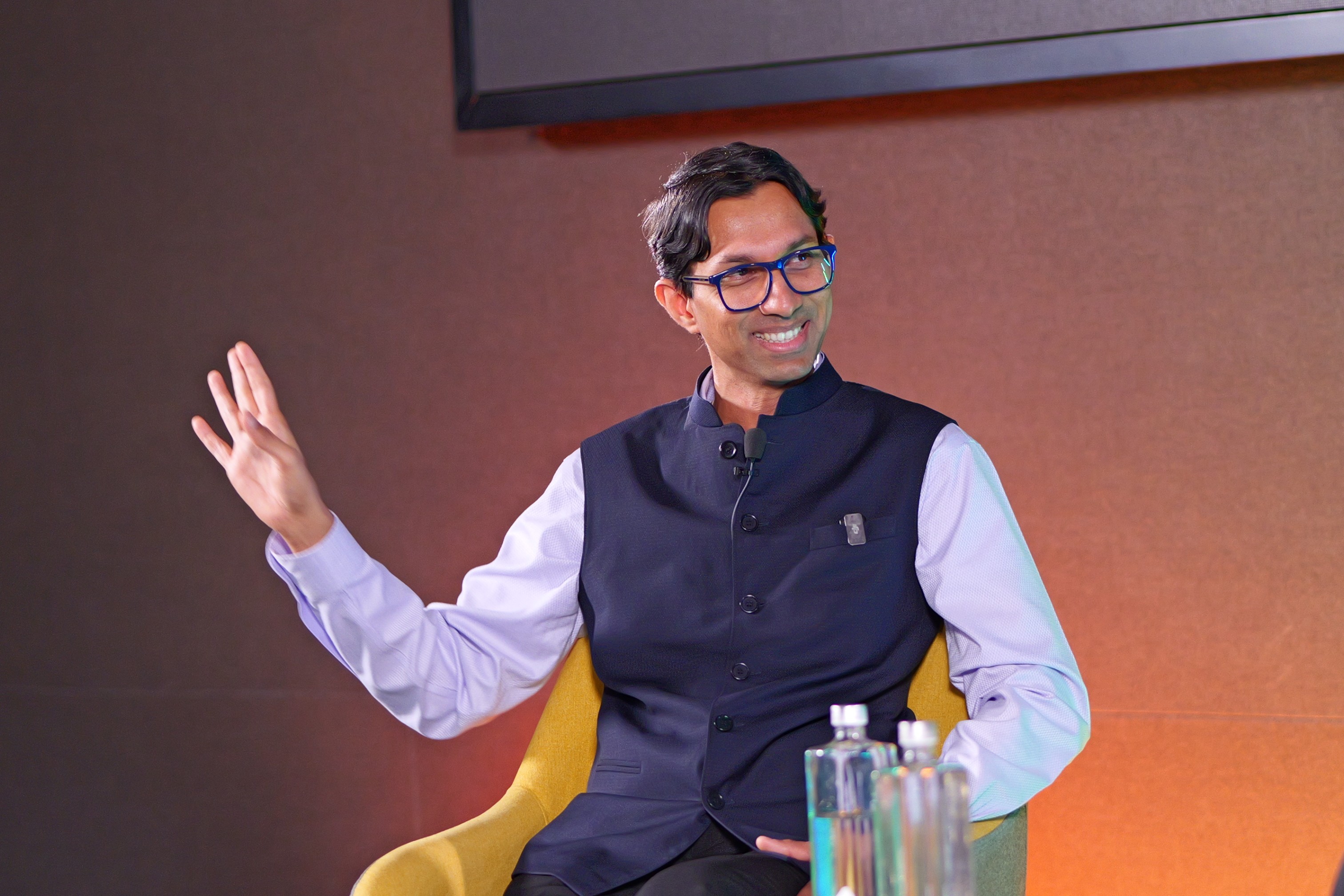
Higher education is undergoing a structural shift rather than a surface-level change. Universities are no longer operating in a protected environment where demand is guaranteed. Student expectations, rising costs, and employability pressures are forcing institutions to rethink their relevance.
In a recent conversation between Pratham Mittal, CEO & Founder - Masters’ Union, and Ashwin Damera, CEO of Eruditus, it became clear that disruption is already visible in the system through declining enrolments in certain colleges and increasing interest in alternative education models. While thousands of universities still operate globally, many are struggling to keep up with evolving learner needs. At the same time, cohort-based and experiential learning platforms are attracting early adopters who prioritise outcomes over credentials.
Higher Education Disruption Trends: Why Universities Are Under Pressure
There are over 20,000 universities globally. Yet, cracks are visible. In the US alone, hundreds of universities have shut down recently. In India, engineering colleges struggle to fill seats. The signal is clear. Demand is shifting.
Ashwin Damera pointed out that disruption is not theoretical. It is already happening. When students stop showing up, the market speaks louder than any policy or ranking.
Why disruption in higher education is accelerating globally
-
Declining enrolment reflects changing student preferences
-
Employability concerns are driving decision-making
-
Alternative education models are gaining early adopters
Product-Market Fit in Education: Why Outcomes Matter More Than Ideas
One of the most striking insights came through a simple analogy. Two teams rowing a boat, one with the current, one against it. The winner is obvious. In education, product-market fit matters more than intent. A great institution in a weak market struggles. A relevant model in a strong market thrives.
What product-market fit means for education providers
-
Programmes must align with real industry demand
-
Student outcomes determine long-term success
-
Market relevance outweighs institutional legacy
Build ROI-Driven Education Models that Reflect Student Realities in India
In India, education is deeply tied to return on investment. Students and families often fund their education themselves. This changes expectations. Ashwin Damera explained that ROI sensitivity is not a flaw. It is a rational response to the market. When students pay from their own pocket, outcomes matter.
Why ROI drives education choices in India
-
High tuition costs increase outcome expectations
-
Job placements remain a critical decision factor
-
Institutions must balance learning with employability
Design Strategies for Foreign Universities Entering India’s Education Market
The entry of foreign universities has sparked debate. Are they advantaged? Or are they operating under different constraints? Ashwin clarified that foreign institutions must meet strict criteria, including global rankings and quality benchmarks, while often charging lower fees in India. The goal is not competition. It is capacity building.
What foreign universities bring to India’s education ecosystem
-
Global standards of teaching and curriculum
-
Increased access to international education locally
-
Retention of talent and capital within India
Innovation in Universities: Slow Change, Long-Term Impact
Education does not change overnight. Unlike startups, universities operate on long cycles. Innovation here is measured in decades.
Ashwin highlighted how global university rankings have shifted over the last century. Countries rise and fall based on investment, research, and ecosystem strength.
Why innovation in higher education takes time
-
Regulatory frameworks slow rapid experimentation
-
Institutional scale makes change complex
-
Long-term investment drives meaningful transformation
How Research Funding Impacts University Competitiveness
A critical but often overlooked factor is research funding. US universities receive tens of billions annually. India operates at a fraction of that. This gap shapes innovation. It determines what gets built, discovered, and commercialised.
How research funding impacts university competitiveness
-
Higher funding enables breakthrough innovation
-
Industry partnerships drive commercial outcomes
-
Research output strengthens global rankings
Specialist vs Generalist Careers: What Students Should Focus On
The debate between specialists and generalists is becoming more relevant in the age of artificial intelligence. Early career stages typically require deep specialization to build strong technical foundations. However, as careers progress, the ability to integrate knowledge across domains becomes more important. AI is also changing this balance by automating certain specialised tasks while increasing demand for adaptable, cross-functional thinkers. At the same time, specialists remain essential for building and maintaining complex systems. The future workforce will require a blend of both capabilities, with education systems needing to prepare students for fluid career paths rather than fixed roles.
How students should approach career development
-
Build specialised skills early in your career
-
Transition to broader roles over time
-
Focus on adaptability in an AI-driven world
Build Trust in New Education Models through Experience-led Learning
For new-age institutions, trust is the hardest barrier. Convincing students is not enough. Parents, peers, and society must believe in the model. Pratham Mittal and Ashwin Damera emphasised that early-stage trust is built through direct experience; campus visits, conversations, and outcomes.
How new education models can build credibility
-
Offer real, tangible experiences to students
-
Showcase alumni success stories
-
Build trust through consistent outcomes
How Education Will Evolve: More Models, More Choice
Education is not a winner-takes-all market. A single institution or model will not dominate it. Instead, the future will see thousands of institutions, each offering unique formats, experiences, and outcomes. The success of one model will inspire many others.
What the future education landscape will look like
-
Multiple models coexisting across regions
-
Increased experimentation in learning formats
-
Greater focus on outcomes over credentials
Education has never really been about certificates or placements. It is about capability, what someone is able to do with what they learn. One student, given the right environment, can go on to build something that impacts thousands. That is the deeper promise of education. And it is why the future of higher education matters now more than ever.