


About us


-
See what students, mentors, alumni and recruiters say about Masters' Union University. Shared highlights and moments that reflect our culture, learning and community. Explore their voices.
OVERVIEW


-
See how Masters’ Union University is represented across leading news and media platforms. Explore articles, features, and press coverage that reflect our journey, initiatives, and growing impact in education, innovation, and industry engagement.
OVERVIEW

-
Explore the awards, rankings and accreditations that recognise the quality, impact and industry relevance of Masters' Union University programmes.
OVERVIEW

-
Explore the reports, brochures, policies, and publications that document Masters' Union University's outcomes, standards, and institutional commitments.
OVERVIEW


PROGRAMMEs
- Highlights
- Curriculum
- Admissions & Fees
- Immersions
- Entrepreneurship
- Careers
- Class Profile
PROGRAMME oVERVIEW
- Highlights
- Curriculum
- Admissions & Fees
- Immersions
- Entrepreneurship
- Career Prospects
- Class Profile
PROGRAMME oVERVIEW
- Highlights
- Curriculum & Faculty
- Immersions
- Admissions & Fees
- Career Prospects
- Class Profile
PROGRAMME oVERVIEW
- Highlights
- Curriculum
PROGRAMME oVERVIEW
- Home
PROGRAMME oVERVIEW
- Highlights
- Curriculum & Faculty
- Admissions & Fees
- Career Prospects
- Class Profile
PROGRAMME oVERVIEW
- Highlights
- Curriculum & Faculty
- Admissions & Fees
- Career Prospects
- Class Profile
PROGRAMME oVERVIEW
- Highlights
- Curriculum
- Admissions & Fees
- Career Prospects
- Class Profile
PROGRAMME oVERVIEW
PROGRAMMEs
- Highlights
- Curriculum & Faculty
- Admissions & Fees
- Career Prospects
- Class Profile
PROGRAMME oVERVIEW
- Highlights
- Curriculum & Faculty
- Admissions & Fees
- Career Prospects
- Class Profile
PROGRAMME oVERVIEW
- Highlights
- Curriculum
- Admissions & Fees
- Career Prospects
- Class Profile
PROGRAMME oVERVIEW
- Highlights
- Curriculum & Faculty
- Admissions & Fees
- Career Prospects
- Class Profile
PROGRAMME oVERVIEW
- Highlights
- Curriculum & Faculty
- Admissions & Fees
- Career Prospects
- Class Profile
PROGRAMME oVERVIEW
- Highlights
- Curriculum
- Admissions & Fees
- Career Prospects
- Class Profile
PROGRAMME oVERVIEW
- Highlights
- Curriculum
- Admissions & Fees
- Career Prospects
- Class Profile
PROGRAMME oVERVIEW
PROGRAMMES
-
PGP in
Technology & Business Management

-
PGP in
Technology & Business Management
(Young Leaders Cohort)
-
MBA in Finance with CFA Pathway
-
Post Graduate Diploma (Human Resources and Organisation Strategy)
-
Post Graduate Diploma (Sports Management and Gaming)
-
PGP in
Applied AI & Agentic Systems
-
PGP in Sustainability &
Business Management
-
Four Nations Global
Business Programme
- Highlights
- Curriculum
- Immersions
- Admissions & Fees
- Career Prospects
- Cohort Profile
PROGRAMME oVERVIEW
- Home
PROGRAMME OVERVIEW
- Highlights
- Curriculum
- Immersions
- Admissions & Fees
- Career Prospects
- Faculty & Student Stories
PROGRAMME oVERVIEW
- Highlights
- Curriculum
- Immersions
- Admissions & Fees
- Career Prospects
PROGRAMME oVERVIEW
- Highlights
- Curriculum & Faculty
- Admissions & Fees
- Career Prospects
PROGRAMME oVERVIEW
- Highlights
- Curriculum & Faculty
- Admissions & Fees
- Career Prospects
PROGRAMME OVERVIEW
- Highlights
- Curriculum & Faculty
- Admissions & Fees
PROGRAMME OVERVIEW
- Highlights
PROGRAMME OVERVIEW
- Highlights
- Curriculum
- Immersions
- Admissions & Fees
- Career Prospects
- Cohort Profile
PROGRAMME oVERVIEW
PROGRAMMES
-
Post Graduate Diploma (Rise General Management)
-
Post Graduate Diploma (Capital Markets & Trading)
-
PGP in US Capital Markets &
Trading
-
PGP
in Entrepreneurship & Business Acceleration
-
Post Graduate Diploma (Rise General Management Global)
-
AI First Operator Programme
-
Bloomberg Equity Research Programme
- Highlights
- Curriculum
- Faculty
- Admissions & Fees
- Career Prospects
- Cohort Profile
PROGRAMME oVERVIEW
- Home
PROGRAMME oVERVIEW
- Highlights
- Curriculum
- Admissions & Fees
PROGRAMME oVERVIEW
- Highlights
- Curriculum
- Admissions & Fees
PROGRAMME oVERVIEW
- Highlights
- Curriculum
- Immersions
- Faculty & Coaches
- Admissions & Fees
- Career Prospects
PROGRAMME oVERVIEW
- Highlights
- Curriculum
PROGRAMME oVERVIEW
- Home
PROGRAMME oVERVIEW
- Highlights
- Global Immersions
- Curriculum
- Faculty & Coaches
- Leadership Learning
- Admissions & Fees
PROGRAMME oVERVIEW
- Highlights
- Curriculum
- Admissions & Fees
PROGRAMME oVERVIEW
PROGRAMMES
- Highlights
- Curriculum
- Beyond Classroom
- Admissions & Fees
PROGRAMME oVERVIEW
- Highlights
- Curriculum
- Beyond Classroom
- Admissions & Fees
PROGRAMME oVERVIEW
- Home
PROGRAMME oVERVIEW
- Home
PROGRAMME oVERVIEW
PROGRAMMES
- Home
PROGRAMME oVERVIEW
- Highlights
- Curriculum
- Beyond Classroom
- Admissions & Fees
PROGRAMME oVERVIEW
- Home
PROGRAMME oVERVIEW
- Home
PROGRAMME oVERVIEW
STUDENT LIFE
- Student Premises
- Amenities
- Hostel Council
oVERVIEW


- Case Union
- UnMute
- Clubs & Committees
oVERVIEW


oVERVIEW

- Healthcare
- BFSI
- Technology
- Manufacturing
- Retail
Industry
- Governments
- Universities
- Startups
- SMEs
- Large Enterprises
Industry
oVERVIEW
PROGRAMMEs
- Highlights
- Curriculum & Faculty
- Admissions & Fees
- Career Prospects
- Class Profile
PROGRAMME oVERVIEW
- Highlights
- Curriculum & Faculty
- Admissions & Fees
- Career Prospects
- Class Profile
PROGRAMME oVERVIEW
- Highlights
- Curriculum
- Admissions & Fees
- Career Prospects
- Class Profile
PROGRAMME oVERVIEW
- Highlights
- Curriculum & Faculty
- Admissions & Fees
- Career Prospects
- Class Profile
PROGRAMME oVERVIEW
- Highlights
- Curriculum & Faculty
- Admissions & Fees
- Career Prospects
- Class Profile
PROGRAMME oVERVIEW
- Highlights
- Curriculum
- Admissions & Fees
- Career Prospects
- Class Profile
PROGRAMME oVERVIEW
- Highlights
- Curriculum
- Admissions & Fees
- Career Prospects
- Class Profile
PROGRAMME oVERVIEW
PROGRAMMES
- Highlights
- Curriculum
- Immersions
- Admissions & Fees
- Career Prospects
- Cohort Profile
PROGRAMME oVERVIEW
- Home
PROGRAMME OVERVIEW
- Highlights
- Curriculum
- Immersions
- Admissions & Fees
- Career Prospects
- Faculty & Student Stories
PROGRAMME oVERVIEW
- Highlights
- Curriculum
- Immersions
- Admissions & Fees
- Career Prospects
PROGRAMME oVERVIEW
- Highlights
- Curriculum & Faculty
- Admissions & Fees
- Career Prospects
PROGRAMME oVERVIEW
- Highlights
- Curriculum
- Immersions
- Admissions & Fees
- Career Prospects
- Cohort Profile
PROGRAMME oVERVIEW
PROGRAMMES
- Highlights
- Curriculum
- Faculty
- Admissions & Fees
- Career Prospects
- Cohort Profile
PROGRAMME oVERVIEW
- Highlights
- Curriculum
- Admissions & Fees
PROGRAMME oVERVIEW
- Highlights
- Curriculum
- Admissions & Fees
PROGRAMME oVERVIEW
- Highlights
- Curriculum
- Immersions
- Faculty & Coaches
- Admissions & Fees
- Career Prospects
PROGRAMME oVERVIEW
- Highlights
- Global Immersions
- Curriculum
- Faculty & Coaches
- Leadership Learning
- Admissions & Fees
PROGRAMME oVERVIEW
- Highlights
- Curriculum
- Admissions & Fees
PROGRAMME oVERVIEW


About Us

Undergraduate
Postgraduate
PGP in Technology & Business Management
PGP in Technology & Business Management
(Young Leaders Cohort)
MBA in Finance with CFA Pathway
Post Graduate Diploma (Human Resources and Organisation Strategy)
Post Graduate Diploma (Sports Management and Gaming)
PGP in Applied AI & Agentic Systems
PGP in Sustainability & Business Management
Four Nations Global Business Programme
Executive
Post Graduate Diploma (Rise General Management)
Post Graduate Diploma (Capital Markets & Trading)
PGP in US Capital Markets & Trading
PGP in Entrepreneurship & Business Acceleration
Post Graduate Diploma (Rise General Management Global)
AI First Operator Programme
Bloomberg Equity Research Programme
Family Business
Immersions
1:1 Executive Coaching
Careers
Innovations
Faculty
MU Ventures
Enterprise L&D
Student Life
Jobs
Become a Master
Merch Store
events
For Companies
Blog
Coach LMS
Business
DPS Director Principal Aditi Mishra on Advancing Education and Teachers
September 29, 2025

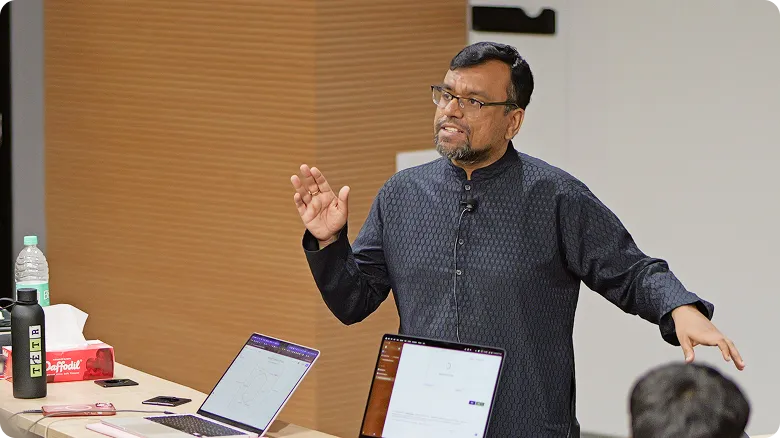
At Masters’ Union, where learning by doing shapes every experience, Professor Ankur Vohra, Head of Institutional Partnerships, spoke with Dr. Aditi Mishra, Principal Director of DPS Sector 45, Gurugram, about how educational leadership can transform schools into thriving communities.
Director Mishra demonstrates that institutions can foster both academic excellence and personal growth for students and teachers. Through strategic combination and empathic planning, she shows that education is as much about nurturing people as it is about delivering the curriculum.
Reideating on Teacher’s Eligibility in Education Industry
Dr. Mishra has redefined teacher eligibility in India, prioritising communication and practical experience over formal qualifications. She emphasises the importance of continuous in-service training to keep educators aligned with evolving student needs. Real-world experience, she believes, is essential to engaging classrooms and creating meaningful learning experiences. Teachers who can translate theory into practice make learning more relevant, helping students connect concepts to everyday life.
What Effective Teaching Requires:
-
Teaching effectiveness relies on communication skills and hands-on experience rather than formal degrees
-
Continuous in-service training ensures teachers adapt to changing educational needs
-
Practical insights from real-world experiences enhance student engagement
How Dr. Aditi Mishra Shaped Her Path to Leadership?
Dr. Mishra’s career began in DPS Vasant Kunj, where hierarchy limited early leadership opportunities. She soon realised that growth required both initiative and patience. Moving to a smaller DPS project school provided space to innovate and take ownership. These early challenges taught her resilience and the value of mentorship. She credits her early mentors for guiding her and providing opportunities that helped her move into larger leadership roles.
Career Lessons:
-
Early career challenges build resilience and adaptability
-
Mentorship can be pivotal in career growth
-
Conviction and willingness to embrace uncertainty enable leadership opportunities
Dr. Mishra’s on Building DPS Sector 45
When DPS Sector 45 opened in 2001, the infrastructure was incomplete. Despite this, early enrolments grew rapidly, and by 2002 the school had 1,200 students. Today, the institution hosts over 5,500 students, highlighting the impact of a strong educational vision. Mishra prioritises happiness for both teachers and students, understanding that a positive environment drives academic success and parental satisfaction. She has cultivated a culture where teachers feel valued and students feel motivated, demonstrating that institutional growth depends as much on human factors as on physical infrastructure.
Principles for Growing a School:
-
DPS Sector 45 expanded rapidly from its initial enrolment to over 5,500 students
-
Teacher and student well-being is central to fostering academic excellence
-
Long-term teacher retention strengthens school culture and consistency
Creating Access: Shiksha Kendra
Beyond elite education, Dr. Mishra founded Shiksha Kendra in 2002, a school for underprivileged children that grew from 50 students to 2,200. The initiative fosters empathy, social awareness, and opportunity, providing children from disadvantaged backgrounds with life-changing access to education.
The programme demonstrates that when schools extend opportunities to underserved communities, the ripple effects can be profound. Students gain confidence, a sense of responsibility, and an understanding of social privilege. Many alumni have progressed to prestigious universities and successful careers, proving the transformative power of access-focused education.
Impact of Inclusive Education:
-
Inclusive education develops empathy, responsibility, and social consciousness
-
Shiksha Kendra enables underprivileged children to access quality education
-
Alumni achievements illustrate the transformative impact of the initiative
Leadership and Sustained Energy
Dr. Mishra maintains her energy and passion for education through the progress and happiness of her students. Even during challenging periods, such as the pandemic, her focus remained on student welfare, underscoring the role of empathy and commitment in sustained educational leadership.
She demonstrates that effective leadership is not limited to administrative skills but is driven by a genuine commitment to the people who are part of the institution. This approach ensures longevity, consistency, and an enduring positive influence on both students and staff.
Sustaining Leadership:
-
Passion and empathy drive long-term leadership effectiveness
-
Student progress and well-being sustain motivation and energy
-
Leadership involves a consistent focus on the holistic development of children
Learn by Doing Philosophy
Dr. Mishra’s philosophy aligns closely with Masters’ Union’s Learn by Doing approach, which integrates practical skills and industry exposure into education. She supports bridging the gap between theoretical knowledge and real-world application, fostering critical thinking, curiosity, and problem-solving.
In her schools, project-based learning and experiential methods have shown that students retain more, understand deeper, and develop skills essential for future challenges. This approach demonstrates that education is most effective when students are active participants rather than passive recipients of information.
Practical Learning in Action:
-
Practical experience is essential alongside foundational learning
-
Industry engagement bridges the gap between theory and real-world application
-
Hands-on projects nurture problem-solving, critical thinking, and curiosity
Education Beyond Academics: A Lasting Impact
Dr. Aditi Mishra’s journey illustrates that transformative education extends beyond academics. It relies on conviction, teacher empowerment, and care for student welfare. Her work at DPS Sector 45 and Shiksha Kendra demonstrates that schools can be incubators of leadership, empathy, and opportunity.
True success is measured not only in academic achievement but in student growth, teacher satisfaction, and societal impact. Her example shows that when leaders prioritise both human and educational development, institutions can thrive sustainably.
Foundations of Transformative Education:
-
Effective education balances academic rigor with empathy and care
-
Leadership requires resilience, vision, and long-term commitment
-
Real impact is evident in student success, teacher engagement, and societal contribution