


About us


-
See what students, mentors, alumni and recruiters say about Masters' Union University. Shared highlights and moments that reflect our culture, learning and community. Explore their voices.
OVERVIEW


-
See how Masters’ Union University is represented across leading news and media platforms. Explore articles, features, and press coverage that reflect our journey, initiatives, and growing impact in education, innovation, and industry engagement.
OVERVIEW
-
Explore the awards, rankings and accreditations that recognise the quality, impact and industry relevance of Masters' Union University programmes.
OVERVIEW

-
Explore the reports, brochures, policies, and publications that document Masters' Union University's outcomes, standards, and institutional commitments.
OVERVIEW


PROGRAMMEs
- Highlights
- Curriculum
- Admissions & Fees
- Immersions
- Entrepreneurship
- Careers
- Class Profile
PROGRAMME oVERVIEW
- Highlights
- Curriculum
- Admissions & Fees
- Immersions
- Entrepreneurship
- Career Prospects
- Class Profile
PROGRAMME oVERVIEW
- Highlights
- Curriculum & Faculty
- Immersions
- Admissions & Fees
- Career Prospects
- Class Profile
PROGRAMME oVERVIEW
- Highlights
- Curriculum
PROGRAMME oVERVIEW
- Home
PROGRAMME oVERVIEW
- Highlights
- Curriculum & Faculty
- Admissions & Fees
- Career Prospects
- Class Profile
PROGRAMME oVERVIEW
- Highlights
- Curriculum & Faculty
- Admissions & Fees
- Career Prospects
- Class Profile
PROGRAMME oVERVIEW
- Highlights
- Curriculum
- Admissions & Fees
- Career Prospects
- Class Profile
PROGRAMME oVERVIEW
PROGRAMMEs
- Highlights
- Curriculum & Faculty
- Admissions & Fees
- Career Prospects
- Class Profile
PROGRAMME oVERVIEW
- Highlights
- Curriculum & Faculty
- Admissions & Fees
- Career Prospects
- Class Profile
PROGRAMME oVERVIEW
- Highlights
- Curriculum
- Admissions & Fees
- Career Prospects
- Class Profile
PROGRAMME oVERVIEW
- Highlights
- Curriculum & Faculty
- Admissions & Fees
- Career Prospects
- Class Profile
PROGRAMME oVERVIEW
- Highlights
- Curriculum & Faculty
- Admissions & Fees
- Career Prospects
- Class Profile
PROGRAMME oVERVIEW
- Highlights
- Curriculum
- Admissions & Fees
- Career Prospects
- Class Profile
PROGRAMME oVERVIEW
- Highlights
- Curriculum
- Admissions & Fees
- Career Prospects
- Class Profile
PROGRAMME oVERVIEW
PROGRAMMES
-
PGP in
Technology & Business Management

-
PGP in
Technology & Business Management
(Young Leaders Cohort)
-
Post Graduate Diploma (Human Resources and Organisation Strategy)
-
Post Graduate Diploma (Sports Management and Gaming)
-
PGP in
Applied AI & Agentic Systems
-
PGP in Sustainability &
Business Management
-
Four Nations Global
Business Programme
- Highlights
- Curriculum
- Immersions
- Admissions & Fees
- Career Prospects
- Cohort Profile
PROGRAMME oVERVIEW
- Highlights
- Curriculum
- Immersions
- Admissions & Fees
- Career Prospects
- Faculty & Student Stories
PROGRAMME oVERVIEW
- Highlights
- Curriculum
- Immersions
- Admissions & Fees
- Career Prospects
PROGRAMME oVERVIEW
- Highlights
- Curriculum & Faculty
- Admissions & Fees
- Career Prospects
PROGRAMME oVERVIEW
- Highlights
- Curriculum & Faculty
- Admissions & Fees
- Career Prospects
PROGRAMME OVERVIEW
- Highlights
- Curriculum & Faculty
- Admissions & Fees
PROGRAMME OVERVIEW
- Highlights
PROGRAMME OVERVIEW
- Highlights
- Curriculum
- Immersions
- Admissions & Fees
- Career Prospects
- Cohort Profile
PROGRAMME oVERVIEW
PROGRAMMES
-
Post Graduate Diploma (Rise General Management)
-
Post Graduate Diploma (Capital Markets & Trading)
-
PGP in US Capital Markets &
Trading
-
PGP
in Entrepreneurship & Business Acceleration
-
Post Graduate Diploma (Rise General Management Global)
-
AI First Operator Programme
-
Bloomberg Equity Research Programme
- Highlights
- Curriculum
- Faculty
- Admissions & Fees
- Career Prospects
- Cohort Profile
PROGRAMME oVERVIEW
- Home
PROGRAMME oVERVIEW
- Highlights
- Curriculum
- Admissions & Fees
PROGRAMME oVERVIEW
- Highlights
- Curriculum
- Admissions & Fees
PROGRAMME oVERVIEW
- Highlights
- Curriculum
- Immersions
- Faculty & Coaches
- Admissions & Fees
- Career Prospects
PROGRAMME oVERVIEW
- Highlights
- Curriculum
PROGRAMME oVERVIEW
- Home
PROGRAMME oVERVIEW
- Highlights
- Global Immersions
- Curriculum
- Faculty & Coaches
- Leadership Learning
- Admissions & Fees
PROGRAMME oVERVIEW
- Highlights
- Curriculum
- Admissions & Fees
PROGRAMME oVERVIEW
PROGRAMMES
- Highlights
- Curriculum
- Beyond Classroom
- Admissions & Fees
PROGRAMME oVERVIEW
- Highlights
- Curriculum
- Beyond Classroom
- Admissions & Fees
PROGRAMME oVERVIEW
- Home
PROGRAMME oVERVIEW
- Home
PROGRAMME oVERVIEW
PROGRAMMES
- Home
PROGRAMME oVERVIEW
- Highlights
- Curriculum
- Beyond Classroom
- Admissions & Fees
PROGRAMME oVERVIEW
- Home
PROGRAMME oVERVIEW
- Home
PROGRAMME oVERVIEW
STUDENT LIFE
- Student Premises
- Amenities
- Hostel Council
oVERVIEW


- Case Union
- UnMute
- Clubs & Committees
oVERVIEW

oVERVIEW

- Healthcare
- BFSI
- Technology
- Manufacturing
- Retail
Industry
- Governments
- Universities
- Startups
- SMEs
- Large Enterprises
Industry
oVERVIEW
PROGRAMMEs
- Highlights
- Curriculum & Faculty
- Admissions & Fees
- Career Prospects
- Class Profile
PROGRAMME oVERVIEW
- Highlights
- Curriculum & Faculty
- Admissions & Fees
- Career Prospects
- Class Profile
PROGRAMME oVERVIEW
- Highlights
- Curriculum
- Admissions & Fees
- Career Prospects
- Class Profile
PROGRAMME oVERVIEW
- Highlights
- Curriculum & Faculty
- Admissions & Fees
- Career Prospects
- Class Profile
PROGRAMME oVERVIEW
- Highlights
- Curriculum & Faculty
- Admissions & Fees
- Career Prospects
- Class Profile
PROGRAMME oVERVIEW
- Highlights
- Curriculum
- Admissions & Fees
- Career Prospects
- Class Profile
PROGRAMME oVERVIEW
- Highlights
- Curriculum
- Admissions & Fees
- Career Prospects
- Class Profile
PROGRAMME oVERVIEW
PROGRAMMES
- Highlights
- Curriculum
- Immersions
- Admissions & Fees
- Career Prospects
- Cohort Profile
PROGRAMME oVERVIEW
- Highlights
- Curriculum
- Immersions
- Admissions & Fees
- Career Prospects
- Faculty & Student Stories
PROGRAMME oVERVIEW
- Highlights
- Curriculum
- Immersions
- Admissions & Fees
- Career Prospects
PROGRAMME oVERVIEW
- Highlights
- Curriculum & Faculty
- Admissions & Fees
- Career Prospects
PROGRAMME oVERVIEW
- Highlights
- Curriculum
- Immersions
- Admissions & Fees
- Career Prospects
- Cohort Profile
PROGRAMME oVERVIEW
PROGRAMMES
- Highlights
- Curriculum
- Faculty
- Admissions & Fees
- Career Prospects
- Cohort Profile
PROGRAMME oVERVIEW
- Highlights
- Curriculum
- Admissions & Fees
PROGRAMME oVERVIEW
- Highlights
- Curriculum
- Admissions & Fees
PROGRAMME oVERVIEW
- Highlights
- Curriculum
- Immersions
- Faculty & Coaches
- Admissions & Fees
- Career Prospects
PROGRAMME oVERVIEW
- Highlights
- Global Immersions
- Curriculum
- Faculty & Coaches
- Leadership Learning
- Admissions & Fees
PROGRAMME oVERVIEW
- Highlights
- Curriculum
- Admissions & Fees
PROGRAMME oVERVIEW


About Us

Undergraduate
Postgraduate
PGP in Technology & Business Management
PGP in Technology & Business Management
(Young Leaders Cohort)
Post Graduate Diploma (Human Resources and Organisation Strategy)
Post Graduate Diploma (Sports Management and Gaming)
PGP in Applied AI & Agentic Systems
PGP in Sustainability & Business Management
Four Nations Global Business Programme
Executive
Post Graduate Diploma (Rise General Management)
Post Graduate Diploma (Capital Markets & Trading)
PGP in US Capital Markets & Trading
PGP in Entrepreneurship & Business Acceleration
Post Graduate Diploma (Rise General Management Global)
AI First Operator Programme
Bloomberg Equity Research Programme
Family Business
Immersions
1:1 Executive Coaching
Careers
Innovations
Faculty
MU Ventures
Enterprise L&D
Student Life
Jobs
Become a Master
Merch Store
events
For Companies
Blog
Coach LMS
Emerging Careers for Non-Tech
Strategy Roles for Non-Tech Backgrounds, What the Market Is Actually Saying
April 17, 2026
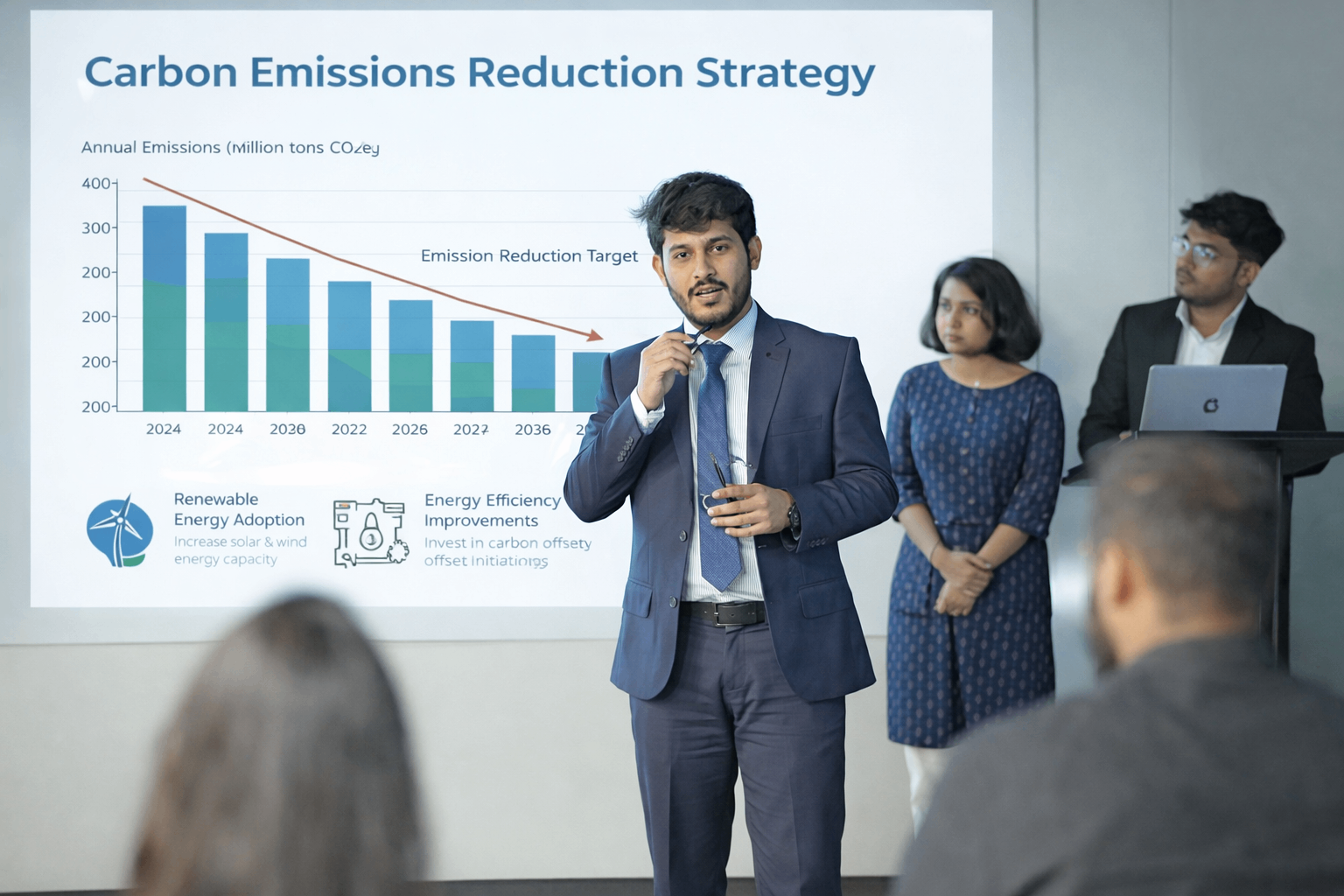
....There is a widely held assumption in career conversations that strategy, consulting, and sustainability leadership belong to engineers. That if you studied business, economics, communications, or the humanities, you are somehow playing for a different league. This belief shapes how people think about business strategy career paths in India and It is worth examining where that assumption breaks down.
Because the data tells a different story. A 2024 BCG study found that 52% of S&P 500 and FTSE 100 companies now have a senior sustainability leader up 10 points in a single year. The CSO role has grown seven-fold in just over a decade. And the professionals filling these roles are not primarily engineers or scientists.
66% of Chief Sustainability Officers come from economics, business, or general management backgrounds. Many entered from communications, policy, and finance. The assumption that only technical profiles qualify for strategy roles for non-tech backgrounds was never accurate and the market has confirmed it.
What Strategic Roles Actually Evaluate?
Here is where most candidates get it wrong: they assume how to get a strategy job without a tech background comes down to acquiring technical knowledge. In practice, they are won on something else entirely.
Consulting firms run case interviews not to test what you know, but how you think. Structured problem solving, quantitative reasoning, and the ability to communicate clearly under pressure are the filters. And 75% of consulting recruiters rate emotional intelligence above IQ in their hiring decisions.
For strategy and sustainability leadership roles, the criteria shift further. What firms evaluate is strategic vision, cross-functional leadership, stakeholder management, and the ability to connect sustainability goals to measurable business outcomes.
The KPIs these leaders are measured reflect the same logic ESG integration across business units, quality of investor disclosures, and how quickly they align an entire organisation around a new strategic direction.
These are management skills, communication skills, systems thinking which is built through business education and not engineering programmes.
Where Non-Tech Backgrounds Have a Natural Edge?
Business, economics, humanities, and commerce backgrounds develop specific capabilities that engineers often have to deliberately build communication across functions, comfort with ambiguity, qualitative reasoning, and the ability to read organisations and people.
These are precisely the skills that separate a good analyst from a great strategist and they are exactly what makes non-tech to strategy career transitions not just possible, but logical.
Consider what the most sought-after strategy jobs after graduation for non-tech professionals actually require day to day: influencing a board without direct authority, translating a complex regulatory shift into a business decision, aligning a supply chain team, a finance team, and an external stakeholder around a single direction. None of that is a technical problem. All of it is a management one.
Which is why professionals from Cornell, NYU, Oxford, and NASA with backgrounds spanning economics, communications, policy, and social entrepreneurship are teaching in sustainability business programmes today. Not because they represent the exception. Because they represent what the field actually looks like at its most senior levels.
What Closes the Gap?
Knowing that the door is open is one thing. Knowing how to walk through it is another.
The missing layer for most non-tech professionals exploring non-technical high-paying jobs in India isn't subject matter knowledge, it's applied experience. The ability to take business and strategy skills and use them on real sustainability problems, with real constraints, in real time.
That is precisely what a well-designed curriculum builds. Not theory in a classroom, but live work that mirrors what these roles actually demand.
Designing ESG strategies for listed-style companies modelled on Tata, Infosys, and Unilever. Building audit-ready ESG reports from multi-year data. Rebuilding supply chains for low-carbon scale for businesses like Flipkart and BigBasket. Designing India's sustainability regulation for FMCG and e-commerce sectors. Launching sustainability-focused ventures with real GMV targets.
These are not hypothetical exercises. They are the exact problems that ESG consultants, sustainability managers, carbon market specialists, and strategy leads are paid to solve.
The faculty guiding this work includes partners from zero-carbon capital funds, ESG advisors from global financial institutions, sustainability officers who have built and scaled green ventures, founders operating at the intersection of climate and commerce, and former directors from organisations including Tesla and NASA.
Not because their names carry weight. Because their careers are proof that the path exists and that it is built on exactly the skills a business education develops.
So Where Does That Leave You?
The gap between where non-tech professionals are and where they want to be in strategy jobs after post-graduation in sustainability is not a gap in intelligence or ambition. It is a gap in exposure, application, and framing.
Managers with green skills already command a 13% wage premium over peers. Green hiring is growing fastest not in sustainability firms but in financial services, technology, retail, and logistics industries that need business thinkers who understand the sustainability landscape, not scientists who have never built a P&L.
The question was never whether non-tech professionals can build a business strategy career path in India through sustainability. The question is whether they are building the right skills in the right environment to get there.
FAQs
1. Can someone without a technical or engineering background apply?
Yes. The programme is designed for professionals and graduates from business, economics, communications, and humanities backgrounds looking to build careers in sustainability strategy.
2. What kind of strategy roles does this programme prepare you for?
Roles including ESG consulting, carbon market strategy, sustainable finance, supply chain management, and Chief Sustainability Officer tracks across Indian and global organisations.
3. Do I need prior knowledge of sustainability to join?
No prior sustainability expertise is required. The curriculum builds fluency in ESG frameworks, carbon accounting, climate risk, and business strategy from the ground up.
4. Who teaches on this programme?
The faculty includes ESG advisors from global financial institutions, partners from zero-carbon capital funds, sustainability founders, and former directors from organisations including Tesla and NASA.
5. What real-world work will I do during the programme?
You will design ESG strategies for listed-style companies, build audit-ready sustainability reports, redesign supply chains for low-carbon scale, and launch sustainability-focused ventures with real business targets.
6. How does this programme help non-tech professionals move into high-paying strategy roles?
By combining business strategy with applied sustainability work, the programme builds the exact skills, systems thinking, stakeholder management, ESG fluency that employers in financial services, consulting, and corporate strategy are actively hiring for.