


About us


-
See what students, mentors, alumni and recruiters say about Masters' Union University. Shared highlights and moments that reflect our culture, learning and community. Explore their voices.
OVERVIEW


-
See how Masters’ Union University is represented across leading news and media platforms. Explore articles, features, and press coverage that reflect our journey, initiatives, and growing impact in education, innovation, and industry engagement.
OVERVIEW
-
Explore the awards, rankings and accreditations that recognise the quality, impact and industry relevance of Masters' Union University programmes.
OVERVIEW

-
Explore the reports, brochures, policies, and publications that document Masters' Union University's outcomes, standards, and institutional commitments.
OVERVIEW


PROGRAMMEs
- Highlights
- Curriculum
- Admissions & Fees
- Immersions
- Entrepreneurship
- Careers
- Class Profile
PROGRAMME oVERVIEW
- Highlights
- Curriculum
- Admissions & Fees
- Immersions
- Entrepreneurship
- Career Prospects
- Class Profile
PROGRAMME oVERVIEW
- Highlights
- Curriculum & Faculty
- Immersions
- Admissions & Fees
- Career Prospects
- Class Profile
PROGRAMME oVERVIEW
- Highlights
- Curriculum
PROGRAMME oVERVIEW
- Home
PROGRAMME oVERVIEW
- Highlights
- Curriculum & Faculty
- Admissions & Fees
- Career Prospects
- Class Profile
PROGRAMME oVERVIEW
- Highlights
- Curriculum & Faculty
- Admissions & Fees
- Career Prospects
- Class Profile
PROGRAMME oVERVIEW
- Highlights
- Curriculum
- Admissions & Fees
- Career Prospects
- Class Profile
PROGRAMME oVERVIEW
PROGRAMMEs
- Highlights
- Curriculum & Faculty
- Admissions & Fees
- Career Prospects
- Class Profile
PROGRAMME oVERVIEW
- Highlights
- Curriculum & Faculty
- Admissions & Fees
- Career Prospects
- Class Profile
PROGRAMME oVERVIEW
- Highlights
- Curriculum
- Admissions & Fees
- Career Prospects
- Class Profile
PROGRAMME oVERVIEW
- Highlights
- Curriculum & Faculty
- Admissions & Fees
- Career Prospects
- Class Profile
PROGRAMME oVERVIEW
- Highlights
- Curriculum & Faculty
- Admissions & Fees
- Career Prospects
- Class Profile
PROGRAMME oVERVIEW
- Highlights
- Curriculum
- Admissions & Fees
- Career Prospects
- Class Profile
PROGRAMME oVERVIEW
- Highlights
- Curriculum
- Admissions & Fees
- Career Prospects
- Class Profile
PROGRAMME oVERVIEW
PROGRAMMES
-
PGP in
Technology & Business Management

-
PGP in
Technology & Business Management
(Young Leaders Cohort)
-
MBA in Finance with CFA Pathway
-
Post Graduate Diploma (Human Resources and Organisation Strategy)
-
Post Graduate Diploma (Sports Management and Gaming)
-
PGP in
Applied AI & Agentic Systems
-
PGP in Sustainability &
Business Management
-
Four Nations Global
Business Programme
- Highlights
- Curriculum
- Immersions
- Admissions & Fees
- Career Prospects
- Cohort Profile
PROGRAMME oVERVIEW
- Home
PROGRAMME OVERVIEW
- Highlights
- Curriculum
- Immersions
- Admissions & Fees
- Career Prospects
- Faculty & Student Stories
PROGRAMME oVERVIEW
- Highlights
- Curriculum
- Immersions
- Admissions & Fees
- Career Prospects
PROGRAMME oVERVIEW
- Highlights
- Curriculum & Faculty
- Admissions & Fees
- Career Prospects
PROGRAMME oVERVIEW
- Highlights
- Curriculum & Faculty
- Admissions & Fees
- Career Prospects
PROGRAMME OVERVIEW
- Highlights
- Curriculum & Faculty
- Admissions & Fees
PROGRAMME OVERVIEW
- Highlights
PROGRAMME OVERVIEW
- Highlights
- Curriculum
- Immersions
- Admissions & Fees
- Career Prospects
- Cohort Profile
PROGRAMME oVERVIEW
PROGRAMMES
-
Post Graduate Diploma (Rise General Management)
-
Post Graduate Diploma (Capital Markets & Trading)
-
PGP in US Capital Markets &
Trading
-
PGP
in Entrepreneurship & Business Acceleration
-
Post Graduate Diploma (Rise General Management Global)
-
AI First Operator Programme
-
Bloomberg Equity Research Programme
- Highlights
- Curriculum
- Faculty
- Admissions & Fees
- Career Prospects
- Cohort Profile
PROGRAMME oVERVIEW
- Home
PROGRAMME oVERVIEW
- Highlights
- Curriculum
- Admissions & Fees
PROGRAMME oVERVIEW
- Highlights
- Curriculum
- Admissions & Fees
PROGRAMME oVERVIEW
- Highlights
- Curriculum
- Immersions
- Faculty & Coaches
- Admissions & Fees
- Career Prospects
PROGRAMME oVERVIEW
- Highlights
- Curriculum
PROGRAMME oVERVIEW
- Home
PROGRAMME oVERVIEW
- Highlights
- Global Immersions
- Curriculum
- Faculty & Coaches
- Leadership Learning
- Admissions & Fees
PROGRAMME oVERVIEW
- Highlights
- Curriculum
- Admissions & Fees
PROGRAMME oVERVIEW
PROGRAMMES
- Highlights
- Curriculum
- Beyond Classroom
- Admissions & Fees
PROGRAMME oVERVIEW
- Highlights
- Curriculum
- Beyond Classroom
- Admissions & Fees
PROGRAMME oVERVIEW
- Home
PROGRAMME oVERVIEW
- Home
PROGRAMME oVERVIEW
PROGRAMMES
- Home
PROGRAMME oVERVIEW
- Highlights
- Curriculum
- Beyond Classroom
- Admissions & Fees
PROGRAMME oVERVIEW
- Home
PROGRAMME oVERVIEW
- Home
PROGRAMME oVERVIEW
STUDENT LIFE
- Student Premises
- Amenities
- Hostel Council
oVERVIEW


- Case Union
- UnMute
- Clubs & Committees
oVERVIEW

oVERVIEW

- Healthcare
- BFSI
- Technology
- Manufacturing
- Retail
Industry
- Governments
- Universities
- Startups
- SMEs
- Large Enterprises
Industry
oVERVIEW
PROGRAMMEs
- Highlights
- Curriculum & Faculty
- Admissions & Fees
- Career Prospects
- Class Profile
PROGRAMME oVERVIEW
- Highlights
- Curriculum & Faculty
- Admissions & Fees
- Career Prospects
- Class Profile
PROGRAMME oVERVIEW
- Highlights
- Curriculum
- Admissions & Fees
- Career Prospects
- Class Profile
PROGRAMME oVERVIEW
- Highlights
- Curriculum & Faculty
- Admissions & Fees
- Career Prospects
- Class Profile
PROGRAMME oVERVIEW
- Highlights
- Curriculum & Faculty
- Admissions & Fees
- Career Prospects
- Class Profile
PROGRAMME oVERVIEW
- Highlights
- Curriculum
- Admissions & Fees
- Career Prospects
- Class Profile
PROGRAMME oVERVIEW
- Highlights
- Curriculum
- Admissions & Fees
- Career Prospects
- Class Profile
PROGRAMME oVERVIEW
PROGRAMMES
- Highlights
- Curriculum
- Immersions
- Admissions & Fees
- Career Prospects
- Cohort Profile
PROGRAMME oVERVIEW
- Home
PROGRAMME OVERVIEW
- Highlights
- Curriculum
- Immersions
- Admissions & Fees
- Career Prospects
- Faculty & Student Stories
PROGRAMME oVERVIEW
- Highlights
- Curriculum
- Immersions
- Admissions & Fees
- Career Prospects
PROGRAMME oVERVIEW
- Highlights
- Curriculum & Faculty
- Admissions & Fees
- Career Prospects
PROGRAMME oVERVIEW
- Highlights
- Curriculum
- Immersions
- Admissions & Fees
- Career Prospects
- Cohort Profile
PROGRAMME oVERVIEW
PROGRAMMES
- Highlights
- Curriculum
- Faculty
- Admissions & Fees
- Career Prospects
- Cohort Profile
PROGRAMME oVERVIEW
- Highlights
- Curriculum
- Admissions & Fees
PROGRAMME oVERVIEW
- Highlights
- Curriculum
- Admissions & Fees
PROGRAMME oVERVIEW
- Highlights
- Curriculum
- Immersions
- Faculty & Coaches
- Admissions & Fees
- Career Prospects
PROGRAMME oVERVIEW
- Highlights
- Global Immersions
- Curriculum
- Faculty & Coaches
- Leadership Learning
- Admissions & Fees
PROGRAMME oVERVIEW
- Highlights
- Curriculum
- Admissions & Fees
PROGRAMME oVERVIEW


About Us

Undergraduate
Postgraduate
PGP in Technology & Business Management
PGP in Technology & Business Management
(Young Leaders Cohort)
MBA in Finance with CFA Pathway
Post Graduate Diploma (Human Resources and Organisation Strategy)
Post Graduate Diploma (Sports Management and Gaming)
PGP in Applied AI & Agentic Systems
PGP in Sustainability & Business Management
Four Nations Global Business Programme
Executive
Post Graduate Diploma (Rise General Management)
Post Graduate Diploma (Capital Markets & Trading)
PGP in US Capital Markets & Trading
PGP in Entrepreneurship & Business Acceleration
Post Graduate Diploma (Rise General Management Global)
AI First Operator Programme
Bloomberg Equity Research Programme
Family Business
Immersions
1:1 Executive Coaching
Careers
Innovations
Faculty
MU Ventures
Enterprise L&D
Student Life
Jobs
Become a Master
Merch Store
events
For Companies
Blog
Coach LMS
Emerging Careers
MBA in Sustainability vs MBA in ESG: Which Degree Pays Off More in 2026?
May 15, 2026
A few years ago, if someone had said they wanted to build a career in sustainability, most people would have assumed they meant environmental activism or NGO work.
Today, the same person could end up working in investment banking, consulting, climate-tech, manufacturing, venture capital, or supply chain strategy. That is how dramatically the sustainability conversation has shifted.
Businesses are now being asked difficult questions by investors, regulators, and consumers:
-
How are you reducing emissions?
-
What climate risks could affect your business?
-
Are your supply chains sustainable?
And suddenly, companies need professionals who can answer those questions in commercial terms. That explains why ESG jobs, sustainability careers, and climate finance have become some of the fastest-growing career conversations right now.
But it has also created confusion for students. Should you pursue an MBA in Sustainability Management or ESG course? The two sound similar on paper but lead very differently.
Why Sustainability Talent has Suddenly Become so Valuable?
The global ESG investing market was valued at USD 39.08 trillion in 2025 and is projected to grow sharply over the next decade. Businesses across industries are building sustainability and ESG teams faster than the talent ecosystem can currently support.
In India, the momentum is even stronger. SEBI’s BRSR disclosure mandates, investor scrutiny, and net-zero commitments are pushing companies to integrate sustainability into finance, operations, procurement, and supply chains.
The talent gap is already becoming visible:
-
ESG hiring demand is accelerating across industries
-
Sustainability is moving into mainstream business functions
-
India is still early in building a strong sustainability talent pipeline
Business Management in Sustainability is Bigger Than Most People Think
When people hear “sustainability”, they often imagine carbon emissions, recycling campaigns, or CSR presentations.
In reality, sustainability management today sits much closer to core business strategy. It affects how products are designed, how supply chains operate, how companies raise money, and even how investors value businesses.
A professional working in sustainability management might help:
-
Redesign a company’s supply chain to reduce waste
-
Build a circular business model
-
Evaluate climate finance opportunities
-
Create long-term decarbonisation strategies
In simple terms, sustainability management is about helping businesses grow responsibly without becoming irrelevant in the future. That is why companies are no longer hiring sustainability professionals only for reporting roles. They want people who understand business first and sustainability second.
What Qualifications Are Companies Looking for in Sustainability Experts?
Most people still associate sustainability with carbon emissions, CSR initiatives, or recycling campaigns.
But sustainability management today influences how businesses operate altogether. It affects product design, supply chains, operational efficiency, investor relations, and long-term business strategy.
A sustainability professional today may work on:
-
climate finance projects,
-
circular business models,
-
green supply chains,
-
or decarbonisation strategies.
The role itself has evolved significantly:
-
Sustainability now sits closer to finance and operations
-
Companies want commercially aware sustainability professionals
-
Business strategy and climate thinking are increasingly connected
What Made ESG Jobs Explod in the Last Few Years?
ESG stands for Environmental, Social, and Governance. Unlike broader sustainability management, ESG is often more measurement-driven. It focuses on how companies report, disclose, and manage risks related to sustainability.
And right now, every major company is under pressure to prove it is taking ESG seriously. Investors are asking tougher questions. Regulators are introducing stricter frameworks. Consumers are paying attention to corporate behaviour in ways they never did before.
According to PwC’s Global Investor Survey, 79% of investors now consider ESG risks and opportunities before making investment decisions.
That has created a surge in ESG jobs across:
-
consulting firms
-
investment companies
-
listed corporations
-
risk advisory teams
-
and sustainability reporting functions
Global players like BlackRock and Vanguard are already influencing how sustainable finance frameworks evolve globally. Even in India, ESG reporting is no longer optional for many businesses because of SEBI’s BRSR disclosure mandates.
The Difference Between MBA In Sustainability Management vs ESG Course
This is where many students get confused. An ESG certification India programme usually focuses on frameworks, disclosures, reporting standards, and governance metrics. It is designed to help professionals understand how ESG systems work in practice.
An MBA in Sustainability Management takes a broader business approach. It explores how sustainability affects operations, finance, business strategy, supply chains, and organisational decision-making.
The difference becomes clearer in the careers each path prepares you for.
|
MBA in Sustainability Management |
ESG Course India |
|
Broader business education |
Specialised ESG knowledge |
|
Focuses on business transformation |
Focuses on reporting and compliance |
|
Covers operations, finance, and climate strategy |
Covers ESG frameworks and disclosures |
|
Better suited for leadership roles |
Useful for faster upskilling |
|
Offers long-term career flexibility |
Strong short-term domain entry |
Both pathways have value. But they solve different problems.
The distinction matters because:
-
ESG certifications are more specialised
-
Sustainability MBAs offer wider business exposure
-
Career growth depends heavily on long-term role alignment
How Crucial Is It for Business Leaders to Know About Sustainability Before Leading It?
There is no universal answer when choosing between sustainability management and ESG certifications. If you already work in finance, consulting, auditing, or compliance, a sustainability certification or ESG certification India programme may help you move into ESG-focused roles relatively quickly.
But if you are looking at long-term sustainability careers in climate-tech, renewable energy, sustainability consulting, or climate finance, a full-time MBA in Sustainability Management may create stronger career mobility over time.
The bigger shift happening right now is this: companies no longer want sustainability professionals who only understand frameworks. They want people who can make business decisions with sustainability in mind.
That is changing hiring priorities:
-
Employers increasingly value interdisciplinary business skills
-
Sustainability strategy is becoming commercially driven
-
Leadership roles require broader business understanding
How Sustainability Consulting Became A High-Growth Career Path?
One of the biggest growth areas right now is sustainability consulting careers. Businesses are trying to answer difficult operational questions:
-
How do we reduce emissions?
-
How do we comply with ESG regulations?
-
How do we redesign supply chains responsibly?
-
How do we prepare for climate risks?
Most companies still do not have enough in-house expertise to solve these problems alone. That has created opportunities across Big Four firms, ESG advisory companies, climate-tech startups, renewable energy businesses, and sustainability-focused venture funds. What makes these roles particularly interesting is that the work is highly practical.
Sustainability consultants are not simply preparing reports or discussing frameworks in theory. They are solving real business problems tied to operations, finance, supply chains, and climate strategy. Which is why employers increasingly value problem-solving and commercial thinking just as much as ESG knowledge itself.
How Business Schools Are Adapting To The Sustainability Economy
The nature of sustainability work itself has changed. Companies are no longer hiring people simply to prepare reports or manage compliance checklists. They want professionals who understand finance, operations, climate risk, business strategy, and implementation together.
That shift is influencing how newer business programmes are being designed.
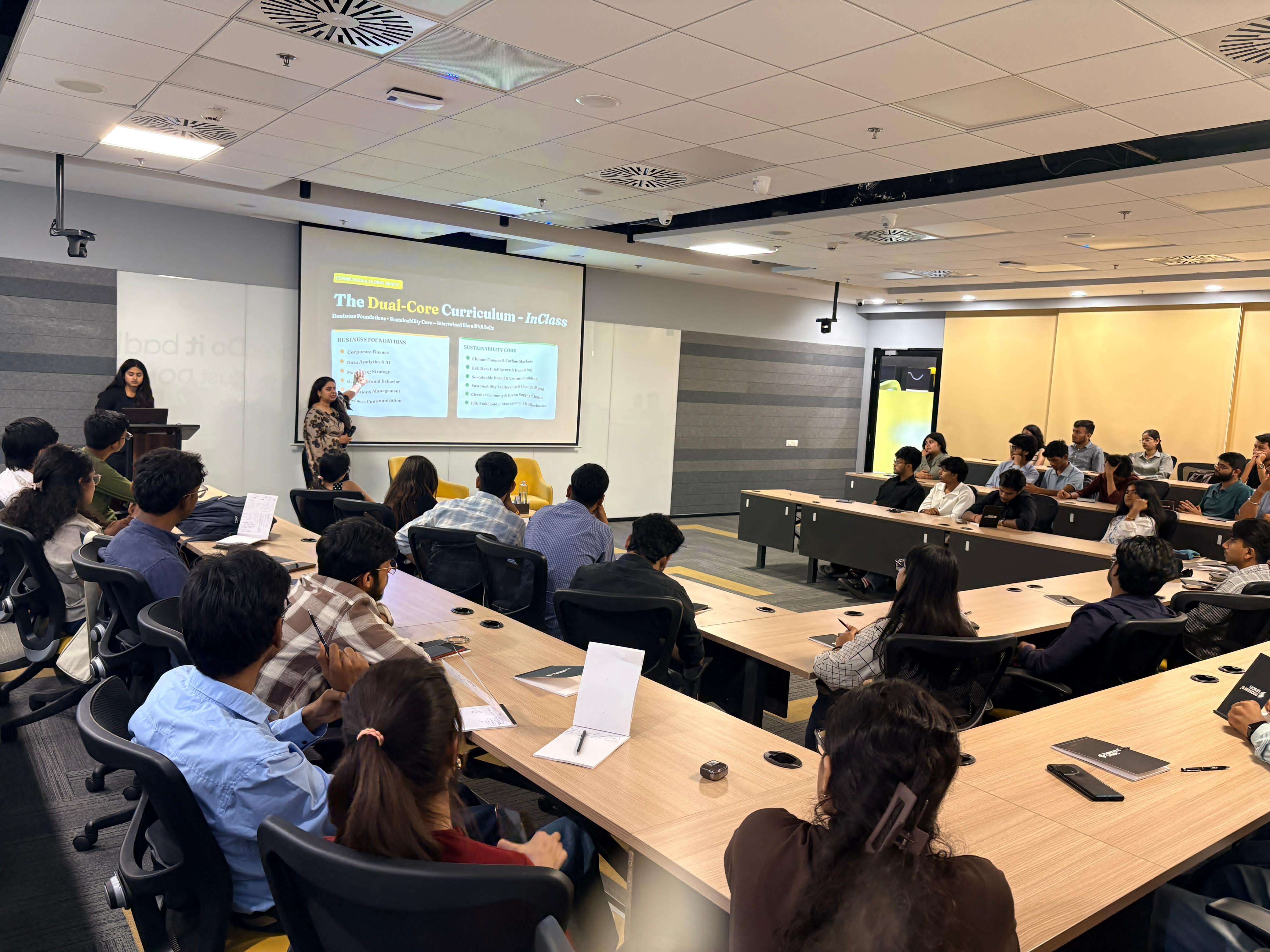
At Masters’ Union, the Post Graduate Programme in Sustainability & Business Management approaches sustainability through live business application rather than only theoretical learning.
The programme covers:
-
Carbon accounting and BRSR reporting
-
Climate finance
-
ESG strategy
-
Circular business models
-
Green supply chain management
Students also work on live sustainability projects, consulting-style problem-solving, and ESG reporting exercises while learning from climate-tech founders, ESG practitioners, policymakers, and sustainability leaders.
The structure reflects the direction the industry itself is moving in. Sustainability education is becoming far more application-driven, with employers placing increasing value on practical business exposure rather than theoretical understanding alone. As sustainability begins influencing finance, operations, strategy, and supply chains simultaneously, interdisciplinary learning is also becoming a significant advantage in hiring.
India’s Move Towards Sustainability: Green Roles in High Demand
India is still relatively early in its sustainability transition, which is exactly why the opportunity is so large. Companies like Tata Group, Infosys, Mahindra Group, and Unilever are already investing heavily in sustainability and ESG-led transformation.
And this is unlikely to slow down anytime soon. Over the next decade, sustainability will probably stop being treated as a separate business function altogether. It will simply become part of how modern companies operate.
That shift is creating long-term career opportunities across industries. Sustainability is steadily moving closer to core business strategy, influencing how companies operate, invest, hire, and grow.
At the same time, India’s demand for ESG and sustainability talent is still rising rapidly, particularly across consulting, finance, climate-tech, manufacturing, and supply chain functions. Which means students and professionals entering the space today are still relatively early. And in industries undergoing large structural change, early movers often end up building the strongest long-term advantage.
 QUERIES
Frequently Asked Questions

Unlike shorter ESG certification programmes focused mainly on reporting and disclosures, the Masters’ Union Sustainability & Business Management programme combines sustainability with broader business learning across finance, operations, strategy, and climate-focused decision-making.