


About us

-
See what students, mentors, alumni and recruiters say about Masters' Union University. Shared highlights and moments that reflect our culture, learning and community. Explore their voices.
OVERVIEW
-
See how Masters’ Union University is represented across leading news and media platforms. Explore articles, features, and press coverage that reflect our journey, initiatives, and growing impact in education, innovation, and industry engagement.
OVERVIEW
-
Explore the awards, rankings and accreditations that recognise the quality, impact and industry relevance of Masters' Union University programmes.
OVERVIEW
-
Explore the reports, brochures, policies, and publications that document Masters' Union University's outcomes, standards, and institutional commitments.
OVERVIEW

PROGRAMMEs
- Highlights
- Curriculum
- Admissions & Fees
- Immersions
- Entrepreneurship
- Careers
- Class Profile
PROGRAMME oVERVIEW
- Highlights
- Curriculum
- Admissions & Fees
- Immersions
- Entrepreneurship
- Career Prospects
- Class Profile
PROGRAMME oVERVIEW
- Highlights
- Curriculum & Faculty
- Immersions
- Admissions & Fees
- Career Prospects
- Class Profile
PROGRAMME oVERVIEW
- Highlights
- Curriculum
PROGRAMME oVERVIEW
- Home
PROGRAMME oVERVIEW
- Highlights
- Curriculum & Faculty
- Admissions & Fees
- Career Prospects
- Class Profile
PROGRAMME oVERVIEW
- Highlights
- Curriculum & Faculty
- Admissions & Fees
- Career Prospects
- Class Profile
PROGRAMME oVERVIEW
- Highlights
- Curriculum
- Admissions & Fees
- Career Prospects
- Class Profile
PROGRAMME oVERVIEW
PROGRAMMEs
- Highlights
- Curriculum & Faculty
- Admissions & Fees
- Career Prospects
- Class Profile
PROGRAMME oVERVIEW
- Highlights
- Curriculum & Faculty
- Admissions & Fees
- Career Prospects
- Class Profile
PROGRAMME oVERVIEW
- Highlights
- Curriculum
- Admissions & Fees
- Career Prospects
- Class Profile
PROGRAMME oVERVIEW
- Highlights
- Curriculum & Faculty
- Admissions & Fees
- Career Prospects
- Class Profile
PROGRAMME oVERVIEW
- Highlights
- Curriculum & Faculty
- Admissions & Fees
- Career Prospects
- Class Profile
PROGRAMME oVERVIEW
- Highlights
- Curriculum
- Admissions & Fees
- Career Prospects
- Class Profile
PROGRAMME oVERVIEW
- Highlights
- Curriculum
- Admissions & Fees
- Career Prospects
- Class Profile
PROGRAMME oVERVIEW
PROGRAMMES
-
PGP in
Technology & Business Management

-
PGP in
Technology & Business Management
(Young Leaders Cohort)
-
Post Graduate Diploma (Human Resources and Organisation Strategy)
-
Post Graduate Diploma (Sports Management and Gaming)
-
PGP in
Applied AI & Agentic Systems
-
PGP in Sustainability &
Business Management
-
Four Nations Global
Business Programme
- Highlights
- Curriculum
- Immersions
- Admissions & Fees
- Career Prospects
- Cohort Profile
PROGRAMME oVERVIEW
- Highlights
- Curriculum
- Immersions
- Admissions & Fees
- Career Prospects
- Faculty & Student Stories
PROGRAMME oVERVIEW
- Highlights
- Curriculum
- Immersions
- Admissions & Fees
- Career Prospects
PROGRAMME oVERVIEW
- Highlights
- Curriculum & Faculty
- Admissions & Fees
- Career Prospects
PROGRAMME oVERVIEW
- Highlights
- Curriculum & Faculty
- Admissions & Fees
- Career Prospects
PROGRAMME OVERVIEW
- Highlights
- Curriculum & Faculty
- Admissions & Fees
PROGRAMME OVERVIEW
- Highlights
PROGRAMME OVERVIEW
- Highlights
- Curriculum
- Immersions
- Admissions & Fees
- Career Prospects
- Cohort Profile
PROGRAMME oVERVIEW
PROGRAMMES
-
Post Graduate Diploma (Rise General Management)
-
Post Graduate Diploma (Capital Markets & Trading)
-
PGP in US Capital Markets &
Trading
-
PGP
in Entrepreneurship & Business Acceleration
-
Post Graduate Diploma (Rise General Management Global)
-
AI First Operator Programme
-
Bloomberg Equity Research Programme
- Highlights
- Curriculum
- Faculty
- Admissions & Fees
- Career Prospects
- Cohort Profile
PROGRAMME oVERVIEW
- Home
PROGRAMME oVERVIEW
- Highlights
- Curriculum
- Admissions & Fees
PROGRAMME oVERVIEW
- Highlights
- Curriculum
- Admissions & Fees
PROGRAMME oVERVIEW
- Highlights
- Curriculum
- Immersions
- Faculty & Coaches
- Admissions & Fees
- Career Prospects
PROGRAMME oVERVIEW
- Highlights
- Curriculum
PROGRAMME oVERVIEW
- Home
PROGRAMME oVERVIEW
- Highlights
- Global Immersions
- Curriculum
- Faculty & Coaches
- Leadership Learning
- Admissions & Fees
PROGRAMME oVERVIEW
- Highlights
- Curriculum
- Admissions & Fees
PROGRAMME oVERVIEW
PROGRAMMES
- Highlights
- Curriculum
- Beyond Classroom
- Admissions & Fees
PROGRAMME oVERVIEW
- Highlights
- Curriculum
- Beyond Classroom
- Admissions & Fees
PROGRAMME oVERVIEW
- Home
PROGRAMME oVERVIEW
- Home
PROGRAMME oVERVIEW
PROGRAMMES
- Home
PROGRAMME oVERVIEW
- Highlights
- Curriculum
- Beyond Classroom
- Admissions & Fees
PROGRAMME oVERVIEW
- Home
PROGRAMME oVERVIEW
- Home
PROGRAMME oVERVIEW
STUDENT LIFE
- Student Premises
- Amenities
- Hostel Council
oVERVIEW

- Case Union
- UnMute
- Clubs & Committees
oVERVIEW
oVERVIEW

- Healthcare
- BFSI
- Technology
- Manufacturing
- Retail
Industry
- Governments
- Universities
- Startups
- SMEs
- Large Enterprises
Industry
oVERVIEW
PROGRAMMEs
- Highlights
- Curriculum & Faculty
- Admissions & Fees
- Career Prospects
- Class Profile
PROGRAMME oVERVIEW
- Highlights
- Curriculum & Faculty
- Admissions & Fees
- Career Prospects
- Class Profile
PROGRAMME oVERVIEW
- Highlights
- Curriculum
- Admissions & Fees
- Career Prospects
- Class Profile
PROGRAMME oVERVIEW
- Highlights
- Curriculum & Faculty
- Admissions & Fees
- Career Prospects
- Class Profile
PROGRAMME oVERVIEW
- Highlights
- Curriculum & Faculty
- Admissions & Fees
- Career Prospects
- Class Profile
PROGRAMME oVERVIEW
- Highlights
- Curriculum
- Admissions & Fees
- Career Prospects
- Class Profile
PROGRAMME oVERVIEW
- Highlights
- Curriculum
- Admissions & Fees
- Career Prospects
- Class Profile
PROGRAMME oVERVIEW
PROGRAMMES
- Highlights
- Curriculum
- Immersions
- Admissions & Fees
- Career Prospects
- Cohort Profile
PROGRAMME oVERVIEW
- Highlights
- Curriculum
- Immersions
- Admissions & Fees
- Career Prospects
- Faculty & Student Stories
PROGRAMME oVERVIEW
- Highlights
- Curriculum
- Immersions
- Admissions & Fees
- Career Prospects
PROGRAMME oVERVIEW
- Highlights
- Curriculum & Faculty
- Admissions & Fees
- Career Prospects
PROGRAMME oVERVIEW
- Highlights
- Curriculum
- Immersions
- Admissions & Fees
- Career Prospects
- Cohort Profile
PROGRAMME oVERVIEW
PROGRAMMES
- Highlights
- Curriculum
- Faculty
- Admissions & Fees
- Career Prospects
- Cohort Profile
PROGRAMME oVERVIEW
- Highlights
- Curriculum
- Admissions & Fees
PROGRAMME oVERVIEW
- Highlights
- Curriculum
- Admissions & Fees
PROGRAMME oVERVIEW
- Highlights
- Curriculum
- Immersions
- Faculty & Coaches
- Admissions & Fees
- Career Prospects
PROGRAMME oVERVIEW
- Highlights
- Global Immersions
- Curriculum
- Faculty & Coaches
- Leadership Learning
- Admissions & Fees
PROGRAMME oVERVIEW
- Highlights
- Curriculum
- Admissions & Fees
PROGRAMME oVERVIEW


About Us

Undergraduate
Postgraduate
PGP in Technology & Business Management
PGP in Technology & Business Management
(Young Leaders Cohort)
Post Graduate Diploma (Human Resources and Organisation Strategy)
Post Graduate Diploma (Sports Management and Gaming)
PGP in Applied AI & Agentic Systems
PGP in Sustainability & Business Management
Four Nations Global Business Programme
Executive
Post Graduate Diploma (Rise General Management)
Post Graduate Diploma (Capital Markets & Trading)
PGP in US Capital Markets & Trading
PGP in Entrepreneurship & Business Acceleration
Post Graduate Diploma (Rise General Management Global)
AI First Operator Programme
Bloomberg Equity Research Programme
Family Business
Immersions
1:1 Executive Coaching
Careers
Innovations
Faculty
MU Ventures
Enterprise L&D
Student Life
Jobs
Become a Master
Merch Store
events
For Companies
Blog
Coach LMS
Business
How Do We Solve the Food-and-Water Dilemma to Unlock a 100% Sustainable Ethanol Model?
July 10, 2026
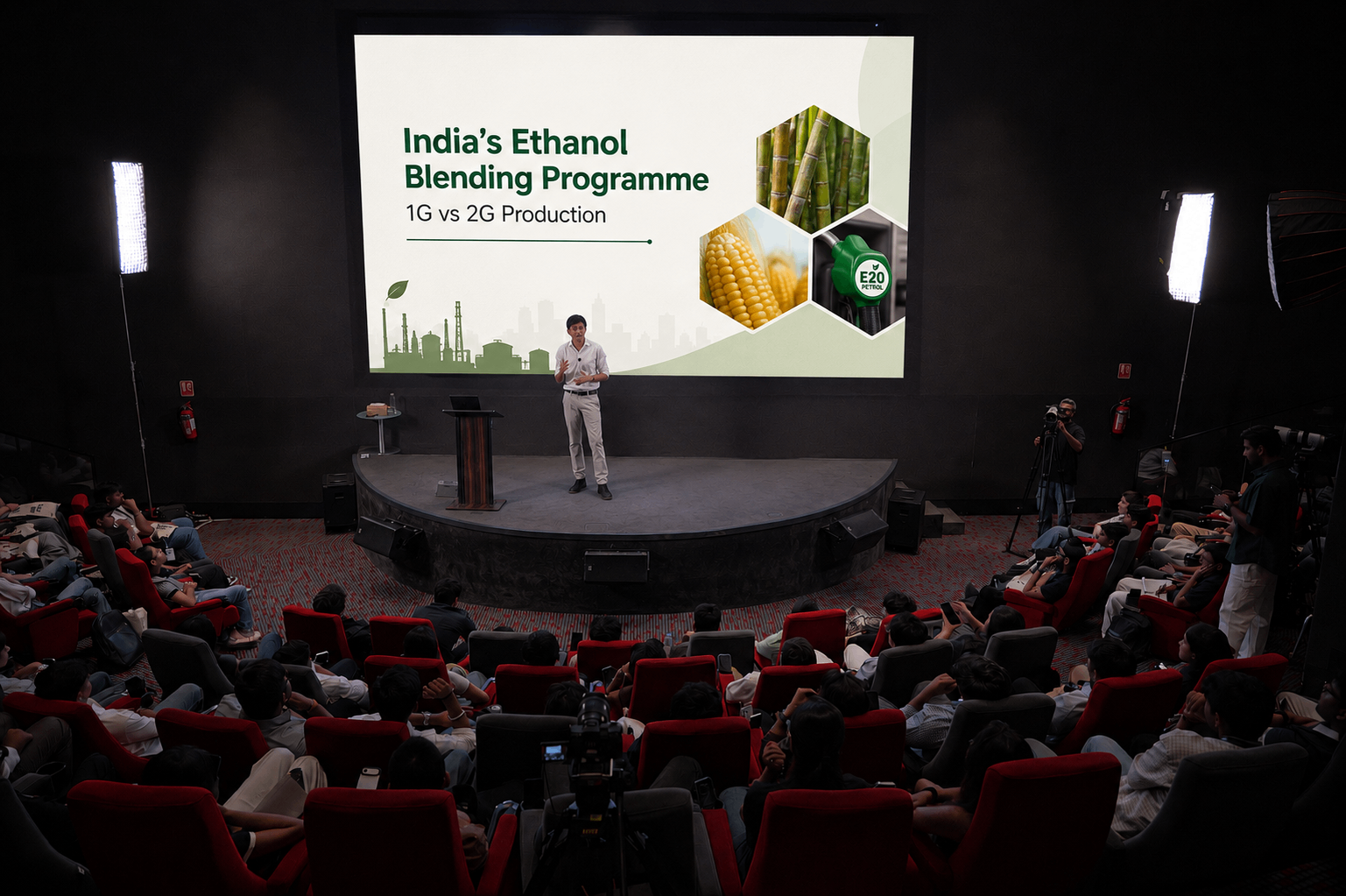
India's ethanol blending programme is one of the government's most ambitious clean energy initiatives, reducing oil imports, lowering vehicle emissions and supporting farmers. The policy logic is sound.
But a growing body of evidence suggests the method being used to execute it is creating environmental costs that are being largely ignored. This blog breaks down what ethanol production in India entails, why the current approach is problematic, and where the genuinely sustainable future of this industry is headed.
The Controversy That Made Ethanol National Conversation
In late June 2026, an independent journalist travelled to Byrnihat, a small industrial town on the Assam-Meghalaya border and documented families living with asthma, skin disease, and breathlessness as everyday reality. Respiratory disease cases in the area rose from 2,082 in 2022 to 3,681 in 2024, a 77% jump in two years. At the centre of the controversy was an ethanol manufacturing plant producing the same ethanol blended into petrol and marketed nationally as eco-friendly clean energy.
The Meghalaya State Pollution Control Board subsequently inspected the plant and found emissions within prescribed limits, pointing to the town's 80-odd industries as a collective problem rather than a single factory.
But the public health data is real, and the documentary triggered a national conversation that had been building for some time: is ethanol in India actually as clean as advertised?
What It Actually Takes to Produce One Litre of Ethanol in India
The environmental cost of India's ethanol programme becomes clear when you look at three specific numbers.
The Water Cost
India's programme runs primarily on rice and sugarcane, two of the most water-intensive crops in the country:
-
Producing one litre of ethanol from rice requires roughly 10,790 litres of water, since about 2.5 to 3 kg of rice is needed per litre of fuel, and rice cultivation itself needs 3,000–5,000 litres of water per kg.
-
For sugarcane-based ethanol, the figure is lower, around 2,860 litres of water per litre of ethanol
-
The government allocated 52 lakh tonnes of rice for ethanol in 2024–25, with a target of 90 lakh tonnes the following year
This is happening in states of Punjab, Haryana, Uttar Pradesh, already classified as critically groundwater-stressed.
The Food Cost
1G ethanol is produced from sugar or starch-based crops like corn and sugarcane, crops rich in easily fermentable sugars but essential for feeding large populations.
The government plans to cut broken rice in ration supplies from 25% to 10% so that more can go to distilleries. That's not using extra stock, it's redirecting it, and it affects food security quite directly.
The Wastewater Cost
For every litre of ethanol produced, the distillation process generates a highly acidic, dark-coloured liquid waste called vinasse:
-
For each litre of bioethanol, 12–14 litres of vinasse are produced
-
If not handled properly it can pollute surrounding soils, making them unsuitable for agriculture, and contaminate groundwater
When production scales up without matching treatment infrastructure, that cost doesn't disappear. It shifts to the communities around the plant.
1G vs 2G: Why This Distinction Is the Most Important Thing to Understand
Almost all of India's ethanol today is produced using what is called first-generation (1G) technology. There is an alternative, second generation (2G) and the difference between the two is significant.
|
1G Ethanol |
2G Ethanol |
|
|
Feedstock |
Food crops - rice, sugarcane, corn |
Agricultural waste - rice straw, wheat stubble, bagasse |
|
Water footprint |
2,860–10,790 litres per litre of ethanol |
Significantly lower, no separate crop irrigation needed |
|
Food conflict |
Directly competes with food supply |
No conflict, uses waste that would otherwise be burned |
|
GHG reduction vs petrol |
30–50% |
Up to 88–108% |
|
Wastewater |
12–15 litres of vinasse per litre produced |
Lower, with less toxic byproduct profile |
|
Commercial maturity |
Fully commercial in India |
Early stage, a few plants globally, very few in India |
The catch with 2G: The process of manufacturing 2G ethanol involves breaking down tough cellulose fibres in plant walls, requiring pretreatment, hydrolysis, and fermentation stages that need more energy and specialised enzymes compared to the simpler process of converting sugars from corn or sugarcane. This makes it more complex and currently more expensive to produce at scale.
But that gap is narrowing. The key to commercialisation lies in integrating 2G production with existing 1G facilities by using byproducts from 1G production like bagasse from sugarcane; 2G ethanol can piggyback on existing infrastructure, reducing costs and improving efficiency.
Why 2G Is Where India Needs to Go And Quickly
The feedstock for 2G ethanol isn't scarce. India already has access to rice straw, wheat stubble, sugarcane bagasse, bamboo, which grows with very little irrigation and algae, which can be cultivated using saline water and wastewater without competing with agricultural land
Every season, millions of tonnes of this material are burned in open fields, contributing to the air pollution crisis while a viable industrial use sits underutilised.
The barriers to 2G are not scientific. They are commercial: high upfront capital, complex feedstock logistics, immature supply chains, and policy incentives that haven't yet moved fast enough. These are solvable problems, but they require people who understand energy economics, supply chain strategy, and policy navigation, not just chemistry.
End Thoughts
India's ethanol blending ambition is legitimate. The method being used to achieve it today is not sustainable at scale.
The cruel irony at the centre of the Byrnihat story of a factory choking a village while producing fuel sold to the country as clean and eco-friendly is not a one-off failure. It is a signal that the policy is running ahead of the infrastructure, and that the industry needs a structural rethink, not a rebranding.
2G ethanol is not a future concept. The technology exists, the feedstock is available, and the environmental case is overwhelming. The question is whether India builds the commercial and policy infrastructure to get there before 1G's costs become too large to ignore.