


About us


-
See what students, mentors, alumni and recruiters say about Masters' Union University. Shared highlights and moments that reflect our culture, learning and community. Explore their voices.
OVERVIEW


-
See how Masters’ Union University is represented across leading news and media platforms. Explore articles, features, and press coverage that reflect our journey, initiatives, and growing impact in education, innovation, and industry engagement.
OVERVIEW
-
Explore the awards, rankings and accreditations that recognise the quality, impact and industry relevance of Masters' Union University programmes.
OVERVIEW
-
Explore the reports, brochures, policies, and publications that document Masters' Union University's outcomes, standards, and institutional commitments.
OVERVIEW


PROGRAMMEs
- Highlights
- Curriculum
- Admissions & Fees
- Immersions
- Entrepreneurship
- Careers
- Class Profile
PROGRAMME oVERVIEW
- Highlights
- Curriculum
- Admissions & Fees
- Immersions
- Entrepreneurship
- Career Prospects
- Class Profile
PROGRAMME oVERVIEW
- Highlights
- Curriculum & Faculty
- Immersions
- Admissions & Fees
- Career Prospects
- Class Profile
PROGRAMME oVERVIEW
- Highlights
- Curriculum
PROGRAMME oVERVIEW
- Home
PROGRAMME oVERVIEW
- Highlights
- Curriculum & Faculty
- Admissions & Fees
- Career Prospects
- Class Profile
PROGRAMME oVERVIEW
- Highlights
- Curriculum & Faculty
- Admissions & Fees
- Career Prospects
- Class Profile
PROGRAMME oVERVIEW
- Highlights
- Curriculum
- Admissions & Fees
- Career Prospects
- Class Profile
PROGRAMME oVERVIEW
PROGRAMMEs
- Highlights
- Curriculum & Faculty
- Admissions & Fees
- Career Prospects
- Class Profile
PROGRAMME oVERVIEW
- Highlights
- Curriculum & Faculty
- Admissions & Fees
- Career Prospects
- Class Profile
PROGRAMME oVERVIEW
- Highlights
- Curriculum
- Admissions & Fees
- Career Prospects
- Class Profile
PROGRAMME oVERVIEW
- Highlights
- Curriculum & Faculty
- Admissions & Fees
- Career Prospects
- Class Profile
PROGRAMME oVERVIEW
- Highlights
- Curriculum & Faculty
- Admissions & Fees
- Career Prospects
- Class Profile
PROGRAMME oVERVIEW
- Highlights
- Curriculum
- Admissions & Fees
- Career Prospects
- Class Profile
PROGRAMME oVERVIEW
- Highlights
- Curriculum
- Admissions & Fees
- Career Prospects
- Class Profile
PROGRAMME oVERVIEW
PROGRAMMES
-
PGP in
Technology & Business Management

-
PGP in
Technology & Business Management
(Young Leaders Cohort)
-
PGP in
Human Resources & Organisation Strategy
-
PGP in Sports
Management & Gaming
-
PGP in
Applied AI & Agentic Systems
-
PGP in Sustainability &
Business Management
-
Four Nations Global
Business Programme
- Highlights
- Curriculum
- Immersions
- Admissions & Fees
- Career Prospects
- Cohort Profile
PROGRAMME oVERVIEW
- Highlights
- Curriculum
- Immersions
- Admissions & Fees
- Career Prospects
- Faculty & Student Stories
PROGRAMME oVERVIEW
- Highlights
- Curriculum
- Immersions
- Admissions & Fees
- Career Prospects
PROGRAMME oVERVIEW
- Highlights
- Curriculum & Faculty
- Admissions & Fees
- Career Prospects
PROGRAMME oVERVIEW
- Highlights
- Curriculum & Faculty
- Admissions & Fees
- Career Prospects
PROGRAMME OVERVIEW
- Highlights
- Curriculum & Faculty
- Admissions & Fees
PROGRAMME OVERVIEW
- Highlights
PROGRAMME OVERVIEW
- Highlights
- Curriculum
- Immersions
- Admissions & Fees
- Career Prospects
- Cohort Profile
PROGRAMME oVERVIEW
PROGRAMMES
- Highlights
- Curriculum
- Faculty
- Admissions & Fees
- Career Prospects
- Cohort Profile
PROGRAMME oVERVIEW
- Home
PROGRAMME oVERVIEW
- Highlights
- Curriculum
- Admissions & Fees
PROGRAMME oVERVIEW
- Highlights
- Curriculum
- Admissions & Fees
PROGRAMME oVERVIEW
- Highlights
- Curriculum
- Immersions
- Faculty & Coaches
- Admissions & Fees
- Career Prospects
PROGRAMME oVERVIEW
- Highlights
- Curriculum
PROGRAMME oVERVIEW
- Home
PROGRAMME oVERVIEW
- Highlights
- Global Immersions
- Curriculum
- Faculty & Coaches
- Leadership Learning
- Admissions & Fees
PROGRAMME oVERVIEW
- Highlights
- Curriculum
- Admissions & Fees
PROGRAMME oVERVIEW
PROGRAMMES
- Highlights
- Curriculum
- Beyond Classroom
- Admissions & Fees
PROGRAMME oVERVIEW
- Highlights
- Curriculum
- Beyond Classroom
- Admissions & Fees
PROGRAMME oVERVIEW
- Home
PROGRAMME oVERVIEW
- Home
PROGRAMME oVERVIEW
PROGRAMMES
- Home
PROGRAMME oVERVIEW
- Highlights
- Curriculum
- Beyond Classroom
- Admissions & Fees
PROGRAMME oVERVIEW
- Home
PROGRAMME oVERVIEW
- Home
PROGRAMME oVERVIEW
STUDENT LIFE
- Student Premises
- Amenities
- Hostel Council
oVERVIEW


- Case Union
- UnMute
- Clubs & Committees
oVERVIEW


oVERVIEW
- Healthcare
- BFSI
- Technology
- Manufacturing
- Retail
Industry
- Governments
- Universities
- Startups
- SMEs
- Large Enterprises
Industry
oVERVIEW
PROGRAMMEs
- Highlights
- Curriculum & Faculty
- Admissions & Fees
- Career Prospects
- Class Profile
PROGRAMME oVERVIEW
- Highlights
- Curriculum & Faculty
- Admissions & Fees
- Career Prospects
- Class Profile
PROGRAMME oVERVIEW
- Highlights
- Curriculum
- Admissions & Fees
- Career Prospects
- Class Profile
PROGRAMME oVERVIEW
- Highlights
- Curriculum & Faculty
- Admissions & Fees
- Career Prospects
- Class Profile
PROGRAMME oVERVIEW
- Highlights
- Curriculum & Faculty
- Admissions & Fees
- Career Prospects
- Class Profile
PROGRAMME oVERVIEW
- Highlights
- Curriculum
- Admissions & Fees
- Career Prospects
- Class Profile
PROGRAMME oVERVIEW
- Highlights
- Curriculum
- Admissions & Fees
- Career Prospects
- Class Profile
PROGRAMME oVERVIEW
PROGRAMMES
- Highlights
- Curriculum
- Immersions
- Admissions & Fees
- Career Prospects
- Cohort Profile
PROGRAMME oVERVIEW
- Highlights
- Curriculum
- Immersions
- Admissions & Fees
- Career Prospects
- Faculty & Student Stories
PROGRAMME oVERVIEW
- Highlights
- Curriculum
- Immersions
- Admissions & Fees
- Career Prospects
PROGRAMME oVERVIEW
- Highlights
- Curriculum & Faculty
- Admissions & Fees
- Career Prospects
PROGRAMME oVERVIEW
- Highlights
- Curriculum
- Immersions
- Admissions & Fees
- Career Prospects
- Cohort Profile
PROGRAMME oVERVIEW
PROGRAMMES
- Highlights
- Curriculum
- Faculty
- Admissions & Fees
- Career Prospects
- Cohort Profile
PROGRAMME oVERVIEW
- Highlights
- Curriculum
- Admissions & Fees
PROGRAMME oVERVIEW
- Highlights
- Curriculum
- Admissions & Fees
PROGRAMME oVERVIEW
- Highlights
- Curriculum
- Immersions
- Faculty & Coaches
- Admissions & Fees
- Career Prospects
PROGRAMME oVERVIEW
- Highlights
- Global Immersions
- Curriculum
- Faculty & Coaches
- Leadership Learning
- Admissions & Fees
PROGRAMME oVERVIEW
- Highlights
- Curriculum
- Admissions & Fees
PROGRAMME oVERVIEW


About Us

Undergraduate
Postgraduate
PGP in Technology & Business Management
PGP in Technology & Business Management
(Young Leaders Cohort)
PGP in Human Resources & Organisation Strategy
PGP in Sports Management & Gaming
PGP in Applied AI & Agentic Systems
PGP in Sustainability & Business Management
Four Nations Global Business Programme
Executive
Family Business
Immersions
1:1 Executive Coaching
Careers
Innovations
Faculty
MU Ventures
Enterprise L&D
Student Life
Jobs
Become a Master
Merch Store
events
For Companies
Blog
Coach LMS
PGP in UIUX Product Design
UI/UX Design: The Skill Digital Marketing Can't Function Without
May 1, 2026
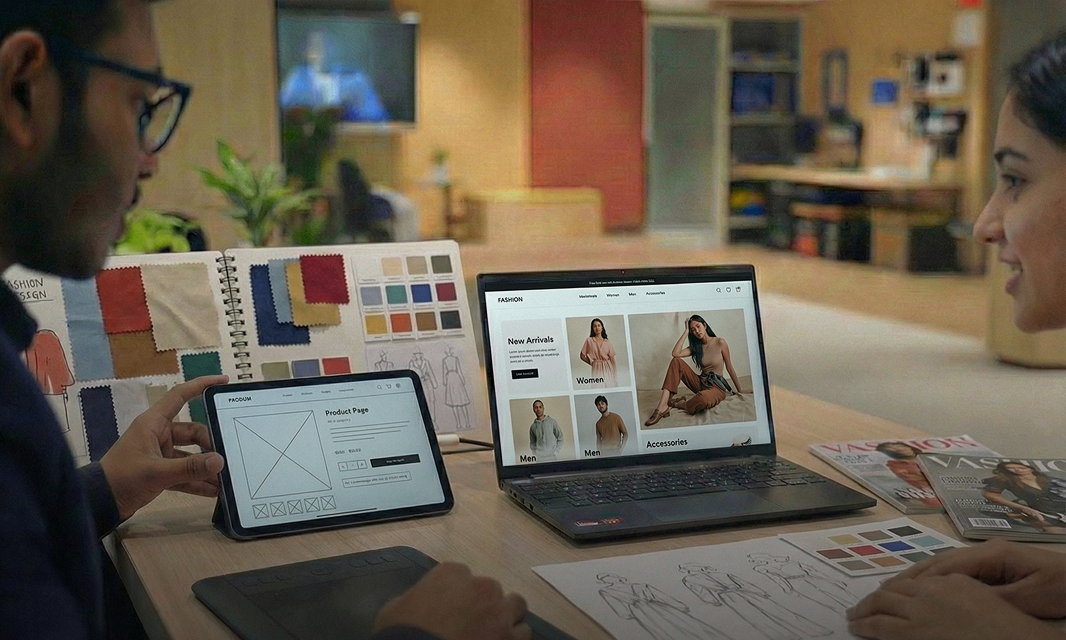
Most graduates who want to get into UI/UX design start by looking for a course. The ones who actually build careers start by understanding what the market is asking for, and why most courses are not delivering it.
There is no shortage of UI/UX design courses in India - short-term bootcamps, online certifications, weekend programmes, etc.
They will train you for the basics for sure, but not for big picture excellencies. They rarely prepare you for the version of a UI/UX design career in India & abroad that actually exists in 2026 - an AI-first version. A version where designers are expected to conduct research, defend decisions in business terms, collaborate with engineers, and increasingly, direct AI tools as a core part of how they work.
That gap, between what most courses deliver and what the market requires, is exactly why a full-time postgraduate design programme in UI/UX is not just a credential upgrade but a fundamentally different kind of training.
Demand for UI/UX Designers in India Is Outpacing Supply
India currently has over 15,000 active UX job listings at any given time, spanning tech, e-commerce, finance, and healthcare. The roles are there. The question is who is qualified to fill them.
(Source: Institute of Product Leadership, Job and Hiring Statistics for UX Designers in India)
LinkedIn's 2024 Jobs on the Rise India report tracked the 25 fastest-growing roles in the country over the previous five years. Design Specialist appeared as one of the honouree titles, reflecting consistent growth in demand for design professionals across sectors.
(Source: LinkedIn Jobs on the Rise India, 2024)
What the data does not capture is the quality gap. Hiring managers across product companies consistently report the same problem: too many candidates who can produce polished screens, too few who can demonstrate research-led, outcome-driven work. The shortage is not in the number of people entering design. It is in the depth of the capability they bring.
Why a Design Short-Term Course Isn’t Enough Anymore
This is worth being direct about. A three-month bootcamp or an online certification will teach you the tools. At best, it will walk you through a design process. What it cannot do in that time are skills that product companies are actually hiring for.:
-
Build the research capability
-
Enhance the product thinking
-
Establish AI fluency,
-
Persuasive communication skills
The designers who are clearing the bar at India's top product companies like Razorpay, Zepto, CRED, and Swiggy are the ones who have worked on real product problems with real constraints. They have had their decisions challenged by engineers and product managers, and have built enough judgment to defend their work under pressure.
That kind of capability takes time and the right environment to develop. It does not happen in eight weeks.
McKinsey's Business Value of Design report tracked 300 companies over five years and found that top-quartile design performers outperformed their industry peers with 32% higher revenue growth. Design is not a support function anymore. It is a business driver.
(Source: McKinsey, The Business Value of Design)
Companies that understand this are raising their standards for who they hire. A postgraduate UI/UX design full-time programme in India that is built around real industry outcomes is the most direct response to that shift.
A Full-time PGP UI/UX vs Short-term Design Courses
1. Research Capability
The ability to find out what users actually need, not what they say they need
User interviews, usability testing, qualitative synthesis, journey mapping. This is the foundation of a UX design career, and it is the area where most short courses are weakest. Research fluency takes practice across multiple real projects before it becomes something a designer can do reliably. A postgraduate programme provides that duration and depth.
2. Product and Business Thinking
Understanding why a design decision matters beyond how it looks
At product companies in India, designers are expected to connect their decisions to metrics. Conversion rates, activation drop-offs, retention curves. A UI/UX designer who cannot have that conversation has a limited shelf life. A postgraduate programme with live industry challenges, where deliverables are measured against real business outcomes, builds this thinking in a way that classroom instruction alone cannot.
3. AI Fluency
Directing AI tools rather than competing with them
The question is no longer whether designers need to work with AI. It is whether their programme treats AI as a core competency or an optional module. The best postgraduate design courses in India in 2026 integrate AI from the first term, building the ability to use generative tools, prototype with AI assistance, and design for AI-native products from the ground up.
4. Portfolio That Earns Interviews
Documented evidence of real problems solved, not reimagined apps
The single biggest gap between candidates who get shortlisted and those who do not is portfolio quality. Not visual quality. Problem-solving quality. A postgraduate programme with live industry briefs, real clients, and measurable outcomes produces portfolio work that is genuinely hard to dismiss in an interview. This is what a UI UX design course with placement support in India needs to be built around.
The Advantage of Getting In Before the Market Catches Up
India's product economy is expanding at a pace that is creating genuine demand for senior design talent. Companies like Google, Microsoft, Adobe, and Amazon have deepened their product design presence in India significantly over the last three years, building teams that go beyond support functions into core product ownership. Alongside them, India's own product companies, from Zepto and Razorpay to CRED and PhonePe, are scaling design teams as they move into new markets and product lines.
The window will not stay this wide forever. As more candidates enter the market, the bar will rise further, and the advantage of getting in ahead of the curve will narrow. The designers who are building postgraduate-level capability in AI-first design now are the ones who will be at the front of that curve when demand peaks.
This is what makes the decision to pursue a postgraduate design course not just a career move, but a timing decision. India's UI UX design career landscape is at an inflexion point. The people who train at the right depth, at the right time, are the ones who will define the next generation of product design in this market.
The Last Thing Standing Between You and a Product Design Role
Most UI UX design programmes address one of the three core areas well. A few address two. Very few address all three, and fewer still do it through work that is real enough to matter on a portfolio.
The Masters' Union PG Programme in UI UX and AI Product Design is a 16-month postgraduate UI/UX programme built around live industry challenges, faculty from Swiggy, Google, Amazon, and BharatPe, and a curriculum that covers research, craft, and AI fluency together. It is open to graduates from any discipline. Applications for the August 2026 cohort are open now.
Graduates leave with a portfolio built on real briefs, the ability to talk business outcomes in a product review, and the fluency to direct AI tools rather than compete with them. That is a different kind of designer. And right now, it is exactly the kind the market cannot find enough of.
 QUERIES
Frequently Asked Questions

Masters' Union PG Programme in UI UX and AI Product Design is among the strongest options available. It is India's only AI-first postgraduate design programme, with live industry challenges each term, faculty drawn from Swiggy, Google, Amazon, and BharatPe, and independently audited placement outcomes. It is open to graduates from any academic background.
A UI UX design course typically covers tools and processes over a few weeks or months. A postgraduate design programme covers research methodology, product thinking, AI integration, and design systems over a year or more, with real industry projects that produce portfolio-grade work. The depth of capability built is significantly different, and so are the career outcomes.