


About us


-
See what students, mentors, alumni and recruiters say about Masters' Union University. Shared highlights and moments that reflect our culture, learning and community. Explore their voices.
OVERVIEW


-
See how Masters’ Union University is represented across leading news and media platforms. Explore articles, features, and press coverage that reflect our journey, initiatives, and growing impact in education, innovation, and industry engagement.
OVERVIEW
-
Explore the awards, rankings and accreditations that recognise the quality, impact and industry relevance of Masters' Union University programmes.
OVERVIEW

-
Explore the reports, brochures, policies, and publications that document Masters' Union University's outcomes, standards, and institutional commitments.
OVERVIEW


PROGRAMMEs
- Highlights
- Curriculum
- Admissions & Fees
- Immersions
- Entrepreneurship
- Careers
- Class Profile
PROGRAMME oVERVIEW
- Highlights
- Curriculum
- Admissions & Fees
- Immersions
- Entrepreneurship
- Career Prospects
- Class Profile
PROGRAMME oVERVIEW
- Highlights
- Curriculum & Faculty
- Immersions
- Admissions & Fees
- Career Prospects
- Class Profile
PROGRAMME oVERVIEW
- Highlights
- Curriculum
PROGRAMME oVERVIEW
- Home
PROGRAMME oVERVIEW
- Highlights
- Curriculum & Faculty
- Admissions & Fees
- Career Prospects
- Class Profile
PROGRAMME oVERVIEW
- Highlights
- Curriculum & Faculty
- Admissions & Fees
- Career Prospects
- Class Profile
PROGRAMME oVERVIEW
- Highlights
- Curriculum
- Admissions & Fees
- Career Prospects
- Class Profile
PROGRAMME oVERVIEW
PROGRAMMEs
- Highlights
- Curriculum & Faculty
- Admissions & Fees
- Career Prospects
- Class Profile
PROGRAMME oVERVIEW
- Highlights
- Curriculum & Faculty
- Admissions & Fees
- Career Prospects
- Class Profile
PROGRAMME oVERVIEW
- Highlights
- Curriculum
- Admissions & Fees
- Career Prospects
- Class Profile
PROGRAMME oVERVIEW
- Highlights
- Curriculum & Faculty
- Admissions & Fees
- Career Prospects
- Class Profile
PROGRAMME oVERVIEW
- Highlights
- Curriculum & Faculty
- Admissions & Fees
- Career Prospects
- Class Profile
PROGRAMME oVERVIEW
- Highlights
- Curriculum
- Admissions & Fees
- Career Prospects
- Class Profile
PROGRAMME oVERVIEW
- Highlights
- Curriculum
- Admissions & Fees
- Career Prospects
- Class Profile
PROGRAMME oVERVIEW
PROGRAMMES
-
PGP in
Technology & Business Management

-
PGP in
Technology & Business Management
(Young Leaders Cohort)
-
PGP in
Human Resources & Organisation Strategy
-
PGP in Sports
Management & Gaming
-
PGP in
Applied AI & Agentic Systems
-
PGP in Sustainability &
Business Management
-
Four Nations Global
Business Programme
- Highlights
- Curriculum
- Immersions
- Admissions & Fees
- Career Prospects
- Cohort Profile
PROGRAMME oVERVIEW
- Highlights
- Curriculum
- Immersions
- Admissions & Fees
- Career Prospects
- Faculty & Student Stories
PROGRAMME oVERVIEW
- Highlights
- Curriculum
- Immersions
- Admissions & Fees
- Career Prospects
PROGRAMME oVERVIEW
- Highlights
- Curriculum & Faculty
- Admissions & Fees
- Career Prospects
PROGRAMME oVERVIEW
- Highlights
- Curriculum & Faculty
- Admissions & Fees
- Career Prospects
PROGRAMME OVERVIEW
- Highlights
- Curriculum & Faculty
- Admissions & Fees
PROGRAMME OVERVIEW
- Highlights
PROGRAMME OVERVIEW
- Highlights
- Curriculum
- Immersions
- Admissions & Fees
- Career Prospects
- Cohort Profile
PROGRAMME oVERVIEW
PROGRAMMES
- Highlights
- Curriculum
- Faculty
- Admissions & Fees
- Career Prospects
- Cohort Profile
PROGRAMME oVERVIEW
- Home
PROGRAMME oVERVIEW
- Highlights
- Curriculum
- Admissions & Fees
PROGRAMME oVERVIEW
- Highlights
- Curriculum
- Admissions & Fees
PROGRAMME oVERVIEW
- Highlights
- Curriculum
- Immersions
- Faculty & Coaches
- Admissions & Fees
- Career Prospects
PROGRAMME oVERVIEW
- Highlights
- Curriculum
PROGRAMME oVERVIEW
- Home
PROGRAMME oVERVIEW
- Highlights
- Global Immersions
- Curriculum
- Faculty & Coaches
- Leadership Learning
- Admissions & Fees
PROGRAMME oVERVIEW
- Highlights
- Curriculum
- Admissions & Fees
PROGRAMME oVERVIEW
PROGRAMMES
- Highlights
- Curriculum
- Beyond Classroom
- Admissions & Fees
PROGRAMME oVERVIEW
- Highlights
- Curriculum
- Beyond Classroom
- Admissions & Fees
PROGRAMME oVERVIEW
- Home
PROGRAMME oVERVIEW
- Home
PROGRAMME oVERVIEW
PROGRAMMES
- Home
PROGRAMME oVERVIEW
- Highlights
- Curriculum
- Beyond Classroom
- Admissions & Fees
PROGRAMME oVERVIEW
- Home
PROGRAMME oVERVIEW
- Home
PROGRAMME oVERVIEW
STUDENT LIFE
- Student Premises
- Amenities
- Hostel Council
oVERVIEW


- Case Union
- UnMute
- Clubs & Committees
oVERVIEW



oVERVIEW

- Healthcare
- BFSI
- Technology
- Manufacturing
- Retail
Industry
- Governments
- Universities
- Startups
- SMEs
- Large Enterprises
Industry
oVERVIEW
PROGRAMMEs
- Highlights
- Curriculum & Faculty
- Admissions & Fees
- Career Prospects
- Class Profile
PROGRAMME oVERVIEW
- Highlights
- Curriculum & Faculty
- Admissions & Fees
- Career Prospects
- Class Profile
PROGRAMME oVERVIEW
- Highlights
- Curriculum
- Admissions & Fees
- Career Prospects
- Class Profile
PROGRAMME oVERVIEW
- Highlights
- Curriculum & Faculty
- Admissions & Fees
- Career Prospects
- Class Profile
PROGRAMME oVERVIEW
- Highlights
- Curriculum & Faculty
- Admissions & Fees
- Career Prospects
- Class Profile
PROGRAMME oVERVIEW
- Highlights
- Curriculum
- Admissions & Fees
- Career Prospects
- Class Profile
PROGRAMME oVERVIEW
- Highlights
- Curriculum
- Admissions & Fees
- Career Prospects
- Class Profile
PROGRAMME oVERVIEW
PROGRAMMES
- Highlights
- Curriculum
- Immersions
- Admissions & Fees
- Career Prospects
- Cohort Profile
PROGRAMME oVERVIEW
- Highlights
- Curriculum
- Immersions
- Admissions & Fees
- Career Prospects
- Faculty & Student Stories
PROGRAMME oVERVIEW
- Highlights
- Curriculum
- Immersions
- Admissions & Fees
- Career Prospects
PROGRAMME oVERVIEW
- Highlights
- Curriculum & Faculty
- Admissions & Fees
- Career Prospects
PROGRAMME oVERVIEW
- Highlights
- Curriculum
- Immersions
- Admissions & Fees
- Career Prospects
- Cohort Profile
PROGRAMME oVERVIEW
PROGRAMMES
- Highlights
- Curriculum
- Faculty
- Admissions & Fees
- Career Prospects
- Cohort Profile
PROGRAMME oVERVIEW
- Highlights
- Curriculum
- Admissions & Fees
PROGRAMME oVERVIEW
- Highlights
- Curriculum
- Admissions & Fees
PROGRAMME oVERVIEW
- Highlights
- Curriculum
- Immersions
- Faculty & Coaches
- Admissions & Fees
- Career Prospects
PROGRAMME oVERVIEW
- Highlights
- Global Immersions
- Curriculum
- Faculty & Coaches
- Leadership Learning
- Admissions & Fees
PROGRAMME oVERVIEW
- Highlights
- Curriculum
- Admissions & Fees
PROGRAMME oVERVIEW


About Us

Undergraduate
Postgraduate
PGP in Technology & Business Management
PGP in Technology & Business Management
(Young Leaders Cohort)
PGP in Human Resources & Organisation Strategy
PGP in Sports Management & Gaming
PGP in Applied AI & Agentic Systems
PGP in Sustainability & Business Management
Four Nations Global Business Programme
Executive
Family Business
Immersions
1:1 Executive Coaching
Careers
Innovations
Faculty
MU Ventures
Enterprise L&D
Student Life
Jobs
Become a Master
Merch Store
events
For Companies
Blog
Coach LMS
Business
Inside a ₹100 Crore Shoe Empire: What Our Students Discovered on Their Bacca Bucci Visit
March 20, 2026
Walk through any sneaker store today and you’ll see the same pattern. Premium global brands dominate the shelves, prices climb into the thousands and yet millions of Indian consumers are still looking for stylish footwear they can actually afford.
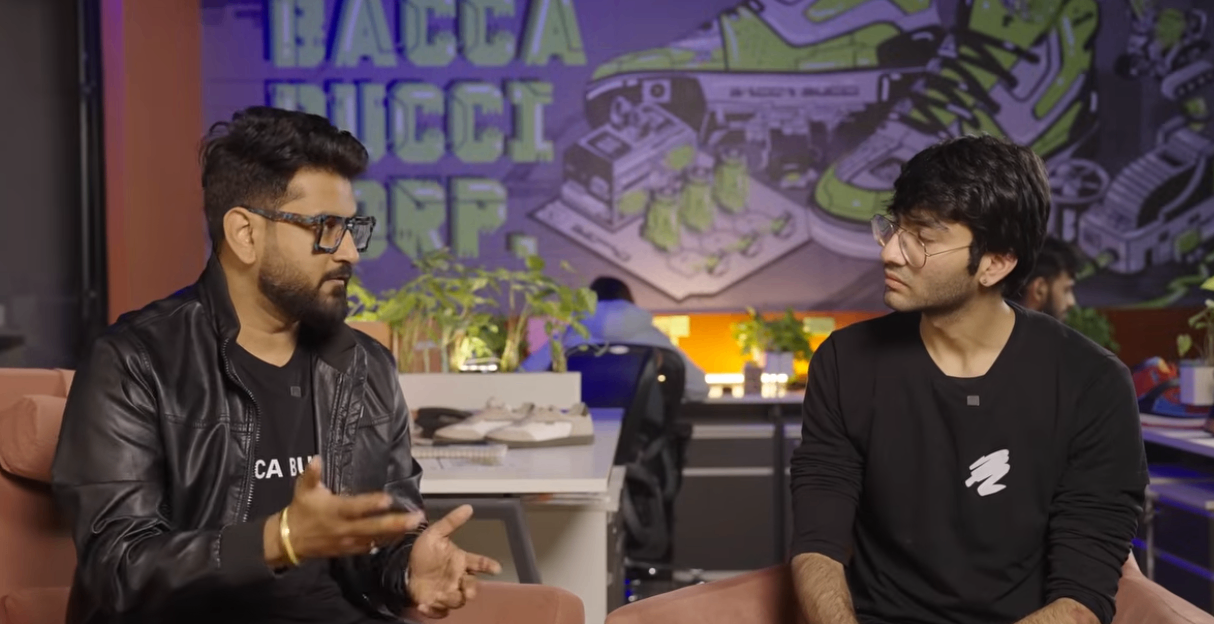
So where does a homegrown brand fit in? That question became the starting point for an Off-Campus visit by Masters’ Union students, who met Natwar Agrawal, founder of Bacca Bucci, along with co-founder Anuj Nevatia. The conversation focused on something every entrepreneur eventually has to solve: how do you build a consumer brand in a market already crowded with global giants?
For the students, this visit was about understanding how real businesses operate: how products are sourced, how pricing decisions are made, how suppliers are managed, and how brands evolve over time.
The discussion highlighted a simple truth: successful businesses seldom start with perfect plans. They start by watching the market closely and acting on opportunities others miss.
How Bacca Bucci Found a ₹100 Crore Gap Nobody Was Filling?
The Indian footwear industry is massive. India produces more shoes than almost any country in the world. Yet when it comes to lifestyle sneakers and branded footwear, much of the market is dominated by international labels.
Natwar Agrawal explained that the market broadly falls into three segments. At the lower end, footwear under ₹1,000 is dominated by legacy Indian brands. At the upper end, above ₹3,500, international companies lead with premium designs and strong brand recognition.
But the most interesting space lies in the middle. Between ₹1,000 and ₹3,500 sits a large group of consumers who want good design and durability but cannot justify the premium price tags of global brands. That gap is where Bacca Bucci positioned itself.
For the students, this was a classic example of market positioning in action. Instead of competing head-on with large international brands, the company focused on a segment that was underserved but rapidly growing.
Identifying Untapped Segments
-
Budget footwear brands dominate the sub-₹1,000 category
-
The ₹1,000-₹3,500 category represents a growing opportunity
-
Strong brands often emerge by targeting overlooked customer segments
What’s the Origin Story Behind a ₹100 Crore Brand That Started as a Salary Experiment?
The story of Bacca Bucci began with something far simpler than a startup pitch. After moving to Delhi to pursue Chartered Accountancy, Natwar Agrawal noticed a price difference between shoes sold in local markets and those listed online. Curious about the opportunity, he used his first salary to buy a few pairs of shoes from Karol Bagh and listed them online.
At the time, it was just an experiment. Those early listings went up on platforms such as eBay, Snapdeal, and Groupon. Orders began to trickle in, then gradually increase. Within a few months, the small venture began to show real potential. Natwar soon left his job and devoted himself entirely to building the brand.
For the students listening to this journey, the lesson was simple but powerful: many businesses begin not with grand strategies, but with testing small opportunities and learning quickly from the market.
Early Brand Lessons
-
Bacca Bucci began as a small online resale experiment
-
Online marketplaces helped validate customer demand
-
Entrepreneurs often discover opportunities through experimentation
Why Bacca Bucci Doesn't Own a Single Factory And Why That's Genius?
Footwear manufacturing is far more complex than most people realise. Different types of shoes require different materials, processes, and technical expertise. Running a single factory capable of producing every type of footwear is difficult and expensive.
Instead of investing heavily in manufacturing facilities, Bacca Bucci chose an outsourcing model. The company focuses on design, product development, and quality standards while specialised partner factories handle production.
To ensure consistency, the brand created clear standard operating procedures and maintains strong relationships with its manufacturing partners. For students studying operations and supply chains, this offered an important insight. Ownership is not always the smartest strategy. Sometimes the more efficient model is building systems and partnerships that allow businesses to scale without heavy capital investment.
Supply Chain Insights
-
Footwear manufacturing requires specialised production capabilities
-
Outsourcing reduces capital investment and increases flexibility
-
Supplier partnerships are critical for scaling consumer brands
How Does a Shoe Go from Trend Board to Your Doorstep in 6 Months?
Students were particularly curious about how footwear design actually works. The process begins long before a shoe reaches the market. Designers rely on global trend forecasting reports that predict colours, materials, and styles years in advance.
Based on these insights, teams develop mood boards, sketch concepts, and create detailed technical documents known as tech packs. These tech packs specify every component of the shoe, from the sole to the stitching. From concept to final product, a single shoe design can take as long as six months.
Yet the brand still manages to launch multiple new styles every month. The pace reflects how quickly fashion trends evolve and how important product freshness is in consumer categories.
Design and Trend Execution
-
Product design relies on structured research and forecasting
-
Tech packs translate creative ideas into manufacturable products
-
Fast product cycles help brands stay relevant in fashion markets
How it Built Brand Loyalty Through Strategic Partnerships?
Another area students explored was brand collaborations.
Bacca Bucci has partnered with Warner Bros. to launch sneakers inspired by iconic characters such as Superman, Batman, Tom and Jerry, and Looney Tunes.
These collaborations do more than create visually distinctive shoes. They tap into fan communities and cultural nostalgia, turning products into stories that customers connect with.
For students interested in marketing and branding, this illustrated how consumer companies build deeper emotional relationships with their audiences.
Strategic Brand Growth
-
Licensing partnerships strengthen brand storytelling
-
Pop culture collaborations attract engaged communities
-
Strategic partnerships help brands expand globally
How Indian D2C Footwear Brands Compete with Global Brands: David vs Goliath?
One of the most interesting discussions during the visit focused on competition. Global brands dominate premium sneaker markets. They have decades of brand equity, large marketing budgets, and global distribution networks. Competing with them requires a different approach. Natwar Agrawal explained that Indian brands succeed when they focus on three advantages.
First, pricing flexibility. Local brands understand Indian consumers better and can design products that balance style, quality, and affordability. Second, faster product cycles. Smaller teams can launch new designs more quickly than large multinational companies. Third, supply chain proximity. Manufacturing partnerships within India allow faster experimentation and lower operational costs.
Instead of competing directly with global prestige brands, companies like Bacca Bucci compete on relevance and accessibility. For students, this highlighted a broader lesson in business strategy: competing effectively often means choosing the right battlefield rather than fighting the biggest competitors head-on.
Hands-On Business Insights
-
Global brands dominate the premium sneaker segment
-
Indian brands win through pricing, agility, and local insights
-
Faster design and supply chain cycles create a competitive advantage
Business Lessons from the Off-Campus Visit
The Off-Campus experience offered something students rarely get from textbooks: direct exposure to how founders think and operate. They saw how pricing strategies emerge from market gaps, how supply chains shape business models, and how product design balances creativity with practicality.
More importantly, they saw how businesses grow step by step.
For Masters’ Union students, the real insight came from seeing business in action; watching how products move from concept to store, how pricing shapes decisions, and how brands grow with every choice they make.
Experiences like this make entrepreneurship tangible and help future leaders develop the instincts that cannot be learned from case studies alone.
FAQs
1. What practical skills do Masters’ Union students gain from off-campus visits like Bacca Bucci?
Students see how products are sourced, priced, and sold, gaining hands-on understanding of supply chains, operations, and brand growth.
2. How does understanding the footwear market help students in broader business careers?
Analysing mass and premium segments develops skills in market research, pricing strategy, and product positioning, applicable across consumer goods and retail.
3. Can students leverage these experiences for entrepreneurial opportunities?
Yes. Observing a startup grow from a side hustle teaches lean operations, supplier management, and brand-building strategies vital for launching ventures.
4. How does Masters’ Union integrate off-campus experiences into the curriculum?
Visits are immersive, connecting classroom theory with real business operations, helping students develop strategic thinking and practical insights.
5. Why is exposure to licensing and brand partnerships important for students?
Students learn how collaborations, like with Warner Bros., drive brand value and consumer engagement, preparing them for careers in marketing and brand strategy.