


About us


-
See what students, mentors, alumni and recruiters say about Masters' Union University. Shared highlights and moments that reflect our culture, learning and community. Explore their voices.
OVERVIEW


-
See how Masters’ Union University is represented across leading news and media platforms. Explore articles, features, and press coverage that reflect our journey, initiatives, and growing impact in education, innovation, and industry engagement.
OVERVIEW
-
Explore the awards, rankings and accreditations that recognise the quality, impact and industry relevance of Masters' Union University programmes.
OVERVIEW

-
Explore the reports, brochures, policies, and publications that document Masters' Union University's outcomes, standards, and institutional commitments.
OVERVIEW


PROGRAMMEs
- Highlights
- Curriculum
- Admissions & Fees
- Immersions
- Entrepreneurship
- Careers
- Class Profile
PROGRAMME oVERVIEW
- Highlights
- Curriculum
- Admissions & Fees
- Immersions
- Entrepreneurship
- Career Prospects
- Class Profile
PROGRAMME oVERVIEW
- Highlights
- Curriculum & Faculty
- Immersions
- Admissions & Fees
- Career Prospects
- Class Profile
PROGRAMME oVERVIEW
- Highlights
- Curriculum
PROGRAMME oVERVIEW
- Home
PROGRAMME oVERVIEW
- Highlights
- Curriculum & Faculty
- Admissions & Fees
- Career Prospects
- Class Profile
PROGRAMME oVERVIEW
- Highlights
- Curriculum & Faculty
- Admissions & Fees
- Career Prospects
- Class Profile
PROGRAMME oVERVIEW
- Highlights
- Curriculum
- Admissions & Fees
- Career Prospects
- Class Profile
PROGRAMME oVERVIEW
PROGRAMMEs
- Highlights
- Curriculum & Faculty
- Admissions & Fees
- Career Prospects
- Class Profile
PROGRAMME oVERVIEW
- Highlights
- Curriculum & Faculty
- Admissions & Fees
- Career Prospects
- Class Profile
PROGRAMME oVERVIEW
- Highlights
- Curriculum
- Admissions & Fees
- Career Prospects
- Class Profile
PROGRAMME oVERVIEW
- Highlights
- Curriculum & Faculty
- Admissions & Fees
- Career Prospects
- Class Profile
PROGRAMME oVERVIEW
- Highlights
- Curriculum & Faculty
- Admissions & Fees
- Career Prospects
- Class Profile
PROGRAMME oVERVIEW
- Highlights
- Curriculum
- Admissions & Fees
- Career Prospects
- Class Profile
PROGRAMME oVERVIEW
- Highlights
- Curriculum
- Admissions & Fees
- Career Prospects
- Class Profile
PROGRAMME oVERVIEW
PROGRAMMES
-
PGP in
Technology & Business Management

-
PGP in
Technology & Business Management
(Young Leaders Cohort)
-
MBA in Finance with CFA Pathway
-
Post Graduate Diploma (Human Resources and Organisation Strategy)
-
Post Graduate Diploma (Sports Management and Gaming)
-
PGP in
Applied AI & Agentic Systems
-
PGP in Sustainability &
Business Management
-
Four Nations Global
Business Programme
- Highlights
- Curriculum
- Immersions
- Admissions & Fees
- Career Prospects
- Cohort Profile
PROGRAMME oVERVIEW
- Home
PROGRAMME OVERVIEW
- Highlights
- Curriculum
- Immersions
- Admissions & Fees
- Career Prospects
- Faculty & Student Stories
PROGRAMME oVERVIEW
- Highlights
- Curriculum
- Immersions
- Admissions & Fees
- Career Prospects
PROGRAMME oVERVIEW
- Highlights
- Curriculum & Faculty
- Admissions & Fees
- Career Prospects
PROGRAMME oVERVIEW
- Highlights
- Curriculum & Faculty
- Admissions & Fees
- Career Prospects
PROGRAMME OVERVIEW
- Highlights
- Curriculum & Faculty
- Admissions & Fees
PROGRAMME OVERVIEW
- Highlights
PROGRAMME OVERVIEW
- Highlights
- Curriculum
- Immersions
- Admissions & Fees
- Career Prospects
- Cohort Profile
PROGRAMME oVERVIEW
PROGRAMMES
-
Post Graduate Diploma (Rise General Management)
-
Post Graduate Diploma (Capital Markets & Trading)
-
PGP in US Capital Markets &
Trading
-
PGP
in Entrepreneurship & Business Acceleration
-
Post Graduate Diploma (Rise General Management Global)
-
AI First Operator Programme
-
Bloomberg Equity Research Programme
- Highlights
- Curriculum
- Faculty
- Admissions & Fees
- Career Prospects
- Cohort Profile
PROGRAMME oVERVIEW
- Home
PROGRAMME oVERVIEW
- Highlights
- Curriculum
- Admissions & Fees
PROGRAMME oVERVIEW
- Highlights
- Curriculum
- Admissions & Fees
PROGRAMME oVERVIEW
- Highlights
- Curriculum
- Immersions
- Faculty & Coaches
- Admissions & Fees
- Career Prospects
PROGRAMME oVERVIEW
- Highlights
- Curriculum
PROGRAMME oVERVIEW
- Home
PROGRAMME oVERVIEW
- Highlights
- Global Immersions
- Curriculum
- Faculty & Coaches
- Leadership Learning
- Admissions & Fees
PROGRAMME oVERVIEW
- Highlights
- Curriculum
- Admissions & Fees
PROGRAMME oVERVIEW
PROGRAMMES
- Highlights
- Curriculum
- Beyond Classroom
- Admissions & Fees
PROGRAMME oVERVIEW
- Highlights
- Curriculum
- Beyond Classroom
- Admissions & Fees
PROGRAMME oVERVIEW
- Home
PROGRAMME oVERVIEW
- Home
PROGRAMME oVERVIEW
PROGRAMMES
- Home
PROGRAMME oVERVIEW
- Highlights
- Curriculum
- Beyond Classroom
- Admissions & Fees
PROGRAMME oVERVIEW
- Home
PROGRAMME oVERVIEW
- Home
PROGRAMME oVERVIEW
STUDENT LIFE
- Student Premises
- Amenities
- Hostel Council
oVERVIEW


- Case Union
- UnMute
- Clubs & Committees
oVERVIEW

oVERVIEW

- Healthcare
- BFSI
- Technology
- Manufacturing
- Retail
Industry
- Governments
- Universities
- Startups
- SMEs
- Large Enterprises
Industry
oVERVIEW
PROGRAMMEs
- Highlights
- Curriculum & Faculty
- Admissions & Fees
- Career Prospects
- Class Profile
PROGRAMME oVERVIEW
- Highlights
- Curriculum & Faculty
- Admissions & Fees
- Career Prospects
- Class Profile
PROGRAMME oVERVIEW
- Highlights
- Curriculum
- Admissions & Fees
- Career Prospects
- Class Profile
PROGRAMME oVERVIEW
- Highlights
- Curriculum & Faculty
- Admissions & Fees
- Career Prospects
- Class Profile
PROGRAMME oVERVIEW
- Highlights
- Curriculum & Faculty
- Admissions & Fees
- Career Prospects
- Class Profile
PROGRAMME oVERVIEW
- Highlights
- Curriculum
- Admissions & Fees
- Career Prospects
- Class Profile
PROGRAMME oVERVIEW
- Highlights
- Curriculum
- Admissions & Fees
- Career Prospects
- Class Profile
PROGRAMME oVERVIEW
PROGRAMMES
- Highlights
- Curriculum
- Immersions
- Admissions & Fees
- Career Prospects
- Cohort Profile
PROGRAMME oVERVIEW
- Home
PROGRAMME OVERVIEW
- Highlights
- Curriculum
- Immersions
- Admissions & Fees
- Career Prospects
- Faculty & Student Stories
PROGRAMME oVERVIEW
- Highlights
- Curriculum
- Immersions
- Admissions & Fees
- Career Prospects
PROGRAMME oVERVIEW
- Highlights
- Curriculum & Faculty
- Admissions & Fees
- Career Prospects
PROGRAMME oVERVIEW
- Highlights
- Curriculum
- Immersions
- Admissions & Fees
- Career Prospects
- Cohort Profile
PROGRAMME oVERVIEW
PROGRAMMES
- Highlights
- Curriculum
- Faculty
- Admissions & Fees
- Career Prospects
- Cohort Profile
PROGRAMME oVERVIEW
- Highlights
- Curriculum
- Admissions & Fees
PROGRAMME oVERVIEW
- Highlights
- Curriculum
- Admissions & Fees
PROGRAMME oVERVIEW
- Highlights
- Curriculum
- Immersions
- Faculty & Coaches
- Admissions & Fees
- Career Prospects
PROGRAMME oVERVIEW
- Highlights
- Global Immersions
- Curriculum
- Faculty & Coaches
- Leadership Learning
- Admissions & Fees
PROGRAMME oVERVIEW
- Highlights
- Curriculum
- Admissions & Fees
PROGRAMME oVERVIEW


About Us

Undergraduate
Postgraduate
PGP in Technology & Business Management
PGP in Technology & Business Management
(Young Leaders Cohort)
MBA in Finance with CFA Pathway
Post Graduate Diploma (Human Resources and Organisation Strategy)
Post Graduate Diploma (Sports Management and Gaming)
PGP in Applied AI & Agentic Systems
PGP in Sustainability & Business Management
Four Nations Global Business Programme
Executive
Post Graduate Diploma (Rise General Management)
Post Graduate Diploma (Capital Markets & Trading)
PGP in US Capital Markets & Trading
PGP in Entrepreneurship & Business Acceleration
Post Graduate Diploma (Rise General Management Global)
AI First Operator Programme
Bloomberg Equity Research Programme
Family Business
Immersions
1:1 Executive Coaching
Careers
Innovations
Faculty
MU Ventures
Enterprise L&D
Student Life
Jobs
Become a Master
Merch Store
events
For Companies
Blog
Coach LMS
Business
Gain Insights on Robotics from Addverb Co-Founder Satish Shukla
September 9, 2025

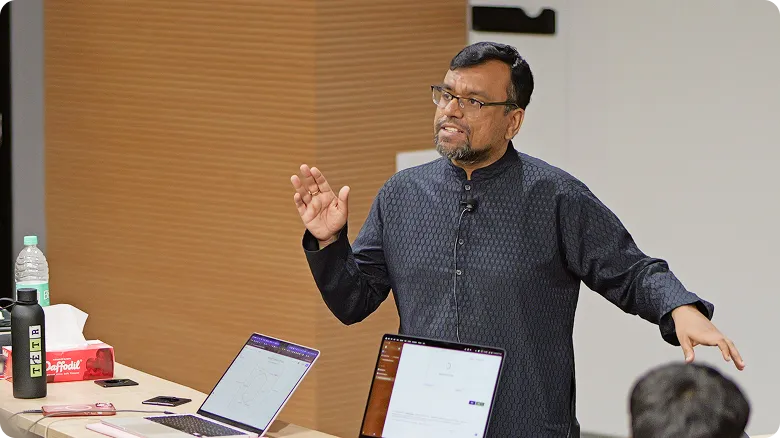
The recent CXO Session at Masters’ Union hosted Satish Shukla, Co-Founder of Addverb - an end-to-end warehouse automation company. This session was an unfiltered discussion on building a bootstrapped technology company, navigating India’s hardware ecosystem, and scaling globally. Shukla spoke about Addverb’s 80+ months of profitability, the shortcomings of India’s higher education and industrial policy, and why automation will define the country’s next decade.
For students, the session went beyond theory, it was a real-time case study on how an Indian founder built credibility in a sector often overlooked by venture investors, and how scale can come from discipline rather than excess capital.
Bootstrapping Addverb into Profitability
Addverb’s journey challenges the popular belief that rapid growth requires deep venture funding. Shukla shared how the company achieved profitability for more than six years without external capital, a rare feat for hardware-led businesses.
Central to this was the company’s dukandari culture, where employees are treated like owners, responsible for delivering measurable outcomes. Shukla described how this culture pushed the team to stay accountable, keep operations lean, and innovate under constraints. Instead of chasing quick valuations, Addverb chose to build steadily, scaling revenues to ₹1,200 crore while staying independent.
The Outcome Addverb Gained:
-
Sustaining 80+ months of profitability
-
Building accountability with Dukandari culture
-
Scaling revenue without external funding
Barriers in India’s Technology Ecosystem
Shukla turned the spotlight on India’s innovation gaps. While software ventures scale quickly with low fixed costs, hardware-led startups face structural disadvantages. Supply chain inefficiencies, limited investor appetite, and long payback cycles make scaling slower and riskier.
Equally pressing is the challenge in higher education. Many universities prioritise credentials over practical skills, leaving graduates unprepared for industrial problem-solving. For founders like Shukla, this creates a double challenge: building products while training talent from the ground up.
The Challenges Addverb Faced:
-
Hardware versus software growth constraints
-
Supply chain inefficiencies are limiting industrial scale
-
Education gaps in applied problem-solving
Expanding Addverb into Global Supply Chains
Despite these hurdles, Addverb has built a strong international presence. From its base in Noida, the company now powers warehouses in Europe, the US, and Southeast Asia. Shukla explained that the turning point came when Addverb began positioning Indian technology as credible abroad, relying on quality assurance and trust rather than cost arbitrage.
Partnerships with global manufacturers also played a key role, helping Addverb integrate into established supply chains. By delivering consistent performance, the company earned recognition in markets often dominated by Western or East Asian players. For Indian students aspiring to build global companies, the message was clear: credibility travels faster than low pricing.
Addverb’s Expansion Plan:
-
Positioning Indian technology in global markets
-
Building trust with international manufacturers
-
Expanding through global supply chain partnerships
Innovation Aligned with Regulation
Shukla cautioned against chasing growth in regulatory grey zones — a common strategy in India’s startup ecosystem. While such shortcuts may deliver short-term wins, they erode trust. Addverb chose a different path: building within regulations from the start.
By aligning innovation with compliance, the company compounded credibility with regulators, investors, and customers. Shukla noted that designing products for compliance may slow down experimentation initially, but in the long run, it secures stability and global acceptance.
Addverb’s Hidden Approach:
-
Credibility outlasting investor capital
-
Designing technology for compliance, not loopholes
-
Building trust with regulators for long-term growth
Future of Automation and Workforce Readiness
Automation, according to Shukla, is inevitable across industries from logistics to manufacturing. But technology alone is not the challenge but workforce readiness is. Without reskilling and industry-education collaboration, automation risks deepening inequality.
India, with its demographic advantage, must focus on building skills for technology-driven industries. Shukla argued that this is where educational institutions like Masters’ Union can play a key role: preparing students not only to adapt but to lead in a future shaped by automation.
The Impact of Automation:
-
Automation is transforming industries across sectors
-
Reskilling the workforce for technology-driven roles
-
Strengthening education-industry collaboration
Entrepreneurial Insights for Students
For students at Masters’ Union, Shukla’s advice was grounded in first principles. Don’t chase safe playbooks or replicate what has already been built. Instead, focus on solving real-world problems and treat profitability as a discipline, not an afterthought.
He also emphasised the power of constraints. Limited resources, he argued, spark creativity and force teams to innovate. And while global opportunities may seem far away, they often lie in unserved markets waiting for credible players to step in.
The Insights from Addverb Founder:
-
Treat profitability as a discipline, not a milestone
-
Use constraints to fuel creativity
-
Explore unserved markets for global expansion
Conclusion: Building Scale with Credibility
The CXO Session with Satish Shukla reinforced Masters’ Union’s philosophy of learning directly from practitioners. Addverb’s story shows that global scale can be built from India by combining credibility, compliance, and disciplined growth.
For students, the lesson was not about chasing buzzwords or quick wins. It was about building businesses that endure. The next decade, Shukla reminded, will belong to founders who balance resilience with innovation and who see credibility not as a cost but as the strongest currency for global growth.