


About us

-
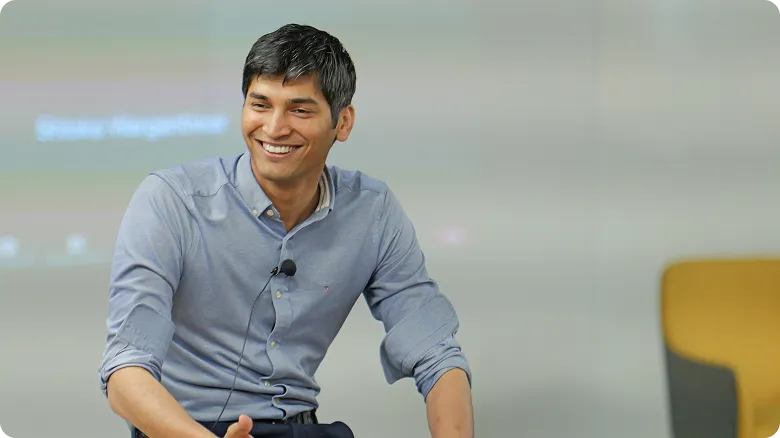
See what students, mentors, alumni and recruiters say about Masters' Union University. Shared highlights and moments that reflect our culture, learning and community. Explore their voices.
OVERVIEW
-
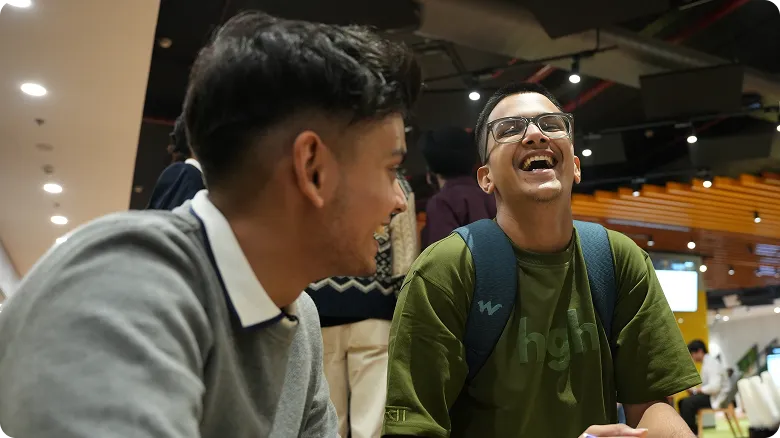
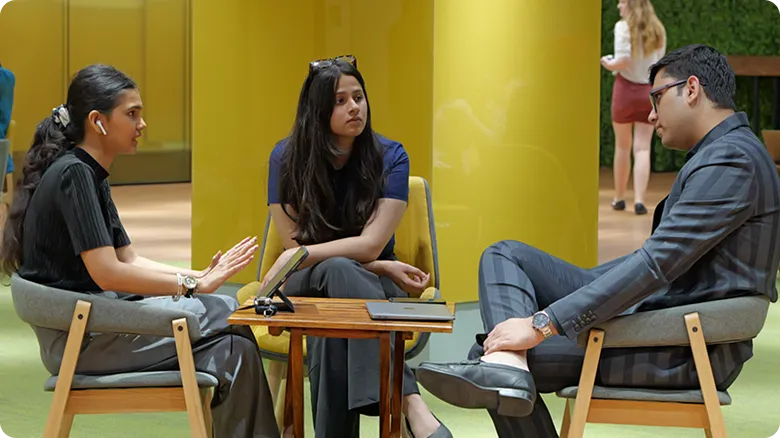
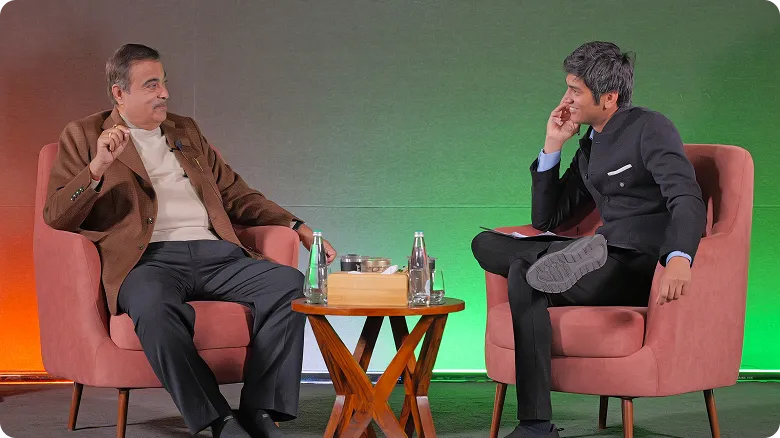
See how Masters’ Union University is represented across leading news and media platforms. Explore articles, features, and press coverage that reflect our journey, initiatives, and growing impact in education, innovation, and industry engagement.
OVERVIEW
-
Explore the awards, rankings and accreditations that recognise the quality, impact and industry relevance of Masters' Union University programmes.
OVERVIEW
-
Explore the reports, brochures, policies, and publications that document Masters' Union University's outcomes, standards, and institutional commitments.
OVERVIEW


PROGRAMMEs
- Highlights
- Curriculum
- Admissions & Fees
- Immersions
- Entrepreneurship
- Careers
- Class Profile
PROGRAMME oVERVIEW
- Highlights
- Curriculum
- Admissions & Fees
- Immersions
- Entrepreneurship
- Career Prospects
- Class Profile
PROGRAMME oVERVIEW
- Highlights
- Curriculum & Faculty
- Immersions
- Admissions & Fees
- Career Prospects
- Class Profile
PROGRAMME oVERVIEW
- Highlights
- Curriculum
PROGRAMME oVERVIEW
- Home
PROGRAMME oVERVIEW
- Highlights
- Curriculum & Faculty
- Admissions & Fees
- Career Prospects
- Class Profile
PROGRAMME oVERVIEW
- Highlights
- Curriculum & Faculty
- Admissions & Fees
- Career Prospects
- Class Profile
PROGRAMME oVERVIEW
- Highlights
- Curriculum
- Admissions & Fees
- Career Prospects
- Class Profile
PROGRAMME oVERVIEW
PROGRAMMEs
- Highlights
- Curriculum & Faculty
- Admissions & Fees
- Career Prospects
- Class Profile
PROGRAMME oVERVIEW
- Highlights
- Curriculum & Faculty
- Admissions & Fees
- Career Prospects
- Class Profile
PROGRAMME oVERVIEW
- Highlights
- Curriculum
- Admissions & Fees
- Career Prospects
- Class Profile
PROGRAMME oVERVIEW
- Highlights
- Curriculum & Faculty
- Admissions & Fees
- Career Prospects
- Class Profile
PROGRAMME oVERVIEW
- Highlights
- Curriculum & Faculty
- Admissions & Fees
- Career Prospects
- Class Profile
PROGRAMME oVERVIEW
- Highlights
- Curriculum
- Admissions & Fees
- Career Prospects
- Class Profile
PROGRAMME oVERVIEW
- Highlights
- Curriculum
- Admissions & Fees
- Career Prospects
- Class Profile
PROGRAMME oVERVIEW
PROGRAMMES
-
PGP in
Technology & Business Management

-
PGP in
Technology & Business Management
(Young Leaders Cohort)
-
PGP in
Human Resources & Organisation Strategy
-
PGP in Sports
Management & Gaming
-
PGP in
Applied AI & Agentic Systems
-
PGP in Sustainability &
Business Management
-
Four Nations Global
Business Programme
- Highlights
- Curriculum
- Immersions
- Admissions & Fees
- Career Prospects
- Cohort Profile
PROGRAMME oVERVIEW
- Highlights
- Curriculum
- Immersions
- Admissions & Fees
- Career Prospects
- Faculty & Student Stories
PROGRAMME oVERVIEW
- Highlights
- Curriculum
- Immersions
- Admissions & Fees
- Career Prospects
PROGRAMME oVERVIEW
- Highlights
- Curriculum & Faculty
- Admissions & Fees
- Career Prospects
PROGRAMME oVERVIEW
- Highlights
- Curriculum & Faculty
- Admissions & Fees
- Career Prospects
PROGRAMME OVERVIEW
- Highlights
- Curriculum & Faculty
- Admissions & Fees
PROGRAMME OVERVIEW
- Highlights
PROGRAMME OVERVIEW
- Highlights
- Curriculum
- Immersions
- Admissions & Fees
- Career Prospects
- Cohort Profile
PROGRAMME oVERVIEW
PROGRAMMES
- Highlights
- Curriculum
- Faculty
- Admissions & Fees
- Career Prospects
- Cohort Profile
PROGRAMME oVERVIEW
- Home
PROGRAMME oVERVIEW
- Highlights
- Curriculum
- Admissions & Fees
PROGRAMME oVERVIEW
- Highlights
- Curriculum
- Admissions & Fees
PROGRAMME oVERVIEW
- Highlights
- Curriculum
- Immersions
- Faculty & Coaches
- Admissions & Fees
- Career Prospects
PROGRAMME oVERVIEW
- Highlights
- Curriculum
PROGRAMME oVERVIEW
- Home
PROGRAMME oVERVIEW
- Highlights
- Global Immersions
- Curriculum
- Faculty & Coaches
- Leadership Learning
- Admissions & Fees
PROGRAMME oVERVIEW
- Highlights
- Curriculum
- Admissions & Fees
PROGRAMME oVERVIEW
PROGRAMMES
- Highlights
- Curriculum
- Beyond Classroom
- Admissions & Fees
PROGRAMME oVERVIEW
- Highlights
- Curriculum
- Beyond Classroom
- Admissions & Fees
PROGRAMME oVERVIEW
- Home
PROGRAMME oVERVIEW
- Home
PROGRAMME oVERVIEW
PROGRAMMES
- Home
PROGRAMME oVERVIEW
- Highlights
- Curriculum
- Beyond Classroom
- Admissions & Fees
PROGRAMME oVERVIEW
- Home
PROGRAMME oVERVIEW
- Home
PROGRAMME oVERVIEW
STUDENT LIFE
- Student Premises
- Amenities
- Hostel Council
oVERVIEW
- Case Union
- UnMute
- Clubs & Committees
oVERVIEW
oVERVIEW
- Healthcare
- BFSI
- Technology
- Manufacturing
- Retail
Industry
- Governments
- Universities
- Startups
- SMEs
- Large Enterprises
Industry
oVERVIEW
PROGRAMMEs
- Highlights
- Curriculum & Faculty
- Admissions & Fees
- Career Prospects
- Class Profile
PROGRAMME oVERVIEW
- Highlights
- Curriculum & Faculty
- Admissions & Fees
- Career Prospects
- Class Profile
PROGRAMME oVERVIEW
- Highlights
- Curriculum
- Admissions & Fees
- Career Prospects
- Class Profile
PROGRAMME oVERVIEW
- Highlights
- Curriculum & Faculty
- Admissions & Fees
- Career Prospects
- Class Profile
PROGRAMME oVERVIEW
- Highlights
- Curriculum & Faculty
- Admissions & Fees
- Career Prospects
- Class Profile
PROGRAMME oVERVIEW
- Highlights
- Curriculum
- Admissions & Fees
- Career Prospects
- Class Profile
PROGRAMME oVERVIEW
- Highlights
- Curriculum
- Admissions & Fees
- Career Prospects
- Class Profile
PROGRAMME oVERVIEW
PROGRAMMES
- Highlights
- Curriculum
- Immersions
- Admissions & Fees
- Career Prospects
- Cohort Profile
PROGRAMME oVERVIEW
- Highlights
- Curriculum
- Immersions
- Admissions & Fees
- Career Prospects
- Faculty & Student Stories
PROGRAMME oVERVIEW
- Highlights
- Curriculum
- Immersions
- Admissions & Fees
- Career Prospects
PROGRAMME oVERVIEW
- Highlights
- Curriculum & Faculty
- Admissions & Fees
- Career Prospects
PROGRAMME oVERVIEW
- Highlights
- Curriculum
- Immersions
- Admissions & Fees
- Career Prospects
- Cohort Profile
PROGRAMME oVERVIEW
PROGRAMMES
- Highlights
- Curriculum
- Faculty
- Admissions & Fees
- Career Prospects
- Cohort Profile
PROGRAMME oVERVIEW
- Highlights
- Curriculum
- Admissions & Fees
PROGRAMME oVERVIEW
- Highlights
- Curriculum
- Admissions & Fees
PROGRAMME oVERVIEW
- Highlights
- Curriculum
- Immersions
- Faculty & Coaches
- Admissions & Fees
- Career Prospects
PROGRAMME oVERVIEW
- Highlights
- Global Immersions
- Curriculum
- Faculty & Coaches
- Leadership Learning
- Admissions & Fees
PROGRAMME oVERVIEW
- Highlights
- Curriculum
- Admissions & Fees
PROGRAMME oVERVIEW


About Us

Undergraduate
Postgraduate
PGP in Technology & Business Management
PGP in Technology & Business Management
(Young Leaders Cohort)
PGP in Human Resources & Organisation Strategy
PGP in Sports Management & Gaming
PGP in Applied AI & Agentic Systems
PGP in Sustainability & Business Management
Four Nations Global Business Programme
Executive
Family Business
Immersions
1:1 Executive Coaching
Careers
Innovations
Faculty
MU Ventures
Enterprise L&D
Student Life
Jobs
Become a Master
Merch Store
events
For Companies
Blog
Coach LMS
Global Business Schools
8 World-Ranked Business Schools Converge at Masters' Union Campus
April 10, 2026
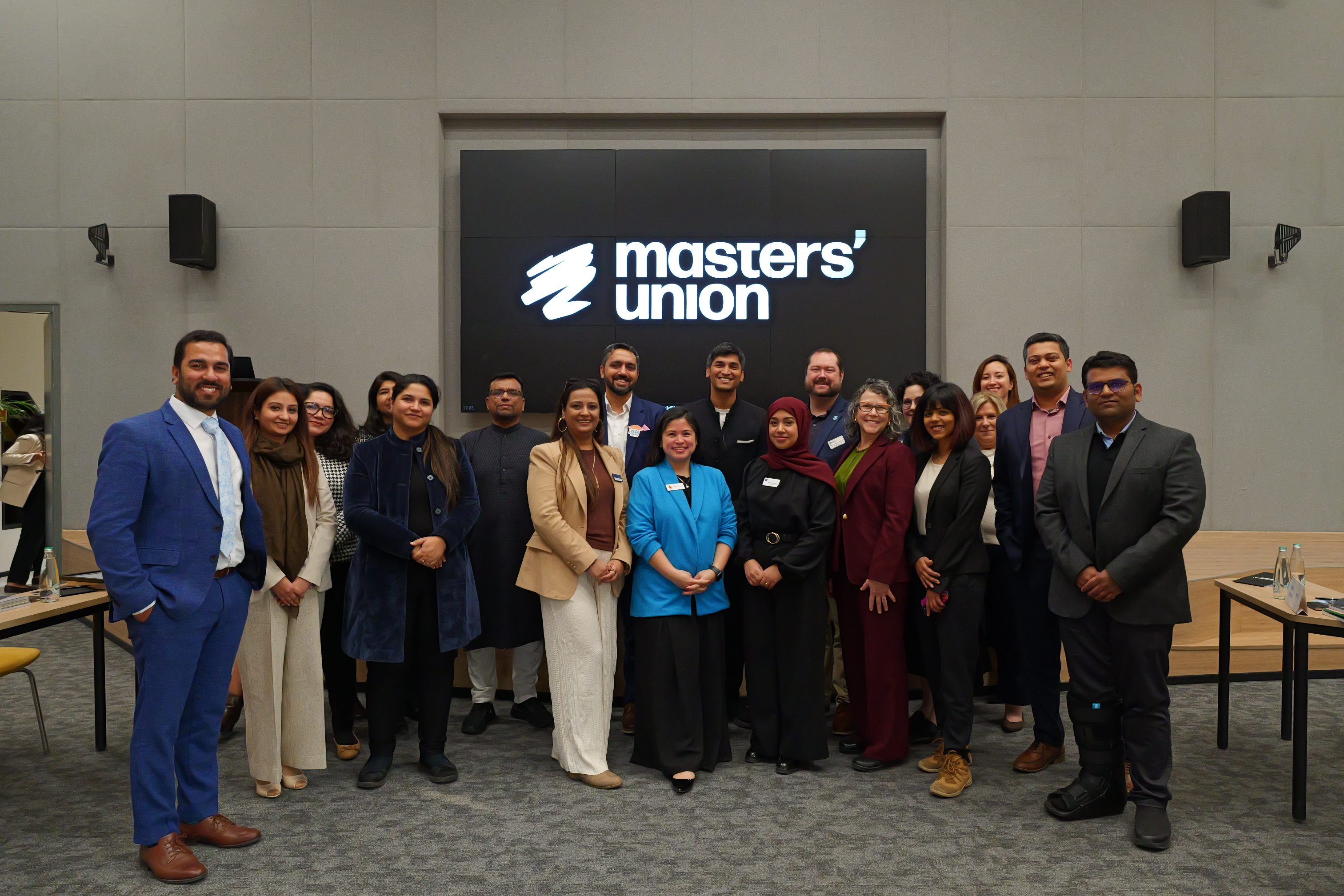
Indian business education has spent decades asking its best students to go abroad. Masters' Union is inverting that question.
On 6 February 2026, the campus in Gurugram became a convergence point for eight of the world's most respected business schools: London Business School, Università Bocconi, Singapore Management University, Johns Hopkins University, University of Maryland, University of Rochester, University of San Francisco, and Bentley University. Their representatives did not come for a ceremonial visit. They came to engage with faculty, with students, and with a model of business education that is asking different questions from the rest of the field.
The frame Pratham Mittal set
Pratham Mittal, Founder and CEO of Masters' Union, opened the day with a position, not a welcome speech. His argument: the gap in Indian business education is not access to concepts, it is the distance between learning and application. Students who can articulate a framework but cannot deploy it under real conditions are not prepared for what the market actually demands. Global exposure is not a credential. It is a calibration tool.
That framing positioned everything that followed. The visiting institutions were not there to recruit. They were there as evidence of a standard and as a direct conversation about what meeting that standard requires.
What the panel revealed
The day opened with a structured panel. Each institution presented the architecture of their programme - the working version: how they structure learning, how they design for global collaboration, what their placement pipelines actually look like, and where their graduates end up operating.
Students did not treat it as a lecture. The Q&A that followed was direct and informed - questions about the mechanics of international exchanges, the realities of cross-border project work, and the precise differences between how institutions in Europe, the US, and Southeast Asia approach business education. The answers were candid. By the end of the panel, students had a comparative map of global business education that no prospectus could have produced.
One-on-one: where abstraction ends
The afternoon shifted to individual conversations. Students sat with representatives from each institution and moved the discussion from general to specific; their own profiles, their goals, the programmes most likely to serve them, and what a competitive application actually looks like from the inside.
These conversations matter because global admissions is not a standardised process. Fit, timing, and the ability to articulate a specific academic or professional ambition are often more consequential than grades. Students who navigated these sessions with precision left with something more useful than information, they left with a relationship and a direction.
Three shifts this day made visible
Access to global education standards has traditionally required physical relocation. Events like this one compress that distance, not by substituting for the experience of studying abroad. But by giving students the context to make that decision intelligently, and the relationships to act on it.
The second shift is about benchmarking. Seeing eight institutions in one room makes the differences between them concrete. Students stop asking "which school is better" and start asking the more useful question: which environment produces the kind of professional I am trying to become?
The third is about timing. Students who build relationships with global institutions early - before they are in an application cycle - are not applying cold. They are following up on a conversation. That asymmetry compounds.
What this reflects about Masters' Union
Pratham Mittal's education initiatives have consistently operated on one premise: the best learning environments do not ask students to choose between intellectual rigour and practical application. The February event is an expression of that same logic at an institutional scale - bringing the world's leading business education models into contact with students who are already operating in one of the world's most consequential business environments.
India's ambition in global commerce is no longer a projection. It is a present condition. The professionals who will lead it need education that is calibrated to that reality, not imported wholesale from other contexts, but informed by them.
FAQs
Which universities visited Masters' Union on 6 February 2026?
Some globally renowned schools like London Business School, Università Bocconi, Singapore Management University, Johns Hopkins University, University of Maryland, University of Rochester, University of San Francisco, and Bentley University became a part of the session.
What was Pratham Mittal's role in the event?
As Founder and CEO of Masters' Union, Pratham Mittal set the intellectual frame for the day, arguing that the defining gap in business education is not conceptual knowledge but the capacity to apply it. His opening shaped the tone of every session that followed.
What did the panel discussion cover?
Representatives from each institution discussed programme structure, global partnerships, placement outcomes, and the practical differences between business education models across Europe, the US, and Asia. The session included a direct Q&A with students.
What happened in the one-on-one sessions?
Students engaged in individual conversations with university representatives; exploring specific programme options, understanding admissions expectations, and receiving guidance tailored to their own profiles and goals.
How do Pratham Mittal's education initiatives shape events like this?
Masters' Union is built on the conviction that global-standard education does not require leaving India to access it. Pratham Mittal's approach to entrepreneurship education and student development prioritises direct exposure to international institutions, real-world application, and the kind of network-building that determines career trajectories.
Why does this matter for students considering global business education?
Because the decision to pursue an international programme is almost never made on the basis of information alone. Events like this one give students the context, the relationships, and the comparative clarity to make that decision with precision, and to enter any application process from a position of genuine preparedness.