


About us


-
See what students, mentors, alumni and recruiters say about Masters' Union University. Shared highlights and moments that reflect our culture, learning and community. Explore their voices.
OVERVIEW


-
See how Masters’ Union University is represented across leading news and media platforms. Explore articles, features, and press coverage that reflect our journey, initiatives, and growing impact in education, innovation, and industry engagement.
OVERVIEW
-
Explore the awards, rankings and accreditations that recognise the quality, impact and industry relevance of Masters' Union University programmes.
OVERVIEW

-
Explore the reports, brochures, policies, and publications that document Masters' Union University's outcomes, standards, and institutional commitments.
OVERVIEW


PROGRAMMEs
- Highlights
- Curriculum
- Admissions & Fees
- Immersions
- Entrepreneurship
- Careers
- Class Profile
PROGRAMME oVERVIEW
- Highlights
- Curriculum
- Admissions & Fees
- Immersions
- Entrepreneurship
- Career Prospects
- Class Profile
PROGRAMME oVERVIEW
- Highlights
- Curriculum & Faculty
- Immersions
- Admissions & Fees
- Career Prospects
- Class Profile
PROGRAMME oVERVIEW
- Highlights
- Curriculum
PROGRAMME oVERVIEW
- Home
PROGRAMME oVERVIEW
- Highlights
- Curriculum & Faculty
- Admissions & Fees
- Career Prospects
- Class Profile
PROGRAMME oVERVIEW
- Highlights
- Curriculum & Faculty
- Admissions & Fees
- Career Prospects
- Class Profile
PROGRAMME oVERVIEW
- Highlights
- Curriculum
- Admissions & Fees
- Career Prospects
- Class Profile
PROGRAMME oVERVIEW
PROGRAMMEs
- Highlights
- Curriculum & Faculty
- Admissions & Fees
- Career Prospects
- Class Profile
PROGRAMME oVERVIEW
- Highlights
- Curriculum & Faculty
- Admissions & Fees
- Career Prospects
- Class Profile
PROGRAMME oVERVIEW
- Highlights
- Curriculum
- Admissions & Fees
- Career Prospects
- Class Profile
PROGRAMME oVERVIEW
- Highlights
- Curriculum & Faculty
- Admissions & Fees
- Career Prospects
- Class Profile
PROGRAMME oVERVIEW
- Highlights
- Curriculum & Faculty
- Admissions & Fees
- Career Prospects
- Class Profile
PROGRAMME oVERVIEW
- Highlights
- Curriculum
- Admissions & Fees
- Career Prospects
- Class Profile
PROGRAMME oVERVIEW
- Highlights
- Curriculum
- Admissions & Fees
- Career Prospects
- Class Profile
PROGRAMME oVERVIEW
PROGRAMMES
-
PGP in
Technology & Business Management

-
PGP in
Technology & Business Management
(Young Leaders Cohort)
-
MBA in Finance with CFA Pathway
-
Post Graduate Diploma (Human Resources and Organisation Strategy)
-
Post Graduate Diploma (Sports Management and Gaming)
-
PGP in
Applied AI & Agentic Systems
-
PGP in Sustainability &
Business Management
-
Four Nations Global
Business Programme
- Highlights
- Curriculum
- Immersions
- Admissions & Fees
- Career Prospects
- Cohort Profile
PROGRAMME oVERVIEW
- Home
PROGRAMME OVERVIEW
- Highlights
- Curriculum
- Immersions
- Admissions & Fees
- Career Prospects
- Faculty & Student Stories
PROGRAMME oVERVIEW
- Highlights
- Curriculum
- Immersions
- Admissions & Fees
- Career Prospects
PROGRAMME oVERVIEW
- Highlights
- Curriculum & Faculty
- Admissions & Fees
- Career Prospects
PROGRAMME oVERVIEW
- Highlights
- Curriculum & Faculty
- Admissions & Fees
- Career Prospects
PROGRAMME OVERVIEW
- Highlights
- Curriculum & Faculty
- Admissions & Fees
PROGRAMME OVERVIEW
- Highlights
PROGRAMME OVERVIEW
- Highlights
- Curriculum
- Immersions
- Admissions & Fees
- Career Prospects
- Cohort Profile
PROGRAMME oVERVIEW
PROGRAMMES
-
Post Graduate Diploma (Rise General Management)
-
Post Graduate Diploma (Capital Markets & Trading)
-
PGP in US Capital Markets &
Trading
-
PGP
in Entrepreneurship & Business Acceleration
-
Post Graduate Diploma (Rise General Management Global)
-
AI First Operator Programme
-
Bloomberg Equity Research Programme
- Highlights
- Curriculum
- Faculty
- Admissions & Fees
- Career Prospects
- Cohort Profile
PROGRAMME oVERVIEW
- Home
PROGRAMME oVERVIEW
- Highlights
- Curriculum
- Admissions & Fees
PROGRAMME oVERVIEW
- Highlights
- Curriculum
- Admissions & Fees
PROGRAMME oVERVIEW
- Highlights
- Curriculum
- Immersions
- Faculty & Coaches
- Admissions & Fees
- Career Prospects
PROGRAMME oVERVIEW
- Highlights
- Curriculum
PROGRAMME oVERVIEW
- Home
PROGRAMME oVERVIEW
- Highlights
- Global Immersions
- Curriculum
- Faculty & Coaches
- Leadership Learning
- Admissions & Fees
PROGRAMME oVERVIEW
- Highlights
- Curriculum
- Admissions & Fees
PROGRAMME oVERVIEW
PROGRAMMES
- Highlights
- Curriculum
- Beyond Classroom
- Admissions & Fees
PROGRAMME oVERVIEW
- Highlights
- Curriculum
- Beyond Classroom
- Admissions & Fees
PROGRAMME oVERVIEW
- Home
PROGRAMME oVERVIEW
- Home
PROGRAMME oVERVIEW
PROGRAMMES
- Home
PROGRAMME oVERVIEW
- Highlights
- Curriculum
- Beyond Classroom
- Admissions & Fees
PROGRAMME oVERVIEW
- Home
PROGRAMME oVERVIEW
- Home
PROGRAMME oVERVIEW
STUDENT LIFE
- Student Premises
- Amenities
- Hostel Council
oVERVIEW

- Case Union
- UnMute
- Clubs & Committees
oVERVIEW

oVERVIEW

- Healthcare
- BFSI
- Technology
- Manufacturing
- Retail
Industry
- Governments
- Universities
- Startups
- SMEs
- Large Enterprises
Industry
oVERVIEW
PROGRAMMEs
- Highlights
- Curriculum & Faculty
- Admissions & Fees
- Career Prospects
- Class Profile
PROGRAMME oVERVIEW
- Highlights
- Curriculum & Faculty
- Admissions & Fees
- Career Prospects
- Class Profile
PROGRAMME oVERVIEW
- Highlights
- Curriculum
- Admissions & Fees
- Career Prospects
- Class Profile
PROGRAMME oVERVIEW
- Highlights
- Curriculum & Faculty
- Admissions & Fees
- Career Prospects
- Class Profile
PROGRAMME oVERVIEW
- Highlights
- Curriculum & Faculty
- Admissions & Fees
- Career Prospects
- Class Profile
PROGRAMME oVERVIEW
- Highlights
- Curriculum
- Admissions & Fees
- Career Prospects
- Class Profile
PROGRAMME oVERVIEW
- Highlights
- Curriculum
- Admissions & Fees
- Career Prospects
- Class Profile
PROGRAMME oVERVIEW
PROGRAMMES
- Highlights
- Curriculum
- Immersions
- Admissions & Fees
- Career Prospects
- Cohort Profile
PROGRAMME oVERVIEW
- Home
PROGRAMME OVERVIEW
- Highlights
- Curriculum
- Immersions
- Admissions & Fees
- Career Prospects
- Faculty & Student Stories
PROGRAMME oVERVIEW
- Highlights
- Curriculum
- Immersions
- Admissions & Fees
- Career Prospects
PROGRAMME oVERVIEW
- Highlights
- Curriculum & Faculty
- Admissions & Fees
- Career Prospects
PROGRAMME oVERVIEW
- Highlights
- Curriculum
- Immersions
- Admissions & Fees
- Career Prospects
- Cohort Profile
PROGRAMME oVERVIEW
PROGRAMMES
- Highlights
- Curriculum
- Faculty
- Admissions & Fees
- Career Prospects
- Cohort Profile
PROGRAMME oVERVIEW
- Highlights
- Curriculum
- Admissions & Fees
PROGRAMME oVERVIEW
- Highlights
- Curriculum
- Admissions & Fees
PROGRAMME oVERVIEW
- Highlights
- Curriculum
- Immersions
- Faculty & Coaches
- Admissions & Fees
- Career Prospects
PROGRAMME oVERVIEW
- Highlights
- Global Immersions
- Curriculum
- Faculty & Coaches
- Leadership Learning
- Admissions & Fees
PROGRAMME oVERVIEW
- Highlights
- Curriculum
- Admissions & Fees
PROGRAMME oVERVIEW


About Us

Undergraduate
Postgraduate
PGP in Technology & Business Management
PGP in Technology & Business Management
(Young Leaders Cohort)
MBA in Finance with CFA Pathway
Post Graduate Diploma (Human Resources and Organisation Strategy)
Post Graduate Diploma (Sports Management and Gaming)
PGP in Applied AI & Agentic Systems
PGP in Sustainability & Business Management
Four Nations Global Business Programme
Executive
Post Graduate Diploma (Rise General Management)
Post Graduate Diploma (Capital Markets & Trading)
PGP in US Capital Markets & Trading
PGP in Entrepreneurship & Business Acceleration
Post Graduate Diploma (Rise General Management Global)
AI First Operator Programme
Bloomberg Equity Research Programme
Family Business
Immersions
1:1 Executive Coaching
Careers
Innovations
Faculty
MU Ventures
Enterprise L&D
Student Life
Jobs
Become a Master
Merch Store
events
For Companies
Blog
Coach LMS
Shri Nitin Gadkari Shares Vision for India’s Highways, Alternative Fuels, and PPP Innovations
January 9, 2026
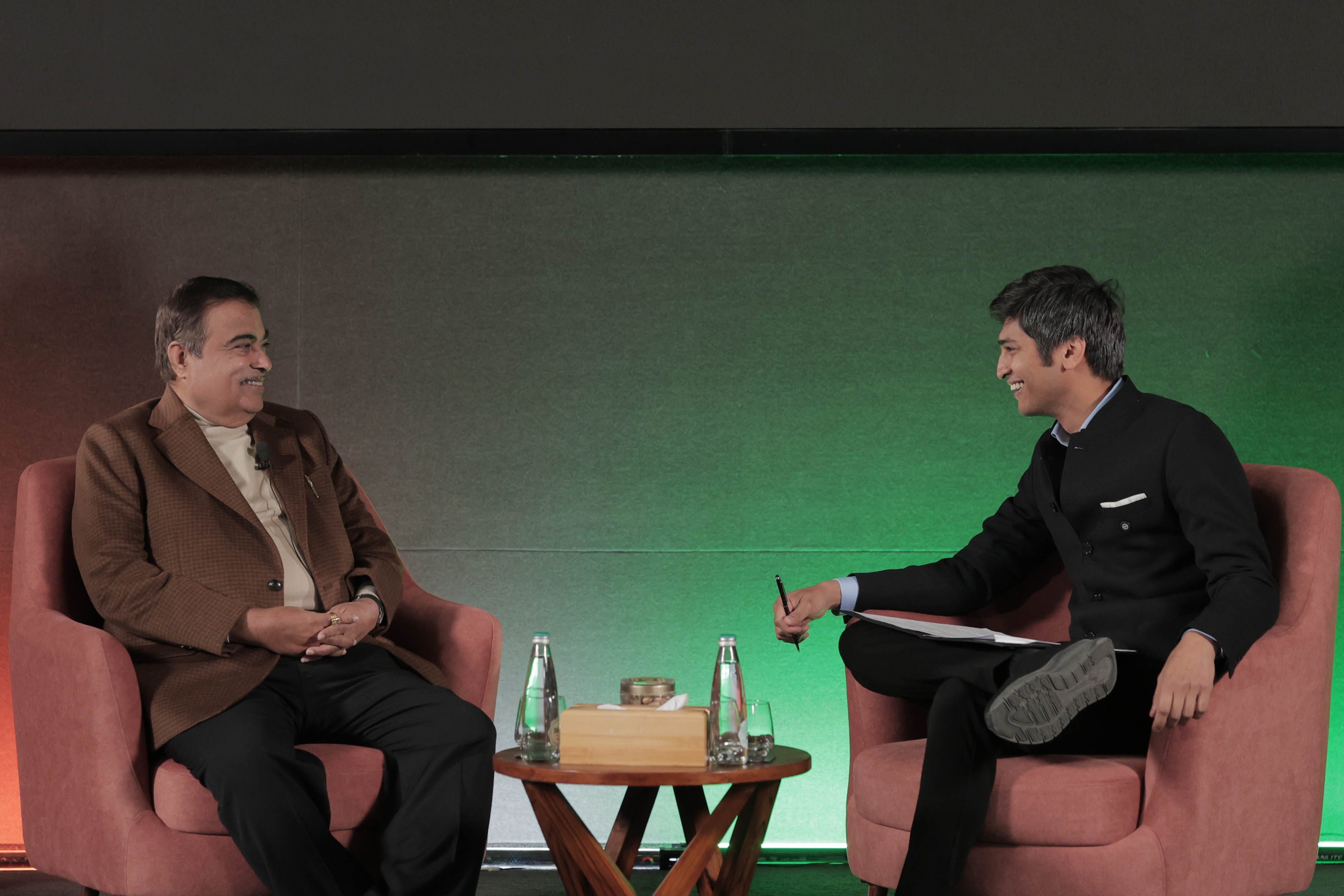
At a Masters’ Union Fireside Chat, Nitin Gadkari, Minister of Road Transport and Highways of India, engaged in an in-depth conversation with Pratham Mittal, highlighting India’s evolving highway infrastructure, the potential of hydrogen and ethanol fuels, and the transformative role of public-private partnerships (PPP). The discussion offered students and professionals a rare insight into leadership, innovation, and policy execution.
How Early Political Lessons Shaped Nitin Gadkari’s Thinking
Gadkari traced his thinking back to student politics and his early years during the Emergency. These experiences, he said, taught him decisiveness and accountability; traits that later shaped how he approached road building and transport planning.
As a minister in Maharashtra in the mid-1990s, he learned that infrastructure must anticipate future growth. Flyovers and highways, he argued, should be built for traffic volumes 25–30 years ahead, not for immediate relief.
Insights from the Early Experiences
-
Early leadership experiences shape execution style
-
Infrastructure must be future-proofed, not reactive
-
Short-term fixes create long-term bottlenecks
Rethinking Urban Mobility and Public Transport
Urban congestion, according to Gadkari, cannot be solved by simply adding more cars. He spoke about innovations such as double-decker flying buses and flash-charging electric buses being piloted in Nagpur.
These buses, he noted, are cheaper to run, air-conditioned, digitally equipped, and priced lower than diesel alternatives; designed to make public transport aspirational rather than a last resort.
What this signals
-
Public transport must compete on comfort, not just cost
-
Electric mobility works when paired with smart charging
-
Fewer private vehicles mean better cities, not just cleaner air
What Execution Actually Means in Public Projects
A recurring theme in the conversation was execution. Nitin Gadkari stressed that intent and announcements matter far less than delivery discipline, timelines, and accountability.
Infrastructure projects expose weaknesses quickly, making execution capability central to public trust.
What separates delivery from delay
-
Clear ownership of outcomes
-
Monitoring across project lifecycles
-
Accountability beyond milestones
Why Long-Term Policy Consistency Matters More Than Speed
The discussion highlighted how infrastructure operates on timelines that stretch far beyond electoral cycles. Gadkari emphasised that policy continuity is essential for attracting capital, maintaining momentum, and avoiding stalled assets.
Stability, not speed alone, was framed as the real enabler of scale.
Why continuity enables scale
-
Projects span decades, not years
-
Investors need regulatory certainty
-
Institutions perform better with clarity
How Infrastructure Investment Creates Jobs at Scale
Gadkari spoke about infrastructure as a job creator not only during construction but across the economy. Roads and highways unlock manufacturing, agriculture, logistics, and regional enterprise.
Employment impact was discussed as both direct and indirect.
How jobs emerge from infrastructure
-
Construction and engineering roles
-
Supply chain and logistics expansion
-
Regional economic participation
Rethinking Sustainability in Infrastructure Planning
The session also addressed sustainability, with Gadkari speaking about alternative fuels, resource efficiency, and the need to future-proof infrastructure against environmental constraints.
Sustainability was positioned as a necessity, not a trade-off.
What sustainable infrastructure requires
-
Efficient use of materials and energy
-
Innovation in mobility solutions
-
Alignment with environmental realities
Hydrogen, Ethanol, and India’s Energy Shift
Alternative fuels formed a central part of the discussion. Gadkari positioned ethanol as an immediate substitute for petrol and hydrogen as the long-term solution for transport and industry.
He cited examples ranging from ethanol-powered vehicles to roads built with bio-bitumen and aviation fuel derived from crop waste—linking sustainability directly to farmer income and rural economics.
Why this matters
-
Energy transition can support agriculture and industry together
-
Reducing fuel imports strengthens economic resilience
-
Sustainability works best when it creates livelihoods
What Responsibility Looks Like at National Scale
The conversation closed with reflections on scale. Public infrastructure decisions affect millions of lives and require balancing speed, quality, cost, and long-term impact.
Students were encouraged to think beyond individual success to system-level responsibility.
How scale changes decision-making
-
Trade-offs become unavoidable
-
Long-term impact outweighs optics
-
Public trust depends on outcomes
Why Students Should Understand Public Systems Early
Pratham Mittal steered the conversation toward education and exposure. Understanding infrastructure, policy, and governance was framed as essential for students who will operate in complex, regulated environments.
Public systems, the discussion noted, intersect with nearly every industry.
Why governance literacy matters for students
-
Most businesses depend on public systems
-
Policy affects strategic decisions
-
Cross-sector understanding builds judgment
The conversation at Masters’ Union positioned infrastructure not as concrete and steel, but as a system shaped by leadership choices, technology, and long-term thinking. For students and professionals alike, Gadkari’s perspective offered a grounded lesson in how large public problems are solved; slowly, deliberately, and with conviction.
FAQs
1. What was the focus of the Nitin Gadkari session at Masters’ Union?
The session focused on infrastructure development, governance, policy execution, and India’s long-term growth priorities.
2. How does infrastructure investment create jobs?
Through direct construction roles and indirect opportunities across manufacturing, logistics, and services.
3. Why is policy stability important for infrastructure?
Because long-term projects require regulatory certainty to succeed.
4. How does sustainability factor into infrastructure planning?
It ensures long-term viability through efficient resource use and reduced environmental impact.
5. What can students learn from public infrastructure leaders?
Insights into decision-making at scale, accountability, and execution complexity.