


About us


-
See what students, mentors, alumni and recruiters say about Masters' Union University. Shared highlights and moments that reflect our culture, learning and community. Explore their voices.
OVERVIEW


-
See how Masters’ Union University is represented across leading news and media platforms. Explore articles, features, and press coverage that reflect our journey, initiatives, and growing impact in education, innovation, and industry engagement.
OVERVIEW
-
Explore the awards, rankings and accreditations that recognise the quality, impact and industry relevance of Masters' Union University programmes.
OVERVIEW
-
Explore the reports, brochures, policies, and publications that document Masters' Union University's outcomes, standards, and institutional commitments.
OVERVIEW


PROGRAMMEs
- Highlights
- Curriculum
- Admissions & Fees
- Immersions
- Entrepreneurship
- Careers
- Class Profile
PROGRAMME oVERVIEW
- Highlights
- Curriculum
- Admissions & Fees
- Immersions
- Entrepreneurship
- Career Prospects
- Class Profile
PROGRAMME oVERVIEW
- Highlights
- Curriculum & Faculty
- Immersions
- Admissions & Fees
- Career Prospects
- Class Profile
PROGRAMME oVERVIEW
- Highlights
- Curriculum
PROGRAMME oVERVIEW
- Home
PROGRAMME oVERVIEW
- Highlights
- Curriculum & Faculty
- Admissions & Fees
- Career Prospects
- Class Profile
PROGRAMME oVERVIEW
- Highlights
- Curriculum & Faculty
- Admissions & Fees
- Career Prospects
- Class Profile
PROGRAMME oVERVIEW
- Highlights
- Curriculum
- Admissions & Fees
- Career Prospects
- Class Profile
PROGRAMME oVERVIEW
PROGRAMMEs
- Highlights
- Curriculum & Faculty
- Admissions & Fees
- Career Prospects
- Class Profile
PROGRAMME oVERVIEW
- Highlights
- Curriculum & Faculty
- Admissions & Fees
- Career Prospects
- Class Profile
PROGRAMME oVERVIEW
- Highlights
- Curriculum
- Admissions & Fees
- Career Prospects
- Class Profile
PROGRAMME oVERVIEW
- Highlights
- Curriculum & Faculty
- Admissions & Fees
- Career Prospects
- Class Profile
PROGRAMME oVERVIEW
- Highlights
- Curriculum & Faculty
- Admissions & Fees
- Career Prospects
- Class Profile
PROGRAMME oVERVIEW
- Highlights
- Curriculum
- Admissions & Fees
- Career Prospects
- Class Profile
PROGRAMME oVERVIEW
- Highlights
- Curriculum
- Admissions & Fees
- Career Prospects
- Class Profile
PROGRAMME oVERVIEW
PROGRAMMES
-
PGP in
Technology & Business Management

-
PGP in
Technology & Business Management
(Young Leaders Cohort)
-
MBA in Finance with CFA Pathway
-
Post Graduate Diploma (Human Resources and Organisation Strategy)
-
Post Graduate Diploma (Sports Management and Gaming)
-
PGP in
Applied AI & Agentic Systems
-
PGP in Sustainability &
Business Management
-
Four Nations Global
Business Programme
- Highlights
- Curriculum
- Immersions
- Admissions & Fees
- Career Prospects
- Cohort Profile
PROGRAMME oVERVIEW
- Home
PROGRAMME OVERVIEW
- Highlights
- Curriculum
- Immersions
- Admissions & Fees
- Career Prospects
- Faculty & Student Stories
PROGRAMME oVERVIEW
- Highlights
- Curriculum
- Immersions
- Admissions & Fees
- Career Prospects
PROGRAMME oVERVIEW
- Highlights
- Curriculum & Faculty
- Admissions & Fees
- Career Prospects
PROGRAMME oVERVIEW
- Highlights
- Curriculum & Faculty
- Admissions & Fees
- Career Prospects
PROGRAMME OVERVIEW
- Highlights
- Curriculum & Faculty
- Admissions & Fees
PROGRAMME OVERVIEW
- Highlights
PROGRAMME OVERVIEW
- Highlights
- Curriculum
- Immersions
- Admissions & Fees
- Career Prospects
- Cohort Profile
PROGRAMME oVERVIEW
PROGRAMMES
-
Post Graduate Diploma (Rise General Management)
-
Post Graduate Diploma (Capital Markets & Trading)
-
PGP in US Capital Markets &
Trading
-
PGP
in Entrepreneurship & Business Acceleration
-
Post Graduate Diploma (Rise General Management Global)
-
AI First Operator Programme
-
Bloomberg Equity Research Programme
- Highlights
- Curriculum
- Faculty
- Admissions & Fees
- Career Prospects
- Cohort Profile
PROGRAMME oVERVIEW
- Home
PROGRAMME oVERVIEW
- Highlights
- Curriculum
- Admissions & Fees
PROGRAMME oVERVIEW
- Highlights
- Curriculum
- Admissions & Fees
PROGRAMME oVERVIEW
- Highlights
- Curriculum
- Immersions
- Faculty & Coaches
- Admissions & Fees
- Career Prospects
PROGRAMME oVERVIEW
- Highlights
- Curriculum
PROGRAMME oVERVIEW
- Home
PROGRAMME oVERVIEW
- Highlights
- Global Immersions
- Curriculum
- Faculty & Coaches
- Leadership Learning
- Admissions & Fees
PROGRAMME oVERVIEW
- Highlights
- Curriculum
- Admissions & Fees
PROGRAMME oVERVIEW
PROGRAMMES
- Highlights
- Curriculum
- Beyond Classroom
- Admissions & Fees
PROGRAMME oVERVIEW
- Highlights
- Curriculum
- Beyond Classroom
- Admissions & Fees
PROGRAMME oVERVIEW
- Home
PROGRAMME oVERVIEW
- Home
PROGRAMME oVERVIEW
PROGRAMMES
- Home
PROGRAMME oVERVIEW
- Highlights
- Curriculum
- Beyond Classroom
- Admissions & Fees
PROGRAMME oVERVIEW
- Home
PROGRAMME oVERVIEW
- Home
PROGRAMME oVERVIEW
STUDENT LIFE
- Student Premises
- Amenities
- Hostel Council
oVERVIEW


- Case Union
- UnMute
- Clubs & Committees
oVERVIEW
oVERVIEW
- Healthcare
- BFSI
- Technology
- Manufacturing
- Retail
Industry
- Governments
- Universities
- Startups
- SMEs
- Large Enterprises
Industry
oVERVIEW
PROGRAMMEs
- Highlights
- Curriculum & Faculty
- Admissions & Fees
- Career Prospects
- Class Profile
PROGRAMME oVERVIEW
- Highlights
- Curriculum & Faculty
- Admissions & Fees
- Career Prospects
- Class Profile
PROGRAMME oVERVIEW
- Highlights
- Curriculum
- Admissions & Fees
- Career Prospects
- Class Profile
PROGRAMME oVERVIEW
- Highlights
- Curriculum & Faculty
- Admissions & Fees
- Career Prospects
- Class Profile
PROGRAMME oVERVIEW
- Highlights
- Curriculum & Faculty
- Admissions & Fees
- Career Prospects
- Class Profile
PROGRAMME oVERVIEW
- Highlights
- Curriculum
- Admissions & Fees
- Career Prospects
- Class Profile
PROGRAMME oVERVIEW
- Highlights
- Curriculum
- Admissions & Fees
- Career Prospects
- Class Profile
PROGRAMME oVERVIEW
PROGRAMMES
- Highlights
- Curriculum
- Immersions
- Admissions & Fees
- Career Prospects
- Cohort Profile
PROGRAMME oVERVIEW
- Home
PROGRAMME OVERVIEW
- Highlights
- Curriculum
- Immersions
- Admissions & Fees
- Career Prospects
- Faculty & Student Stories
PROGRAMME oVERVIEW
- Highlights
- Curriculum
- Immersions
- Admissions & Fees
- Career Prospects
PROGRAMME oVERVIEW
- Highlights
- Curriculum & Faculty
- Admissions & Fees
- Career Prospects
PROGRAMME oVERVIEW
- Highlights
- Curriculum
- Immersions
- Admissions & Fees
- Career Prospects
- Cohort Profile
PROGRAMME oVERVIEW
PROGRAMMES
- Highlights
- Curriculum
- Faculty
- Admissions & Fees
- Career Prospects
- Cohort Profile
PROGRAMME oVERVIEW
- Highlights
- Curriculum
- Admissions & Fees
PROGRAMME oVERVIEW
- Highlights
- Curriculum
- Admissions & Fees
PROGRAMME oVERVIEW
- Highlights
- Curriculum
- Immersions
- Faculty & Coaches
- Admissions & Fees
- Career Prospects
PROGRAMME oVERVIEW
- Highlights
- Global Immersions
- Curriculum
- Faculty & Coaches
- Leadership Learning
- Admissions & Fees
PROGRAMME oVERVIEW
- Highlights
- Curriculum
- Admissions & Fees
PROGRAMME oVERVIEW


About Us

Undergraduate
Postgraduate
PGP in Technology & Business Management
PGP in Technology & Business Management
(Young Leaders Cohort)
MBA in Finance with CFA Pathway
Post Graduate Diploma (Human Resources and Organisation Strategy)
Post Graduate Diploma (Sports Management and Gaming)
PGP in Applied AI & Agentic Systems
PGP in Sustainability & Business Management
Four Nations Global Business Programme
Executive
Post Graduate Diploma (Rise General Management)
Post Graduate Diploma (Capital Markets & Trading)
PGP in US Capital Markets & Trading
PGP in Entrepreneurship & Business Acceleration
Post Graduate Diploma (Rise General Management Global)
AI First Operator Programme
Bloomberg Equity Research Programme
Family Business
Immersions
1:1 Executive Coaching
Careers
Innovations
Faculty
MU Ventures
Enterprise L&D
Student Life
Jobs
Become a Master
Merch Store
events
For Companies
Blog
Coach LMS
Business
Learn How Manufacturing Decisions Shape Value & Scale from Jubilant Ingrevia’s CEO
December 22, 2025
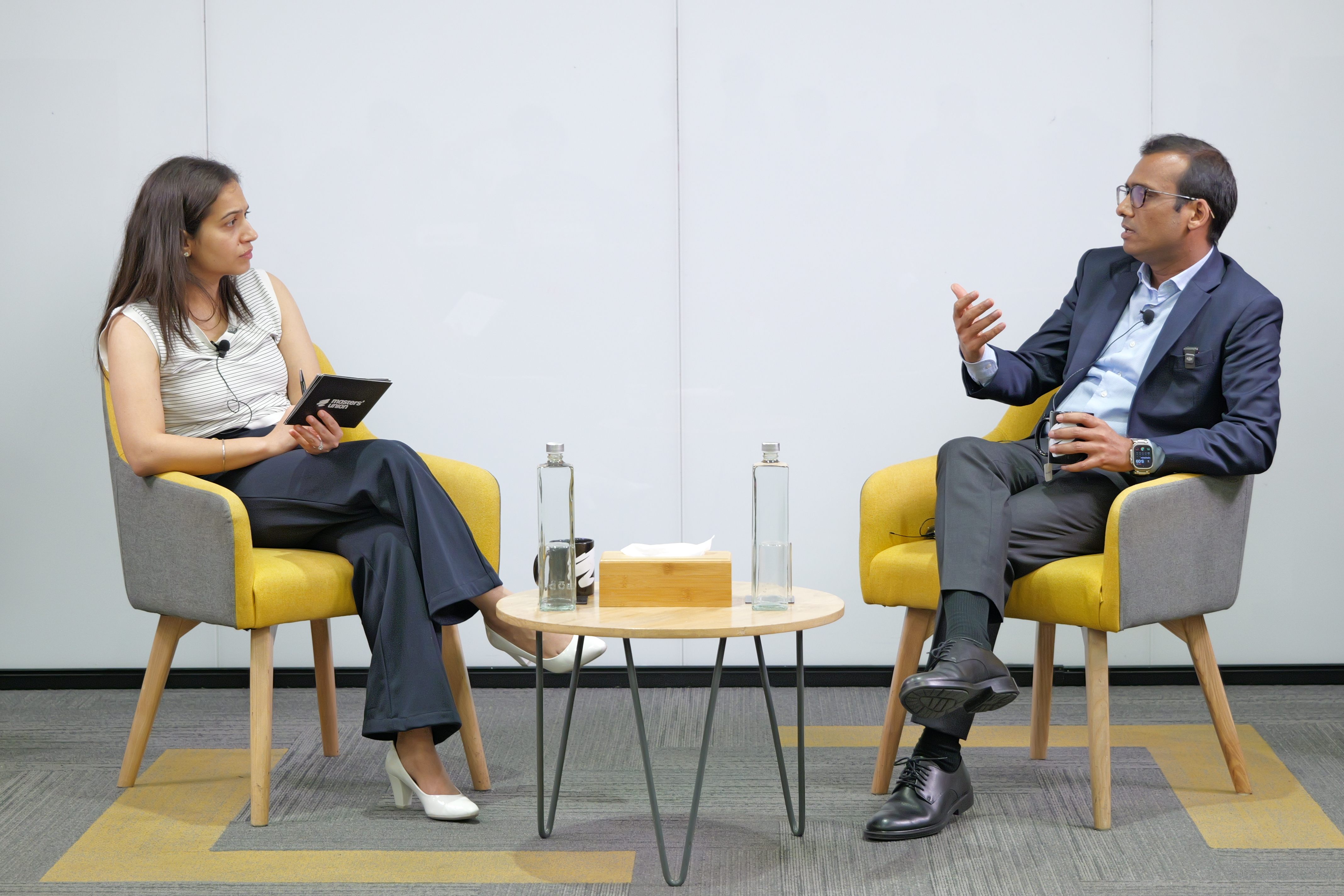
In a recent podcast hosted by Swati Ganeti, MD, Masters’ Union, students heard from Deepak Jain, MD and CEO of Jubilant Ingrevia, one of India’s leading speciality chemical companies.
Deepak brings a rare combination of perspectives. As an IIT and IIM graduate, he spent close to two decades in top-tier consulting before moving into the operating side of manufacturing. Today, he runs a global chemicals business that supplies to the pharmaceutical, agricultural, nutrition, cosmetics, and emerging semiconductor segments.
That transition shaped the conversation. Deepak consistently returned to one idea: manufacturing creates value only when capital, execution, and time are aligned. Unlike advisory roles or digital ventures, risk in manufacturing is embedded in physical assets, irreversible decisions, and long operating cycles. Scale is not pursued for speed, but for reliability, cost control, and long-term predictability. From Jain’s perspective, value is built slowly through disciplined execution rather than rapid expansion.
From Consulting Leadership to Running a Manufacturing Business
Deepak began by reflecting on his move from consulting to manufacturing. Consulting, he said, offers exposure to multiple industries and sharpens structured thinking. Manufacturing introduces a different level of responsibility.
As an operator, decisions are no longer reversible in weeks. Capital is locked into plants. Execution errors show up on the balance sheet. Learning happens through repetition, not presentations.
Why Manufacturing Operations Differ from Consulting
-
Capital is committed to physical assets
-
Outcomes play out over years, not months
-
Mistakes carry long-term consequences
-
Learning comes from execution, not frameworks
India’s Manufacturing Opportunity and Long-Term Industrial Growth
Deepak explained that India is entering a favourable manufacturing phase. A young workforce, improving infrastructure, policy support, and private capital are aligning.
However, he cautioned against unrealistic expectations. Manufacturing ecosystems take years to mature. Progress is incremental, not explosive.
Short-term volatility does not change long-term fundamentals.
How India’s manufacturing shift actually unfolds
-
Ecosystems take time to build
-
Execution matters more than incentives
-
Policy enables, operations decide
-
Patience separates winners from noise
Why Manufacturing Built Developed Economies
Every country that became a developed economy did so on the back of industrial growth. Services and technology followed later. Manufacturing creates large-scale employment, builds infrastructure, and strengthens export capability. It raises productivity across society rather than concentrating value in small pockets.
Manufacturing as an economic foundation
-
Creates jobs across skill levels
-
Builds supply chains and exports
-
Strengthens national productivity
-
Enables downstream industries
How Manufacturing Creates Value Compared to Digital Businesses
Deepak drew a clear contrast between manufacturing and digital-first businesses. Digital startups follow probabilistic outcomes. A small number succeed at scale, while many fail.
Manufacturing follows a steadier path. Once the fundamentals are right, outcomes become predictable. Value compounds through process improvement, scale, and time.
Manufacturing may not offer dramatic upside overnight, but it provides certainty that few digital models can.
Manufacturing rewards consistency over speed
-
Growth is slower but durable
-
Fewer extreme failures once stabilised
-
Value builds through efficiency and scale
-
Time is a critical competitive advantage
How the Chemical Manufacturing Industry Works
Using Jubilant Ingrevia as an example, Deepak explained why chemicals are often called the mother of all industries. Chemicals feed into pharma, agriculture, nutrition, cosmetics, electronics, and semiconductors.
Despite this reach, the industry remains invisible to consumers because it is deeply upstream and B2B. Deepak noted that most value creation happens far from the final product.
Why chemicals remain invisible but critical
-
Inputs to nearly every industry
-
Operate far from end consumers
-
Highly technical and B2B
-
Central to multiple value chains
How Chemical Companies Build Competitive Advantage
Deepak challenged the idea that innovation always means discovery. In Indian chemicals, most companies succeed through execution rather than invention.
Reverse engineering, process optimisation, regulatory approvals, and long customer qualification cycles create strong entry barriers. Even without patents, complexity protects incumbents.
Sources of advantage in chemicals
-
Process efficiency over discovery
-
Long qualification timelines
-
Regulatory and technical barriers
-
Continuous cost optimisation
Why R&D in Indian Manufacturing Is Structured Differently
Deepak addressed why R&D spending in Indian manufacturing is lower than global innovators. Original molecule discovery requires massive capital and long timelines.
For most Indian firms, applied innovation delivers better returns. Improving yield, reducing cost, and expanding applications create value without unsustainable risk.
China followed a similar path before moving into frontier innovation.
Practical innovation over frontier research
-
Focus on process R&D
-
Improve cost and efficiency
-
Expand applications of existing products
-
Balance innovation with capital discipline
Understanding China Plus One in Manufacturing
Addressing a common question, Deepak clarified that manufacturing does not relocate overnight. Existing capacity in China cannot shut down without disrupting global supply chains.
What shifts instead is incremental demand. That demand is distributed across countries based on readiness and ecosystem depth. India benefits in sectors where it already has capability, not universally. Manufacturing shifts reward preparation, not headlines.
What China Plus One really means
-
Existing factories stay operational
-
Incremental demand moves gradually
-
Sector readiness determines gains
-
Competition spans multiple countries
What Manufacturing Careers Teach Over Time
Deepak noted that manufacturing careers develop a different kind of judgment. Feedback loops are slower. Decisions are harder to reverse. Accountability is unavoidable.
Over time, this builds systems thinking, patience, and long-term decision-making ability.
Skills shaped by manufacturing experience
-
Systems-level thinking
-
Long-term accountability
-
Risk assessment discipline
-
Operational judgment
Manufacturing does not reward urgency. It rewards consistency, judgment, and the ability to stand by decisions over long cycles. As Deepak Jain explains, real value is created when capital, execution, and time move in sync, not when growth is chased for speed.
For India, this mindset matters as the country strengthens its industrial base. For professionals, manufacturing builds patience, accountability, and long-term judgment. Progress is quiet, but when done right, it endures.
FAQs
Who is Deepak Jain, and what is his role at Jubilant Ingrevia?
Deepak Jain is the Managing Director and CEO of Jubilant Ingrevia, a global specialty chemicals company serving pharma, agrochemicals, nutrition, cosmetics, and industrial segments.
What was the main focus of Deepak Jain’s conversation at Masters’ Union?
The discussion focused on understanding manufacturing from an operator’s perspective, including how value is created, how risk is managed, and how manufacturing businesses scale over time.
Why is manufacturing important for India’s long-term economic growth?
Manufacturing creates large-scale employment, strengthens supply chains, boosts exports, and forms the foundation for sustainable economic development.
What industries does Jubilant Ingrevia operate in?
Jubilant Ingrevia operates across speciality chemicals used in pharmaceuticals, agrochemicals, nutrition, cosmetics, and emerging semiconductor applications.
What can students learn from this Masters’ Union podcast?
Students gain practical insight into how manufacturing businesses function in reality, how long-term value is built, and why execution and patience matter in industrial careers.