


About us

-
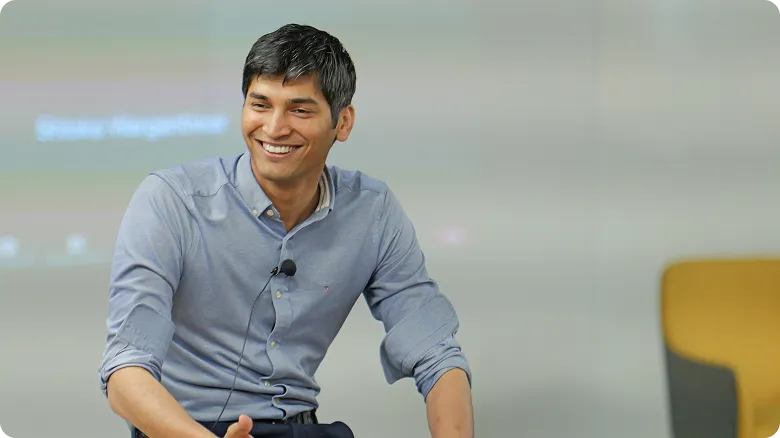
See what students, mentors, alumni and recruiters say about Masters' Union University. Shared highlights and moments that reflect our culture, learning and community. Explore their voices.
OVERVIEW

-
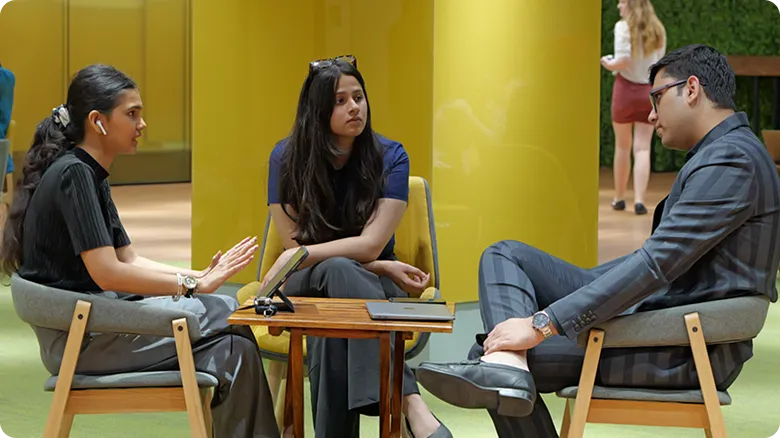
See how Masters’ Union University is represented across leading news and media platforms. Explore articles, features, and press coverage that reflect our journey, initiatives, and growing impact in education, innovation, and industry engagement.
OVERVIEW
-
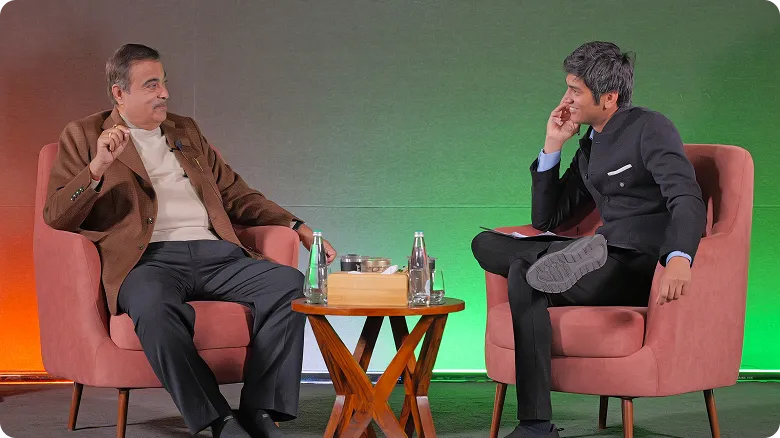
Explore the awards, rankings and accreditations that recognise the quality, impact and industry relevance of Masters' Union University programmes.
OVERVIEW
-
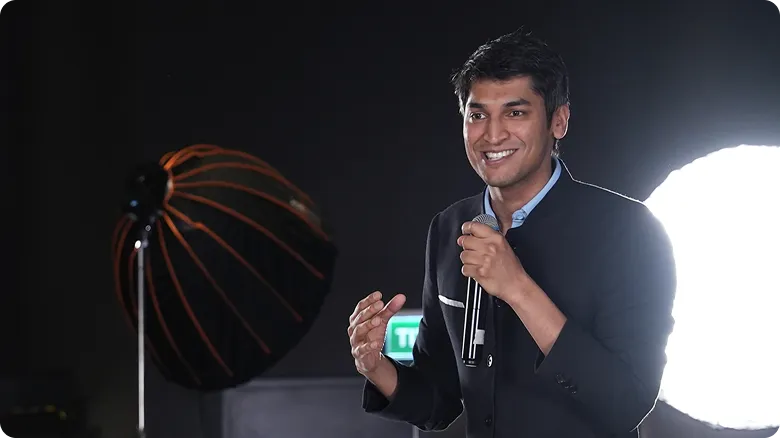
Explore the reports, brochures, policies, and publications that document Masters' Union University's outcomes, standards, and institutional commitments.
OVERVIEW


PROGRAMMEs
- Highlights
- Curriculum
- Admissions & Fees
- Immersions
- Entrepreneurship
- Careers
- Class Profile
PROGRAMME oVERVIEW
- Highlights
- Curriculum
- Admissions & Fees
- Immersions
- Entrepreneurship
- Career Prospects
- Class Profile
PROGRAMME oVERVIEW
- Highlights
- Curriculum & Faculty
- Immersions
- Admissions & Fees
- Career Prospects
- Class Profile
PROGRAMME oVERVIEW
- Highlights
- Curriculum
PROGRAMME oVERVIEW
- Home
PROGRAMME oVERVIEW
- Highlights
- Curriculum & Faculty
- Admissions & Fees
- Career Prospects
- Class Profile
PROGRAMME oVERVIEW
- Highlights
- Curriculum & Faculty
- Admissions & Fees
- Career Prospects
- Class Profile
PROGRAMME oVERVIEW
- Highlights
- Curriculum
- Admissions & Fees
- Career Prospects
- Class Profile
PROGRAMME oVERVIEW
PROGRAMMEs
- Highlights
- Curriculum & Faculty
- Admissions & Fees
- Career Prospects
- Class Profile
PROGRAMME oVERVIEW
- Highlights
- Curriculum & Faculty
- Admissions & Fees
- Career Prospects
- Class Profile
PROGRAMME oVERVIEW
- Highlights
- Curriculum
- Admissions & Fees
- Career Prospects
- Class Profile
PROGRAMME oVERVIEW
- Highlights
- Curriculum & Faculty
- Admissions & Fees
- Career Prospects
- Class Profile
PROGRAMME oVERVIEW
- Highlights
- Curriculum & Faculty
- Admissions & Fees
- Career Prospects
- Class Profile
PROGRAMME oVERVIEW
- Highlights
- Curriculum
- Admissions & Fees
- Career Prospects
- Class Profile
PROGRAMME oVERVIEW
- Highlights
- Curriculum
- Admissions & Fees
- Career Prospects
- Class Profile
PROGRAMME oVERVIEW
PROGRAMMES
-
PGP in
Technology & Business Management

-
PGP in
Technology & Business Management
(Young Leaders Cohort)
-
MBA in Finance with CFA Pathway
-
Post Graduate Diploma (Human Resources and Organisation Strategy)
-
Post Graduate Diploma (Sports Management and Gaming)
-
PGP in
Applied AI & Agentic Systems
-
PGP in Sustainability &
Business Management
-
Four Nations Global
Business Programme
- Highlights
- Curriculum
- Immersions
- Admissions & Fees
- Career Prospects
- Cohort Profile
PROGRAMME oVERVIEW
- Home
PROGRAMME OVERVIEW
- Highlights
- Curriculum
- Immersions
- Admissions & Fees
- Career Prospects
- Faculty & Student Stories
PROGRAMME oVERVIEW
- Highlights
- Curriculum
- Immersions
- Admissions & Fees
- Career Prospects
PROGRAMME oVERVIEW
- Highlights
- Curriculum & Faculty
- Admissions & Fees
- Career Prospects
PROGRAMME oVERVIEW
- Highlights
- Curriculum & Faculty
- Admissions & Fees
- Career Prospects
PROGRAMME OVERVIEW
- Highlights
- Curriculum & Faculty
- Admissions & Fees
PROGRAMME OVERVIEW
- Highlights
PROGRAMME OVERVIEW
- Highlights
- Curriculum
- Immersions
- Admissions & Fees
- Career Prospects
- Cohort Profile
PROGRAMME oVERVIEW
PROGRAMMES
-
Post Graduate Diploma (Rise General Management)
-
Post Graduate Diploma (Capital Markets & Trading)
-
PGP in US Capital Markets &
Trading
-
PGP
in Entrepreneurship & Business Acceleration
-
Post Graduate Diploma (Rise General Management Global)
-
AI First Operator Programme
-
Bloomberg Equity Research Programme
- Highlights
- Curriculum
- Faculty
- Admissions & Fees
- Career Prospects
- Cohort Profile
PROGRAMME oVERVIEW
- Home
PROGRAMME oVERVIEW
- Highlights
- Curriculum
- Admissions & Fees
PROGRAMME oVERVIEW
- Highlights
- Curriculum
- Admissions & Fees
PROGRAMME oVERVIEW
- Highlights
- Curriculum
- Immersions
- Faculty & Coaches
- Admissions & Fees
- Career Prospects
PROGRAMME oVERVIEW
- Highlights
- Curriculum
PROGRAMME oVERVIEW
- Home
PROGRAMME oVERVIEW
- Highlights
- Global Immersions
- Curriculum
- Faculty & Coaches
- Leadership Learning
- Admissions & Fees
PROGRAMME oVERVIEW
- Highlights
- Curriculum
- Admissions & Fees
PROGRAMME oVERVIEW
PROGRAMMES
- Highlights
- Curriculum
- Beyond Classroom
- Admissions & Fees
PROGRAMME oVERVIEW
- Highlights
- Curriculum
- Beyond Classroom
- Admissions & Fees
PROGRAMME oVERVIEW
- Home
PROGRAMME oVERVIEW
- Home
PROGRAMME oVERVIEW
PROGRAMMES
- Home
PROGRAMME oVERVIEW
- Highlights
- Curriculum
- Beyond Classroom
- Admissions & Fees
PROGRAMME oVERVIEW
- Home
PROGRAMME oVERVIEW
- Home
PROGRAMME oVERVIEW
STUDENT LIFE
- Student Premises
- Amenities
- Hostel Council
oVERVIEW


- Case Union
- UnMute
- Clubs & Committees
oVERVIEW
oVERVIEW
- Healthcare
- BFSI
- Technology
- Manufacturing
- Retail
Industry
- Governments
- Universities
- Startups
- SMEs
- Large Enterprises
Industry
oVERVIEW
PROGRAMMEs
- Highlights
- Curriculum & Faculty
- Admissions & Fees
- Career Prospects
- Class Profile
PROGRAMME oVERVIEW
- Highlights
- Curriculum & Faculty
- Admissions & Fees
- Career Prospects
- Class Profile
PROGRAMME oVERVIEW
- Highlights
- Curriculum
- Admissions & Fees
- Career Prospects
- Class Profile
PROGRAMME oVERVIEW
- Highlights
- Curriculum & Faculty
- Admissions & Fees
- Career Prospects
- Class Profile
PROGRAMME oVERVIEW
- Highlights
- Curriculum & Faculty
- Admissions & Fees
- Career Prospects
- Class Profile
PROGRAMME oVERVIEW
- Highlights
- Curriculum
- Admissions & Fees
- Career Prospects
- Class Profile
PROGRAMME oVERVIEW
- Highlights
- Curriculum
- Admissions & Fees
- Career Prospects
- Class Profile
PROGRAMME oVERVIEW
PROGRAMMES
- Highlights
- Curriculum
- Immersions
- Admissions & Fees
- Career Prospects
- Cohort Profile
PROGRAMME oVERVIEW
- Home
PROGRAMME OVERVIEW
- Highlights
- Curriculum
- Immersions
- Admissions & Fees
- Career Prospects
- Faculty & Student Stories
PROGRAMME oVERVIEW
- Highlights
- Curriculum
- Immersions
- Admissions & Fees
- Career Prospects
PROGRAMME oVERVIEW
- Highlights
- Curriculum & Faculty
- Admissions & Fees
- Career Prospects
PROGRAMME oVERVIEW
- Highlights
- Curriculum
- Immersions
- Admissions & Fees
- Career Prospects
- Cohort Profile
PROGRAMME oVERVIEW
PROGRAMMES
- Highlights
- Curriculum
- Faculty
- Admissions & Fees
- Career Prospects
- Cohort Profile
PROGRAMME oVERVIEW
- Highlights
- Curriculum
- Admissions & Fees
PROGRAMME oVERVIEW
- Highlights
- Curriculum
- Admissions & Fees
PROGRAMME oVERVIEW
- Highlights
- Curriculum
- Immersions
- Faculty & Coaches
- Admissions & Fees
- Career Prospects
PROGRAMME oVERVIEW
- Highlights
- Global Immersions
- Curriculum
- Faculty & Coaches
- Leadership Learning
- Admissions & Fees
PROGRAMME oVERVIEW
- Highlights
- Curriculum
- Admissions & Fees
PROGRAMME oVERVIEW


About Us

Undergraduate
Postgraduate
PGP in Technology & Business Management
PGP in Technology & Business Management
(Young Leaders Cohort)
MBA in Finance with CFA Pathway
Post Graduate Diploma (Human Resources and Organisation Strategy)
Post Graduate Diploma (Sports Management and Gaming)
PGP in Applied AI & Agentic Systems
PGP in Sustainability & Business Management
Four Nations Global Business Programme
Executive
Post Graduate Diploma (Rise General Management)
Post Graduate Diploma (Capital Markets & Trading)
PGP in US Capital Markets & Trading
PGP in Entrepreneurship & Business Acceleration
Post Graduate Diploma (Rise General Management Global)
AI First Operator Programme
Bloomberg Equity Research Programme
Family Business
Immersions
1:1 Executive Coaching
Careers
Innovations
Faculty
MU Ventures
Enterprise L&D
Student Life
Jobs
Become a Master
Merch Store
events
For Companies
Blog
Coach LMS
Business
Inside the Mind of Ex-Lenovo CEO: Brand Strategy Lessons at Masters’ Union
December 25, 2025
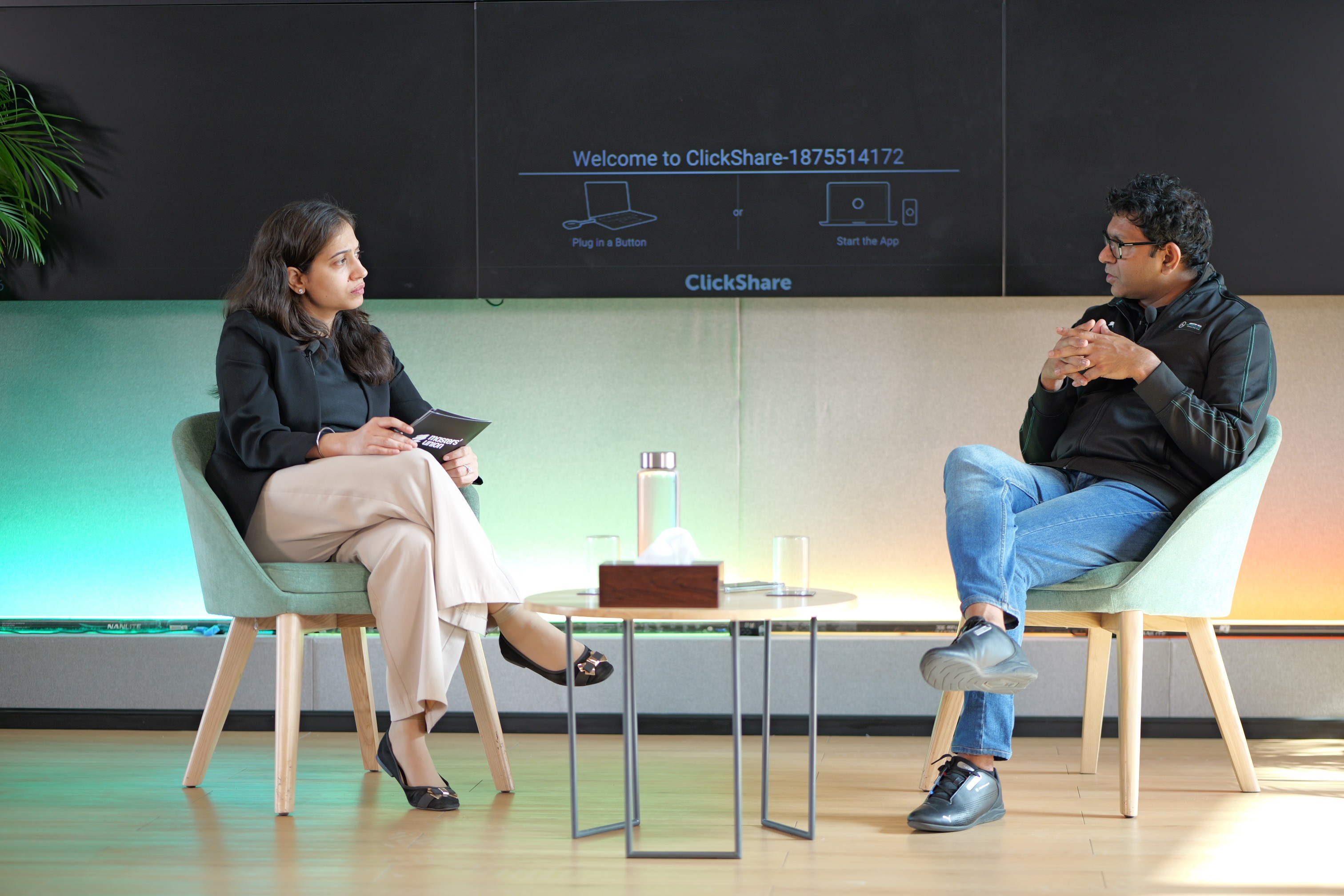
In our value-driven podcast at Masters’ Union, MD Swati Ganeti hosted Lenovo’s former Managing Director, Rahul Agarwal, to share his insights on scaling in businesses with thin margins and intense competition.
Rather than the bookish discussion around growth narratives or frameworks, Rahul spoke from experience about brand trust, execution discipline, and long-cycle decision-making in the hardware industry.
Read more to understand how brilliant minds at legacy brands overcome brand crises with scalable solutions like a difference-maker.
Lenovo’s Market Entry and Early Challenges
Rahul Agarwal joined Lenovo at a time when the brand carried limited recognition in India. While products like ThinkPad retained IBM’s legacy, Lenovo itself faced scepticism, amplified by prevailing perceptions of Chinese technology brands.
Many professionals who moved from IBM chose to exit early. Staying on was neither obvious nor safe, but it created the opportunity to build something durable.
How Lenovo Established Brand Legitimacy
-
Lenovo had low brand trust in India
-
Chinese brands faced quality scepticism
-
ThinkPad’s legacy needed protection
-
Belief preceded external validation
The High-Conviction Marketing Bet That Unlocked Scale
Rahul explained that Lenovo’s early constraint was not product capability or pricing. It was relevant. Without trust, distribution and demand could not scale.
A high-conviction decision to invest heavily in Kaun Banega Crorepati created immediate national visibility. At the time, it meant committing most of the annual marketing budget to a single platform.
The outcome was clear. Awareness rose sharply, enabling consideration and accelerating growth.
Lessons in Scaling Brand Trust
-
Visibility before optimisation
-
One decisive bet over incremental spends
-
Awareness unlocked consideration
-
Trust enabled downstream execution
Scaling Hardware Businesses in Competitive Markets
Hardware leaves little room for error. Consumers expect reliability, performance, design, pricing, and service to be delivered simultaneously.
Margins are structurally low, and differentiation is limited. Unlike digital businesses, mistakes in hardware are costly and slow to correct.
The Hardware Business is Operationally Unforgiving
-
High expectations across attributes
-
Low margin for error
-
Limited room for differentiation
-
Execution failures compound quickly
Lenovo's Distribution and Execution Challenges
One of Lenovo’s early disadvantages was distribution depth. Competitors were present across significantly more retail outlets, shaping availability and preference at the point of purchase.
Closing this gap required sustained operational focus rather than repositioning or messaging changes.
Distribution Influence on Lenovo’s Outcomes
-
PC buying remained largely offline
-
Retail presence shaped choice
-
Reach reinforced brand visibility
-
Execution closed competitive gaps
Changing Marketing Dynamics in Hardware
Rahul reflected on how marketing has moved from mass media to performance-driven systems. Buying intent is now visible through search and commerce platforms, making marketing faster, more technical, and more competitive.
Campaigns no longer run passively. They demand constant optimisation and daily decision-making.
Why Brand Building Is Harder Today
-
Performance marketing dominates budgets
-
Consumer signals are real-time
-
Creative fatigue is faster
-
Brand building competes with conversion
Understand Scaling-Strategy in B2B Ecosystem
Lenovo’s business leaned toward enterprise customers. B2B scale followed a different logic, driven by relationships, credibility, and pricing discipline rather than mass reach.
Large deals often required portfolio-level thinking, including accepting near-term losses to secure long-term positioning.
How B2B Hardware Sales Work in Practice
-
Smaller, defined buyer universe
-
Relationship-led decision-making
-
Price pressure on volume
-
Portfolio profitability over deal margins
Manufacturing in India Through an Operator’s Lens
The conversation also addressed manufacturing realities. Most PC production in India remains assembly-led, with core components imported.
True manufacturing requires scale, export readiness, predictable policy, and operational ease. Without these, assembly alone cannot build depth.
Why Assembly Is Not Manufacturing
-
Core components are imported
-
Domestic PC market is limited
-
Export economics are essential
-
Policy clarity enables scale
Separating AI Narrative from Real Value
AI features prominently in hardware messaging, but Rahul urged caution. Most AI capabilities rely on common software layers rather than differentiated hardware advantages.
For now, AI serves more as positioning than transformation.
The Current Reality of AI in Hardware
-
Few differentiated use cases
-
Shared software across brands
-
Messaging ahead of the utility
-
Consumer impact remains limited
What Operator Roles Build Over Time
Careers in hardware and manufacturing shape judgment differently. Decisions are harder to reverse, feedback cycles are slower, and accountability is unavoidable.
Over time, this builds patience, systems thinking, and long-term decision discipline.
Skills Built Through Operator Experience
-
Long-term decision ownership
-
Systems-level thinking
-
Risk discipline
-
Execution consistency
Rahul Agarwall’s conversation showed that scale in hard businesses is built through judgment, consistency, and time. Brand trust must be earned before growth can compound. Execution matters more than narrative. For students, the session offered a clear view of leadership grounded in accountability, patience, and long-cycle decision-making.
FAQs
Who were the speakers in this Masters’ Union podcast?
The podcast featured Swati Ganeti, Managing Director at Masters’ Union, in conversation with Rahul Agarwal, former MD and CEO of Lenovo India.
What was the focus of the discussion?
The conversation examined brand building, execution discipline, risk management, and scaling hardware businesses.
Why was brand trust critical for Lenovo?
Lenovo entered India with low recognition. Trust was necessary before distribution and sales could scale.
How does B2B hardware differ from B2C?
B2B growth depends on relationships and pricing discipline, while B2C relies on brand recall and reach.
What should students take away from this session?
Students gain insight into how operators make long-term decisions and build durable businesses under constraints.