


About us


-
See what students, mentors, alumni and recruiters say about Masters' Union University. Shared highlights and moments that reflect our culture, learning and community. Explore their voices.
OVERVIEW

-
See how Masters’ Union University is represented across leading news and media platforms. Explore articles, features, and press coverage that reflect our journey, initiatives, and growing impact in education, innovation, and industry engagement.
OVERVIEW
-
Explore the awards, rankings and accreditations that recognise the quality, impact and industry relevance of Masters' Union University programmes.
OVERVIEW

-
Explore the reports, brochures, policies, and publications that document Masters' Union University's outcomes, standards, and institutional commitments.
OVERVIEW


PROGRAMMEs
- Highlights
- Curriculum
- Admissions & Fees
- Immersions
- Entrepreneurship
- Careers
- Class Profile
PROGRAMME oVERVIEW
- Highlights
- Curriculum
- Admissions & Fees
- Immersions
- Entrepreneurship
- Career Prospects
- Class Profile
PROGRAMME oVERVIEW
- Highlights
- Curriculum & Faculty
- Immersions
- Admissions & Fees
- Career Prospects
- Class Profile
PROGRAMME oVERVIEW
- Highlights
- Curriculum
PROGRAMME oVERVIEW
- Home
PROGRAMME oVERVIEW
- Highlights
- Curriculum & Faculty
- Admissions & Fees
- Career Prospects
- Class Profile
PROGRAMME oVERVIEW
- Highlights
- Curriculum & Faculty
- Admissions & Fees
- Career Prospects
- Class Profile
PROGRAMME oVERVIEW
- Highlights
- Curriculum
- Admissions & Fees
- Career Prospects
- Class Profile
PROGRAMME oVERVIEW
PROGRAMMEs
- Highlights
- Curriculum & Faculty
- Admissions & Fees
- Career Prospects
- Class Profile
PROGRAMME oVERVIEW
- Highlights
- Curriculum & Faculty
- Admissions & Fees
- Career Prospects
- Class Profile
PROGRAMME oVERVIEW
- Highlights
- Curriculum
- Admissions & Fees
- Career Prospects
- Class Profile
PROGRAMME oVERVIEW
- Highlights
- Curriculum & Faculty
- Admissions & Fees
- Career Prospects
- Class Profile
PROGRAMME oVERVIEW
- Highlights
- Curriculum & Faculty
- Admissions & Fees
- Career Prospects
- Class Profile
PROGRAMME oVERVIEW
- Highlights
- Curriculum
- Admissions & Fees
- Career Prospects
- Class Profile
PROGRAMME oVERVIEW
- Highlights
- Curriculum
- Admissions & Fees
- Career Prospects
- Class Profile
PROGRAMME oVERVIEW
PROGRAMMES
-
PGP in
Technology & Business Management

-
PGP in
Technology & Business Management
(Young Leaders Cohort)
-
PGP in
Human Resources & Organisation Strategy
-
PGP in Sports
Management & Gaming
-
PGP in
Applied AI & Agentic Systems
-
PGP in Sustainability &
Business Management
-
Four Nations Global
Business Programme
- Highlights
- Curriculum
- Immersions
- Admissions & Fees
- Career Prospects
- Cohort Profile
PROGRAMME oVERVIEW
- Highlights
- Curriculum
- Immersions
- Admissions & Fees
- Career Prospects
- Faculty & Student Stories
PROGRAMME oVERVIEW
- Highlights
- Curriculum
- Immersions
- Admissions & Fees
- Career Prospects
PROGRAMME oVERVIEW
- Highlights
- Curriculum & Faculty
- Admissions & Fees
- Career Prospects
PROGRAMME oVERVIEW
- Highlights
- Curriculum & Faculty
- Admissions & Fees
- Career Prospects
PROGRAMME OVERVIEW
- Highlights
- Curriculum & Faculty
- Admissions & Fees
PROGRAMME OVERVIEW
- Highlights
PROGRAMME OVERVIEW
- Highlights
- Curriculum
- Immersions
- Admissions & Fees
- Career Prospects
- Cohort Profile
PROGRAMME oVERVIEW
PROGRAMMES
- Highlights
- Curriculum
- Faculty
- Admissions & Fees
- Career Prospects
- Cohort Profile
PROGRAMME oVERVIEW
- Home
PROGRAMME oVERVIEW
- Highlights
- Curriculum
- Admissions & Fees
PROGRAMME oVERVIEW
- Highlights
- Curriculum
- Admissions & Fees
PROGRAMME oVERVIEW
- Highlights
- Curriculum
- Immersions
- Faculty & Coaches
- Admissions & Fees
- Career Prospects
PROGRAMME oVERVIEW
- Highlights
- Curriculum
PROGRAMME oVERVIEW
- Home
PROGRAMME oVERVIEW
- Highlights
- Global Immersions
- Curriculum
- Faculty & Coaches
- Leadership Learning
- Admissions & Fees
PROGRAMME oVERVIEW
- Highlights
- Curriculum
- Admissions & Fees
PROGRAMME oVERVIEW
PROGRAMMES
- Highlights
- Curriculum
- Beyond Classroom
- Admissions & Fees
PROGRAMME oVERVIEW
- Highlights
- Curriculum
- Beyond Classroom
- Admissions & Fees
PROGRAMME oVERVIEW
- Home
PROGRAMME oVERVIEW
- Home
PROGRAMME oVERVIEW
PROGRAMMES
- Home
PROGRAMME oVERVIEW
- Highlights
- Curriculum
- Beyond Classroom
- Admissions & Fees
PROGRAMME oVERVIEW
- Home
PROGRAMME oVERVIEW
- Home
PROGRAMME oVERVIEW
STUDENT LIFE
- Student Premises
- Amenities
- Hostel Council
oVERVIEW


- Case Union
- UnMute
- Clubs & Committees
oVERVIEW

oVERVIEW

- Healthcare
- BFSI
- Technology
- Manufacturing
- Retail
Industry
- Governments
- Universities
- Startups
- SMEs
- Large Enterprises
Industry
oVERVIEW
PROGRAMMEs
- Highlights
- Curriculum & Faculty
- Admissions & Fees
- Career Prospects
- Class Profile
PROGRAMME oVERVIEW
- Highlights
- Curriculum & Faculty
- Admissions & Fees
- Career Prospects
- Class Profile
PROGRAMME oVERVIEW
- Highlights
- Curriculum
- Admissions & Fees
- Career Prospects
- Class Profile
PROGRAMME oVERVIEW
- Highlights
- Curriculum & Faculty
- Admissions & Fees
- Career Prospects
- Class Profile
PROGRAMME oVERVIEW
- Highlights
- Curriculum & Faculty
- Admissions & Fees
- Career Prospects
- Class Profile
PROGRAMME oVERVIEW
- Highlights
- Curriculum
- Admissions & Fees
- Career Prospects
- Class Profile
PROGRAMME oVERVIEW
- Highlights
- Curriculum
- Admissions & Fees
- Career Prospects
- Class Profile
PROGRAMME oVERVIEW
PROGRAMMES
- Highlights
- Curriculum
- Immersions
- Admissions & Fees
- Career Prospects
- Cohort Profile
PROGRAMME oVERVIEW
- Highlights
- Curriculum
- Immersions
- Admissions & Fees
- Career Prospects
- Faculty & Student Stories
PROGRAMME oVERVIEW
- Highlights
- Curriculum
- Immersions
- Admissions & Fees
- Career Prospects
PROGRAMME oVERVIEW
- Highlights
- Curriculum & Faculty
- Admissions & Fees
- Career Prospects
PROGRAMME oVERVIEW
- Highlights
- Curriculum
- Immersions
- Admissions & Fees
- Career Prospects
- Cohort Profile
PROGRAMME oVERVIEW
PROGRAMMES
- Highlights
- Curriculum
- Faculty
- Admissions & Fees
- Career Prospects
- Cohort Profile
PROGRAMME oVERVIEW
- Highlights
- Curriculum
- Admissions & Fees
PROGRAMME oVERVIEW
- Highlights
- Curriculum
- Admissions & Fees
PROGRAMME oVERVIEW
- Highlights
- Curriculum
- Immersions
- Faculty & Coaches
- Admissions & Fees
- Career Prospects
PROGRAMME oVERVIEW
- Highlights
- Global Immersions
- Curriculum
- Faculty & Coaches
- Leadership Learning
- Admissions & Fees
PROGRAMME oVERVIEW
- Highlights
- Curriculum
- Admissions & Fees
PROGRAMME oVERVIEW


About Us

Undergraduate
Postgraduate
PGP in Technology & Business Management
PGP in Technology & Business Management
(Young Leaders Cohort)
PGP in Human Resources & Organisation Strategy
PGP in Sports Management & Gaming
PGP in Applied AI & Agentic Systems
PGP in Sustainability & Business Management
Four Nations Global Business Programme
Executive
Family Business
Immersions
1:1 Executive Coaching
Careers
Innovations
Faculty
MU Ventures
Enterprise L&D
Student Life
Jobs
Become a Master
Merch Store
events
For Companies
Blog
Coach LMS
Business
The Boardroom by Masters’ Union’s for Young Entrepreneurs & Strategic Thinkers
February 10, 2025
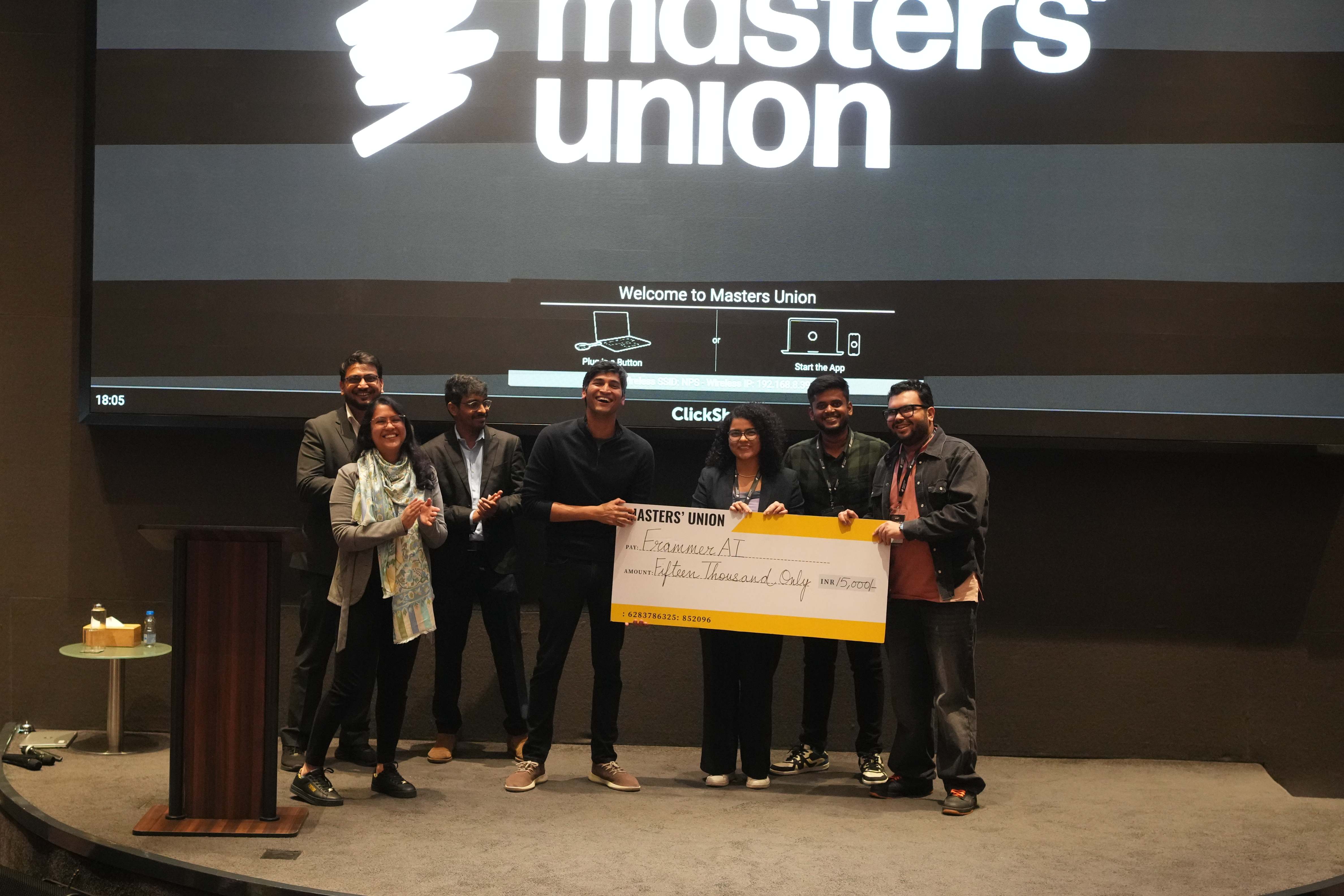
What does it take to evaluate a startup, craft a winning strategy, and convince investors that your vision is worth backing? That was the challenge Masters’ Union students faced during the Startup Weekend, where first-round admits of Cohort 6 stepped into the shoes of future entrepreneurs.
Guided by industry experts, mentors, and the Masters’ Union learning model, the two-day event wasn’t a mere competition. It was a real-world immersion into startup evaluation, go-to-market strategies, and investor pitching — skills that define the world’s best entrepreneurs in India and beyond.
A Weekend of Startup Building and Strategy
The Startup Weekend was structured as an intensive, team-based challenge designed to mimic the real-world pressures entrepreneurs face. Students had to select an early-stage, pre-seed startup (with funding under $5 million) and build a winning pitch deck. The objective was clear: sharpen critical thinking, strategic analysis, and presentation skills while receiving guidance from successful entrepreneurs and seasoned professionals.
Students not only learned how to evaluate business models but also understood the challenges faced by entrepreneurs when positioning a young company in competitive markets.
Learning from the programme:
-
Hands-on experience in startup evaluation and scaling strategies
-
Exposure to teamwork, ideation, and structured problem-solving
-
Opportunities to practice communication and persuasion skills
-
Guidance from industry experts who’ve navigated similar challenges
Day One: Virtual Foundations and Startup Selection
The journey began with 95 students tuning in virtually for expert-led masterclasses in startup building and go-to-market (GTM) strategy. The focus was on identifying market opportunities, evaluating business potential, and creating frameworks for growth.
Students formed teams of 6–8 and collaborated to select promising early-stage startups. With inputs from mentors, they refined their ideas and began laying the foundation for the final pitch presentation.
Lessons from the Foundation Stage
-
The importance of strong product-market fit in early ventures
-
Frameworks for analyzing GTM strategies in different industries
-
Collaborative decision-making within entrepreneurial teams
-
Early exposure to the entrepreneurial skills that define scalable businesses
Day Two: On-Campus Action and the Final Pitch
The excitement peaked when students gathered at the Masters’ Union Gurugram campus for a day of live learning and competitive pitching.
The day opened with two impactful masterclasses in the masterclass space:
-
Dr. Bhupesh Manoharan (Marketing Professor, Masters’ Union) shared deep insights into GTM strategies, dissecting how startups penetrate new markets and establish sustainable growth.
-
Saksham Kotiya (ex-VC and consultant) conducted a session on “Startup Building 101,” walking students through evaluation frameworks and strategies for positioning ventures effectively.
-
Armed with this knowledge, teams worked intensively to refine their pitch decks. They blended creativity with data-driven insights, demonstrating both innovation and strategic clarity.
The competition concluded with the top three teams presenting standout pitches. Their clarity of vision, innovative solutions, and structured strategies earned them accolades and cash prizes. The winners were felicitated by Pratham Mittal, Founder of Masters’ Union, underscoring the institution’s commitment to nurturing young entrepreneurs.
Exclusivity from the On-Campus Experience
-
Practical exposure to high-stakes pitching and investor engagement
-
First-hand lessons on presenting under time pressure
-
Mentorship-driven improvements in deck-building and storytelling
-
Recognition for innovation, strategic clarity, and teamwork
Industry Experts Share Their Insights
The involvement of experts was a defining feature of the event. Their guidance helped students connect theory with practice and offered a realistic view of entrepreneurship in action.
Both masterclasses emphasized that building a startup requires much more than a bright idea. Founders must understand markets, adapt strategies, and cultivate resilience. The students learned that adaptability and strategic discipline are often what separate successful entrepreneurs from those who fail.
Insights from the Experts
-
GTM strategies must align with customer needs and cultural contexts
-
Strong leadership and team dynamics drive growth
-
Community and mentor networks can accelerate entrepreneurial journeys
-
Investor communication requires clarity, precision, and vision
Masters’ Union’s Learning Model in Action
The Startup Weekend reflected the very essence of the Masters’ Union learning model: hands-on, immersive, and guided by industry leaders. Unlike traditional classroom education, this approach ensures students don’t just study theory but actively practice entrepreneurship.
For Cohort 6 admits, this experience demonstrated what sets Masters’ Union apart: real-world application, mentorship from industry professionals, and opportunities to simulate high-stakes decision-making.
Learning Outcomes from the Model
-
Understanding that entrepreneurship is a lived experience, not just a subject
-
Practical learning reinforced by structured mentorship
-
Confidence-building through direct application of skills
-
An introduction to the demanding yet rewarding journey of startup building
End Thoughts
For the students, Startup Weekend was more than just an event; it was the beginning of their entrepreneurial journey. It showcased the challenges of entrepreneurship — from ideation to execution — and offered a safe yet competitive environment to practice critical skills.
With similar experiences awaiting them throughout their Masters’ Union journey, these future entrepreneurs are being prepared to enter the business world with confidence and capability.
The Road Ahead for Young Entrepreneurs
-
Continued exposure to industry leaders and practitioners
-
More opportunities to build, test, and scale entrepreneurial ideas
-
A dynamic ecosystem that nurtures curiosity, resilience, and adaptability
-
A network of mentors, peers, and alumni driving collective success
FAQs
Q1. What is the significance of Startup Weekend for students?
It provides students with real-world exposure to startup evaluation, strategy building, and investor pitching, helping them develop entrepreneurial skills.
Q2. How does the Masters’ Union learning model differ from traditional education?
It focuses on experiential learning, combining masterclasses with practical challenges that mirror real business scenarios.
Q3. What challenges faced by entrepreneurs were highlighted in the event?
Key challenges included market penetration, adapting to customer needs, and effectively managing investor expectations.
Q4. How do industry experts contribute to the program?
Experts offer real-world insights, frameworks, and mentorship, helping students connect theory with practical business challenges.
Q5. Why is team-based learning important for future entrepreneurs?
Teamwork mirrors the collaboration required in startups, teaching students how to align diverse skill sets toward a common goal.
Q6. What skills did students gain through Startup Weekend?
Students developed skills in strategy, pitching, negotiation, critical thinking, and problem-solving.
Q7. How does Masters’ Union prepare young entrepreneurs for the future?
Through hands-on events like Startup Weekend, networking opportunities, and mentorship, Masters’ Union builds practical skills and entrepreneurial confidence.