


About us


-
See what students, mentors, alumni and recruiters say about Masters' Union University. Shared highlights and moments that reflect our culture, learning and community. Explore their voices.
OVERVIEW


-
See how Masters’ Union University is represented across leading news and media platforms. Explore articles, features, and press coverage that reflect our journey, initiatives, and growing impact in education, innovation, and industry engagement.
OVERVIEW
-
Explore the awards, rankings and accreditations that recognise the quality, impact and industry relevance of Masters' Union University programmes.
OVERVIEW

-
Explore the reports, brochures, policies, and publications that document Masters' Union University's outcomes, standards, and institutional commitments.
OVERVIEW


PROGRAMMEs
- Highlights
- Curriculum
- Admissions & Fees
- Immersions
- Entrepreneurship
- Careers
- Class Profile
PROGRAMME oVERVIEW
- Highlights
- Curriculum
- Admissions & Fees
- Immersions
- Entrepreneurship
- Career Prospects
- Class Profile
PROGRAMME oVERVIEW
- Highlights
- Curriculum & Faculty
- Immersions
- Admissions & Fees
- Career Prospects
- Class Profile
PROGRAMME oVERVIEW
- Highlights
- Curriculum
PROGRAMME oVERVIEW
- Home
PROGRAMME oVERVIEW
- Highlights
- Curriculum & Faculty
- Admissions & Fees
- Career Prospects
- Class Profile
PROGRAMME oVERVIEW
- Highlights
- Curriculum & Faculty
- Admissions & Fees
- Career Prospects
- Class Profile
PROGRAMME oVERVIEW
- Highlights
- Curriculum
- Admissions & Fees
- Career Prospects
- Class Profile
PROGRAMME oVERVIEW
PROGRAMMEs
- Highlights
- Curriculum & Faculty
- Admissions & Fees
- Career Prospects
- Class Profile
PROGRAMME oVERVIEW
- Highlights
- Curriculum & Faculty
- Admissions & Fees
- Career Prospects
- Class Profile
PROGRAMME oVERVIEW
- Highlights
- Curriculum
- Admissions & Fees
- Career Prospects
- Class Profile
PROGRAMME oVERVIEW
- Highlights
- Curriculum & Faculty
- Admissions & Fees
- Career Prospects
- Class Profile
PROGRAMME oVERVIEW
- Highlights
- Curriculum & Faculty
- Admissions & Fees
- Career Prospects
- Class Profile
PROGRAMME oVERVIEW
- Highlights
- Curriculum
- Admissions & Fees
- Career Prospects
- Class Profile
PROGRAMME oVERVIEW
- Highlights
- Curriculum
- Admissions & Fees
- Career Prospects
- Class Profile
PROGRAMME oVERVIEW
PROGRAMMES
-
PGP in
Technology & Business Management

-
PGP in
Technology & Business Management
(Young Leaders Cohort)
-
MBA in Finance with CFA Pathway
-
Post Graduate Diploma (Human Resources and Organisation Strategy)
-
Post Graduate Diploma (Sports Management and Gaming)
-
PGP in
Applied AI & Agentic Systems
-
PGP in Sustainability &
Business Management
-
Four Nations Global
Business Programme
- Highlights
- Curriculum
- Immersions
- Admissions & Fees
- Career Prospects
- Cohort Profile
PROGRAMME oVERVIEW
- Home
PROGRAMME OVERVIEW
- Highlights
- Curriculum
- Immersions
- Admissions & Fees
- Career Prospects
- Faculty & Student Stories
PROGRAMME oVERVIEW
- Highlights
- Curriculum
- Immersions
- Admissions & Fees
- Career Prospects
PROGRAMME oVERVIEW
- Highlights
- Curriculum & Faculty
- Admissions & Fees
- Career Prospects
PROGRAMME oVERVIEW
- Highlights
- Curriculum & Faculty
- Admissions & Fees
- Career Prospects
PROGRAMME OVERVIEW
- Highlights
- Curriculum & Faculty
- Admissions & Fees
PROGRAMME OVERVIEW
- Highlights
PROGRAMME OVERVIEW
- Highlights
- Curriculum
- Immersions
- Admissions & Fees
- Career Prospects
- Cohort Profile
PROGRAMME oVERVIEW
PROGRAMMES
-
Post Graduate Diploma (Rise General Management)
-
Post Graduate Diploma (Capital Markets & Trading)
-
PGP in US Capital Markets &
Trading
-
PGP
in Entrepreneurship & Business Acceleration
-
Post Graduate Diploma (Rise General Management Global)
-
AI First Operator Programme
-
Bloomberg Equity Research Programme
- Highlights
- Curriculum
- Faculty
- Admissions & Fees
- Career Prospects
- Cohort Profile
PROGRAMME oVERVIEW
- Home
PROGRAMME oVERVIEW
- Highlights
- Curriculum
- Admissions & Fees
PROGRAMME oVERVIEW
- Highlights
- Curriculum
- Admissions & Fees
PROGRAMME oVERVIEW
- Highlights
- Curriculum
- Immersions
- Faculty & Coaches
- Admissions & Fees
- Career Prospects
PROGRAMME oVERVIEW
- Highlights
- Curriculum
PROGRAMME oVERVIEW
- Home
PROGRAMME oVERVIEW
- Highlights
- Global Immersions
- Curriculum
- Faculty & Coaches
- Leadership Learning
- Admissions & Fees
PROGRAMME oVERVIEW
- Highlights
- Curriculum
- Admissions & Fees
PROGRAMME oVERVIEW
PROGRAMMES
- Highlights
- Curriculum
- Beyond Classroom
- Admissions & Fees
PROGRAMME oVERVIEW
- Highlights
- Curriculum
- Beyond Classroom
- Admissions & Fees
PROGRAMME oVERVIEW
- Home
PROGRAMME oVERVIEW
- Home
PROGRAMME oVERVIEW
PROGRAMMES
- Home
PROGRAMME oVERVIEW
- Highlights
- Curriculum
- Beyond Classroom
- Admissions & Fees
PROGRAMME oVERVIEW
- Home
PROGRAMME oVERVIEW
- Home
PROGRAMME oVERVIEW
STUDENT LIFE
- Student Premises
- Amenities
- Hostel Council
oVERVIEW


- Case Union
- UnMute
- Clubs & Committees
oVERVIEW

oVERVIEW

- Healthcare
- BFSI
- Technology
- Manufacturing
- Retail
Industry
- Governments
- Universities
- Startups
- SMEs
- Large Enterprises
Industry
oVERVIEW
PROGRAMMEs
- Highlights
- Curriculum & Faculty
- Admissions & Fees
- Career Prospects
- Class Profile
PROGRAMME oVERVIEW
- Highlights
- Curriculum & Faculty
- Admissions & Fees
- Career Prospects
- Class Profile
PROGRAMME oVERVIEW
- Highlights
- Curriculum
- Admissions & Fees
- Career Prospects
- Class Profile
PROGRAMME oVERVIEW
- Highlights
- Curriculum & Faculty
- Admissions & Fees
- Career Prospects
- Class Profile
PROGRAMME oVERVIEW
- Highlights
- Curriculum & Faculty
- Admissions & Fees
- Career Prospects
- Class Profile
PROGRAMME oVERVIEW
- Highlights
- Curriculum
- Admissions & Fees
- Career Prospects
- Class Profile
PROGRAMME oVERVIEW
- Highlights
- Curriculum
- Admissions & Fees
- Career Prospects
- Class Profile
PROGRAMME oVERVIEW
PROGRAMMES
- Highlights
- Curriculum
- Immersions
- Admissions & Fees
- Career Prospects
- Cohort Profile
PROGRAMME oVERVIEW
- Home
PROGRAMME OVERVIEW
- Highlights
- Curriculum
- Immersions
- Admissions & Fees
- Career Prospects
- Faculty & Student Stories
PROGRAMME oVERVIEW
- Highlights
- Curriculum
- Immersions
- Admissions & Fees
- Career Prospects
PROGRAMME oVERVIEW
- Highlights
- Curriculum & Faculty
- Admissions & Fees
- Career Prospects
PROGRAMME oVERVIEW
- Highlights
- Curriculum
- Immersions
- Admissions & Fees
- Career Prospects
- Cohort Profile
PROGRAMME oVERVIEW
PROGRAMMES
- Highlights
- Curriculum
- Faculty
- Admissions & Fees
- Career Prospects
- Cohort Profile
PROGRAMME oVERVIEW
- Highlights
- Curriculum
- Admissions & Fees
PROGRAMME oVERVIEW
- Highlights
- Curriculum
- Admissions & Fees
PROGRAMME oVERVIEW
- Highlights
- Curriculum
- Immersions
- Faculty & Coaches
- Admissions & Fees
- Career Prospects
PROGRAMME oVERVIEW
- Highlights
- Global Immersions
- Curriculum
- Faculty & Coaches
- Leadership Learning
- Admissions & Fees
PROGRAMME oVERVIEW
- Highlights
- Curriculum
- Admissions & Fees
PROGRAMME oVERVIEW


About Us

Undergraduate
Postgraduate
PGP in Technology & Business Management
PGP in Technology & Business Management
(Young Leaders Cohort)
MBA in Finance with CFA Pathway
Post Graduate Diploma (Human Resources and Organisation Strategy)
Post Graduate Diploma (Sports Management and Gaming)
PGP in Applied AI & Agentic Systems
PGP in Sustainability & Business Management
Four Nations Global Business Programme
Executive
Post Graduate Diploma (Rise General Management)
Post Graduate Diploma (Capital Markets & Trading)
PGP in US Capital Markets & Trading
PGP in Entrepreneurship & Business Acceleration
Post Graduate Diploma (Rise General Management Global)
AI First Operator Programme
Bloomberg Equity Research Programme
Family Business
Immersions
1:1 Executive Coaching
Careers
Innovations
Faculty
MU Ventures
Enterprise L&D
Student Life
Jobs
Become a Master
Merch Store
events
For Companies
Blog
Coach LMS
India’s Union Minister Kiren Rijiju on Youth, Institutions & the Future
January 9, 2026
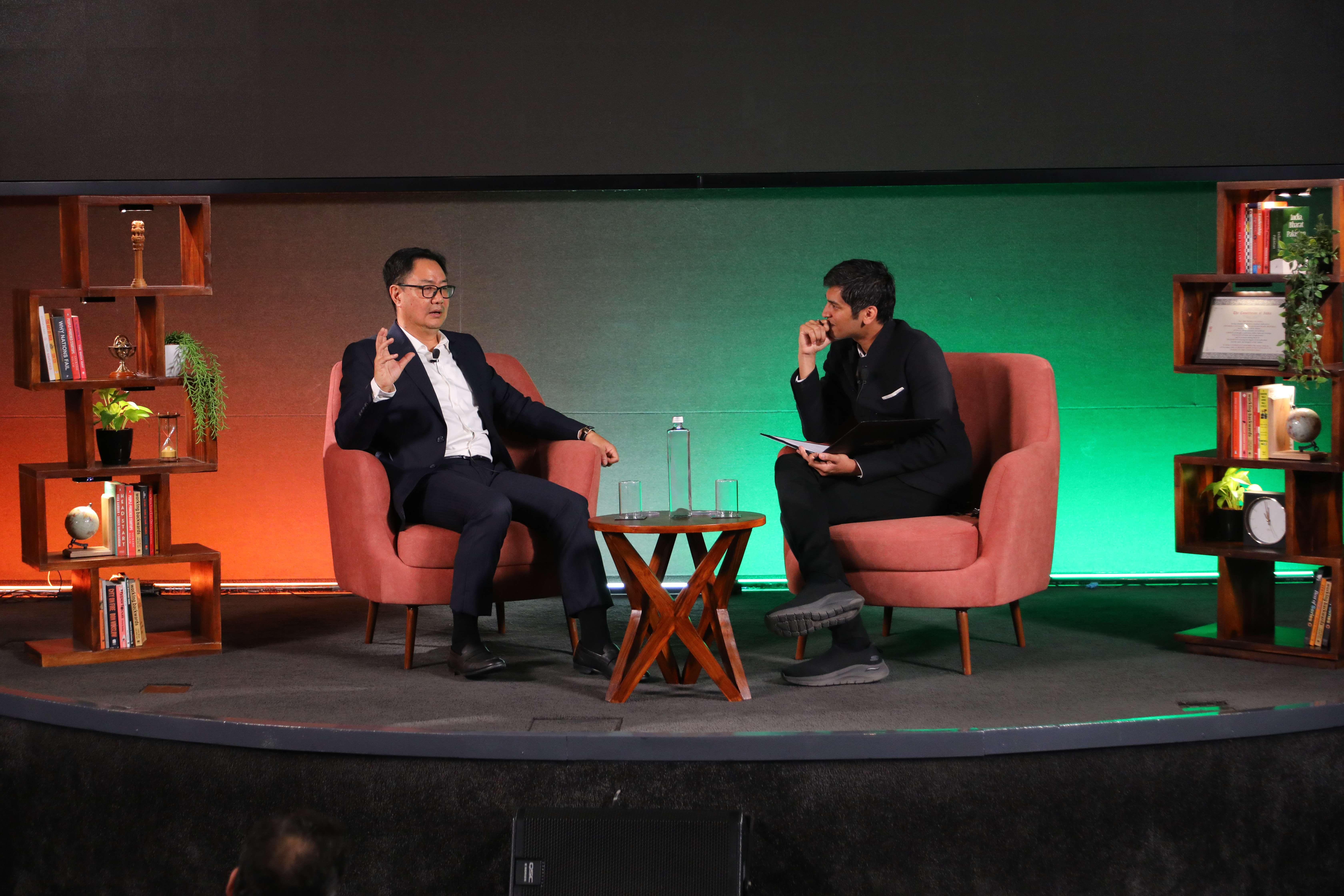
At the Cyberpark campus, Pratham Mittal, Founder of Masters’ Union, hosted Kiren Rijiju, Union Minister of India, for a candid conversation on governance, public institutions, and the role young Indians play in shaping them.
Kiren Rijiju is one of India’s most experienced public leaders, having held multiple Union Cabinet and Minister of State roles across Law & Justice, Parliamentary Affairs, Sports & Youth Affairs, and Minority Affairs. Known for his long parliamentary career and administrative exposure, he has worked closely with institutional reform, legislative processes, and youth-facing policy initiatives at the national level.
The discussion positioned governance not as an abstract political construct, but as a practical system shaped by discipline, accountability, and citizen participation. For students at Masters’ Union, the session connected public leadership with real-world responsibility rather than rhetoric.
What Does Governance Look Like Beyond Policy Intent
Rijiju positioned governance as execution, not theory. Drawing from his experience across ministries, including Parliamentary Affairs, Law & Justice, Sports & Youth Affairs, and Minority Affairs, he explained that outcomes depend less on intention and more on process.
He stressed that institutions survive only when procedures are followed consistently, regardless of who holds office. Authority may change, but systems must not.
How governance functions in reality
-
Decisions operate within long timelines
-
Systems matter more than personalities
-
Process ensures continuity across tenures
Why Can Youth Participation Not Remain Passive
A central theme of the conversation was youth participation. Rijiju made it clear that participation does not begin and end with voting or social commentary. Understanding institutions, policy processes, and how decisions are implemented is critical if young people want real influence.
He cautioned against disengagement, noting that distance from systems often leads to misunderstanding how change actually happens.
How young people shape institutions
-
Informed participation improves accountability
-
Engagement builds institutional understanding
-
Change requires sustained involvement
Education as the Foundation of National Capacity
Rather than focusing on degrees or employability, the discussion positioned education as preparation for responsibility.
Rijiju spoke about education’s role in building judgment, patience, and the ability to work within systems. Exposure to governance, public policy, and national institutions was described as essential for anyone aiming to operate at scale.
What education enables beyond careers
-
Judgment in complex environments
-
Respect for institutional processes
-
Capacity to handle long-term impact
Institutions Depend on Discipline, Not Personality
Instead of attributing outcomes to individual authority, Rijiju spoke about the quiet work that keeps institutions running. Systems, documentation, and process, he noted, matter precisely because they reduce reliance on any single person. When rules are followed and decisions are recorded, institutions are able to function smoothly even as people change.
Why systems outlast individuals
-
Process ensures consistency
-
Discipline reduces disruption
-
Institutions function beyond tenure
Linking Classroom Learning to Public Leadership
As the conversation progressed, Pratham Mittal connected governance back to education. Preparing students only for private enterprise, he noted, leaves a gap in understanding how public systems intersect with business, policy, and society. It reinforced that modern careers increasingly sit at the intersection of public and private institutions.
Why students need governance literacy
-
Most industries interact with public systems
-
Policy shapes long-term outcomes
-
Cross-sector awareness builds resilience
The Responsibility That Comes With Opportunity
The discussion closed with a reflection on responsibility. Access to education, platforms, and influence brings with it an obligation to contribute thoughtfully.
Rather than prescribing action, the session encouraged reflection. Leadership, Rijiju suggested, begins with understanding the consequences of decisions and the scale at which they operate.
What responsibility looks like at scale
-
Awareness of societal impact
-
Ethical decision-making
-
Commitment to long-term outcomes
The conversation between Pratham Mittal and Kiren Rijiju offered students a rare look at governance without rhetoric. It framed public institutions as complex systems that demand patience, discipline, and sustained engagement.
FAQs
1. What was the focus of the Pratham Mittal and Kiren Rijiju session at Masters’ Union?
The session focused on leadership, governance, youth participation, and the role of education in national development.
2. Why does Masters’ Union host conversations with public leaders?
To expose students to real-world decision-making, governance frameworks, and leadership beyond corporate roles.
3. What can students learn from public leadership discussions?
Students gain insight into accountability, institutional thinking, and long-term responsibility.
4. How is governance relevant to management and leadership students?
Governance shapes policy, institutions, and economic systems that leaders operate within.
5. How does education influence leadership quality?
Education builds judgment, ethics, and capability that shape leadership effectiveness.