


About us


-
See what students, mentors, alumni and recruiters say about Masters' Union University. Shared highlights and moments that reflect our culture, learning and community. Explore their voices.
OVERVIEW


-
See how Masters’ Union University is represented across leading news and media platforms. Explore articles, features, and press coverage that reflect our journey, initiatives, and growing impact in education, innovation, and industry engagement.
OVERVIEW

-
Explore the awards, rankings and accreditations that recognise the quality, impact and industry relevance of Masters' Union University programmes.
OVERVIEW

-
Explore the reports, brochures, policies, and publications that document Masters' Union University's outcomes, standards, and institutional commitments.
OVERVIEW


PROGRAMMEs
- Highlights
- Curriculum
- Admissions & Fees
- Immersions
- Entrepreneurship
- Careers
- Class Profile
PROGRAMME oVERVIEW
- Highlights
- Curriculum
- Admissions & Fees
- Immersions
- Entrepreneurship
- Career Prospects
- Class Profile
PROGRAMME oVERVIEW
- Highlights
- Curriculum & Faculty
- Immersions
- Admissions & Fees
- Career Prospects
- Class Profile
PROGRAMME oVERVIEW
- Highlights
- Curriculum
PROGRAMME oVERVIEW
- Home
PROGRAMME oVERVIEW
- Highlights
- Curriculum & Faculty
- Admissions & Fees
- Career Prospects
- Class Profile
PROGRAMME oVERVIEW
- Highlights
- Curriculum & Faculty
- Admissions & Fees
- Career Prospects
- Class Profile
PROGRAMME oVERVIEW
- Highlights
- Curriculum
- Admissions & Fees
- Career Prospects
- Class Profile
PROGRAMME oVERVIEW
PROGRAMMEs
- Highlights
- Curriculum & Faculty
- Admissions & Fees
- Career Prospects
- Class Profile
PROGRAMME oVERVIEW
- Highlights
- Curriculum & Faculty
- Admissions & Fees
- Career Prospects
- Class Profile
PROGRAMME oVERVIEW
- Highlights
- Curriculum
- Admissions & Fees
- Career Prospects
- Class Profile
PROGRAMME oVERVIEW
- Highlights
- Curriculum & Faculty
- Admissions & Fees
- Career Prospects
- Class Profile
PROGRAMME oVERVIEW
- Highlights
- Curriculum & Faculty
- Admissions & Fees
- Career Prospects
- Class Profile
PROGRAMME oVERVIEW
- Highlights
- Curriculum
- Admissions & Fees
- Career Prospects
- Class Profile
PROGRAMME oVERVIEW
- Highlights
- Curriculum
- Admissions & Fees
- Career Prospects
- Class Profile
PROGRAMME oVERVIEW
PROGRAMMES
-
PGP in
Technology & Business Management

-
PGP in
Technology & Business Management
(Young Leaders Cohort)
-
MBA in Finance with CFA Pathway
-
Post Graduate Diploma (Human Resources and Organisation Strategy)
-
Post Graduate Diploma (Sports Management and Gaming)
-
PGP in
Applied AI & Agentic Systems
-
PGP in Sustainability &
Business Management
-
Four Nations Global
Business Programme
- Highlights
- Curriculum
- Immersions
- Admissions & Fees
- Career Prospects
- Cohort Profile
PROGRAMME oVERVIEW
- Home
PROGRAMME OVERVIEW
- Highlights
- Curriculum
- Immersions
- Admissions & Fees
- Career Prospects
- Faculty & Student Stories
PROGRAMME oVERVIEW
- Highlights
- Curriculum
- Immersions
- Admissions & Fees
- Career Prospects
PROGRAMME oVERVIEW
- Highlights
- Curriculum & Faculty
- Admissions & Fees
- Career Prospects
PROGRAMME oVERVIEW
- Highlights
- Curriculum & Faculty
- Admissions & Fees
- Career Prospects
PROGRAMME OVERVIEW
- Highlights
- Curriculum & Faculty
- Admissions & Fees
PROGRAMME OVERVIEW
- Highlights
PROGRAMME OVERVIEW
- Highlights
- Curriculum
- Immersions
- Admissions & Fees
- Career Prospects
- Cohort Profile
PROGRAMME oVERVIEW
PROGRAMMES
-
Post Graduate Diploma (Rise General Management)
-
Post Graduate Diploma (Capital Markets & Trading)
-
PGP in US Capital Markets &
Trading
-
PGP
in Entrepreneurship & Business Acceleration
-
Post Graduate Diploma (Rise General Management Global)
-
AI First Operator Programme
-
Bloomberg Equity Research Programme
- Highlights
- Curriculum
- Faculty
- Admissions & Fees
- Career Prospects
- Cohort Profile
PROGRAMME oVERVIEW
- Home
PROGRAMME oVERVIEW
- Highlights
- Curriculum
- Admissions & Fees
PROGRAMME oVERVIEW
- Highlights
- Curriculum
- Admissions & Fees
PROGRAMME oVERVIEW
- Highlights
- Curriculum
- Immersions
- Faculty & Coaches
- Admissions & Fees
- Career Prospects
PROGRAMME oVERVIEW
- Highlights
- Curriculum
PROGRAMME oVERVIEW
- Home
PROGRAMME oVERVIEW
- Highlights
- Global Immersions
- Curriculum
- Faculty & Coaches
- Leadership Learning
- Admissions & Fees
PROGRAMME oVERVIEW
- Highlights
- Curriculum
- Admissions & Fees
PROGRAMME oVERVIEW
PROGRAMMES
- Highlights
- Curriculum
- Beyond Classroom
- Admissions & Fees
PROGRAMME oVERVIEW
- Highlights
- Curriculum
- Beyond Classroom
- Admissions & Fees
PROGRAMME oVERVIEW
- Home
PROGRAMME oVERVIEW
- Home
PROGRAMME oVERVIEW
PROGRAMMES
- Home
PROGRAMME oVERVIEW
- Highlights
- Curriculum
- Beyond Classroom
- Admissions & Fees
PROGRAMME oVERVIEW
- Home
PROGRAMME oVERVIEW
- Home
PROGRAMME oVERVIEW
STUDENT LIFE
- Student Premises
- Amenities
- Hostel Council
oVERVIEW


- Case Union
- UnMute
- Clubs & Committees
oVERVIEW



oVERVIEW

- Healthcare
- BFSI
- Technology
- Manufacturing
- Retail
Industry
- Governments
- Universities
- Startups
- SMEs
- Large Enterprises
Industry
oVERVIEW
PROGRAMMEs
- Highlights
- Curriculum & Faculty
- Admissions & Fees
- Career Prospects
- Class Profile
PROGRAMME oVERVIEW
- Highlights
- Curriculum & Faculty
- Admissions & Fees
- Career Prospects
- Class Profile
PROGRAMME oVERVIEW
- Highlights
- Curriculum
- Admissions & Fees
- Career Prospects
- Class Profile
PROGRAMME oVERVIEW
- Highlights
- Curriculum & Faculty
- Admissions & Fees
- Career Prospects
- Class Profile
PROGRAMME oVERVIEW
- Highlights
- Curriculum & Faculty
- Admissions & Fees
- Career Prospects
- Class Profile
PROGRAMME oVERVIEW
- Highlights
- Curriculum
- Admissions & Fees
- Career Prospects
- Class Profile
PROGRAMME oVERVIEW
- Highlights
- Curriculum
- Admissions & Fees
- Career Prospects
- Class Profile
PROGRAMME oVERVIEW
PROGRAMMES
- Highlights
- Curriculum
- Immersions
- Admissions & Fees
- Career Prospects
- Cohort Profile
PROGRAMME oVERVIEW
- Home
PROGRAMME OVERVIEW
- Highlights
- Curriculum
- Immersions
- Admissions & Fees
- Career Prospects
- Faculty & Student Stories
PROGRAMME oVERVIEW
- Highlights
- Curriculum
- Immersions
- Admissions & Fees
- Career Prospects
PROGRAMME oVERVIEW
- Highlights
- Curriculum & Faculty
- Admissions & Fees
- Career Prospects
PROGRAMME oVERVIEW
- Highlights
- Curriculum
- Immersions
- Admissions & Fees
- Career Prospects
- Cohort Profile
PROGRAMME oVERVIEW
PROGRAMMES
- Highlights
- Curriculum
- Faculty
- Admissions & Fees
- Career Prospects
- Cohort Profile
PROGRAMME oVERVIEW
- Highlights
- Curriculum
- Admissions & Fees
PROGRAMME oVERVIEW
- Highlights
- Curriculum
- Admissions & Fees
PROGRAMME oVERVIEW
- Highlights
- Curriculum
- Immersions
- Faculty & Coaches
- Admissions & Fees
- Career Prospects
PROGRAMME oVERVIEW
- Highlights
- Global Immersions
- Curriculum
- Faculty & Coaches
- Leadership Learning
- Admissions & Fees
PROGRAMME oVERVIEW
- Highlights
- Curriculum
- Admissions & Fees
PROGRAMME oVERVIEW


About Us

Undergraduate
Postgraduate
PGP in Technology & Business Management
PGP in Technology & Business Management
(Young Leaders Cohort)
MBA in Finance with CFA Pathway
Post Graduate Diploma (Human Resources and Organisation Strategy)
Post Graduate Diploma (Sports Management and Gaming)
PGP in Applied AI & Agentic Systems
PGP in Sustainability & Business Management
Four Nations Global Business Programme
Executive
Post Graduate Diploma (Rise General Management)
Post Graduate Diploma (Capital Markets & Trading)
PGP in US Capital Markets & Trading
PGP in Entrepreneurship & Business Acceleration
Post Graduate Diploma (Rise General Management Global)
AI First Operator Programme
Bloomberg Equity Research Programme
Family Business
Immersions
1:1 Executive Coaching
Careers
Innovations
Faculty
MU Ventures
Enterprise L&D
Student Life
Jobs
Become a Master
Merch Store
events
For Companies
Blog
Coach LMS
Business
Cracking Shark Tank India and Scaling Beyond TV with Goat life
February 13, 2026
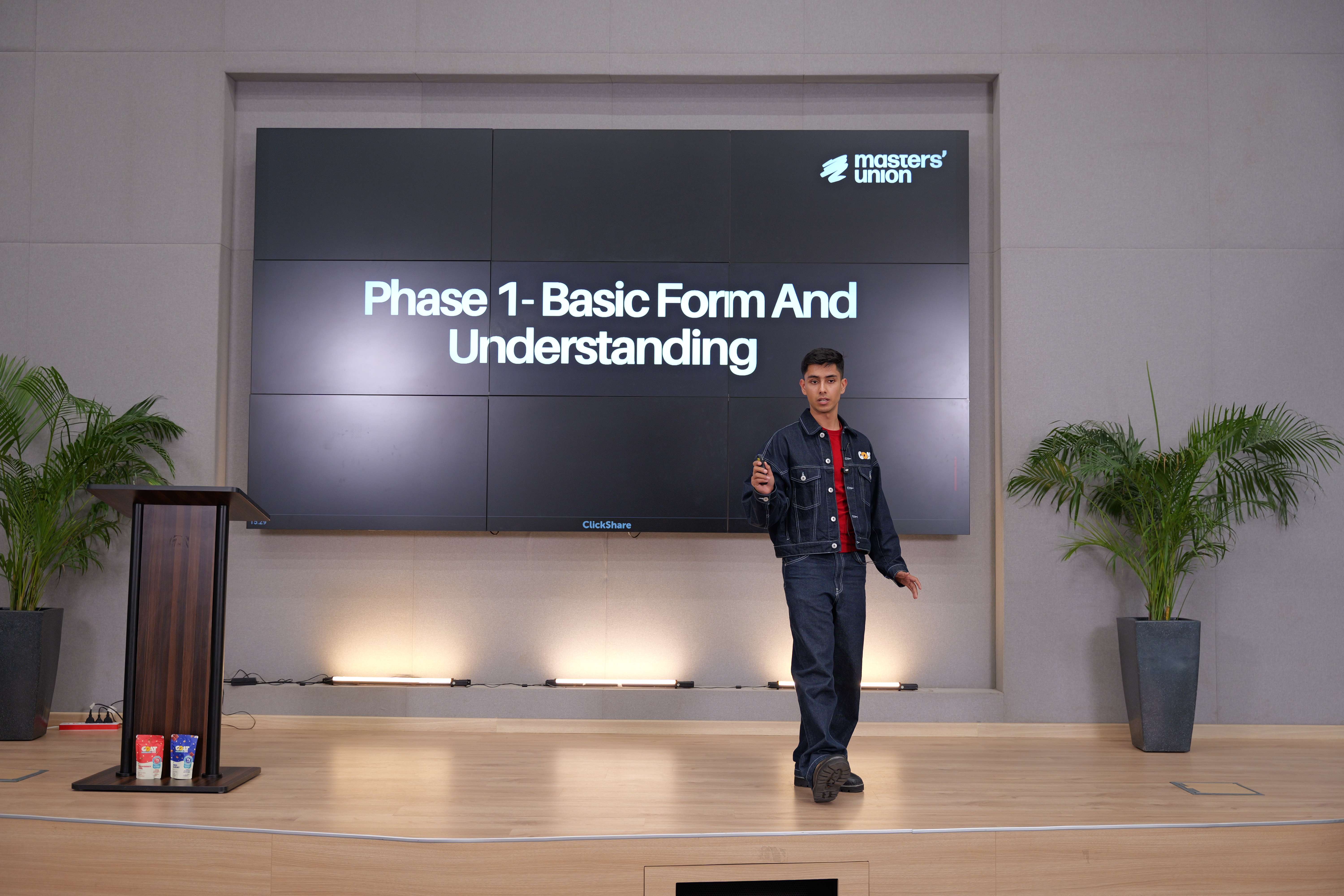
For most founders, Shark Tank India looks like a single moment of performance. Ninety seconds on stage. Tough questions. A deal or a walk away. What is easy to miss is that the pitch is only one part of a much longer process.
In a session at Masters’ Union, Yash Kalra, founder of Goat Life, a Gen Z-focused breakfast and nutrition brand built around convenience and high-protein products, walked students through the full journey. From applying year after year to finally cracking the format, Yash broke down how Shark Tank India evaluates founders as much as it evaluates businesses. The session focused on preparation, storytelling, backend readiness, and how visibility turns into real scale.
How the Shark Tank India Application Funnel Works
Yash outlined the four phases of the Shark Tank India selection process. The first stage is a short personal form designed to establish that the founder is real, relatable, and human. It is not about the product.The second phase is the most demanding. Founders submit an in-depth business form running into multiple pages, along with videos that show the product from every angle.
What founders must understand early
-
The process can run for months
-
Rejections are silent, not announced
-
Each phase filters for different signals
Why Goat Life Took Five Seasons to Get Selected
Goat Life did not succeed on its first attempt. Or the second. Or the third. Yash shared how earlier versions of the brand lacked either traction, clarity, or a compelling story.What changed in the final season was not just the product. It was visibility. Organic content, limited drops, and a strong Gen Z narrative meant the Shark Tank team already knew the brand before the application landed.
What finally worked
-
Consistent organic content
-
Clear brand positioning
-
Familiarity before the pitch
Why the First 90 Seconds Decide Everything
According to Yash, the first 90 seconds are the pitch. Everything else is a reaction to it. This is where founders set the tone, define the problem, and hook both sharks and viewers. Goat Life opened with a simple insight. People skip breakfast. Convenience drives bad food choices. The team turned this into an interactive moment that made the audience lean in.
How the opening was designed
-
A relatable daily problem
-
Simple language, not jargon
-
Moments that translate to social clips
Controlling the Narrative When Sharks Interrupt
What television edits hide is the chaos on stage. Multiple sharks ask questions at once. The pace is fast. The pressure is real. Yash stressed that founders must never surrender narrative control. Every answer should route back to the brand story, whether the question is about valuation, manufacturing, or margins.
How founders keep control
-
Anchor answers to brand strengths
-
Repeat core messages consistently
-
Stay calm when multiple questions come
Why Hygiene Checks Are Only the Starting Point
Knowing numbers, unit economics, and category basics is mandatory. It does not differentiate a pitch. It only prevents failure. What elevates a pitch are deliberate details. How you sit? What you wear. The moments you create that can later travel online as short clips.
What elevated the pitch
-
Visual and behavioral cues
-
Humor without gimmicks
-
Shareable moments built into the script
Preparing the Backend Before the Episode Airs
Visibility without preparation can damage a brand. Yash explained how the team planned inventory, logistics, and marketplaces well before the episode aired.
The rule was simple. Whatever monthly sales were, inventory had to be four to five times that number across Blinkit, Amazon, and the website.
What backend readiness looked like
-
Marketplace inventory buffers
-
Scaled manufacturing capacity
-
Team expansion before airing
What Happens When the Episode Goes Live
Goat Life aired in the first week, and demand spiked instantly. Website orders jumped nearly tenfold within hours. Marketplaces such as Blinkit and Amazon saw sustained growth through the week. As inventory had been scaled in advance, the brand avoided stockouts and fulfilled orders smoothly. The spike did not collapse after day one. Visibility converted into consistent revenue
Post-air impact on the brand
-
Sharp spike in direct sales
-
Marketplace demand growth
-
Rapid operational scale-up
How to sustain after the spotlight fades
Shark Tank attention fades quickly if brands stop pushing. Yash shared how the team extended momentum through public screenings, consistent visuals, and meme-led distribution.
How virality was extended
-
Public watch parties
-
Consistent visual recall
-
Meme marketing using pitch moments
How Valuation Decisions Really Play Out on Stage
Valuation on Shark Tank is negotiation theatre. Founders must price in the marketing premium while expecting sharp pushback.Goat Life entered with a higher multiple knowing it would be negotiated down. The final decision focused less on numbers and more on partner fit.
How founders should think about valuation
-
Expect aggressive negotiation
-
Price in visibility value
-
Choose sharks aligned with brand needs
The Shark Tank India journey is not about one pitch. It is about years of preparation, repeated rejection, and learning how to turn attention into scale.Yash Kalra’s session showed what happens behind the scenes when brands grow in public. For founders and students alike, the lesson was simple. Visibility is earned before the stage and sustained long after it.
FAQs
How does the Shark Tank India application process work?
It involves multiple stages including personal screening, detailed business submissions, interviews, and final pitch preparation.
Why do many founders apply multiple times before getting selected?
Most brands are rejected due to lack of story, traction, or readiness. Familiarity and persistence improve selection chances.
How important are the first 90 seconds of a Shark Tank pitch?
They define the direction of the entire conversation and determine viewer and shark engagement.
What should brands prepare before their episode airs?
Inventory, logistics, marketplace readiness, and customer support must be scaled in advance.
Does Shark Tank India guarantee business success?
No. It provides visibility. Growth depends on backend execution and brand strategy.
How does Masters’ Union expose students to real startup learning?
Through practitioner-led fireside chats, live breakdowns, and direct access to founders building in real time.