


About us


-
See what students, mentors, alumni and recruiters say about Masters' Union University. Shared highlights and moments that reflect our culture, learning and community. Explore their voices.
OVERVIEW


-
See how Masters’ Union University is represented across leading news and media platforms. Explore articles, features, and press coverage that reflect our journey, initiatives, and growing impact in education, innovation, and industry engagement.
OVERVIEW
-
Explore the awards, rankings and accreditations that recognise the quality, impact and industry relevance of Masters' Union University programmes.
OVERVIEW

-
Explore the reports, brochures, policies, and publications that document Masters' Union University's outcomes, standards, and institutional commitments.
OVERVIEW


PROGRAMMEs
- Highlights
- Curriculum
- Admissions & Fees
- Immersions
- Entrepreneurship
- Careers
- Class Profile
PROGRAMME oVERVIEW
- Highlights
- Curriculum
- Admissions & Fees
- Immersions
- Entrepreneurship
- Career Prospects
- Class Profile
PROGRAMME oVERVIEW
- Highlights
- Curriculum & Faculty
- Immersions
- Admissions & Fees
- Career Prospects
- Class Profile
PROGRAMME oVERVIEW
- Highlights
- Curriculum
PROGRAMME oVERVIEW
- Home
PROGRAMME oVERVIEW
- Highlights
- Curriculum & Faculty
- Admissions & Fees
- Career Prospects
- Class Profile
PROGRAMME oVERVIEW
- Highlights
- Curriculum & Faculty
- Admissions & Fees
- Career Prospects
- Class Profile
PROGRAMME oVERVIEW
- Highlights
- Curriculum
- Admissions & Fees
- Career Prospects
- Class Profile
PROGRAMME oVERVIEW
PROGRAMMEs
- Highlights
- Curriculum & Faculty
- Admissions & Fees
- Career Prospects
- Class Profile
PROGRAMME oVERVIEW
- Highlights
- Curriculum & Faculty
- Admissions & Fees
- Career Prospects
- Class Profile
PROGRAMME oVERVIEW
- Highlights
- Curriculum
- Admissions & Fees
- Career Prospects
- Class Profile
PROGRAMME oVERVIEW
- Highlights
- Curriculum & Faculty
- Admissions & Fees
- Career Prospects
- Class Profile
PROGRAMME oVERVIEW
- Highlights
- Curriculum & Faculty
- Admissions & Fees
- Career Prospects
- Class Profile
PROGRAMME oVERVIEW
- Highlights
- Curriculum
- Admissions & Fees
- Career Prospects
- Class Profile
PROGRAMME oVERVIEW
- Highlights
- Curriculum
- Admissions & Fees
- Career Prospects
- Class Profile
PROGRAMME oVERVIEW
PROGRAMMES
-
PGP in
Technology & Business Management

-
PGP in
Technology & Business Management
(Young Leaders Cohort)
-
Post Graduate Diploma (Human Resources and Organisation Strategy)
-
Post Graduate Diploma (Sports Management and Gaming)
-
PGP in
Applied AI & Agentic Systems
-
PGP in Sustainability &
Business Management
-
Four Nations Global
Business Programme
- Highlights
- Curriculum
- Immersions
- Admissions & Fees
- Career Prospects
- Cohort Profile
PROGRAMME oVERVIEW
- Highlights
- Curriculum
- Immersions
- Admissions & Fees
- Career Prospects
- Faculty & Student Stories
PROGRAMME oVERVIEW
- Highlights
- Curriculum
- Immersions
- Admissions & Fees
- Career Prospects
PROGRAMME oVERVIEW
- Highlights
- Curriculum & Faculty
- Admissions & Fees
- Career Prospects
PROGRAMME oVERVIEW
- Highlights
- Curriculum & Faculty
- Admissions & Fees
- Career Prospects
PROGRAMME OVERVIEW
- Highlights
- Curriculum & Faculty
- Admissions & Fees
PROGRAMME OVERVIEW
- Highlights
PROGRAMME OVERVIEW
- Highlights
- Curriculum
- Immersions
- Admissions & Fees
- Career Prospects
- Cohort Profile
PROGRAMME oVERVIEW
PROGRAMMES
-
Post Graduate Diploma (Rise General Management)
-
Post Graduate Diploma (Capital Markets & Trading)
-
PGP in US Capital Markets &
Trading
-
PGP
in Entrepreneurship & Business Acceleration
-
Post Graduate Diploma (Rise General Management Global)
-
AI First Operator Programme
-
Bloomberg Equity Research Programme
- Highlights
- Curriculum
- Faculty
- Admissions & Fees
- Career Prospects
- Cohort Profile
PROGRAMME oVERVIEW
- Home
PROGRAMME oVERVIEW
- Highlights
- Curriculum
- Admissions & Fees
PROGRAMME oVERVIEW
- Highlights
- Curriculum
- Admissions & Fees
PROGRAMME oVERVIEW
- Highlights
- Curriculum
- Immersions
- Faculty & Coaches
- Admissions & Fees
- Career Prospects
PROGRAMME oVERVIEW
- Highlights
- Curriculum
PROGRAMME oVERVIEW
- Home
PROGRAMME oVERVIEW
- Highlights
- Global Immersions
- Curriculum
- Faculty & Coaches
- Leadership Learning
- Admissions & Fees
PROGRAMME oVERVIEW
- Highlights
- Curriculum
- Admissions & Fees
PROGRAMME oVERVIEW
PROGRAMMES
- Highlights
- Curriculum
- Beyond Classroom
- Admissions & Fees
PROGRAMME oVERVIEW
- Highlights
- Curriculum
- Beyond Classroom
- Admissions & Fees
PROGRAMME oVERVIEW
- Home
PROGRAMME oVERVIEW
- Home
PROGRAMME oVERVIEW
PROGRAMMES
- Home
PROGRAMME oVERVIEW
- Highlights
- Curriculum
- Beyond Classroom
- Admissions & Fees
PROGRAMME oVERVIEW
- Home
PROGRAMME oVERVIEW
- Home
PROGRAMME oVERVIEW
STUDENT LIFE
- Student Premises
- Amenities
- Hostel Council
oVERVIEW


- Case Union
- UnMute
- Clubs & Committees
oVERVIEW

oVERVIEW

- Healthcare
- BFSI
- Technology
- Manufacturing
- Retail
Industry
- Governments
- Universities
- Startups
- SMEs
- Large Enterprises
Industry
oVERVIEW
PROGRAMMEs
- Highlights
- Curriculum & Faculty
- Admissions & Fees
- Career Prospects
- Class Profile
PROGRAMME oVERVIEW
- Highlights
- Curriculum & Faculty
- Admissions & Fees
- Career Prospects
- Class Profile
PROGRAMME oVERVIEW
- Highlights
- Curriculum
- Admissions & Fees
- Career Prospects
- Class Profile
PROGRAMME oVERVIEW
- Highlights
- Curriculum & Faculty
- Admissions & Fees
- Career Prospects
- Class Profile
PROGRAMME oVERVIEW
- Highlights
- Curriculum & Faculty
- Admissions & Fees
- Career Prospects
- Class Profile
PROGRAMME oVERVIEW
- Highlights
- Curriculum
- Admissions & Fees
- Career Prospects
- Class Profile
PROGRAMME oVERVIEW
- Highlights
- Curriculum
- Admissions & Fees
- Career Prospects
- Class Profile
PROGRAMME oVERVIEW
PROGRAMMES
- Highlights
- Curriculum
- Immersions
- Admissions & Fees
- Career Prospects
- Cohort Profile
PROGRAMME oVERVIEW
- Highlights
- Curriculum
- Immersions
- Admissions & Fees
- Career Prospects
- Faculty & Student Stories
PROGRAMME oVERVIEW
- Highlights
- Curriculum
- Immersions
- Admissions & Fees
- Career Prospects
PROGRAMME oVERVIEW
- Highlights
- Curriculum & Faculty
- Admissions & Fees
- Career Prospects
PROGRAMME oVERVIEW
- Highlights
- Curriculum
- Immersions
- Admissions & Fees
- Career Prospects
- Cohort Profile
PROGRAMME oVERVIEW
PROGRAMMES
- Highlights
- Curriculum
- Faculty
- Admissions & Fees
- Career Prospects
- Cohort Profile
PROGRAMME oVERVIEW
- Highlights
- Curriculum
- Admissions & Fees
PROGRAMME oVERVIEW
- Highlights
- Curriculum
- Admissions & Fees
PROGRAMME oVERVIEW
- Highlights
- Curriculum
- Immersions
- Faculty & Coaches
- Admissions & Fees
- Career Prospects
PROGRAMME oVERVIEW
- Highlights
- Global Immersions
- Curriculum
- Faculty & Coaches
- Leadership Learning
- Admissions & Fees
PROGRAMME oVERVIEW
- Highlights
- Curriculum
- Admissions & Fees
PROGRAMME oVERVIEW


About Us

Undergraduate
Postgraduate
PGP in Technology & Business Management
PGP in Technology & Business Management
(Young Leaders Cohort)
Post Graduate Diploma (Human Resources and Organisation Strategy)
Post Graduate Diploma (Sports Management and Gaming)
PGP in Applied AI & Agentic Systems
PGP in Sustainability & Business Management
Four Nations Global Business Programme
Executive
Post Graduate Diploma (Rise General Management)
Post Graduate Diploma (Capital Markets & Trading)
PGP in US Capital Markets & Trading
PGP in Entrepreneurship & Business Acceleration
Post Graduate Diploma (Rise General Management Global)
AI First Operator Programme
Bloomberg Equity Research Programme
Family Business
Immersions
1:1 Executive Coaching
Careers
Innovations
Faculty
MU Ventures
Enterprise L&D
Student Life
Jobs
Become a Master
Merch Store
events
For Companies
Blog
Coach LMS
Emerging Careers
Can You Build an ESG Career Without a Science or Environment Degree?
May 26, 2026
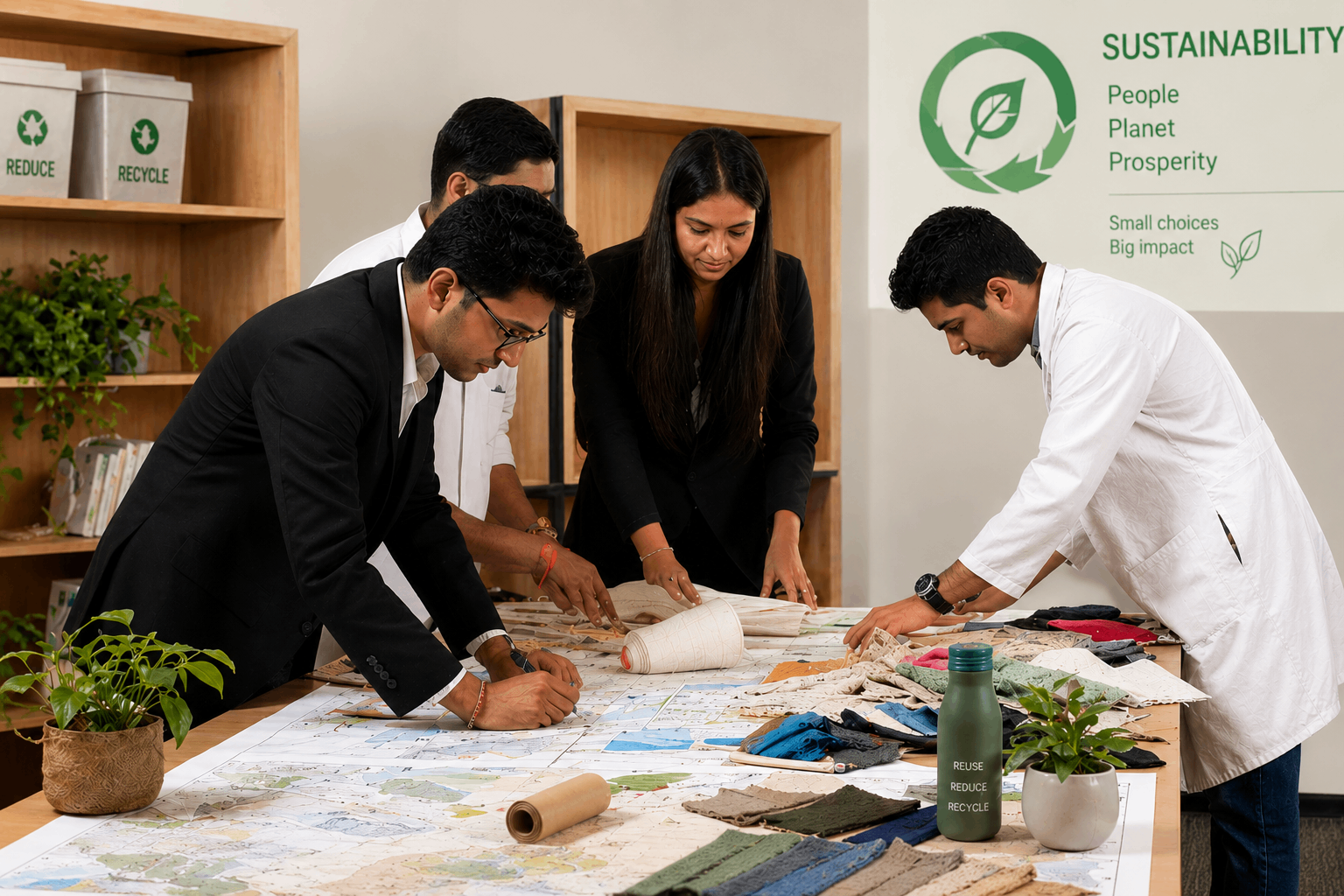
India is expected to create 7.29 million green jobs by FY28. That is not a distant projection anymore. It is already reshaping how companies hire, grow, and make decisions. Across consulting firms, manufacturing giants, climate-tech startups, financial institutions, and consumer brands, sustainability is moving from a side conversation to a business priority.
What makes this shift interesting is who companies are hiring. Not just environmental scientists. They are hiring analysts, marketers, operations professionals, consultants, finance graduates, product managers, and early-career professionals who understand how business works.
Because sustainability today is not only about saving the planet. It is about supply chains, capital allocation, regulations, consumer behaviour, reporting standards, and long-term business survival.
Why Companies Are Hiring Business Thinkers for Sustainability Roles
A few years ago, sustainability roles were largely confined to policy circles or environmental compliance teams. Today, the landscape looks completely different. An FMCG company wants to reduce packaging waste across markets. A logistics firm is redesigning supply chains to reduce emissions. Investors are evaluating ESG disclosures before funding companies. Startups are building businesses around carbon tracking, clean mobility, and circular commerce.
All of this requires professionals who can solve business problems. That is why sustainability management careers increasingly value commercial thinking, analytical ability, communication skills, and strategic decision-making alongside climate awareness.
-
A commerce graduate can move into ESG reporting.
-
An engineer can work on renewable energy operations.
-
A marketing professional can build sustainable consumer brands.
-
A finance graduate can enter climate finance and sustainable investing.
How ESG Careers Are Becoming the Next Big Business Opportunity?
The phrase “ESG jobs” often sounds technical from the outside. In reality, many of these roles sit at the centre of business strategy. An ESG consultant may help companies prepare sustainability disclosures. A sustainability strategist could redesign operations for long-term efficiency. A climate finance analyst evaluates how capital flows into renewable and low-carbon businesses.
These are business decisions with environmental consequences. As organisations commit to net-zero targets and stricter reporting frameworks, professionals who understand both sustainability and business operations are becoming increasingly valuable.
This is also why companies are struggling to hire fast enough. The demand for sustainability talent is growing more quickly than the supply of trained professionals. For young professionals considering a career switch, that gap creates opportunity.
Why ESG Skills Are Becoming Commercially Valuable
-
ESG roles increasingly influence strategic business decisions
-
Sustainability skills are becoming commercially valuable
-
Talent demand in ESG is growing faster than supply
Why Business-First Sustainability Education Is Gaining Momentum?
Many people hesitate to enter sustainability because they assume they need years of technical environmental education. That assumption prevents talented professionals from entering one of the fastest-growing sectors in the economy.
The reality is that organisations today need professionals who can apply sustainability to finance, operations, growth strategy, and decision-making. This is where business-first sustainability programmes are becoming important.
The Postgraduate Programme in Sustainability & Business Management at Masters’ Union approaches sustainability through the lens of business transformation rather than pure environmental theory.
Students learn how to:
-
Build sustainable business models
-
Design decarbonisation roadmaps
-
Understand ESG governance and reporting
-
Evaluate climate investments
-
Work on sustainable supply chain challenges
-
Explore renewable energy and climate-finance ecosystems
The emphasis is practical. Students work on live industry problems, sustainability consulting-style projects, and climate economy challenges that reflect how organisations actually operate today.
What Real Sustainability Management Careers Actually Look Like?
One of the biggest misconceptions about sustainability careers is that every role looks the same. In reality, the sector is incredibly diverse.
Some professionals work in consulting firms helping companies build ESG frameworks. Others work inside corporations managing sustainability operations. Some enter climate-tech startups solving energy or waste problems. Others move into policy, investing, or carbon markets.
Potential career paths include:
-
ESG Consultant
-
Sustainability Strategist
-
Climate Finance Analyst
-
Renewable Energy Specialist
-
Sustainable Supply Chain Professional
-
Climate-tech Operator
-
Circular Economy Entrepreneur
What connects these roles is not a specific undergraduate degree. It is the ability to understand systems, solve business problems, and adapt to changing economic realities.
Learning Sustainability Through Real Business Challenges
The strongest sustainability professionals are not the ones who memorise terminology. They are the ones who can solve real operational and strategic problems. That is why experiential learning matters. Students in the Sustainability & Business Management programme at Masters’ Union work on industry-focused challenges such as:
-
Building sustainability roadmaps for companies
-
Designing circular economy business models
-
Reimagining green supply chains
-
Evaluating sustainability policy frameworks
-
Solving emissions-reduction problems
The programme also includes exposure to global sustainability ecosystems through international immersions in cities like Geneva, Amsterdam, and Singapore, helping students understand how climate finance, policy, and innovation intersect globally.
For many students, that practical exposure becomes the bridge between academic learning and career transition.
How Hands-On Sustainability Learning Improves Career Readiness
-
Hands-on sustainability projects improve employability
-
Real-world exposure builds practical ESG understanding
-
Global climate economy exposure strengthens industry readiness
Why This Is One of the Best Times to Switch Into Sustainability Careers?
Every major economic shift creates new categories of work. The digital economy created product managers, growth marketers, and data analysts. The climate economy is now creating a new generation of ESG consultants, sustainability strategists, climate-finance professionals, and green business operators.
And unlike older industries, this sector is still defining itself. That means professionals entering today are not late. They are early.
You do not need a perfect background to begin. You need curiosity, commercial understanding, and the willingness to learn how sustainability is reshaping modern business. Because the future of sustainability will not be built only by environmental experts. It will also be built by people who understand how businesses scale, operate, invest, and evolve.
Sustainability Careers in India Are Still in Early Growth Stages
-
Sustainability careers are still in a high-growth phase
-
Early-career professionals can enter from multiple backgrounds
-
Business knowledge is becoming essential in the climate economy
Sustainability careers are no longer limited to environmental experts. As businesses rethink operations, finance, supply chains, and growth through an ESG lens, professionals from diverse backgrounds are finding new opportunities in the climate economy. For those willing to adapt and learn, sustainability is becoming one of the most future-relevant career paths in India.
 QUERIES
Frequently Asked Questions
Who can apply for the Sustainability & Business Management programme?

The programme is open to graduates from any discipline, including commerce, engineering, economics, business, humanities, and social sciences. Prior sustainability experience is not mandatory.
Do I need a science or environmental background to build an ESG career?
No. The programme is designed for students and early professionals who want to apply business thinking to sustainability and climate-focused roles.
What kind of careers can students pursue after the programme?
Students can explore roles such as ESG Consultant, Sustainability Strategist, Climate Finance Analyst, Renewable Energy Specialist, and sustainability-focused consulting or operations roles.
Does the programme include practical industry exposure?
Yes. Students work on live sustainability challenges, consulting-style projects, policy simulations, and global immersion experiences across climate and business ecosystems.
What makes this programme different from traditional sustainability courses?
Unlike theory-heavy sustainability programmes, this course focuses on business-first sustainability learning, combining ESG, finance, strategy, operations, and climate innovation with hands-on industry problem-solving.