We value your privacy

We use cookies to improve your browsing experience, personalise content, and understand how our website is used. By clicking “Accept all cookies”, you agree to our use of cookies. Learn more in our Privacy Policy.

Careers

Faculty

MU Ventures

Jobs

Become a Master

Merch Store

events

For Companies

Blog

Coach LMS

Back to Sustainability

Sustainable Development Goal 11

Sustainable Cities and Communities

Make cities and human settlements inclusive, safe, resilient and sustainable

UN Sustainable Development Goal 11: Sustainable Cities and Communities

Goal 11: Sustainable Cities and Communities

Overview

Learning from the city around us

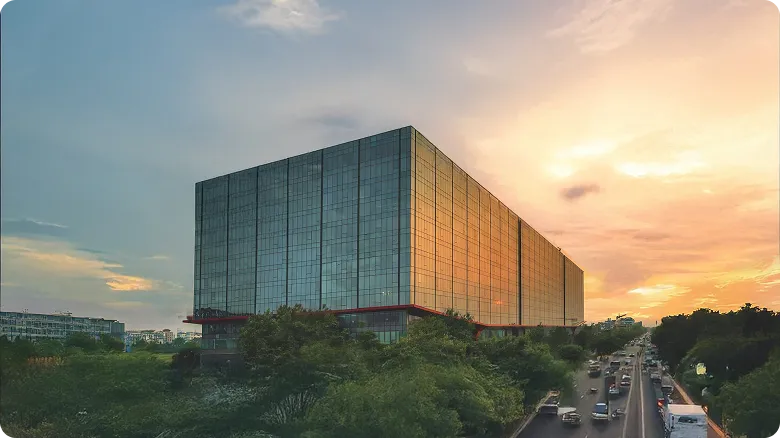
Masters’ Union is based within Gurugram's corporate and commercial district rather than on a self-contained university estate. Our academic spaces at DLF Cyber Park and CDS Corporate Tower sit alongside offices, public commercial areas, food facilities, transport links and other shared urban infrastructure. This places students within the working city throughout their academic experience. Our work on Sustainability Goal 11 brings together sustainable buildings, shared infrastructure, public-facing learning, cultural engagement and field-based education across Indian cities and communities.

Highlights

550

kWp solar capacity

1,300

kLD sewage-treatment capacity

01 Research

Our faculty work examines the role businesses can play in the development of more resilient cities and communities.

Industry and urban environmental conditions

Faculty expertise includes a 2017 study of industrial activity and Noyyal River water quality in Tiruppur, connecting textile production with urban and regional environmental conditions. The study highlights why manufacturing growth needs effective effluent treatment, pollution control and accountable resource use. These questions connect industrial operations with the quality of the water and shared environments on which urban communities depend.

Cities as places of economic participation

Student field inquiry looks at how people take part in a city’s economy, through informal enterprise, local markets, livelihoods and access to opportunity. PGP immersions in Dharavi and with the Chikankari artisan collectives in Lucknow put students inside these systems. They see how small businesses, manufacturing, recycling and craft operate in limited space, and how access to infrastructure, finance and markets shapes who benefits. This applied learning complements published research on cities and industry, and it informs the student projects and teaching cases that follow.

Dr Anushree Poddar’s chapter Mission Resilient Cities: How the Corporate Sector Can Become an Enabler in Developing and Sustaining Resilient Cities?, written with Sapna Narula, appears in CSR Best Practices in Oman and the World (2019).

02 Campus and stewardship

Operating within shared urban infrastructure

Masters’ Union operates within an active business district where university life sits alongside offices, restaurants, commercial spaces and other organisations. Food areas, common spaces, mobility infrastructure and selected recreational facilities are part of the wider district rather than being duplicated within a closed university estate. Students and employees therefore use many of the same urban systems as the professionals and organisations around them. Masters’ Union chooses its buildings deliberately for their low environmental impact, locating its campuses in developments with documented green certification.

DLF Cyber Park

DLF Cyber Park, where part of the campus is located, holds LEED O+M Platinum certification and a GRIHA 4-Star provisional rating. Its environmental infrastructure includes a 550 kWp solar photovoltaic system, energy-efficiency measures, water-conservation systems, a 1,300 kLD sewage-treatment plant and an organic-waste composter capable of processing 2,000 kilograms per day. During development, an existing tree was preserved and 708 new trees were planted. The project also includes measures addressing daylight, open space, heat-island reduction, waste segregation and resource efficiency. These systems are managed at the building level by DLF and form part of the infrastructure used by the Masters’ Union community.

CDS Corporate Tower

Masters’ Union also operates from CDS Corporate Tower, which holds LEED Gold certification. The building's assessment recognises its access to public transport, surrounding density and diverse urban uses, reduced parking footprint, electric-vehicle infrastructure, rainwater management, water-use reduction and energy performance. Together, these locations place the institution within buildings designed to make more efficient use of energy, water and urban infrastructure.

Accessible learning spaces

Our campuses include technology-enabled classrooms, auditoriums, breakout rooms, coworking areas, meeting spaces and student workstations. Lifts and accessible circulation support movement through the learning environment, while different room formats allow spaces to be used for teaching, individual work, collaboration and events. Facilities are reviewed regularly, with recent improvements including expanded coworking space, classroom acoustic upgrades and energy-efficient lighting.

Location and transport at CDS Corporate Tower

CDS Corporate Tower’s LEED v4.1 Core and Shell assessment (Gold, awarded July 2024, 62 of 110 points) earned 16 of 20 points for location and transportation, with full marks for access to quality transit (6 of 6), surrounding density and diverse uses (6 of 6), reduced parking footprint and electric vehicles. It earned 6 of 13 points for sustainable sites. Transit access, density and a reduced parking footprint make the building easier to reach without a private car, which matters for the many students and employees who travel to it every day.

Social spaces

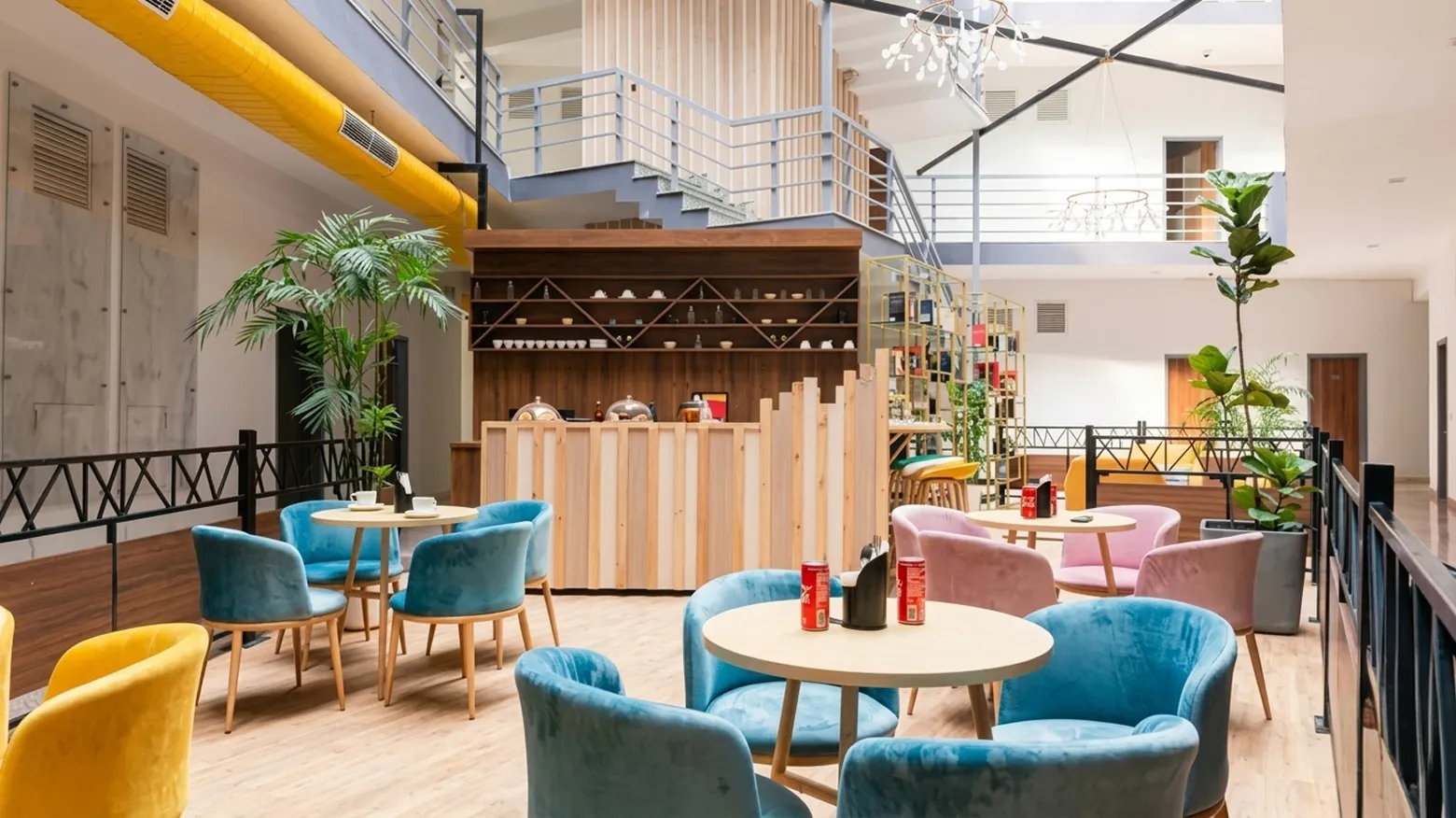
Social areas include the Commons at Tower A and Tower C of DLF Cyber Park and on the 7th and 8th floors of CDS Corporate Tower, the food court at DLF Cyber Park and an in-house cafeteria at CDS. Virtual tours are available for space 1, space 2 and space 3.

03 Beyond campus

Masters’ Union regularly invites people beyond its enrolled student community to take part in learning and campus activity. Free masterclasses, resume workshops, interview-preparation sessions, applicant events and practitioner-led sessions give prospective students and other participants opportunities to learn from faculty, alumni and industry professionals. Campus-based events also allow visitors to experience the learning environment and interact with the Masters’ Union community. Access is managed according to normal campus and building protocols so that public participation can sit alongside the safety and privacy of students and employees.

Dropshipping Mela at CyberHub

The Dropshipping Mela takes student entrepreneurship directly into one of Gurugram's busiest commercial spaces. In September 2025, student founders operated their businesses at DLF CyberHub from 11:00 AM to 9:00 PM. Alumni and members of the wider community were invited to visit the stalls, meet the founders and explore the products being sold. Students therefore tested their businesses in front of real customers and footfall outside the university setting.

Keeping alumni connected to the city and campus

Masters’ Union continues to engage alumni through learning, entrepreneurship and community events after graduation. Alumni mixers, founder sessions, investment programmes, mentorship opportunities and campus events create ways for graduates to remain connected with the institution and with one another. Events are held both in Gurugram and in cities including Mumbai, Bengaluru, Hyderabad, Pune and Chennai, extending the Masters’ Union community beyond its home campus.

Culture and community

Campus life also includes cultural programmes, performances, student showcases and community events involving students, employees, alumni and invited participants. These activities create spaces for music, theatre, dance and other forms of cultural expression within the university community. Students also encounter cultural heritage through field learning. In Lucknow, engagement with Chikankari artisan communities introduces students to a traditional craft that continues to support livelihoods, women's enterprise and local economic activity.

04 Teaching and learning

The PG Programme in Sustainability and Business Management maps each of its 40 courses to the goals it serves. 11 courses are mapped to this goal, including Introduction to Sustainability (Term 1), Introduction to Business Sustainability & Global Best Practices (Term 1), Environmental Systems (Term 1), Decoding Sustainable Business Models (Term 1), Carbon Markets & Trading (Term 2), Introduction to Climate Finance (Term 2). Decoding Sustainable Business Models covers business model canvas through a sustainability lens, value creation for customers, society and the environment and circular, inclusive, regenerative and product-as-a-service models. Environmental Systems covers ecosystems, natural capital, biodiversity and ecosystem services, climate systems, water cycles, land use and pollution pathways and industrial ecology, life-cycle thinking and resource flows.

Using cities as classrooms

Students learn about cities by spending time inside the communities and economic systems they are studying. Through PGP immersions and other field immersions, students encounter businesses, artisans, infrastructure, informal enterprises and local communities across different parts of India. These experiences allow them to examine how people work, move goods, use space, build livelihoods and respond to the opportunities and constraints of the places in which they live.

Dharavi

In Mumbai, students visit Dharavi to understand informal enterprise, community livelihoods and dense urban economic systems. They encounter small businesses operating within limited physical space and see how manufacturing, services, recycling and trade can exist alongside residential communities. The immersion also introduces questions around access to infrastructure, finance, markets and formal economic systems.

Chikankari in Lucknow

The Chikankari immersion in Lucknow introduces students to artisan-led enterprise and the relationship between cultural heritage and livelihoods. Students engage with traditional craft businesses and women's collectives to understand how skills passed across generations can continue to create economic value when artisans have access to markets, organisation and business support. The experience connects the preservation of cultural traditions with the people whose livelihoods sustain them.

Learning from Gurugram every day

The city-as-classroom model also operates much closer to home. Masters’ Union's Gurugram campus places students inside an active corporate district throughout their programme. Companies, professionals, restaurants, public spaces and commercial activity sit around the academic environment. Practitioner sessions bring people from these organisations into the classroom, while student events and businesses move back into the surrounding district. Students therefore experience the city not simply as the location of the campus, but as part of the learning environment itself.

A venture that opens up idle space

ShiftsDeal, a student venture supported by Masters’ Union, runs a booking marketplace for idle and underused spaces. It has listed 150+ spaces and was selected for the AI Ventures Accelerator run by Technovation and UNICEF’s Generation Unlimited.


What comes next: future priorities

Across campus operations, public engagement and field learning, our work on Sustainability Goal 11 reflects a simple idea: sustainable cities depend on how people share infrastructure, participate in community life, sustain culture and use the spaces and resources around them.

Explore Now