01 Research
Our faculty bring research experience in social exclusion, discrimination, identity and collective action.
Faculty research examines how people experience discrimination and how identity shapes belonging and collective action. Two peer-reviewed studies published in 2024 look at collective identity and discrimination among communities in Sikkim, exploring how questions of recognition and belonging persist even where communities have lived in a place for generations. Together, the studies help explain why social recognition and everyday treatment matter alongside formal rights and economic access, and show inequality as something people can experience socially even when formal access or legal rights exist.
Two further publications broaden this research. Dr Tathagata Bhowmik’s 2026 chapter, Marginalization and Disinformation: The Perilous Use of Tech by Political Consultancies in India, appears in the Springer Nature volume Technology, Management, and Design for Social Justice. Dr Bhasker Malu, with S. K. Rajan and N. Jindal, wrote the 2023 entry Regional Populism in India: A Case of Sikkim for Springer’s Encyclopedia of New Populism and Responses in the 21st Century, which turns to the same state as the discrimination study above.
Dr Vipin Sreekumar presented Advertising as Institutional Work: The Case of Casteless Collective in India at the 50th Macromarketing Conference in Rio de Janeiro in 2025. Dr Kashika Sud’s study of investor bias in the funding of women ventures, presented in 2024 and 2025, adds evidence on who gets access to finance.
02 Campus and stewardship
Scholarships and financial support
Masters’ Union offers scholarships and bursaries for students with different forms of talent, financial need and personal circumstance. In the most recent academic year, approximately INR 22.91 crore was awarded in scholarship and bursary support. Within the same period, 100 students received scholarships covering at least 50% of their tuition fees.
Narendra Jadhav Diversity Scholarship
The Narendra Jadhav Diversity Scholarship supports candidates from low-income, marginalised and underserved communities. Awards range from a 15% fee waiver to a full waiver, so that an exceptional candidate is not held back by what their family can pay.
Chairman's Diversity Scholarship
The Chairman's Diversity Scholarship supports candidates from underserved regions and communities across the Indian subcontinent, including the Northeast, Ladakh and tribal regions. Awards cover between 10% and 50% of fees and are meant to bring students from regions that are rarely represented in business school classrooms.
Rajni Thethi Scholarship for Women
The Rajni Thethi Scholarship supports women with strong academic or professional records and the potential to take on leadership roles. Awards range from a 15% fee waiver to a full waiver.
Need-Based Scholarship
Undergraduate students who require financial assistance can apply for need-based support based on their financial circumstances. The scholarship applies from the 2025 undergraduate intake onwards and is aimed at low-income applicants. Working professionals facing financial hardship can apply for the Mihir Mankad Need-Based Scholarship, subject to income documentation.
Bharat Innovator Scholarship
The Bharat Innovator Scholarship supports entrepreneurs from villages and Tier 2 and Tier 3 cities who have already demonstrated the ability to build a startup or minimum viable product. Other scholarships recognise achievement in technology, entrepreneurship, leadership and academics. They include the Technology Leaders scholarship for demonstrated technology leadership, innovation, patents or research, the Edward Rogers Change-Agent Scholarship for social impact or service, and a Sibling Scholarship for applicants with a sibling enrolled at Masters’ Union.
Alternative routes into Masters’ Union
Academic scores are not the only way we assess potential. Masters’ Union has alternative admissions pathways for candidates with exceptional entrepreneurial or personal achievement. Entrepreneurs who have already built meaningful ventures can be considered through an interview-led pathway and may receive scholarship support based on merit.
This pathway allows established entrepreneurial work to form part of admissions assessment, with scholarship support available to eligible candidates. A separate exceptional-achievement pathway recognises accomplishment in areas including sport, adventure, leadership, arts and public impact. These routes allow demonstrated ability and real-world achievement to form part of the admissions process.
Learning and mentoring support
The Learning Development Centre provides academic and personal learning support across Masters’ Union programmes. Students can work with academic advisors, learning and development advisors, career coaches, alumni mentors, industry mentors and domain specialists. Support includes academic writing, tutoring, study skills, communication, mentoring, workshops and individual consultations. Students returning to formal education after a gap can also access preparatory and refresher support in areas such as quantitative reasoning, analytical thinking and academic communication.
Mental health and wellbeing
Students have access to professional mental-health support through Amaha, alongside counselling and mentoring within Masters’ Union. The Counselling Cell provides free support six days a week, complemented by Amaha’s student services. More than 500 offline one-to-one sessions were recorded between September 2024 and August 2025; more than 180 individual requests were addressed in a single semester. The aim is to make support available when students need it, rather than expecting everyone to progress through university in the same way.
A campus where students belong
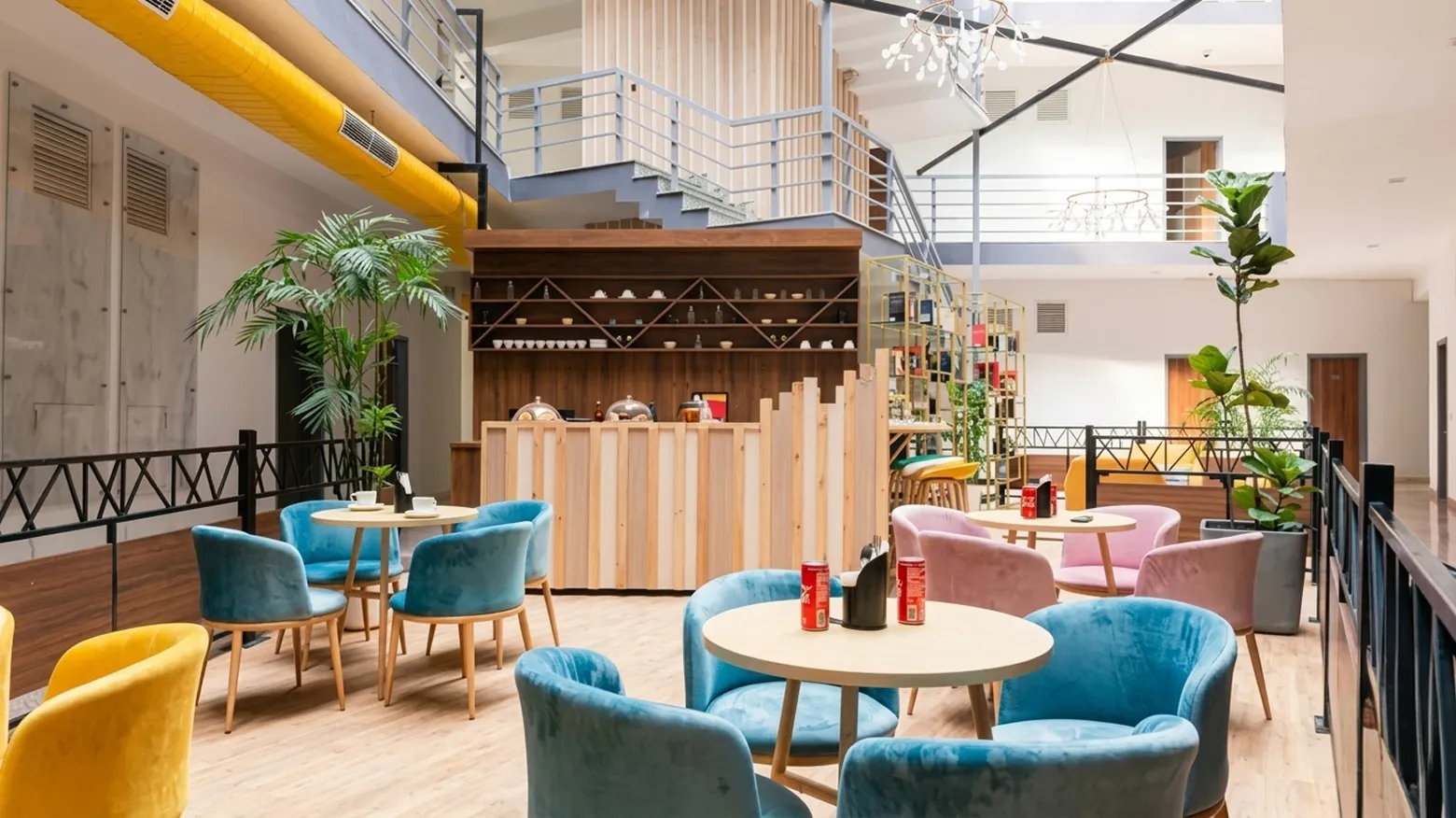
Support and belonging centres on campus offer assistance tailored to students from minority and underrepresented communities, alongside safe and accessible spaces that encourage dialogue and peer interaction. An Equality, Diversity and Inclusion Strategy sets pre-defined, time-bound targets for this work. Student organisations carry it into daily campus life: the Belong Club creates room for conversations on inclusion, dignity and healthy relationships, the Socio-Cultural Club brings communities together around culture and identity, and the SEWA Club takes students into service with communities beyond campus. Student clubs, faculty and staff also organise mentoring workshops, leadership boot camps and inclusive events that build a sense of belonging across diverse student groups. A dedicated prayer and reflection room serves the cultural and religious needs of the community.
Disability support is part of the same effort. Built-in accessibility features on computer systems support visually impaired students, classroom delivery is adapted for students with hearing impairments, and dedicated academic support is available to students with learning disabilities, alongside support services for mental health conditions. Lifts and accessible washrooms are available across the campus, classrooms and event venues offer flexible seating for wheelchair users and students with accessibility needs, and the institution waives campus access fees for a person accompanying a student with a mobility impairment. Together with the diversity scholarships, these measures aim to make admission meaningful by making sure students from different backgrounds can take part fully once they arrive.
Equal opportunity and respect
Masters’ Union's institutional policies prohibit discrimination across areas including recruitment, remuneration, appraisal, promotion, training and termination. The framework covers characteristics including gender, religion, race, ethnicity, disability, sexual orientation, age and nationality. Student grievance, anti-ragging and prevention of sexual harassment policies provide additional routes for students to raise concerns and seek support.
03 Beyond campus
Punjab Entrepreneurship Mindset Programme
The Punjab Entrepreneurship Mindset Programme, which Masters’ Union built for the Government of Punjab from curriculum to app, takes practical entrepreneurship education to students across the state's higher-education system. The programme has engaged 101,884 students across 47 universities and 1,695 colleges. Participants have created 20,226 businesses, with 15,341 recorded as active. Together, these businesses have generated INR 44.15 crore in reported revenue through 43,605 transactions. Students explore opportunities across areas including e-commerce, professional services, retail, skilled trades and content creation. The programme gives young people across a large public education system access to practical business-building experience.
Sharing the Light
Sharing the Light brought together alumni, employees and Masters’ Union to support visually impaired learners. The campaign aimed to improve access to mobility and assistive resources, raising INR 50,000 from alumni, employees and the institution.
The campaign raised INR 50,000 and supported the distribution of:
42 walking canes 43 headphones 81 Braille slates Food packages
The resources were distributed through Nirmala Foundation, Blind Welfare Society and Blind Persons Association. The initiative focused on practical learning and mobility tools that can help visually impaired people participate more independently.
Working with communities in Gurugram
The student-led SEWA Club works with community organisations on food, clothing, health and other forms of support. In one initiative with the Robin Hood Army, students collected food, clothing and funds for more than 250 residents of Ghata Village near Banjara Market. Twelve student volunteers participated in the activity.
Supporting artisan livelihoods
Students also work with artisans and community producers to help their products reach wider markets. Saaha, a student-built venture, worked with a rural women's cooperative in Rajasthan to develop a sustainable handicrafts brand and generated income for more than 20 artisans. Through Kalaghar, students have worked with handcrafted home decor produced by artisans from underserved communities, supporting marketing, sales and customer access. These projects allow students to use business skills while working alongside people whose livelihoods depend on stronger connections to markets.
Reaching rural and underserved students through Punjab
The stated focus of the Punjab programme, built by Masters’ Union in partnership with the Government of Punjab, is rural and underserved youth, women and backward districts. It is taught in English, Hindi and Punjabi, needs little or no starting capital and is credit-bearing, which lowers the cost of taking part.
04 Teaching and learning
The PG Programme in Sustainability and Business Management maps each of its 40 courses to the goals it serves. 5 courses are mapped to this goal: Social Impact (Term 1), Leadership and Negotiation (Term 2), Talent & People Decisions (Term 3), Cross-Cultural Management (Term 4), Managerial Decision-Making (Term 4). Social Impact covers social impact theory, inclusive growth and development challenges, theory of change, logic models and impact pathways and stakeholder and beneficiary analysis. Cross-Cultural Management covers cultural frameworks and their limits, communication, trust and collaboration across cultures and managing multicultural teams and global stakeholders.
Learning in rural communities
The Rural Immersion Challenge places students within rural communities for 10 to 15 days. Students spend time with residents, observe local businesses and services and study challenges related to livelihoods, infrastructure and access to opportunity. They use field research and human-centred design to develop potential business, technology, policy or community responses based on what they have learned.
Learning from different economies and communities
Through PGP immersions, students see how people earn, build businesses and access markets in very different ways across India. At Meesho, students examine how digital commerce can help smaller sellers reach customers across the country. At Zerodha, they explore how technology and lower-cost platforms have changed access to investing and financial markets.
In Dharavi, they encounter informal businesses operating within a dense urban economy. At Amul, students study a cooperative model that connects rural dairy producers with organised markets. Through the Swades Foundation, they learn about rural livelihoods and community development. In Lucknow, the SEWA Chikankari immersion introduces them to women-led collective enterprise and artisan livelihoods. These experiences give students a closer view of how access to markets, finance, technology and organisation can affect economic opportunity.
Inclusion in the workplace
Students also study inequality within organisations. Gender and Inclusion in Organizations examines bias and the way workplace systems can produce different outcomes for different groups. Managing Across Cultures introduces students to different cultural perspectives and ways of working. Business & Public Policy examines how government, regulation and public institutions influence businesses and the people affected by their decisions. Indian and international cases allow students to see how the same organisational decision can affect people differently depending on their economic, social or cultural circumstances.
Social Entrepreneurship Challenge
The Social Entrepreneurship Challenge gives students an opportunity to work on social problems with NGOs, social enterprises, community groups and other organisations. Projects can focus on areas including education, healthcare, women's empowerment, poverty and financial inclusion. Students may work on programme design, fundraising, operations or build an independent social venture. The challenge gives them direct experience of working with communities while considering whether a proposed solution is useful, practical and sustainable.











 Back to Sustainability
