02 Campus and stewardship
Choosing premises with documented standards
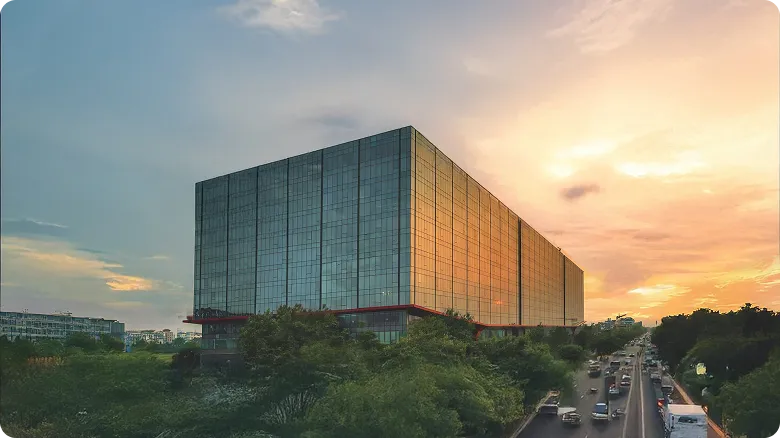
Masters’ Union operates from leased premises at DLF Cyber Park and CDS Corporate Tower. Choosing buildings with documented environmental certification is itself a partnership decision. DLF Cyber Park holds LEED O+M Platinum certification and a GRIHA 4-Star provisional rating, and CDS Corporate Tower holds LEED Gold certification.
EFMD Business School Impact System label
In 2025 Masters’ Union was awarded the EFMD Business School Impact System, or BSIS, label for positive impact. EFMD’s announcement describes the award. BSIS looks at how a school contributes to its region and its stakeholders.
QS Stars overall five-star rating
Within six years of its establishment, Masters’ Union has received an overall five-star QS Stars rating. The assessment recognises institutional performance across teaching, employability, online learning, entrepreneurship and inclusiveness.
Memberships and accreditations
Masters’ Union takes part in AACSB International, EFMD Global and the Business School Impact System, and is an institutional member of the Business Graduates Association and ASSOCHAM. The full list is on the awards, rankings and accreditations page.
03 Beyond campus
Working with the public sector
The Punjab Entrepreneurship Mindset Programme is a partnership between the Government of Punjab and Masters’ Union and runs across the state’s public higher-education system. Masters’ Union also took part in a startup summit with the Chief Minister of Haryana on World Entrepreneurs’ Day. In Nagaland, it worked with Tetso College and met the state’s Minister of Tourism and Higher Education. At school level, it planted 300 saplings with Government Model Senior Secondary School in Gurugram.
Masters’ Union also taught sustainability pro bono at four colleges of the University of Delhi, a public university, on circular economy, ESG, climate entrepreneurship and impact measurement. The sessions ran as follows.
| College |
Period |
Hours |
| Miranda House |
May–June 2025 |
12 |
| Hansraj College |
August–September 2025 |
13 |
| Sri Guru Gobind Singh College of Commerce |
October 2025 |
10 |
| Shaheed Bhagat Singh College |
November–December 2025 |
31 |
Convening across sectors
One sector cannot meet the goals alone, so Masters’ Union convenes and joins platforms where government, industry, investors and academia work through sustainability problems together, and it opens its auditoriums for public dialogue.
| Platform |
What it covered |
| ASSOCHAM Joint Council Meeting, New Delhi |
Environmental governance, ESG and water stewardship with government and industry |
| Seventh NCR Climate Party, 24 September 2024 |
250+ founders, investors, policymakers, researchers and students |
| Women Leadership Summit, 1 May 2025 |
Organised by CII in association with Masters’ Union |
| AI and climate change with PwC India, 25 April 2025 |
AI for climate solutions, and AI’s own footprint |
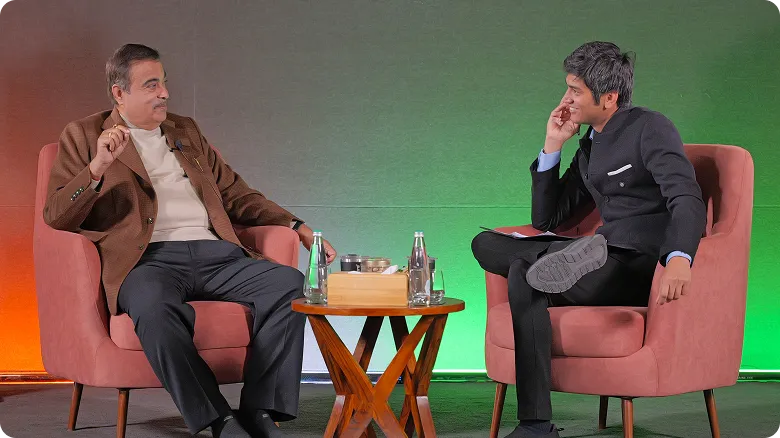
Public sessions have also brought national leaders and practitioners to campus.
| Speaker |
Topic |
| Nitin Gadkari, Union Minister |
Infrastructure, execution and sustainable urban mobility, 9 January 2025 |
| Kiren Rijiju, Union Minister |
Strengthening democratic institutions and responsible leadership |
| Ambassador Dr Deepak Vohra |
“Bharat on the Move!” at Intersect 4.0 |
| Vipul Arora, Sattva Consulting |
Masterclass on ESG and climate solutions |
| Ruchira Shukla, Green Marble VC |
Investing in sustainability |
| Tanya Singhal, Mynzo Carbon |
Building for the future |
| Jayati, Dilli Meri Jaan |
Sustainability as a growth strategy |
| Vivek Mehra, Onlygood |
Sustainable business |
| Mitresh Sharma, First Bud Organic |
Round table mentoring future food and beverage leaders |
Working with NGOs and communities
Drives and PGP immersions give Masters’ Union recurring ways to work with civil society. Drives meet urgent needs, and immersion partners show students how foundations and collectives work across several goals at once.
| Partner |
What they did together |
Goals |
| Robin Hood Army |
Food drive for 250+ Ghata Village residents |
1, 2 |
| Nirmala Foundation, Blind Welfare Society, Blind Persons Association |
Assistive and learning resources for visually impaired learners |
1, 4, 10 |
| DKMS |
Stem-cell donor registration drive |
3 |
| Kiwanis Club |
Run for a Cause, sponsoring two prosthetic limbs |
3 |
| Swades Foundation |
Immersion on livelihoods, health, water and education |
1, 3, 4, 6 |
| SEWA and Ada Chikankari |
Women’s collective enterprise |
5, 8 |
| TIEEDI |
Regenerative land use and biodiversity |
13, 15 |
| Udayan Care; Dream Girl Foundation |
STEM learning for girls; creative learning for children |
4, 5, 10 |
Amaha and Ekaant support student and employee mental health, and the Physical Education Foundation of India is a further partner. A drone-making lab for girls from Udayan Care is one example of how a partnership becomes hands-on learning.
Learning with universities and bodies abroad
Masters’ Union reviews comparative approaches and builds practice with international collaborators, including Griffith University, Illinois Institute of Technology, SDA Bocconi School of Management, IESEG School of Management, the Chinese University of Hong Kong, Imperial College Business School, IE University New York and Tetr College of Business in Dubai, alongside accrediting and membership bodies such as EFMD, AMBA and the Business Graduates Association.
| Partner |
What they do together |
| Griffith University, Australia |
Exchange, dual-degree pathways and a joint undergraduate pathway |
| Illinois Institute of Technology, USA |
Dual-degree undergraduate collaboration |
| SDA Bocconi, IESEG, H-FARM, Babson College, Singapore Management University |
Academic collaboration, faculty exchange, innovation exposure and international immersion |
Global immersions extend this to Singapore, Japan, China, Dubai, Italy, the United Kingdom, the United States and continental Europe, with visits to international organisations in Geneva, Rabobank, Temasek, EDF, Honda and Daikin.
Industry as co-educator
The PwC India x Masters’ Union AI Lab serves students and PwC clients alike. More than 200 practitioners teach complete courses, and more than 30 corporate partners contribute content and live assignments.
A partnership with the Government of Punjab
StartUp Punjab is a partnership between the Government of Punjab and Masters’ Union, and it runs across 47 active universities and 1,695 colleges. Punjab students compete on leaderboards at college, university and state level, and mentors from industry support them through 20+ nodal mentorship centres.
External linkages and volunteering
External linkages include the PwC India Centre of Excellence, operational from January to December 2025, a PHDCCI agreement dated 17 May 2025 and a UAE–India CEPA Council agreement dated 2 July 2025. Volunteer records total 3,208 hours, including 2,000 hours for the Punjab Entrepreneurship Mindset Programme.
04 Teaching and learning
The PG Programme in Sustainability and Business Management maps each of its 40 courses to the goals it serves. 15 courses are mapped to this goal, including Introduction to Sustainability (Term 1), Introduction to Business Sustainability & Global Best Practices (Term 1), Financial Accounting (Term 1), Environmental Systems (Term 1), Social Impact (Term 1), Corporate Governance (Term 1). Introduction to Business Sustainability & Global Best Practices covers business case for sustainability and links to resilience, innovation, cost and reputation, global sustainability standards including GRI, ISSB, TCFD, CSRD and integrated reporting and materiality assessment, stakeholder mapping and sustainability governance. Corporate Governance covers board structures, fiduciary duties and governance mechanisms, shareholder rights, stakeholder interests and agency conflicts and risk oversight, internal controls and ethical decision-making.
Educating for the goals
The PG Programme in Sustainability and Business Management starts from the goals and builds through climate finance, circular business, supply chains and ESG reporting aligned to SEBI’s Business Responsibility and Sustainability Reporting framework. Beyond that programme, courses such as Managing Self and Others, Finance Fundamentals, Gender and Inclusion in Organisations and Building Transformative Business Models introduce ethical decision-making, inclusive leadership, capital allocation and participatory governance. Term 5 governance modules give students frameworks for accountability and stakeholder alignment in both corporate and family-owned businesses.
Teaching through live partnerships
Business labs and simulations connect the classroom with real problems. Design Thinking projects address waste reduction, ESG investment modules sit within finance, and the “Pitching from the SDGs” workshop has students develop startup ideas in public health, circular economies and climate technology, with mentorship from investors and domain experts. Through partnerships with local governments, NGOs and community-based enterprises, students take on live civic challenges. In the Dropshipping Challenge, they work with artisans and small business owners from Banjara Market to co-develop product catalogues, build digital storefronts and design campaigns that widen access to markets. Students also co-lead community clean-up drives, promote sustainable packaging and run workshops on waste reduction.
Reaching beyond enrolled students
Masters’ Union reaches school students through the High School Startup League, which has engaged more than 15,000 students. It reaches college students through 66 hours of pro bono teaching at public colleges, and the public through webinars such as “Sustainability in Business: The Next Big Career Opportunity”.









 Back to Sustainability
