Learning how livelihoods and businesses are built
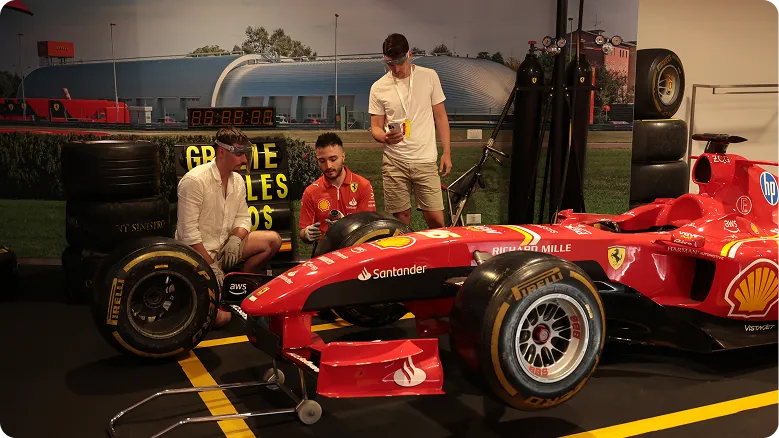
At Masters’ Union, economic mobility is not treated only as a policy question. Students experience the mechanisms behind it by building businesses, working with entrepreneurs and studying livelihoods in the environments where they exist. The OutClass model places students in situations where economic decisions have real consequences. Through the Dropshipping Challenge, students identify products, work with suppliers, set prices, acquire customers and manage sales and fulfilment. Since its inception, the challenge has engaged more than 500 students, supported over 150 student businesses and generated more than INR 10 crore in cumulative revenue.
The importance of the exercise is not simply that students generate sales. They learn how a relatively low-capital business is created from the ground up and develop practical capabilities in digital commerce, marketing, supplier management, pricing and customer acquisition. These skills can translate into entrepreneurship, independent work, employment or the growth of an existing family business.
Students who want to take an idea further can progress through the Venture Initiation Programme, moving from problem validation and a minimum viable product to go-to-market execution and product-market fit. The pathway connects founders with experienced entrepreneurs, investors, CXOs and domain specialists, culminating in opportunities to present ventures to more than 150 venture capitalists and angel investors. The institution also takes students outside conventional corporate settings to understand how livelihoods are created across India.
Through PGP immersions, students encounter rural communities, informal businesses, cooperatives, agricultural enterprises and artisan networks. A Swades Foundation immersion exposes students to integrated rural development across livelihoods, health, water and education. In Dharavi, they examine informal enterprises and recycling economies. At Amul in Anand, they study how a farmer-owned cooperative connects producers with markets and distributes economic value. In Lucknow, engagement with SEWA's Chikankari collective provides a view into women-led artisan livelihoods and collective enterprise. These experiences give students a broader understanding of poverty and economic mobility. They see that livelihoods can be created through a technology startup, a local restaurant, a farmer-owned cooperative, an artisan collective or an informal enterprise, and that the barriers facing each are different.







 Back to Sustainability
