





We value your privacy

We use cookies to improve your browsing experience, personalise content, and understand how our website is used. By clicking “Accept all cookies”, you agree to our use of cookies. Learn more in our Privacy Policy.

Careers

Faculty

MU Ventures

Jobs

Become a Master

Merch Store

events

For Companies

Blog

Coach LMS

Back to Sustainability

Sustainable Development Goal 14

Life Below Water

Conserve and sustainably use the oceans, seas and marine resources for sustainable development

UN Sustainable Development Goal 14: Life Below Water

Goal 14: Life Below Water

Overview

Protecting aquatic ecosystems through responsible business decisions

Sustainability Goal 14 calls for the conservation and sustainable use of oceans, seas and marine resources. Many pressures on aquatic ecosystems begin on land: industrial discharge, untreated wastewater, plastic waste, runoff and resource-intensive operations can travel through rivers and drainage systems before reaching coastal and marine environments. Masters’ Union contributes as a business and management institution. It prepares students to consider water quality, waste, sourcing and environmental safeguards in commercial decision-making, while deliberately selecting leased corporate premises with documented water-efficiency and wastewater-management systems.

Highlights

1,300

kLD sewage-treatment capacity

1,092.9

kLD reusable treated water, 2024

01 Research

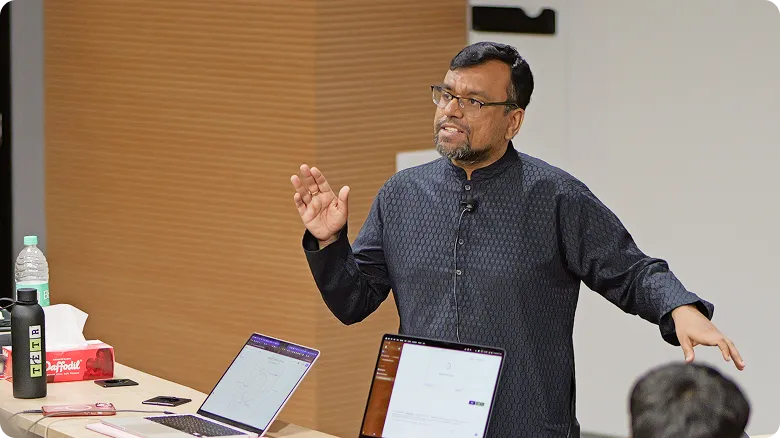
Faculty expertise includes a 2017 study of dyeing and textile activity in Tiruppur and its effect on Noyyal River water quality. The work connects production decisions with pollution beyond the factory boundary and the need for effective treatment, monitoring and compliance. For Sustainability Goal 14, the research is especially relevant because river pollution can move downstream into wider aquatic systems. It gives future managers a practical basis for understanding water risk as an operational, regulatory and ecological responsibility.

02 Campus and stewardship

Intentional selection of water-efficient premises

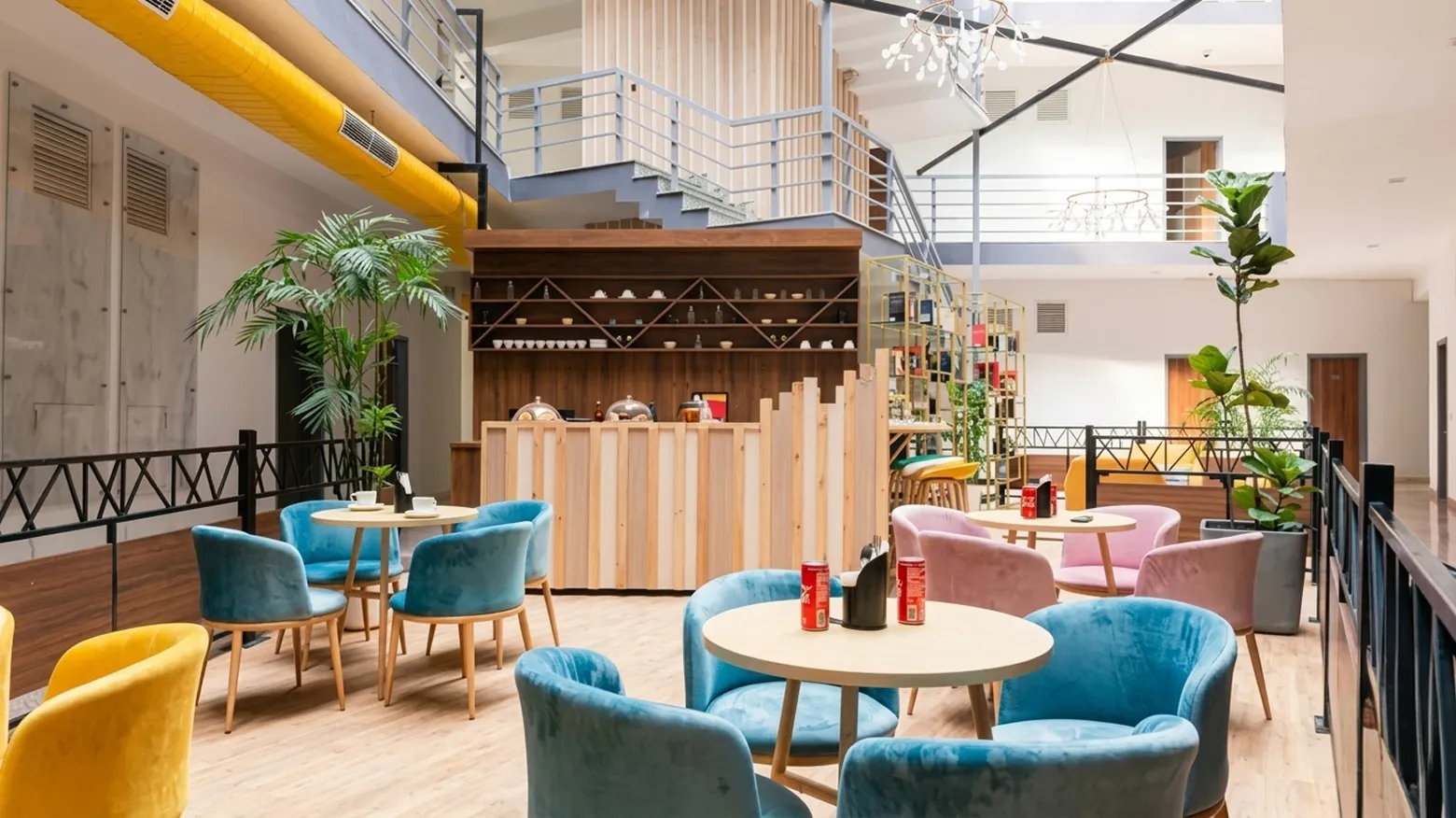
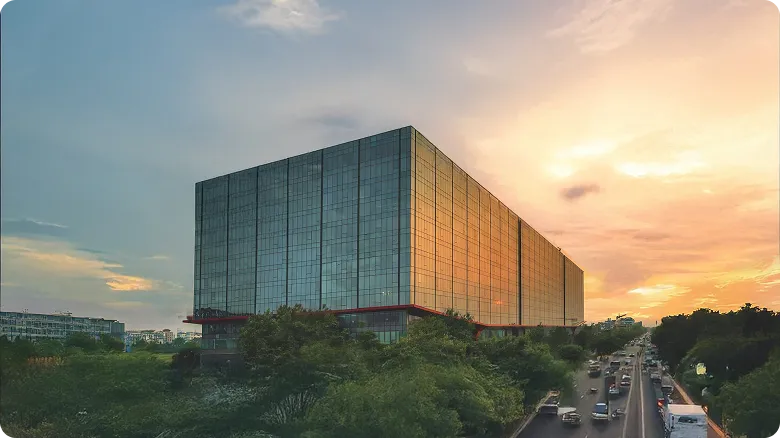
Masters’ Union operates from leased premises within Gurugram’s corporate ecosystem. This model is intentional: it keeps teaching and industry engagement close to the business world while allowing the institution to share the infrastructure of established commercial developments. DLF Cyber Park’s GRIHA assessment records an 82.65% reduction in building water demand against the base case. Its January 2022 LEED O+M scorecard awards 13 of 15 Water Efficiency points. The property’s 2024 environmental-compliance report records 1,300 kLD of sewage-treatment capacity and 1,092.9 kLD of reusable treated water, reused for flushing, landscaping and cooling towers. These are property-level systems managed by DLF. Masters’ Union’s stewardship lies in choosing premises with documented environmental performance, using shared water and waste systems responsibly, and aligning institution-controlled practices with the building’s controls.

Waste and pollution prevention

DLF Cyber Park’s compliance reporting records 4,531 kg of solid waste generated per day across the development. Biodegradable waste is composted on site, while segregated dry, plastic and domestic hazardous waste is routed to authorised recyclers or vendors. Within Masters’ Union spaces, colour-coded bins support segregation and campus practices discourage unnecessary single-use plastic.

03 Beyond campus

Masters’ Union faculty take sustainability education beyond the institution through pro bono programmes with Miranda House, Hansraj College, Sri Guru Gobind Singh College of Commerce and Shaheed Bhagat Singh College. Sessions cover circular economy, resource conservation, sustainable supply chains, ESG and environmental-impact measurement, helping learners connect business activity with pressure on water and natural systems. The institution also participates in wider discussions on water stewardship and environmental governance through industry and policy forums, including ASSOCHAM’s sustainability and water councils.

04 Teaching and learning

Learning from communities and industry

Through PGP immersions, students examine water as part of livelihoods, agriculture, infrastructure and environmental management. At Swades Foundation in rural Maharashtra, they study decentralised water solutions and the relationship between water access, health, agriculture and community resilience.

At TIEEDI in Darjeeling, students learn how permaculture, composting, bio-enzymes and closed-loop resource systems connect water, soil, waste and biodiversity.

At Adani Ports in Mundra, students consider how shipping, logistics infrastructure and environmental management interact where industrial activity meets a coastal ecosystem.

Curriculum and applied cases

The PG Programme in Sustainability and Business Management addresses environmental policy, circular economy, sustainable supply chains, responsible sourcing, climate risk, ESG and natural-resource management. Applied cases and ClimateTech learning help students examine how organisations can monitor water use, manage pollution pathways and design more resource-efficient operations.

What comes next: future priorities

Applied research on water-related business risk, field immersions and the measurement of institution-controlled water and waste practices form the base of Masters’ Union’s contribution to Sustainability Goal 14. The institution distinguishes its own actions from landlord-managed infrastructure, and its corporate-embedded campus model shows how responsible site selection and shared-resource use form part of institutional stewardship.

Explore Now