01 Research
Our faculty work examines how businesses, technologies and operating systems can respond to environmental change.
Sustainable agriculture and climate resilience
Faculty research examines the ecosystem supporting agricultural-technology adoption in emerging economies. The work considers how farmers, technology providers, financial institutions, policy and supply-chain actors affect adoption. It connects technological change with productivity, affordability and more efficient use of agricultural resources. Related faculty work examines climate education and household energy consumption, alongside policies for energy, agriculture and transport. These perspectives connect resource-efficient operations with behaviour, public policy and the adoption of sustainable technologies.
Climate performance and investment
Research on ESG performance and foreign institutional investment in India connects sustainability with capital allocation. Using machine-learning methods, the research looks at how sustainability performance can influence investment decisions and the way capital is allocated. This complements the institution's wider work in climate finance and sustainable investment.
02 Campus and stewardship
Lower-energy infrastructure at DLF Cyber Park
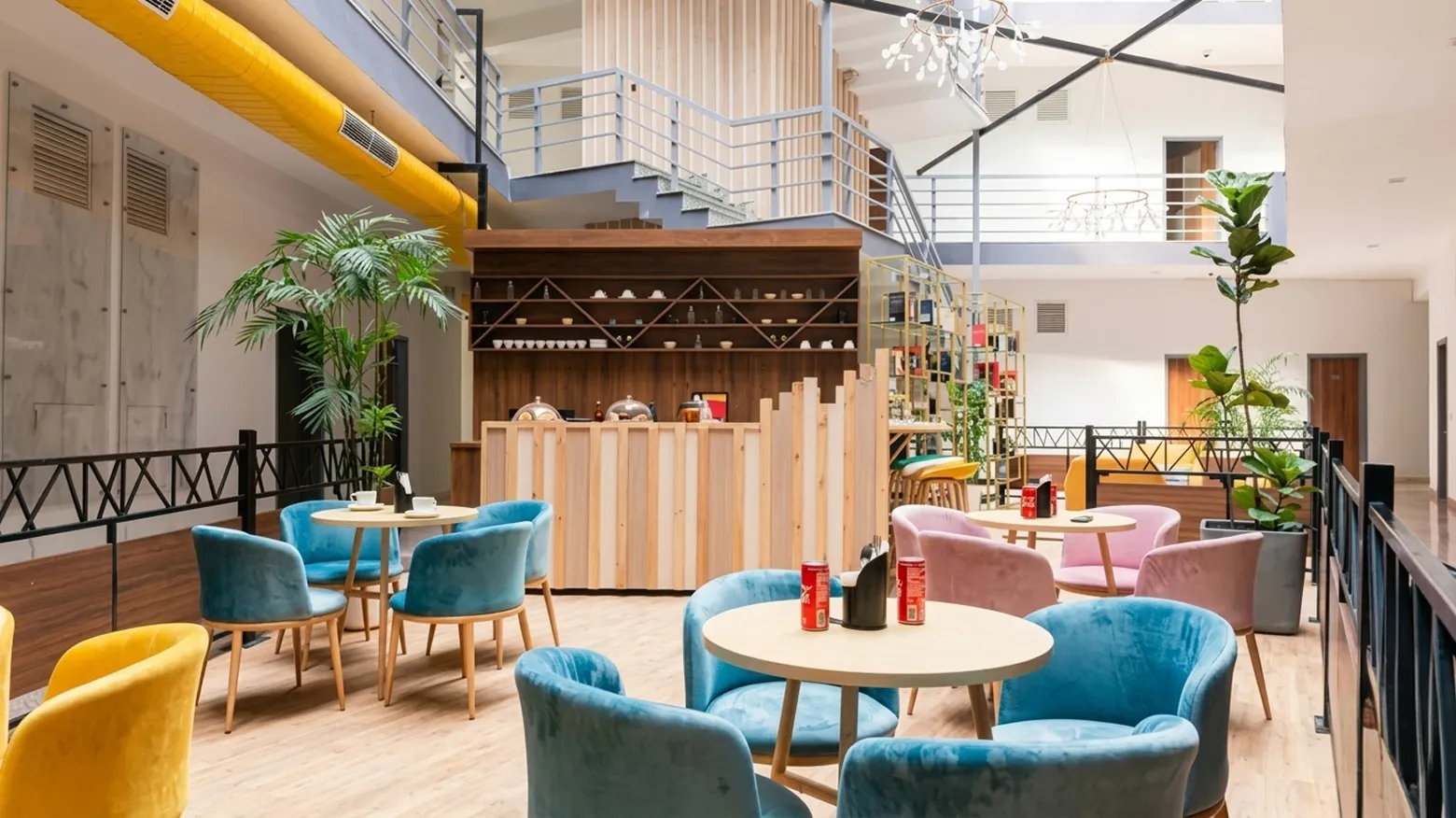
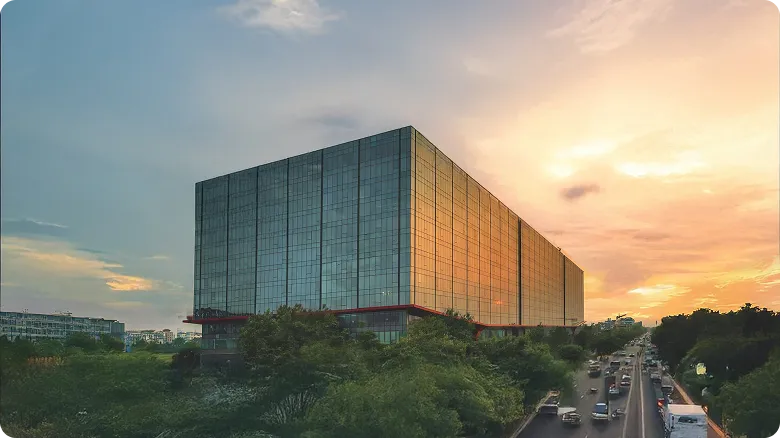
Part of the Masters’ Union campus operates within DLF Cyber Park, where energy and environmental systems are managed at the building level. The development has demonstrated a 40.40% reduction in Energy Performance Index against the GRIHA base case through the use of high-performance building systems. It also reports that 57% of regularly occupied spaces meet prescribed daylight requirements, reducing dependence on artificial lighting during suitable conditions. These are building-level outcomes delivered by DLF Cyber Park, but they form part of the infrastructure used by Masters’ Union students and employees every day.
Renewable energy at the building level
DLF Cyber Park has a 550 kWp solar photovoltaic system installed on site. The development's wider energy systems include metering, energy-efficiency measures and green-building standards designed to reduce the environmental impact of operations. Facility improvements have included upgrades to energy-efficient lighting within Masters’ Union spaces.
Reducing resource use across campus operations
Climate action also extends beyond electricity. DLF Cyber Park combines energy efficiency with water conservation, wastewater treatment, waste segregation and organic-waste processing. The development includes a 1,300 kLD sewage-treatment plant and an organic-waste composter with a capacity of 2,000 kilograms per day, while water-efficient fixtures reduce demand for freshwater. Together, these systems support more efficient use of energy, water and materials within the wider campus environment.
Energy and transport at CDS Corporate Tower
CDS Corporate Tower earned 18 of 33 points under Energy and Atmosphere and the electric-vehicle credit in its LEED v4.1 Core and Shell assessment, awarded Gold in July 2024. Together, these credits point to a building designed to use energy more efficiently and to support lower-emission commuting.
03 Beyond campus
Climate education at public colleges
Masters’ Union faculty take climate and sustainability education beyond the campus through pro bono programmes with public colleges. At Hansraj College, faculty delivered a 13-hour programme covering climate action, carbon accounting, ESG, sustainable business and sustainability problem-solving. Students at Miranda House explored climate communication, circular economy, sustainable supply chains and climate technology through a 12-hour programme.
At Sri Guru Gobind Singh College of Commerce, sessions connected ESG and responsible business with environmental decision-making. Two programmes at Shaheed Bhagat Singh College focused on impact measurement, ESG reporting, climate entrepreneurship and sustainable business. Across five engagements at four public colleges, Masters’ Union faculty delivered 66 hours of pro bono sustainability teaching.
Climate problem-solving with other universities
Masters’ Union also develops sustainability problem statements for students at other institutions. Students at Ashoka University, Miranda House, Hansraj College and Shaheed Bhagat Singh College have worked on challenges covering climate adaptation, circular economy, sustainable business and environmental problem-solving. These projects allow students to work on environmental questions through practical business and management problems.
Joining India's climate and sustainability conversations
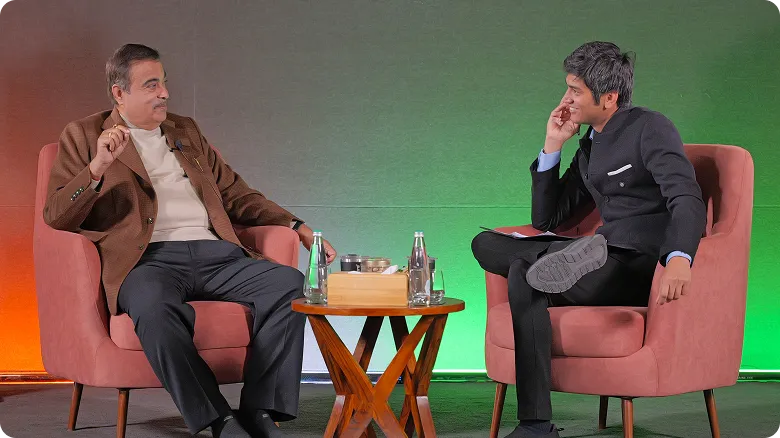
Masters’ Union participates in external forums where businesses, investors, policymakers and sustainability practitioners discuss the transition to a lower-carbon economy. At the Net Zero Hour Summit in New Delhi, discussions included India's net-zero journey, climate commitments and business transformation. At the fifth Mint Sustainability Impact Summit in Mumbai, which Masters’ Union sponsored, conversations focused on climate finance, green investment and sustainability leadership. Through its collaboration with SusMafia, Masters’ Union has also hosted three sessions covering climate innovation, green entrepreneurship, ESG and the changing skills required in sustainability roles.
Exploring AI and climate change with PwC India
On 25 April 2025, Masters’ Union hosted a session with PwC India on artificial intelligence and climate change. The discussion covered the use of artificial intelligence in climate solutions, net-zero strategy and energy management, while also considering the environmental impact of AI itself.
Related link: LinkedIn post on the PwC India session
Related link: Session recording on YouTube
Bringing the climate community together
Masters’ Union hosted the seventh NCR Climate Party on 24 September 2024, bringing together more than 250 participants. Founders, investors, policymakers, researchers, academics, students and sustainability professionals came together to discuss climate entrepreneurship, emerging solutions and opportunities for collaboration across the climate ecosystem.
04 Teaching and learning
The PG Programme in Sustainability and Business Management maps each of its 40 courses to the goals it serves. 12 courses are mapped to this goal, including Introduction to Sustainability (Term 1), Introduction to Business Sustainability & Global Best Practices (Term 1), Financial Accounting (Term 1), Environmental Systems (Term 1), Decoding Sustainable Business Models (Term 1), Corporate & Entrepreneurial Finance (Term 2). Climate Tech Ecosystem covers climate-tech sectors including energy, mobility, industry, food, carbon and adaptation, technology readiness, commercialisation and adoption barriers and startup ecosystems, venture capital and corporate partnerships. Carbon Markets & Trading covers greenhouse-gas accounting and carbon-market fundamentals, compliance and voluntary carbon markets and allowance allocation, offsets, credits and verification.
Sustainability and Business Management
The PG Programme in Sustainability and Business Management gives students a dedicated route into climate and sustainability-focused careers. The 16-month programme includes Carbon Markets & Trading, Climate Finance, Climate Tech, Renewable Energy Markets, Renewable Business Models, Renewable Energy Technologies, Sustainable Supply Chains and Agritech alongside ESG and sustainability strategy. More than 70% of sessions are delivered by practitioners, with over 100 masterclasses, workshops and mentorship sessions built into the programme. Students also work on live sustainability projects and industry challenges, bringing climate questions into decisions about operations, finance, technology and growth.
Measuring carbon
Carbon accounting gives students a practical way to understand where organisational emissions come from. Students learn to examine direct and indirect emissions, work with emissions data and understand the difference between operational emissions and those that sit across wider value chains. Practitioner sessions with Onlygood connect Scope 3 emissions management with the use of AI and IoT in sustainability measurement. Engagement with Mynzo Carbon connects renewable energy and carbon-footprint measurement with decisions by businesses, individuals and policymakers.
Understanding climate risk
Students examine how changing weather patterns, resource availability, policy and the energy transition can affect assets, supply chains, industries and investment decisions. Sustainable finance extends this into capital allocation, helping students understand how investors and businesses assess environmental risks alongside financial returns.
Learning from the energy transition at Khavda
Through PGP immersions, students visit the Khavda Renewable Energy Park in Kutch, Gujarat. The immersion gives students direct exposure to utility-scale renewable-energy infrastructure. Students examine the economics of renewable power, grid integration, land requirements, supply chains and the investment needed to develop energy infrastructure at scale. The experience connects the energy transition with the finance, infrastructure and operating decisions required to make it work.
Investing in climate solutions
Practitioner engagement with Green Marble VC introduces climate technology, the energy transition and climate investing. The session explored how investors assess emerging technologies and how capital can help climate-focused businesses move from early ideas towards wider adoption.
Building businesses for a lower-carbon economy
Students are also applying climate and sustainability thinking through entrepreneurship. Fitsol, part of the Masters’ Union venture ecosystem, supports manufacturing companies’ decarbonisation through software and sustainability services. Smarto Cabs applies an electric-vehicle mobility model to urban transport.
Student venture SS Techfarming India applies technology to farming, adding another connection between innovation, agriculture and more resource-efficient production. Masters’ Union alumni are also working across renewable energy, energy storage, electric mobility and solar infrastructure in organisations including Param Renewable Energy, Hitachi Energy, Amara Raja Energy & Mobility, Ola Electric and Infinia Solar. Across research, campus infrastructure, public education and teaching, our work on Sustainability Goal 13 focuses on preparing students to understand and respond to the way climate change is reshaping business, investment and industry.












 Back to Sustainability
