


About us


-
See what students, mentors, alumni and recruiters say about Masters' Union University. Shared highlights and moments that reflect our culture, learning and community. Explore their voices.
OVERVIEW


-
See how Masters’ Union University is represented across leading news and media platforms. Explore articles, features, and press coverage that reflect our journey, initiatives, and growing impact in education, innovation, and industry engagement.
OVERVIEW

-
Explore the awards, rankings and accreditations that recognise the quality, impact and industry relevance of Masters' Union University programmes.
OVERVIEW

-
Explore the reports, brochures, policies, and publications that document Masters' Union University's outcomes, standards, and institutional commitments.
OVERVIEW


PROGRAMMEs
- Highlights
- Curriculum
- Admissions & Fees
- Immersions
- Entrepreneurship
- Careers
- Class Profile
PROGRAMME oVERVIEW
- Highlights
- Curriculum
- Admissions & Fees
- Immersions
- Entrepreneurship
- Career Prospects
- Class Profile
PROGRAMME oVERVIEW
- Highlights
- Curriculum & Faculty
- Immersions
- Admissions & Fees
- Career Prospects
- Class Profile
PROGRAMME oVERVIEW
- Highlights
- Curriculum
PROGRAMME oVERVIEW
- Home
PROGRAMME oVERVIEW
- Highlights
- Curriculum & Faculty
- Admissions & Fees
- Career Prospects
- Class Profile
PROGRAMME oVERVIEW
- Highlights
- Curriculum & Faculty
- Admissions & Fees
- Career Prospects
- Class Profile
PROGRAMME oVERVIEW
- Highlights
- Curriculum
- Admissions & Fees
- Career Prospects
- Class Profile
PROGRAMME oVERVIEW
PROGRAMMEs
- Highlights
- Curriculum & Faculty
- Admissions & Fees
- Career Prospects
- Class Profile
PROGRAMME oVERVIEW
- Highlights
- Curriculum & Faculty
- Admissions & Fees
- Career Prospects
- Class Profile
PROGRAMME oVERVIEW
- Highlights
- Curriculum
- Admissions & Fees
- Career Prospects
- Class Profile
PROGRAMME oVERVIEW
- Highlights
- Curriculum & Faculty
- Admissions & Fees
- Career Prospects
- Class Profile
PROGRAMME oVERVIEW
- Highlights
- Curriculum & Faculty
- Admissions & Fees
- Career Prospects
- Class Profile
PROGRAMME oVERVIEW
- Highlights
- Curriculum
- Admissions & Fees
- Career Prospects
- Class Profile
PROGRAMME oVERVIEW
- Highlights
- Curriculum
- Admissions & Fees
- Career Prospects
- Class Profile
PROGRAMME oVERVIEW
PROGRAMMES
-
PGP in
Technology & Business Management

-
PGP in
Technology & Business Management
(Young Leaders Cohort)
-
MBA in Finance with CFA Pathway
-
Post Graduate Diploma (Human Resources and Organisation Strategy)
-
Post Graduate Diploma (Sports Management and Gaming)
-
PGP in
Applied AI & Agentic Systems
-
PGP in Sustainability &
Business Management
-
Four Nations Global
Business Programme
- Highlights
- Curriculum
- Immersions
- Admissions & Fees
- Career Prospects
- Cohort Profile
PROGRAMME oVERVIEW
- Home
PROGRAMME OVERVIEW
- Highlights
- Curriculum
- Immersions
- Admissions & Fees
- Career Prospects
- Faculty & Student Stories
PROGRAMME oVERVIEW
- Highlights
- Curriculum
- Immersions
- Admissions & Fees
- Career Prospects
PROGRAMME oVERVIEW
- Highlights
- Curriculum & Faculty
- Admissions & Fees
- Career Prospects
PROGRAMME oVERVIEW
- Highlights
- Curriculum & Faculty
- Admissions & Fees
- Career Prospects
PROGRAMME OVERVIEW
- Highlights
- Curriculum & Faculty
- Admissions & Fees
PROGRAMME OVERVIEW
- Highlights
PROGRAMME OVERVIEW
- Highlights
- Curriculum
- Immersions
- Admissions & Fees
- Career Prospects
- Cohort Profile
PROGRAMME oVERVIEW
PROGRAMMES
-
Post Graduate Diploma (Rise General Management)
-
Post Graduate Diploma (Capital Markets & Trading)
-
PGP in US Capital Markets &
Trading
-
PGP
in Entrepreneurship & Business Acceleration
-
Post Graduate Diploma (Rise General Management Global)
-
AI First Operator Programme
-
Bloomberg Equity Research Programme
- Highlights
- Curriculum
- Faculty
- Admissions & Fees
- Career Prospects
- Cohort Profile
PROGRAMME oVERVIEW
- Home
PROGRAMME oVERVIEW
- Highlights
- Curriculum
- Admissions & Fees
PROGRAMME oVERVIEW
- Highlights
- Curriculum
- Admissions & Fees
PROGRAMME oVERVIEW
- Highlights
- Curriculum
- Immersions
- Faculty & Coaches
- Admissions & Fees
- Career Prospects
PROGRAMME oVERVIEW
- Highlights
- Curriculum
PROGRAMME oVERVIEW
- Home
PROGRAMME oVERVIEW
- Highlights
- Global Immersions
- Curriculum
- Faculty & Coaches
- Leadership Learning
- Admissions & Fees
PROGRAMME oVERVIEW
- Highlights
- Curriculum
- Admissions & Fees
PROGRAMME oVERVIEW
PROGRAMMES
- Highlights
- Curriculum
- Beyond Classroom
- Admissions & Fees
PROGRAMME oVERVIEW
- Highlights
- Curriculum
- Beyond Classroom
- Admissions & Fees
PROGRAMME oVERVIEW
- Home
PROGRAMME oVERVIEW
- Home
PROGRAMME oVERVIEW
PROGRAMMES
- Home
PROGRAMME oVERVIEW
- Highlights
- Curriculum
- Beyond Classroom
- Admissions & Fees
PROGRAMME oVERVIEW
- Home
PROGRAMME oVERVIEW
- Home
PROGRAMME oVERVIEW
STUDENT LIFE
- Student Premises
- Amenities
- Hostel Council
oVERVIEW


- Case Union
- UnMute
- Clubs & Committees
oVERVIEW


oVERVIEW

- Healthcare
- BFSI
- Technology
- Manufacturing
- Retail
Industry
- Governments
- Universities
- Startups
- SMEs
- Large Enterprises
Industry
oVERVIEW
PROGRAMMEs
- Highlights
- Curriculum & Faculty
- Admissions & Fees
- Career Prospects
- Class Profile
PROGRAMME oVERVIEW
- Highlights
- Curriculum & Faculty
- Admissions & Fees
- Career Prospects
- Class Profile
PROGRAMME oVERVIEW
- Highlights
- Curriculum
- Admissions & Fees
- Career Prospects
- Class Profile
PROGRAMME oVERVIEW
- Highlights
- Curriculum & Faculty
- Admissions & Fees
- Career Prospects
- Class Profile
PROGRAMME oVERVIEW
- Highlights
- Curriculum & Faculty
- Admissions & Fees
- Career Prospects
- Class Profile
PROGRAMME oVERVIEW
- Highlights
- Curriculum
- Admissions & Fees
- Career Prospects
- Class Profile
PROGRAMME oVERVIEW
- Highlights
- Curriculum
- Admissions & Fees
- Career Prospects
- Class Profile
PROGRAMME oVERVIEW
PROGRAMMES
- Highlights
- Curriculum
- Immersions
- Admissions & Fees
- Career Prospects
- Cohort Profile
PROGRAMME oVERVIEW
- Home
PROGRAMME OVERVIEW
- Highlights
- Curriculum
- Immersions
- Admissions & Fees
- Career Prospects
- Faculty & Student Stories
PROGRAMME oVERVIEW
- Highlights
- Curriculum
- Immersions
- Admissions & Fees
- Career Prospects
PROGRAMME oVERVIEW
- Highlights
- Curriculum & Faculty
- Admissions & Fees
- Career Prospects
PROGRAMME oVERVIEW
- Highlights
- Curriculum
- Immersions
- Admissions & Fees
- Career Prospects
- Cohort Profile
PROGRAMME oVERVIEW
PROGRAMMES
- Highlights
- Curriculum
- Faculty
- Admissions & Fees
- Career Prospects
- Cohort Profile
PROGRAMME oVERVIEW
- Highlights
- Curriculum
- Admissions & Fees
PROGRAMME oVERVIEW
- Highlights
- Curriculum
- Admissions & Fees
PROGRAMME oVERVIEW
- Highlights
- Curriculum
- Immersions
- Faculty & Coaches
- Admissions & Fees
- Career Prospects
PROGRAMME oVERVIEW
- Highlights
- Global Immersions
- Curriculum
- Faculty & Coaches
- Leadership Learning
- Admissions & Fees
PROGRAMME oVERVIEW
- Highlights
- Curriculum
- Admissions & Fees
PROGRAMME oVERVIEW


About Us

Undergraduate
Postgraduate
PGP in Technology & Business Management
PGP in Technology & Business Management
(Young Leaders Cohort)
MBA in Finance with CFA Pathway
Post Graduate Diploma (Human Resources and Organisation Strategy)
Post Graduate Diploma (Sports Management and Gaming)
PGP in Applied AI & Agentic Systems
PGP in Sustainability & Business Management
Four Nations Global Business Programme
Executive
Post Graduate Diploma (Rise General Management)
Post Graduate Diploma (Capital Markets & Trading)
PGP in US Capital Markets & Trading
PGP in Entrepreneurship & Business Acceleration
Post Graduate Diploma (Rise General Management Global)
AI First Operator Programme
Bloomberg Equity Research Programme
Family Business
Immersions
1:1 Executive Coaching
Careers
Innovations
Faculty
MU Ventures
Enterprise L&D
Student Life
Jobs
Become a Master
Merch Store
events
For Companies
Blog
Coach LMS
Business
Google Cloud’s India Head on AI, Cloud, and Innovation: Insights for the Future
January 30, 2025
.jpg)
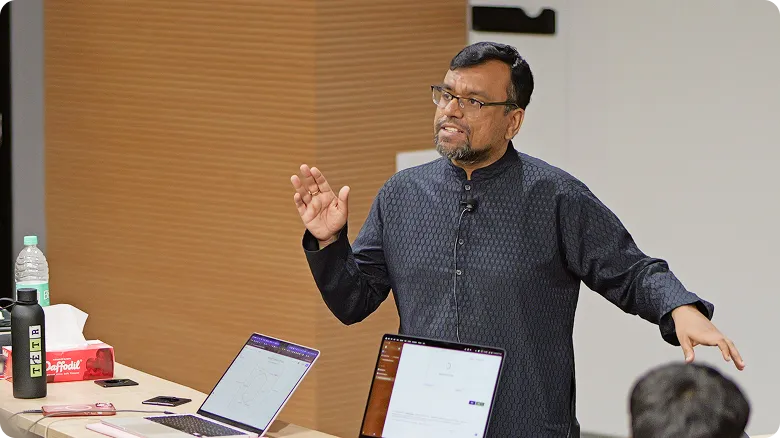
The world of technology is evolving at an unprecedented pace, and leaders who understand the transformative power of digital innovation are shaping its future. Masters’ Union recently hosted one such visionary—Mr. Bikram Singh Bedi, Vice President and Country Managing Director of Google Cloud India.
As the Google Cloud Head India, Mr. Bedi has been instrumental in redefining how enterprises adopt digital technologies. From his pioneering work at AWS India to his current role at Google Cloud India, he has consistently demonstrated how cloud and AI are not just tools of convenience but forces that redefine business models, industries, and economies.
This session gave students and professionals alike a chance to learn directly from one of the most respected voices in technology, gaining insights into enterprise cloud computing, AI, and the cultural shifts needed for innovation to thrive.
Google Cloud India: Redefining Digital Transformation
In his role at Google Cloud India, Mr. Bedi has led initiatives that drive scalability, security, and agility for enterprises. His focus is not just on adoption but on helping companies leverage enterprise cloud solutions to innovate, expand, and strengthen their competitive edge.
By enabling businesses to migrate to secure and agile cloud environments, Google Cloud is helping organisations improve operations, better serve customers, and unlock new avenues of growth.
Impacts of Google Cloud in India
-
Helping enterprises achieve scalability and agility
-
Providing enterprise cloud solutions tailored to diverse industries
-
Enabling businesses to move beyond traditional IT models and embrace innovation
-
Laying the Foundation of India’s Cloud Revolution with AWS
Before leading Google Cloud, Mr. Bedi was the founding leader of AWS India. His work at Amazon Web Services marked the beginning of India’s enterprise cloud computing journey, introducing solutions that changed how startups, enterprises, and even government agencies approached technology.
He played a key role in building an ecosystem where businesses could scale quickly, innovate affordably, and compete globally. His vision at AWS paved the way for the widespread adoption of enterprise cloud technologies in India.
Contributions to India’s Early Cloud Adoption
-
Introduced cloud services to businesses across industries
-
Supported startups with scalable and cost-effective cloud models
-
Encouraged government and enterprises to embrace cloud-first strategies
How Does the Cloud Symbolize Revolution and Change?
During the session, Mr. Bedi reflected on a powerful theme: how does the cloud symbolize revolution and change in today’s world? The answer lies in how cloud computing has evolved into more than just infrastructure—it has become the backbone of digital innovation.
By enabling flexibility, real-time collaboration, and seamless scaling, cloud technologies have allowed organisations to break free from traditional limitations. Businesses are now using enterprise cloud computing to deliver groundbreaking products, improve customer experiences, and embrace new revenue models.
Why the Cloud Represents Change
-
It enables innovation at scale, reducing dependency on physical infrastructure
-
Cloud computing fuels faster, more agile product development
-
It allows enterprises to reach global markets more efficiently
Artificial Intelligence: The Next Frontier of Enterprise Innovation
AI is one of the most transformative forces reshaping industries today. Mr. Bedi highlighted how Google Cloud India integrates AI capabilities into its offerings, helping organisations use predictive analytics, automate workflows, and deliver personalized experiences.
From financial services to retail and healthcare, AI is unlocking efficiencies and creating entirely new ways to engage with customers. For students and professionals, understanding AI’s role in the enterprise ecosystem is no longer optional—it’s essential.
AI’s Expanding Role in Enterprises
-
Predictive insights for smarter decision-making
-
Automation of repetitive workflows to boost productivity
-
Personalized services that redefine customer engagement
Scaling for Success in a Digital Economy
Drawing from his experiences at AWS and Google Cloud, Mr. Bedi emphasized that scale is one of the most critical elements of business success. With enterprise cloud solutions, companies can design systems and strategies that adapt to the changing demands of global markets.
Startups benefit from cloud scalability by being able to grow quickly without heavy infrastructure costs. Established enterprises use cloud technologies to maintain competitiveness and agility. This ability to scale on demand has made enterprise cloud computing indispensable for modern business.
Why Scaling Matters for Enterprises
-
Cloud ensures flexibility in managing unpredictable workloads
-
Businesses can expand globally without being constrained by local IT setups
-
Scaling strategies reduce costs while improving performance
The Human Factor in Technology and Innovation
While technology is central to progress, Mr. Bedi stressed that people remain at the heart of innovation. Successful digital transformation depends on cultivating talent, fostering collaboration, and building a culture that embraces experimentation.
This human factor ensures that businesses don’t just adopt technology for efficiency but use it as a tool to create real impact. For students and professionals, developing critical thinking, adaptability, and collaboration skills is as important as learning about cloud and AI.
Human-Centric Insights from the Session
-
Technology adoption must go hand-in-hand with cultural shifts
-
Talent development is crucial for sustaining innovation
-
Collaboration fosters creativity and long-term success
Insights Students Gained from the Session
For aspiring leaders, entrepreneurs, and technologists, the session was more than an overview of cloud and AI. It was an opportunity to learn directly from the Google Cloud Head India about what it takes to thrive in a digital-first economy.
Students walked away with a deeper understanding of how to leverage cloud computing, how AI is transforming industries, and why leadership in the digital age requires balancing technology with human values.
Learning Outcomes from the Interaction
-
First-hand exposure to enterprise-scale digital transformation
-
Practical insights into AI, innovation, and business leadership
-
Inspiration to leverage technology for long-term impact
End Thoughts
The session with Google Cloud Head India, Mr. Bikram Singh Bedi, was a rare opportunity to learn from a leader who has shaped the country’s digital journey. From enterprise cloud computing to AI, his insights reflected how businesses can adapt to the future with confidence.
As organisations embrace enterprise cloud solutions, and as students prepare to become tomorrow’s leaders, the guiding principle remains clear: innovation is not just about technology—it’s about people, culture, and vision.
At Masters’ Union, sessions like these ensure that students gain first-hand exposure to global leaders, equipping them to lead with creativity, adaptability, and technological expertise in a rapidly evolving world.
FAQs
1. Who is the Google Cloud Head India?
Mr. Bikram Singh Bedi is the Vice President and Country Managing Director of Google Cloud India, leading its enterprise strategy and innovation efforts.
2. What role does Google Cloud India play in digital transformation?
Google Cloud India supports enterprises with secure, scalable, and agile enterprise cloud solutions, enabling businesses to innovate and grow.
3. How does the cloud symbolize revolution and change?
The cloud represents change by offering flexibility, scalability, and innovation opportunities that transform how businesses operate and compete globally.
4. What is enterprise cloud computing?
Enterprise cloud computing refers to using cloud-based services to manage large-scale business operations, ensuring scalability, efficiency, and cost-effectiveness.
5. How has Mr. Bedi contributed to India’s cloud journey?
As the founding leader of AWS India and now Google Cloud Head India, Mr. Bedi has played a key role in driving cloud adoption among startups, enterprises, and government bodies.
6. What industries benefit most from enterprise cloud solutions?
Industries like financial services, healthcare, retail, and technology benefit significantly from enterprise cloud solutions due to improved efficiency and customer engagement.
7. Why is the human factor important in technology adoption?
Technology can only succeed when paired with talent, collaboration, and a culture of innovation. The human factor ensures that technology drives meaningful outcomes.