


About us


-
See what students, mentors, alumni and recruiters say about Masters' Union University. Shared highlights and moments that reflect our culture, learning and community. Explore their voices.
OVERVIEW


-
See how Masters’ Union University is represented across leading news and media platforms. Explore articles, features, and press coverage that reflect our journey, initiatives, and growing impact in education, innovation, and industry engagement.
OVERVIEW
-
Explore the awards, rankings and accreditations that recognise the quality, impact and industry relevance of Masters' Union University programmes.
OVERVIEW

-
Explore the reports, brochures, policies, and publications that document Masters' Union University's outcomes, standards, and institutional commitments.
OVERVIEW


PROGRAMMEs
- Highlights
- Curriculum
- Admissions & Fees
- Immersions
- Entrepreneurship
- Careers
- Class Profile
PROGRAMME oVERVIEW
- Highlights
- Curriculum
- Admissions & Fees
- Immersions
- Entrepreneurship
- Career Prospects
- Class Profile
PROGRAMME oVERVIEW
- Highlights
- Curriculum & Faculty
- Immersions
- Admissions & Fees
- Career Prospects
- Class Profile
PROGRAMME oVERVIEW
- Highlights
- Curriculum
PROGRAMME oVERVIEW
- Home
PROGRAMME oVERVIEW
- Highlights
- Curriculum & Faculty
- Admissions & Fees
- Career Prospects
- Class Profile
PROGRAMME oVERVIEW
- Highlights
- Curriculum & Faculty
- Admissions & Fees
- Career Prospects
- Class Profile
PROGRAMME oVERVIEW
- Highlights
- Curriculum
- Admissions & Fees
- Career Prospects
- Class Profile
PROGRAMME oVERVIEW
PROGRAMMEs
- Highlights
- Curriculum & Faculty
- Admissions & Fees
- Career Prospects
- Class Profile
PROGRAMME oVERVIEW
- Highlights
- Curriculum & Faculty
- Admissions & Fees
- Career Prospects
- Class Profile
PROGRAMME oVERVIEW
- Highlights
- Curriculum
- Admissions & Fees
- Career Prospects
- Class Profile
PROGRAMME oVERVIEW
- Highlights
- Curriculum & Faculty
- Admissions & Fees
- Career Prospects
- Class Profile
PROGRAMME oVERVIEW
- Highlights
- Curriculum & Faculty
- Admissions & Fees
- Career Prospects
- Class Profile
PROGRAMME oVERVIEW
- Highlights
- Curriculum
- Admissions & Fees
- Career Prospects
- Class Profile
PROGRAMME oVERVIEW
- Highlights
- Curriculum
- Admissions & Fees
- Career Prospects
- Class Profile
PROGRAMME oVERVIEW
PROGRAMMES
-
PGP in
Technology & Business Management

-
PGP in
Technology & Business Management
(Young Leaders Cohort)
-
MBA in Finance with CFA Pathway
-
Post Graduate Diploma (Human Resources and Organisation Strategy)
-
Post Graduate Diploma (Sports Management and Gaming)
-
PGP in
Applied AI & Agentic Systems
-
PGP in Sustainability &
Business Management
-
Four Nations Global
Business Programme
- Highlights
- Curriculum
- Immersions
- Admissions & Fees
- Career Prospects
- Cohort Profile
PROGRAMME oVERVIEW
- Home
PROGRAMME OVERVIEW
- Highlights
- Curriculum
- Immersions
- Admissions & Fees
- Career Prospects
- Faculty & Student Stories
PROGRAMME oVERVIEW
- Highlights
- Curriculum
- Immersions
- Admissions & Fees
- Career Prospects
PROGRAMME oVERVIEW
- Highlights
- Curriculum & Faculty
- Admissions & Fees
- Career Prospects
PROGRAMME oVERVIEW
- Highlights
- Curriculum & Faculty
- Admissions & Fees
- Career Prospects
PROGRAMME OVERVIEW
- Highlights
- Curriculum & Faculty
- Admissions & Fees
PROGRAMME OVERVIEW
- Highlights
PROGRAMME OVERVIEW
- Highlights
- Curriculum
- Immersions
- Admissions & Fees
- Career Prospects
- Cohort Profile
PROGRAMME oVERVIEW
PROGRAMMES
-
Post Graduate Diploma (Rise General Management)
-
Post Graduate Diploma (Capital Markets & Trading)
-
PGP in US Capital Markets &
Trading
-
PGP
in Entrepreneurship & Business Acceleration
-
Post Graduate Diploma (Rise General Management Global)
-
AI First Operator Programme
-
Bloomberg Equity Research Programme
- Highlights
- Curriculum
- Faculty
- Admissions & Fees
- Career Prospects
- Cohort Profile
PROGRAMME oVERVIEW
- Home
PROGRAMME oVERVIEW
- Highlights
- Curriculum
- Admissions & Fees
PROGRAMME oVERVIEW
- Highlights
- Curriculum
- Admissions & Fees
PROGRAMME oVERVIEW
- Highlights
- Curriculum
- Immersions
- Faculty & Coaches
- Admissions & Fees
- Career Prospects
PROGRAMME oVERVIEW
- Highlights
- Curriculum
PROGRAMME oVERVIEW
- Home
PROGRAMME oVERVIEW
- Highlights
- Global Immersions
- Curriculum
- Faculty & Coaches
- Leadership Learning
- Admissions & Fees
PROGRAMME oVERVIEW
- Highlights
- Curriculum
- Admissions & Fees
PROGRAMME oVERVIEW
PROGRAMMES
- Highlights
- Curriculum
- Beyond Classroom
- Admissions & Fees
PROGRAMME oVERVIEW
- Highlights
- Curriculum
- Beyond Classroom
- Admissions & Fees
PROGRAMME oVERVIEW
- Home
PROGRAMME oVERVIEW
- Home
PROGRAMME oVERVIEW
PROGRAMMES
- Home
PROGRAMME oVERVIEW
- Highlights
- Curriculum
- Beyond Classroom
- Admissions & Fees
PROGRAMME oVERVIEW
- Home
PROGRAMME oVERVIEW
- Home
PROGRAMME oVERVIEW
STUDENT LIFE
- Student Premises
- Amenities
- Hostel Council
oVERVIEW


- Case Union
- UnMute
- Clubs & Committees
oVERVIEW


oVERVIEW

- Healthcare
- BFSI
- Technology
- Manufacturing
- Retail
Industry
- Governments
- Universities
- Startups
- SMEs
- Large Enterprises
Industry
oVERVIEW
PROGRAMMEs
- Highlights
- Curriculum & Faculty
- Admissions & Fees
- Career Prospects
- Class Profile
PROGRAMME oVERVIEW
- Highlights
- Curriculum & Faculty
- Admissions & Fees
- Career Prospects
- Class Profile
PROGRAMME oVERVIEW
- Highlights
- Curriculum
- Admissions & Fees
- Career Prospects
- Class Profile
PROGRAMME oVERVIEW
- Highlights
- Curriculum & Faculty
- Admissions & Fees
- Career Prospects
- Class Profile
PROGRAMME oVERVIEW
- Highlights
- Curriculum & Faculty
- Admissions & Fees
- Career Prospects
- Class Profile
PROGRAMME oVERVIEW
- Highlights
- Curriculum
- Admissions & Fees
- Career Prospects
- Class Profile
PROGRAMME oVERVIEW
- Highlights
- Curriculum
- Admissions & Fees
- Career Prospects
- Class Profile
PROGRAMME oVERVIEW
PROGRAMMES
- Highlights
- Curriculum
- Immersions
- Admissions & Fees
- Career Prospects
- Cohort Profile
PROGRAMME oVERVIEW
- Home
PROGRAMME OVERVIEW
- Highlights
- Curriculum
- Immersions
- Admissions & Fees
- Career Prospects
- Faculty & Student Stories
PROGRAMME oVERVIEW
- Highlights
- Curriculum
- Immersions
- Admissions & Fees
- Career Prospects
PROGRAMME oVERVIEW
- Highlights
- Curriculum & Faculty
- Admissions & Fees
- Career Prospects
PROGRAMME oVERVIEW
- Highlights
- Curriculum
- Immersions
- Admissions & Fees
- Career Prospects
- Cohort Profile
PROGRAMME oVERVIEW
PROGRAMMES
- Highlights
- Curriculum
- Faculty
- Admissions & Fees
- Career Prospects
- Cohort Profile
PROGRAMME oVERVIEW
- Highlights
- Curriculum
- Admissions & Fees
PROGRAMME oVERVIEW
- Highlights
- Curriculum
- Admissions & Fees
PROGRAMME oVERVIEW
- Highlights
- Curriculum
- Immersions
- Faculty & Coaches
- Admissions & Fees
- Career Prospects
PROGRAMME oVERVIEW
- Highlights
- Global Immersions
- Curriculum
- Faculty & Coaches
- Leadership Learning
- Admissions & Fees
PROGRAMME oVERVIEW
- Highlights
- Curriculum
- Admissions & Fees
PROGRAMME oVERVIEW


About Us

Undergraduate
Postgraduate
PGP in Technology & Business Management
PGP in Technology & Business Management
(Young Leaders Cohort)
MBA in Finance with CFA Pathway
Post Graduate Diploma (Human Resources and Organisation Strategy)
Post Graduate Diploma (Sports Management and Gaming)
PGP in Applied AI & Agentic Systems
PGP in Sustainability & Business Management
Four Nations Global Business Programme
Executive
Post Graduate Diploma (Rise General Management)
Post Graduate Diploma (Capital Markets & Trading)
PGP in US Capital Markets & Trading
PGP in Entrepreneurship & Business Acceleration
Post Graduate Diploma (Rise General Management Global)
AI First Operator Programme
Bloomberg Equity Research Programme
Family Business
Immersions
1:1 Executive Coaching
Careers
Innovations
Faculty
MU Ventures
Enterprise L&D
Student Life
Jobs
Become a Master
Merch Store
events
For Companies
Blog
Coach LMS
Business
Understand Customer Analysis Strategy from Pizza Hut’s CEO
January 30, 2025
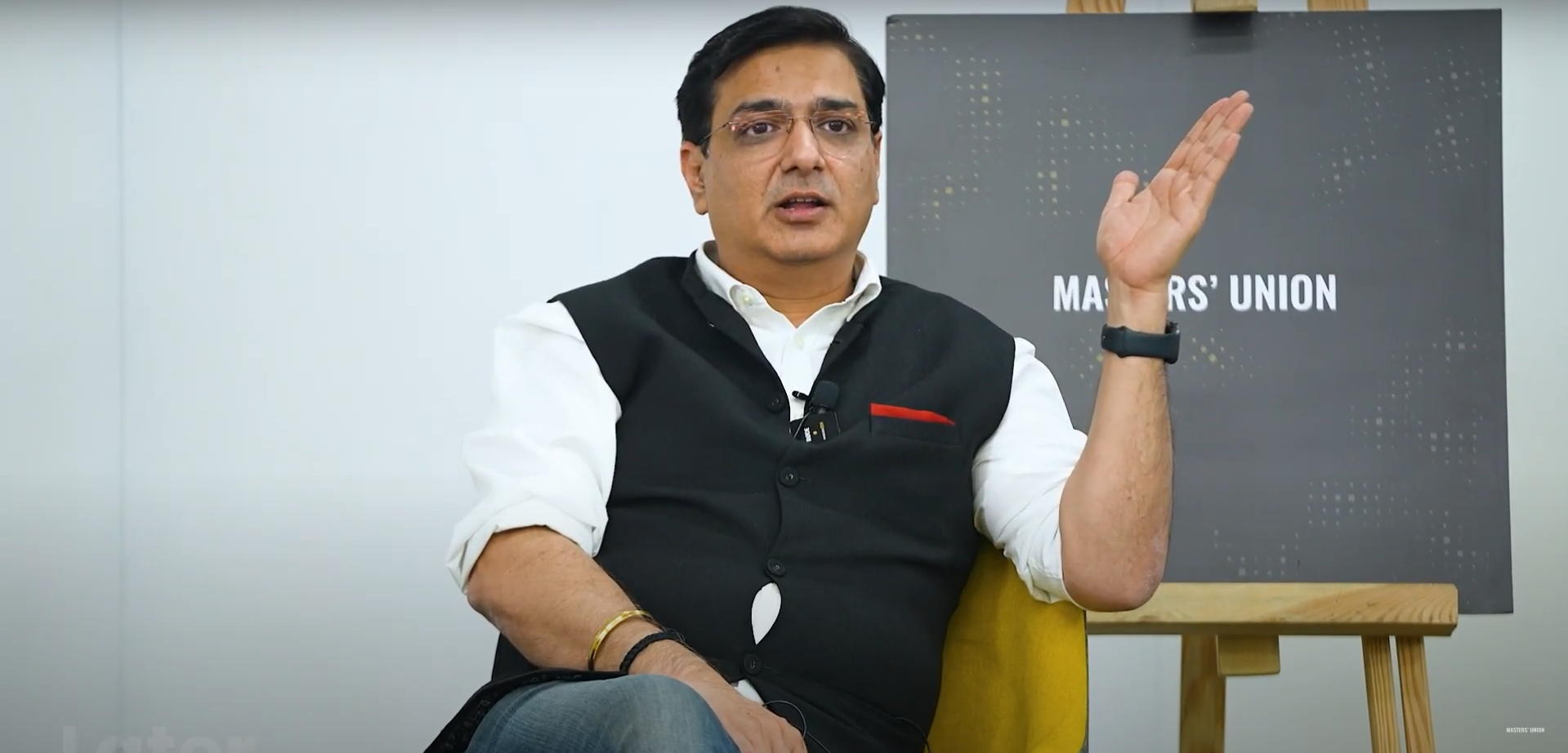
An esteemed executive from Pizza Hut India has shared their first-hand lessons on customer understanding with students at Masters' Union, providing a unique look into how a global brand connects with local consumers. The session, held at the premier business school in Gurugram, served as a direct lesson in strategy, innovation, and agility for the next generation of business leaders.
The discussion, led by a top leader, highlighted the brand's approach to surviving and thriving in one of the world's most competitive markets. Rather than a traditional lecture, it was a deep dive into the real-world application of market strategy. The key takeaway was simple yet profound: winning in business is not about having the best product, but about deeply understanding and anticipating consumer desires.
Decoding the Consumer Psyche: The Art of Listening
The foundation of Pizza Hut India's strategy, as shared with the students, is a relentless focus on listening. It’s a process that goes beyond simple feedback forms and surveys. The brand employs a sophisticated, multi-layered research model to truly decode what customers crave. This isn’t just about taste; it’s about understanding the entire consumption journey.
The session emphasized the importance of qualitative research through focus groups, where the company observes and interacts with consumers in a controlled environment. This allows them to see how people react to new flavors, textures, and even the names of products. Quantitative data from extensive surveys and sales analytics then validates these qualitative insights on a massive scale.
The brand's success lies in its ability to identify the unspoken needs of the Indian consumer. The leader pointed out that factors like convenience, pricing, and cultural relevance are just as crucial as the product itself.
For instance, the demand for affordable, value-driven offerings is a constant in the Indian market, a lesson crucial in the intense Domino's vs Pizza Hut India rivalry. The brand's ability to offer a variety of options, from a full-service dine-in experience to an efficient delivery model, is a direct result of this customer-first approach.
-
Customer understanding starts with active listening, combining qualitative and quantitative research
-
The brand prioritizes understanding unspoken consumer needs related to convenience, price, and cultural relevance
-
This approach is a critical differentiator in a highly competitive market landscape
The Culinary Strategy: Innovation with a Local Heart
A significant portion of the session was dedicated to the brand's culinary innovation. The executive explained that the key to developing a best Pizza Hut pizza is to balance global identity with local flavors. The challenge is to introduce something new and exciting without losing the core essence of the brand that customers know and love.
This is a delicate art, and the leader provided students with a clear framework. The brand's signature pan pizza remains a constant, a symbol of its global identity. However, the toppings and flavor profiles are where the brand's localization strategy truly shines.
The executive shared anecdotes about the rigorous process of developing localized offerings. This involves a collaborative effort between culinary teams and market research analysts to ensure that new products resonate with regional palates. The success of flavors inspired by local ingredients and spice blends is a testament to this strategy.
The brand's relentless product innovation is not about following trends but about setting them. It's a calculated process that ensures every new item, whether it's a new pizza or a side dish, has a strong foundation in consumer insight. The students learned that a pizza hut CEO must not only be a business strategist but also a custodian of the brand's culinary soul.
-
Product innovation is a balance between a consistent global identity and local culinary adaptation
-
The brand's new flavors are a result of extensive collaboration between research and culinary teams
-
The goal is to create menu items that are both familiar and exciting to the local consumer
The Role of Data and Agility in Decision-Making
For the students aspiring to lead a food business, the executive's insights on data-driven decision-making and operational agility were invaluable. The message was clear: in a fast-paced market, instinct is a good start, but data is the engine of growth.
The leader emphasized that every decision at Pizza Hut India is backed by data. From predicting menu trends to analyzing the performance of a new product, data analytics provides a clear, objective view of consumer behavior. The executive shared how the brand swiftly fine-tunes its menu based on real-time feedback. If a new product doesn't perform well, adjustments are made quickly, preventing long-term losses and ensuring resources are focused on winning strategies.
This leads to the concept of agility. In a market where consumer preferences can shift overnight, speed is paramount. The executive told the students that the brand operates with a mindset of "test, learn, and iterate." This means they are not afraid to launch a product in a limited market, gather pizza hut reviews, and then make improvements before a wider rollout. This strategic nimbleness is a direct result of the brand's deep understanding of its market and a core reason why it continues to thrive. A testament to this agility is the story of how old Pizza Hut is. Founded in 1958, its longevity is a direct result of its ability to adapt over decades.
-
Data analytics is used to guide all strategic decisions, from predicting trends to refining products
-
The brand maintains operational agility by quickly testing, learning from, and iterating on new ideas
-
This combination of data and speed is essential for staying ahead of the competition and securing long-term success
End Thoughts
In a final, candid moment, the executive reiterated a crucial point for all future leaders: a successful business is built on a strong foundation of relationships. This includes not only the relationship with the customer but also with every employee.
The discussion covered the importance of a well-trained and motivated team in delivering a consistent and delightful customer experience. The executive noted that behind every Pizza Hut customer service and Pizza Hut customer care interaction is a team empowered to solve problems and make customers feel valued. This holistic, people-first approach ensures that the brand's promise is delivered at every touchpoint. This is the ultimate lesson for the students at Masters' Union: understanding customers is not just about numbers and data—it's about people.
FAQs
Q1: What is the main strategy Pizza Hut India uses to stay ahead in the market?
A: Pizza Hut India's primary strategy is a consumer-centric approach that combines deep market research, data-driven decision-making, and rapid, agile implementation. They focus on understanding what customers want and quickly developing products that meet those needs while also incorporating local flavors and preferences.
Q2: Who is the CEO of Pizza Hut India?
A: The pizza hut ceo is Vikrant Vohra. He is responsible for leading the brand's strategy, growth, and operations in the Indian market.
Q3: How does Pizza Hut India balance global and local flavors?
A: The brand maintains its core global identity, such as the signature Pan Pizza, but infuses the menu with local flavors and ingredients that appeal to the Indian palate. This approach allows them to offer a familiar brand experience that is also uniquely relevant to the local consumer.
Q4: What role does data play in their business decisions?
A: Data analytics is central to their operations. They use data to predict market trends, measure the performance of new menu items, and make quick adjustments to their strategy. This ensures that every product decision is backed by real customer behavior rather than just instinct.
Q5: Who is the pizza hut company owner?
A: Pizza Hut is a subsidiary of Yum! Brands, Inc. It's a global corporation that owns and operates several popular fast-food chains. While there isn't a single individual "owner" in the traditional sense, the company is managed by its corporate leadership and board of directors.
Q6: How can I provide feedback on my Pizza Hut experience?
A: You can provide feedback through Pizza Hut customer service or Pizza Hut customer care channels. These typically include a phone number, email address, or feedback form on their official website. Your feedback is crucial for helping the company improve its products and service.
Q7: How does Pizza Hut India compare to its main competitor, Domino's?
A: Domino's vs Pizza Hut India is a key rivalry. While both brands are leaders in the pizza market, they have different strengths. Domino's is often known for its focus on delivery and speed, while Pizza Hut emphasizes the overall dining and product experience, with a more diverse menu and distinct offerings like its Pan Pizza. Both companies compete intensely on product innovation, pricing, and customer service.